





 Portuguese
  English
  Spanish
  8 min of reading
  5 comments


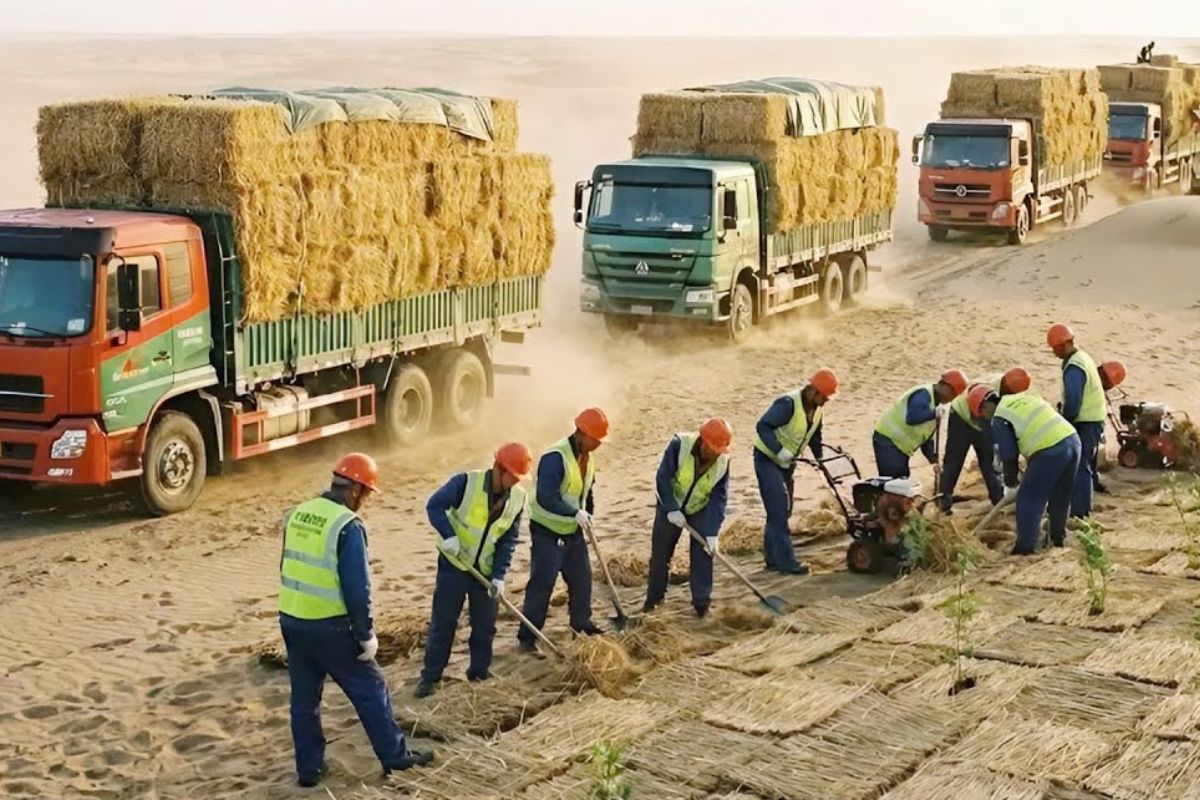


In The Gobi Desert, China Swapped Inappropriate Trees For Buried Straw In Squares, Hardy Shrubs, Solar Panels And Precision Planting, Reducing Wind Strength, Holding Dew And Rain, Stabilizing Mobile Dunes And Creating An Ecological Recovery That Stopped Looking Like Propaganda To Turn Once Again Fertile Concrete Landscape.
In the Gobi Desert, the crisis ceased to be merely hostile landscape and transformed, over decades, into a direct threat to agriculture, transportation, water, and human permanence. In the 1970s and 1980s, desertification advanced more than 3,000 km² per year, burying villages, blocking railways, destroying crops, and pushing millions of people into a condition of environmental displacement within China itself.
It was in this scenario that an apparently ridiculous idea began to take shape. Instead of insisting only on large trees or expensive works, workers started to bury dry straw in the sand in geometric modules. What seemed like improvisation turned into ecological engineering, and what seemed like waste became the basis for retaining moisture, slowing the wind, and returning stability to dunes that had previously been moving uncontrollably.
When Sand Stopped Being A Local Problem
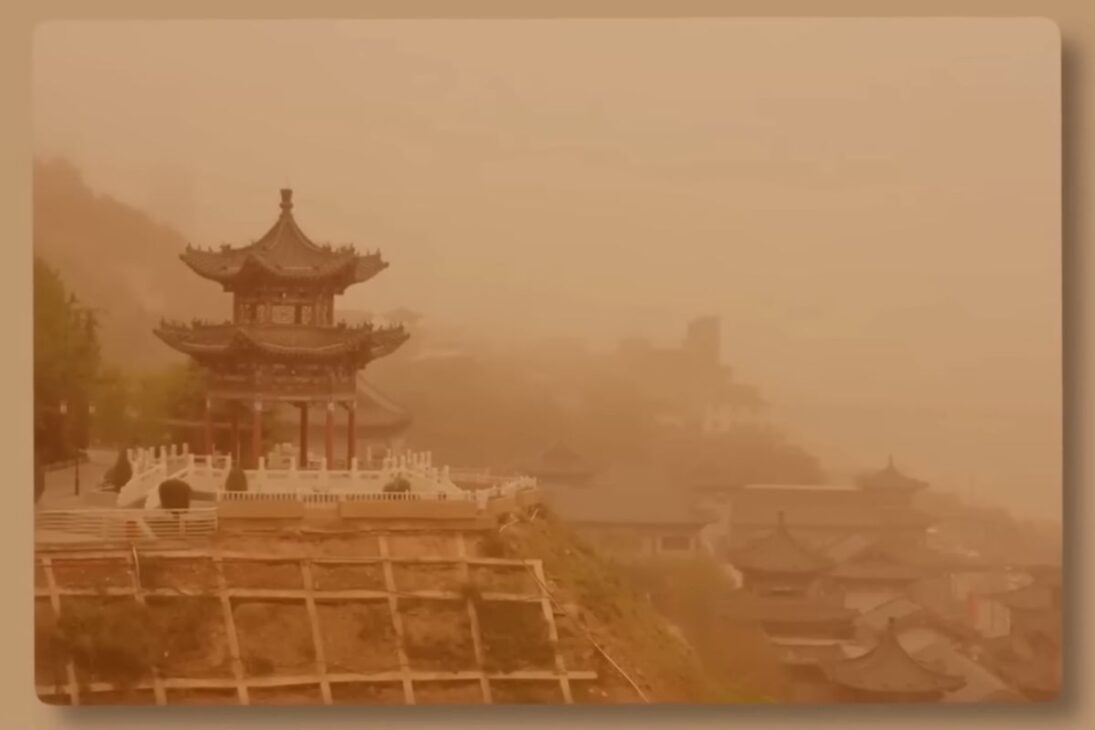
The advance of the Gobi Desert was not limited to isolated areas. In the regions of Inner Mongolia, Ningxia, and Gansu, entire communities began to be trapped by the sand.
-
Upside Down House transforms abandoned warehouses from the 1970s, blending art with concrete and steel engineering, becoming a phenomenon in South Korea and impressing with a surreal experience that attracts tourists from around the world.

-
Brazil became 18 square kilometers smaller in the new official update from IBGE, which redrew the boundaries of 784 municipalities in 13 states and even changed the names of cities that you might know, such as Açu, which is now called Assú.

-
Stephen Hawking said that the worst enemy of knowledge is not ignorance but the illusion of knowledge, and he dedicated his entire career to proving that science dies when people act as if they already have all the answers.

-
A man gathered Styrofoam, PET bottles, sand, and cement to build a recycled block using a mold made from an old board and a 50mm pipe to easily raise walls.

After storms, farmers found blocked doors, buried wells, and destroyed crops. The loss was not only territorial. It was economic, demographic, and social.
By the 1990s, the direct losses from desertification reached around 54 billion yuan per year.
Important railways for the transportation of goods between western and eastern China suffered frequent disruptions, and the dust raised in spring ceased to be a regional problem and acquired international scale.
In 2006, a major sandstorm severely worsened air pollution in Beijing, and the cloud crossed South Korea, Japan, and even the Pacific toward the west coast of the United States. The crisis could no longer be treated as a peripheral issue.
It was for this reason that China began to see desertification as a matter of food security, water security, and national stability.
The initial response came in 1978 with the Great Green Wall, a belt of vegetation planned to reach 4,500 kilometers and block the advance of winds and sand.
The problem was that the plan, in the early years, was guided more by ambition than by ecological adaptation. Millions of seedlings were planted, but a large part of them simply did not belong to the environment they were supposed to occupy.
The Failure Of Trying To Turn The Desert Into Regular Forest
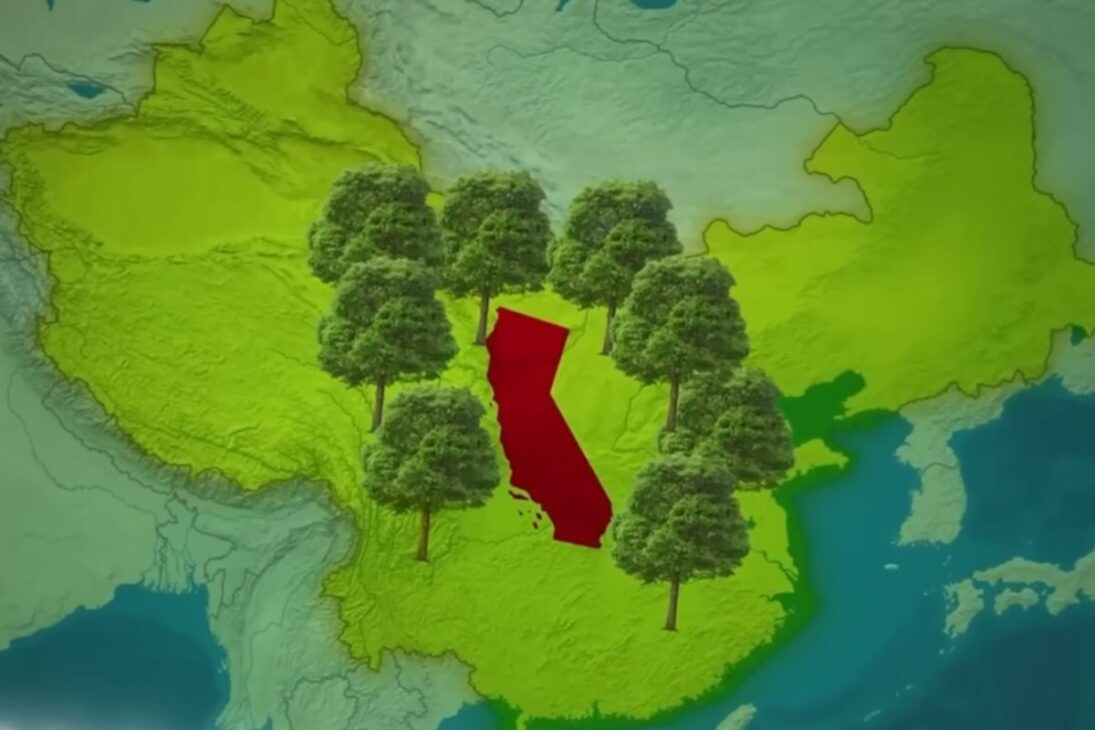
The initial phases of recovery relied on fast-growing trees, such as poplars and pines. On paper, the numbers were impressive.
In practice, the survival rate in various areas was below 10%. The chosen species required too much water for a place that could hardly sustain its native vegetation.
This failure was not neutral. Large trees pulled already scarce groundwater, further weakening the natural cover and leaving the soil drier.
What was supposed to contain desertification, in certain stretches, aggravated vulnerability to erosion. Not by coincidence, criticisms from international scientists emerged, pointing to budget inefficiency and ecological inadequacy.
It was precisely at this stage that doubt grew stronger. If planting millions of trees did not solve the issue, would it make sense to keep pouring resources into the same method?
The turning point came when China understood that recovering the desert did not mean covering it with dense forests, but restoring a functional arid ecosystem.
This shift in thinking became clearer starting in 1999, with the program for returning agricultural lands to forests and pastures.
The government began to recognize that a significant part of desertification stemmed from the excessive exploitation of the soil by inappropriate crops in fragile areas.
In exchange for financial support and food, farmers stopped planting rice or corn in vulnerable zones and began adopting grasses and species more resistant to drought.
The Straw Technique That Seemed Absurd And Changed Everything

The most decisive leap came with the straw chessboard technique, perfected and applied on a large scale decades after its origin.
Instead of trying to plant directly on mobile dunes, workers first fixed the sand. They did this by burying dry straw in squares of 1 meter by 1 meter, with stakes projecting 15 to 20 centimeters above the surface.
This shape was not chosen by chance. Aerodynamic experiments showed that modules of this size were the most efficient at reducing wind speed near the ground by about 40%.
With the wind weaker, grains of sand ceased to be carried away with the same ease. The technique did not create life immediately, but it created the minimum condition for life to return.
The effect did not stop at physical containment. The straw retained dew and rainwater, prevented immediate evaporation, and, over time, began to decompose, forming the first layer of organic matter.
Next, microorganisms, mosses, and a biological crust capable of hardening the surface and transforming mobile dunes into stable soils emerged.
It was only after this stage that re-vegetation began to work properly. Instead of large, thirsty trees, hardier drought-resistant shrubs, grasses, saxaul, and desert willows were introduced.
The most important lesson was simple and harsh: it was not about defeating the desert with brute force, but about rebuilding the ecosystem that already made sense in that climate.
Human Persistence, Generation After Generation
The technique gained strength because it found people willing to sustain it when it still seemed useless. A striking example was that of the so-called six old men from the Babcha Forestry Station.
In the early 1980s, they signed a commitment to cover degraded areas with vegetation, even being treated as men wasting time in the middle of the sand.
They lived in extreme conditions, digging shelters in the ground, eating dry rations, and using melted snow for drinking. The work consisted of planting, protecting the straw, watching over seedlings, and insisting when the wind destroyed part of the effort.
When one of them died, the descendants continued the mission. Today, the third generation of this same family continues the work.
The recovery of the Gobi Desert was not just a state policy. It was also a work of family and community stubbornness.
This point helps to understand why the results did not appear overnight. The process took decades, not months.
The very foundation of the method depends on this patience: fixing the sand, creating crust, recovering moisture, only then planting and only then waiting for the ecosystem to respond.
This is exactly what makes the story more solid than the easy headline about a miraculous solution. There was no miracle.
There was long persistence, technical correction, and sufficient biological time for the landscape to react.
When The Desert Became Economy And Not Just Public Spending
The next stage of the turnaround appeared in the Kubukqi Desert, within the same large belt of combatting desertification in northern China.
There, the issue ceased to be merely ecological and became economic. How to recover the sand without exclusively relying on state budget? How to make the local population earn money with restoration, rather than just obeying a public program?
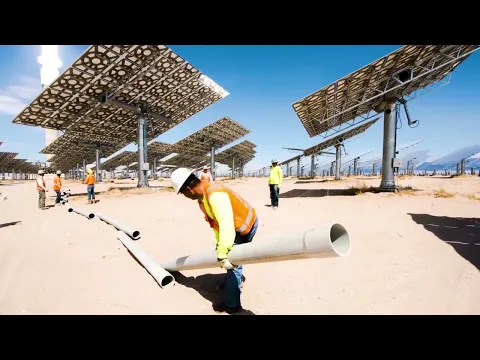
The answer was the model known as sand control by photovoltaic energy. Large areas began to be covered by solar panels.
These panels generate energy, but also function as shade. By reducing direct sunlight, they decrease soil evaporation by 20% to 30% and create a cooler, more humid microenvironment on the surface.
Under them, China began to cultivate high-value medicinal herbs, such as licorice and cistanche, as well as grasses for livestock feed.
A single arrangement began to deliver clean energy, soil recovery, and local income at the same time.
The planting technology also changed the pace of the operation. Instead of slow, manual methods, the water pressure planting technique was used, which injects water into the sand, opens the hole, and already provides initial moisture to the seedling.
The time to plant a tree dropped to about 10 seconds, and the survival rate surpassed 90%.
Social participation also gained new scale with the Ant Forest app, launched in 2016.
Users accumulate virtual green energy by walking, biking, or using digital payments, and this balance is converted into real trees planted in deserts like Kubukqi.
The fight against desertification ceased to be just shovel and straw and began to include urban engagement, drones, big data, and seed capsules launched in remote areas.
What Satellite Images And The Return Of Life Showed
The results of this combination of traditional methods and modern technology were sufficiently visible to change the perception of those who once mocked. In the Kubukqi Desert, more than one-third of the area had already been recovered.
Compared to previous decades, the amount of rain increased in some areas, and the sandstorms hitting Beijing fell about 90% in frequency and intensity.
But the strongest indicator may not have been the green cover itself. It was the return of the ecosystem. Wild rabbits reappeared, birds were again observed, and local life ceased to depend solely on migration.
More than 100,000 residents began to live more stably, working with ecological tourism, agricultural products, and services related to environmental recovery.
When satellites recorded the expansion of green cover, the symbolic effect was even greater.
In 2019, data cited in the foundational material pointed to a global increase of 5% in green cover compared to the beginning of the 2000s, with China accounting for 25% of this gain, despite having only 6.6% of the world’s agricultural area.
It was at this moment that the world began to trade sarcasm for recognition.
Recognition also became institutional. In 2017, the United Nations Environment Program praised the Kubukqi model as an example of ecological restoration.
And the next movement was predictable: African countries, Middle Eastern nations, and initiatives like the Great Green Wall of Africa began studying the Chinese experience as a concrete reference for their own desertification challenges.
What The Gobi Desert Teaches Now
The story of the Gobi Desert is not just about a curious technique that ended up working. It is the story of a course correction.
China made a mistake when it tried to impose an inadequate reforestation model on the desert. It got it right when it began to respect the behavior of wind, sand, moisture, and native species.
This matters because the case dismantles the idea that only expensive and hyper-complex solutions can reverse large-scale environmental degradation.
Sometimes, the leap starts with something much less flashy: straw buried at the right angle, repeated squares at the right scale, decades of maintenance, and the humility to recognize that nature does not need to be forced to become something else to work again.
Today, when the dunes stabilize, the biological crust forms and vegetation returns, the question is no longer whether burying straw in the desert made sense.
The question now is why so many people took so long to realize that simplicity, when guided by science and persistence, can be more powerful than the rush for grand solutions.
In your view, could the method used in the Gobi Desert work in other arid regions of the planet, or does each desert require such a specific type of recovery that copying the technique without adaptation would repeat the mistakes of the past?







Poderiam tentar.
Eu acho que que poderiam ou usar a mesma técnica ou usar uma semelhante, algo que seja apropriado para o tipo de solo que irá se recuperar; claro que isso depende do clima, temperatura, umidade,a geografia da região, os ecossistemas que só tem naquele lugar e evitar a extinção deles. Além das análises que devem ser feitas antes, sejam elas: materiais, químicas, e físicas…
Pergunta para ser respondida pelos biólogos e cientistas, mas a receita principal com resultados eficientes estão aí. Uma adequação com certeza surtiria efeito