





 English
  Francês
  Alemão
  Italiano
  Japonês
  Norueguês
  Portuguese
  Spanish
 4 min of reading
  0 comments



Mining Industry Faces Productive Blackout After Heavy Rains in Zona da Mata; 40% of Industrial Capacity Was Compromised.
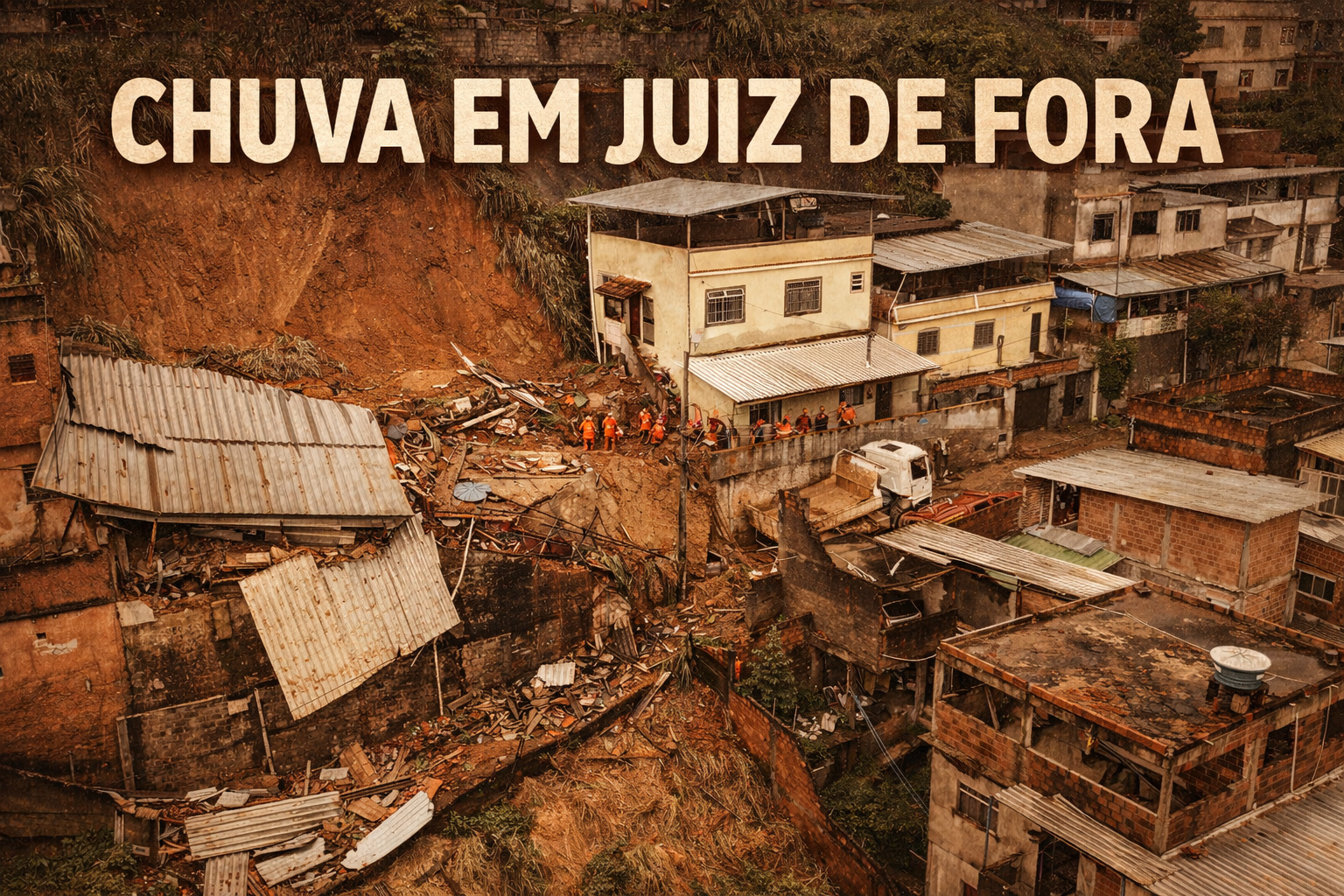
A productive blackout caused by heavy rains has already compromised about 40% of the active industrial capacity in Juiz de Fora and Ubá, in the Zona da Mata region, in 2026.
The tragedy, caused by historic storms, damaged factories, interrupted supply chains, and directly affected workers and companies.
The impact is so severe that it threatens to destabilize the entire mining industry in the region, including the furniture hub of Ubá and the metal-automotive sector of Juiz de Fora.
-
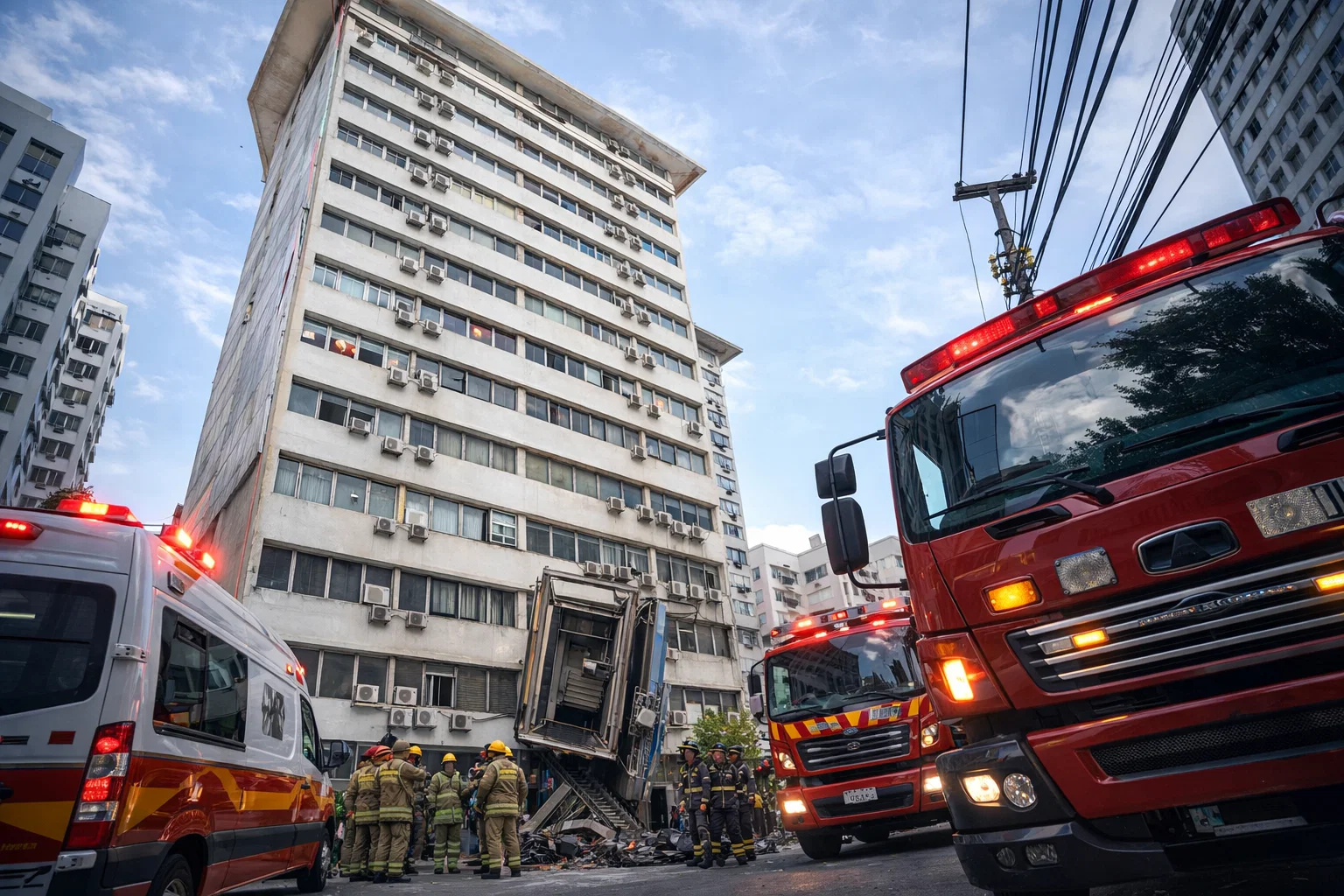
Elevator Plummets From Tenth Floor in Commercial Building in Recife, Raising Concerns About Safety and Engineering of Vertical Transport Systems Used Daily in Urban Buildings
-
Cyclist Hit by Car in Sobradinho, DF Is Rescued After Traffic Accident This Sunday

-
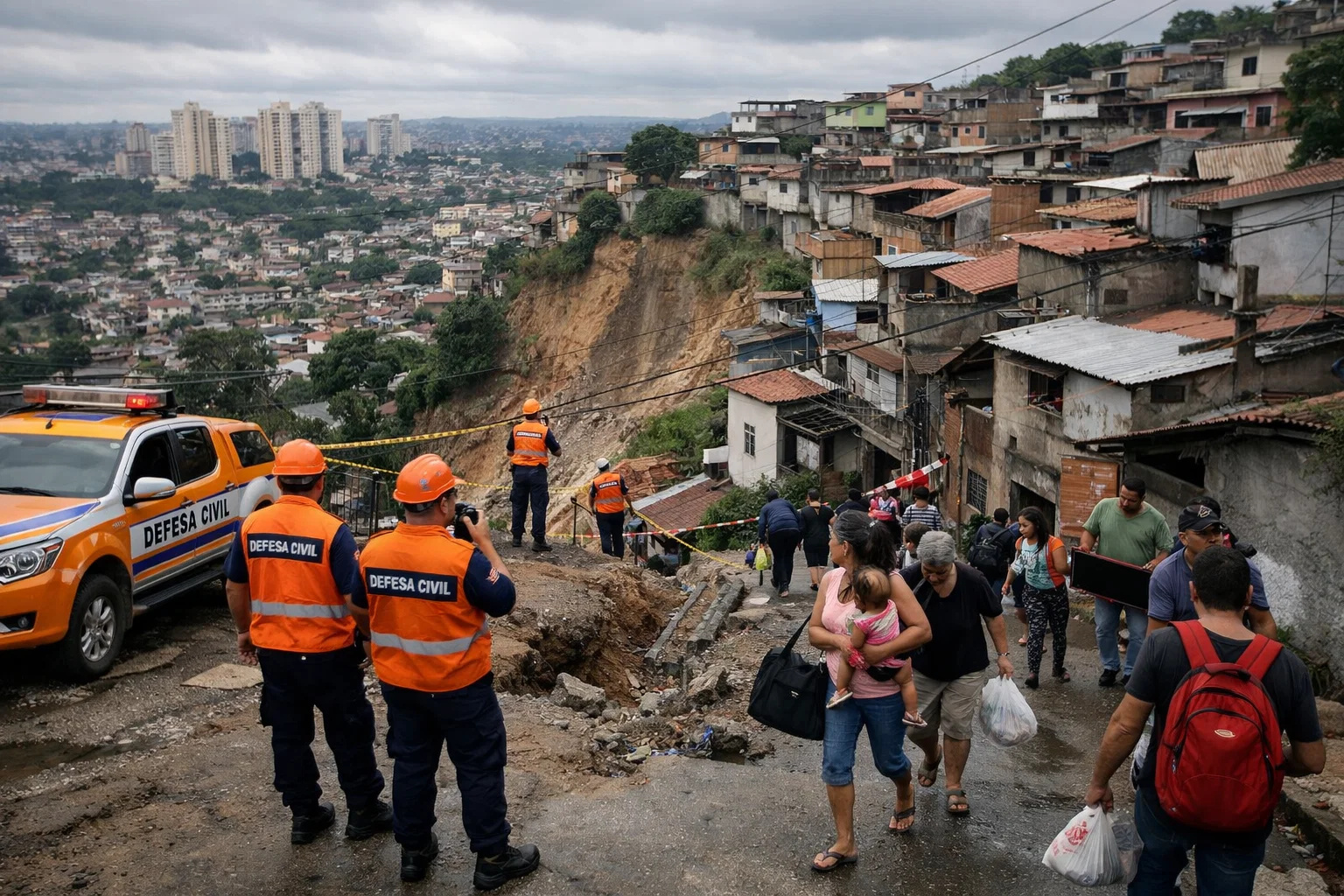
Civil Defense Issues Alert and Advises Evacuation in 51 Streets of Juiz de Fora After Risk of Instability; See the Complete List of Affected Neighborhoods
-
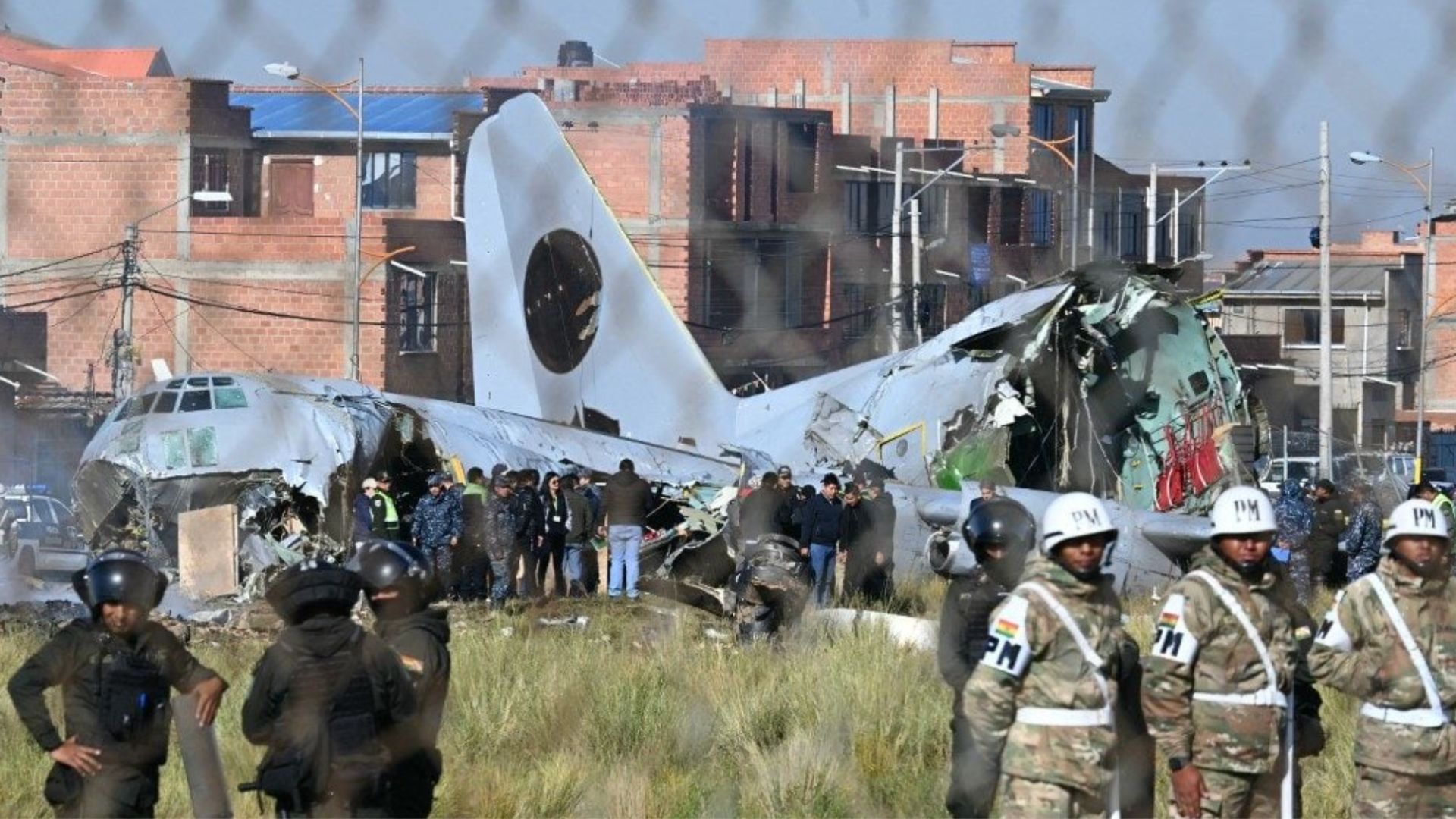
Military Plane With Money Crashes In Bolivia, Leaves 20 Dead And Leads Central Bank To Annul 10, 20, And 50 Bolivianos Notes After Chaos At Airport

According to the president of the Federation of Industries of the State of Minas Gerais (Fiemg) – Zona da Mata Regional, Mariângela Marcon, this is one of the most critical moments faced by the sector since 1961.
According to her, the heavy rains exposed the fragility of industrial structures in the face of extreme climatic events.
In addition to material damage, the crisis worsens because thousands of workers were also affected by the floods, further compromising the resumption of activities.
Heavy Rains Widen the Productive Blackout and Affect Strategic Chains
The productive blackout is not limited to flooded factories.
It spreads throughout the production chain of the Zona da Mata, as companies that depend on inputs from the affected industries also face shutdowns.
“Those who did not have their factories hit by water can manage to resume part of the production, but there are companies that simply cannot operate because many employees live in risk areas and have lost everything.
At this moment, the priority is immediate intervention, including psychological support,” details Mariângela Marcon.
The problem, therefore, goes beyond infrastructure. It is also a social crisis.
Currently, about 130,000 residents of Juiz de Fora live in areas considered at risk, and many are part of the local mining industry labor force.
Meanwhile, closures on sections of BR-040 hinder the transport of inputs and the movement of employees.
As a consequence, the risk of total shutdown of large companies in the region increases.
Among the impacted companies are Mercedes-Benz and ArcelorMittal, which may face shortages if logistics are not quickly restored.
Geotechnical Risk Raises Alarm in Zona da Mata
In addition to the productive blackout, the excess of heavy rains has raised the geotechnical risk — a technical term that refers to the instability of soil and structures such as dams and slopes.
Units such as Nexa Recursos Minerais and Pedreira Santo Cristo have started to operate under continuous monitoring.
The saturation of the soil increases the possibility of landslides and endangers industrial structures.
Thus, the scenario demands constant vigilance to prevent the environmental tragedy from evolving into new structural disasters.
Ubá Furniture Hub Suffers Historic Devastation
If in Juiz de Fora the metal-automotive sector feels the impacts, in Ubá the drama hits hard the furniture hub, considered the main one in Minas Gerais.
In just three hours of storm, the Ubá River reached a historic mark of 7.82 meters.
The force of the water invaded industrial and commercial areas, causing significant damage.
More than 450 companies make up the furniture hub of Ubá, responsible for about 20,000 direct jobs in a city of approximately 110,000 inhabitants.
With factories spread across different neighborhoods, the geographical dispersion made immediate assistance and coordination of emergency actions difficult.
In addition to the loss of timber stocks, many companies had high-tech machinery damaged by mud.
Emergency Measures Aim to Avert Collapse of the Mining Industry
In light of the productive blackout, FiEMG has initiated a detailed mapping of the affected companies.
“A data cross-referencing work was conducted, with support from artificial intelligence tools and available information on the internet, allowing for a systemic analysis of the affected industries,” points out Mariângela Marcon.
Thus, the strategy aims to expedite access to tax benefits and emergency credit.
“If a company has R$ 30,000 in cash, will it prioritize paying taxes or replenishing the raw materials it lost? Naturally, in times like this, the survival of the business weighs more,” explains the leader.
Among the proposals is the extension of the federal tax collection period for 190 days for taxes such as IRPJ, CSLL, PIS, Cofins, and Employer INSS, as well as the suspension of tax executions.
Also under discussion are credit lines with the National Bank for Economic and Social Development (BNDES), release of the FGTS in the disaster mode, and exemption from fines and interest on debts incurred during the critical period.
“We reiterate that the speed in adopting these measures is essential to avoid the economic collapse of the region.
The moment demands public responsibility, unity among government spheres, and a response proportional to the severity of the damages suffered by society and the productive sector,” states Mariângela Marcon.
Productive Blackout Exposes Structural Vulnerability of Zona da Mata
The current scenario reveals that the productive blackout goes far beyond a one-off event.
Thus, it exposes structural weaknesses in the Zona da Mata in the face of increasingly frequent extreme climatic phenomena.
Therefore, the reconstruction of the mining industry will require not only financial resources but also urban planning, resilient infrastructure, and effective public policies.
Meanwhile, business owners and workers await quick responses to prevent the temporary crisis from turning into a prolonged collapse of the regional economy.
See more at: Productive Blackout Affects 40% of the Industry in Juiz de Fora and Ubá









Seja o primeiro a reagir!