





 Portuguese
  English
  Spanish
  8 min of reading
  23 comments


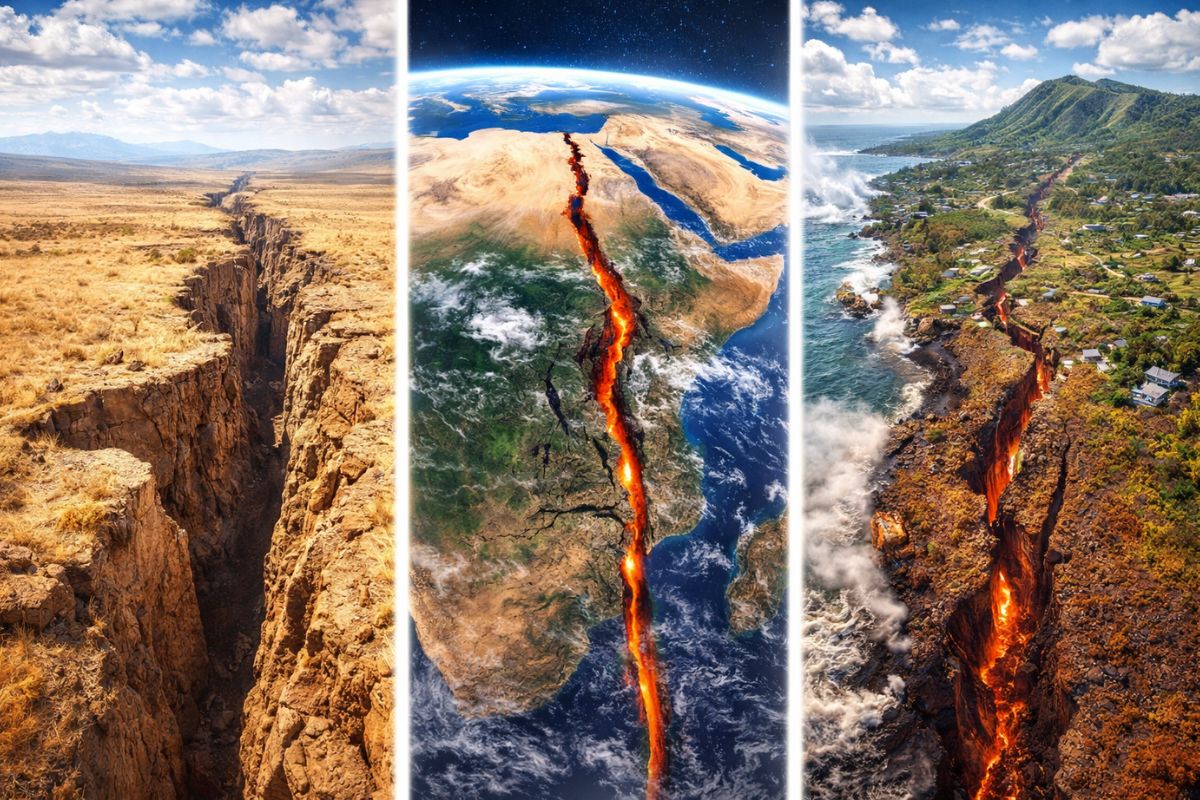


From Faults That Tear Continents to Sunken Valleys, Discover the Colossal Scars Visible from Space That Are Redrawing the Map of the Planet in Real Time.
The maps you see in school may seem static, but the truth is different. The surface of the Earth is full of colossal scars visible from space, opened by tectonic plates that collide, drift apart, and scrape against each other like giants in constant friction. Each of these cracks is a reminder that the planet is alive and in motion.
By monitoring these fissures from above, with the help of satellites and radars, scientists can observe new oceans being born, continents splitting apart, and islands being torn apart in real time. In this article, you will learn about 10 of these extreme scars and understand how they formed, why they are so striking, and what they reveal about the future of our geography.
The Earth Full of Colossal Scars Visible from Space
Before diving into the list, it is worth remembering: faults, fissures, and rift valleys are not just curiosities of geology. They are major frontiers between tectonic plates, channels through which magma moves, and zones where the ground can shift several meters in just a few seconds.
-
He started running at 66 years old, broke records at 82, and is now a subject of study for having a metabolic age comparable to that of a 20-year-old, in a case that is intriguing scientists and inspiring the world.

-
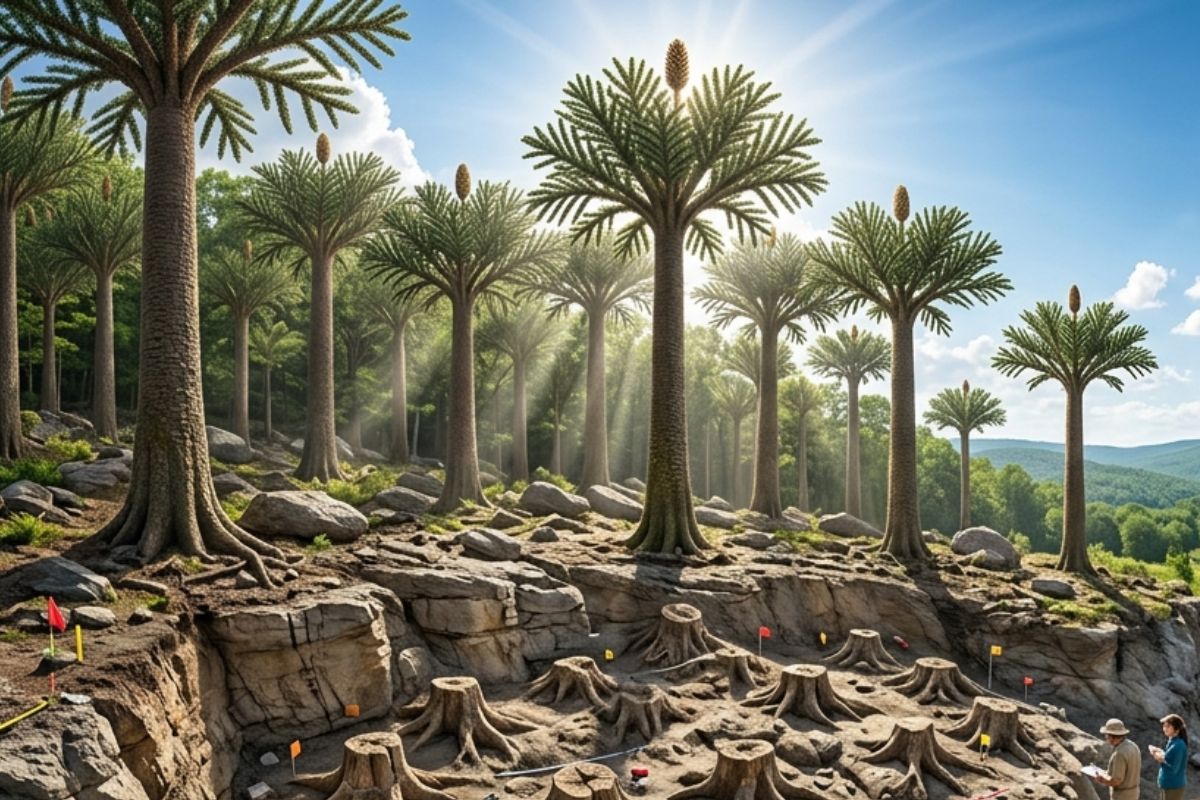
Oldest tree on the planet reappears after 130 years of searches: Wattieza, 385 million years old, was 10 meters tall and had no leaves or seeds; Gilboa fossils in New York solved the mystery in 2007.
-
A 48-square-meter house assembled in hours with 4,000 bricks made of recycled plastic that does not absorb moisture, has natural thermal insulation, and costs less than 90,000 reais in a complete kit.

-
Luciano Hang revealed that Havan’s air fleet has already accumulated more than 20,000 landings, 10,000 flight hours, and 6 million kilometers traveled, and he says that without the planes, the company would never have grown so quickly.


Seen from above, these structures appear as dark lines, narrow valleys, gigantic steps, or bands of recent lava, all perfectly visible from space. Each one is a record on a continental scale of what ultimately shapes mountains, opens seas, and destroys entire cities when accumulated energy is released.
1. Dabahu Rift in Ethiopia, Where a New Ocean Begins to Form

In 2005, the Afar region in northeastern Ethiopia was the site of a rare geological event. In just a few days, a rift over 60 km long and several meters wide opened the Earth’s crust, creating a scar so striking that it became easily visible from space.
Here lies the convergence of three tectonic plates: the African, the Arabian, and the Somali plates. Magma rose from below the crust, pushed rocks to the sides, and abruptly tore the ground after a swarm of over 160 earthquakes and an eruption from the Dabahu volcano.
Researchers describe the area as a living laboratory, where it is possible to observe, in accelerated geological time, the beginning of the process that will open a new ocean in millions of years.
2. Badwater Basin, Death Valley, California

In California, the Badwater Basin is famous for being the lowest point in North America, at 86 m below sea level, but also for its geometric fractures that clearly appear in orbital images.
In this desert area, the crust has been stretching for millions of years. Ancient lakes have evaporated, leaving behind white salt flats filled with polygonal cracks, which expand and contract with the extreme heat.
The combination of tectonic faults and broken salt crusts creates a network of fissures that, seen from above, resembles an irregular chessboard drawn in the desert, standing out starkly as they are visible from space amidst a nearly vegetation-free landscape.
3. San Andreas Fault, the Famous Scar of California

The San Andreas Fault is probably the most famous fault line on the planet. It stretches approximately 1,200 km across California, marking the boundary between the Pacific and North American plates, which slide laterally past each other.
This movement of 30 to 50 mm per year accumulates energy that, from time to time, is released in giant earthquakes, such as the one in San Francisco in 1906, which shifted the ground by up to 6 m. From an aerial perspective, San Andreas appears as a dark linear groove cutting through mountains, valleys, and agricultural areas, with rivers diverted, broken fences, and displaced channels. It is such a clear structural scar that it has become a symbol of Earth’s cracks visible from space.
4. North Anatolian Fault, the Turbulent Sister in Turkey
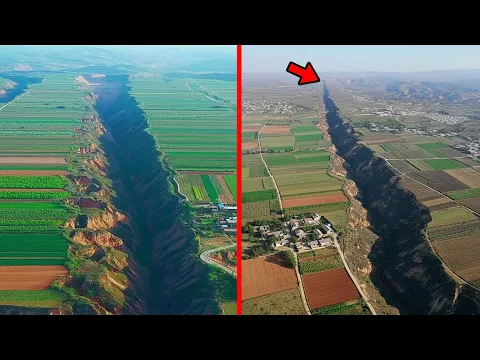

In Turkey, the North Anatolian Fault is a system so active that it rivals San Andreas in energy and danger. It stretches for about 1,500 km, separating the Anatolian plate from the Eurasian plate.
Over the past century, a sequence of massive earthquakes has ruptured successive segments of this fault, leaving rupture lines of up to 150 km and displacements of more than 5 m in a single event, such as in 1999.
From satellite views, these ruptures appear as zigzag lines crossing fields, cities, rivers, and the coastline of the Sea of Marmara, clearly indicating that it is a continental scar on a national scale, easily visible from space.
5. East African Rift System, Where a Continent Splits in Two

From the Afar Triangle in Ethiopia, down through Kenya, Tanzania, and Malawi to Mozambique, the East African Rift System stretches over 3,000 km. Here, the African plate is splitting into two, the Nubian plate and the Somali plate.
The result is a network of deep valleys, high cliffs, linear lakes, and volcanic depressions that align in a darkly recognizable stripe in orbital images.
In regions like Afar, the ground has opened up by several meters in width and tens of kilometers in length, with fissures where magma rises directly.
It is one of the most dramatic scars visible from space and a harbinger of a future ocean that will one day separate East Africa from the rest of the continent.
6. Western Ghats, the Fossil Scar of India

On the southwestern edge of India, the Western Ghats may seem like just a beautiful mountain range. In practice, they are a gigantic tectonic escarpment, a fossil scar marking the ancient rupture of the Indian plate when the supercontinent Gondwana began to break apart.
This raised edge extends for over 1,600 km, with drop-offs of up to hundreds of meters between the interior plateau and the coastal plain.
Viewed from space, the escarpment appears as a continuous wall with elongated shadows, brutally separating the lower coast from the elevated interior.
Even considered inactive in terms of major earthquakes, it remains one of the cleanest and sharpest cracks on the planet when observed from above, resembling a single cut on a continental scale.
7. Kekerengu Fault, New Zealand, When the Ground Moves 10 Meters at Once

On New Zealand’s South Island, the Kekerengu Fault gained worldwide fame after the 2016 Kaikoura earthquake.
In some areas, the ground shifted more than 10 m horizontally, producing one of the most distinctly recorded surface ruptures by modern satellites.
Roads, fences, slopes, and pastures were cut almost surgically, creating a straight brown line of turned earth contrasting with the green of the fields.
The scar, over 30 km long, looks as if it were drawn with a giant ruler. As part of the Marlborough fault system, Kekerengu is now a textbook example of a strike-slip fault, closely monitored precisely because it has become one of the clearest cases of a visible crack from space in near real time.
8. Araba Fault, Jordan, the Straight Blade in the Desert

Connecting the Dead Sea to the Gulf of Aqaba in Jordan, the Araba Fault is part of the Dead Sea transform system.
In the midst of a nearly vegetation-free desert, it appears as a long, deep linear valley, so straight it seems drawn with a scalpel.
The fault traces the boundary between the Arabian and African plates. In satellite images, the contrast between the fault edges, shadows, and the lower floor of the valley makes this scar one of the most easily visible tectonic lines from space.
Due to its dry and sparsely populated environment, the structure remains almost exposed, clearly revealing the boundary where two continental blocks have scraped against each other for millions of years.
9. Baikal Rift Zone, Siberia, the Crack That Houses the Deepest Lake in the World

In southern Siberia, the Baikal Rift Zone is an extreme example of how the Earth can open up to create an abyssal lake.
Here, the Amur plate slowly pulls away from the Eurasian plate, generating a fracture system that extends over 2,000 km.
At the center of this crack lies Lake Baikal, the deepest and oldest freshwater lake on the planet, with nearly 1,700 m of depth. Viewed from space, it serves as a perfect marker of the rift.
Surrounding faults like Sarma and Barguzin cut through the landscape in straight lines, creating linear valleys and abrupt changes in relief and vegetation.
With a crust expansion of 4 to 5 mm per year, the system keeps the lake slowly deepening, producing a gigantic scar, perfectly visible from space and still evolving.
10. East Rift Zone, Big Island of Hawaii, a Volcanic Crack in Real Time

On the Big Island of Hawaii, the East Rift Zone is proof that not all tectonic cracks are silent.
It stretches from the top of the Kilauea volcano to the sea, acting as a valve through which the flank of the volcano slides and magma finds its way to the surface.
During eruptions like the one in 2018 in Lower Puna, the ground opened up in dozens of aligned fissures, pouring rivers of lava that now form black bands cutting through forests, roads, and entire neighborhoods.
In satellite images, this zone appears as a dark wound, with collapsed lava tubes, vent cones, and displaced blocks, all contrasting with the green of the vegetation.
Among all the scars visible from space, few show so clearly the creation and destruction happening almost simultaneously, with the island literally growing and tearing apart before our eyes.
What These Scars Visible from Space Tell Us About Us
These 10 structures show that the planet is not a solid and unchanging block. Continents split, valleys sink, faults slide, and islands tear apart, often in events that last seconds but leave marks that persist for millions of years.
At ground level, everything seems stable. From space, however, these scars visible from space reveal the true scale of tectonic force, reminding us that our cities, roads, and borders are details on a stage that moves slowly but continuously.
And you, which of these colossal scars visible from space impressed you the most, and would you dare to live near an active fault like San Andreas or the rift zone in Hawaii?







1
1
1