





 Portuguese
  English
  Spanish
  5 min of reading
  5 comments


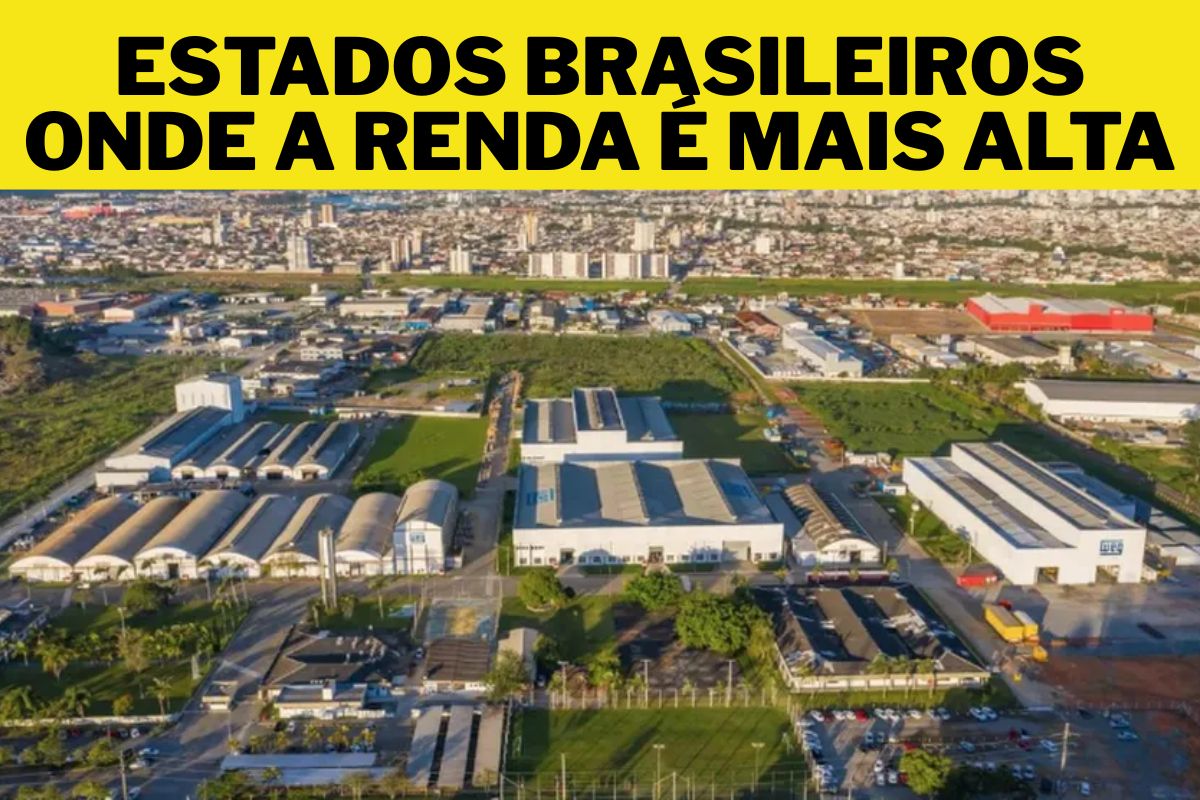

The Brazilian States With The Highest Average Income Concentrate Technological Hubs, High-Tech Industries, And Centers Of Excellence, Forming The Map Of High Income And National Innovation
The Brazilian states with the highest salaries not only lead the income rankings but also reveal where the most structured, innovative, and future-ready economies are located. In these regions, education, technology, and public investment come together to create high-income jobs and attract skilled professionals from across the country.
The latest data from IBGE and CNI indicate that the Federal District, São Paulo, Paraná, Rio de Janeiro, Santa Catarina, Rio Grande do Sul, Mato Grosso, Mato Grosso do Sul, Espírito Santo, and Goiás form the group of the most competitive state economies in Brazil, supported by specialized human capital and strong innovation ecosystems.
Federal District: Capital Of Income And Qualification
The Federal District maintains the highest average income in the country, exceeding R$ 5,000 per month, driven by the concentration of public servants and highly qualified professionals.
-
Work at Vale! The company is recruiting individuals with high school, technical, and higher education in areas such as maintenance, operations, and technology, with 400 immediate openings in 6 states, salaries of up to R$ 10,000, and 100% online applications.

-
Australia accelerates the search for foreign workers in 2026 with an official list of in-demand professions that includes drivers, programmers, and nurses, salaries starting from AUD 76,515 per year, and visas that can lead to permanent residency.

-
The Macaé City Hall starts the week with job openings that promise to boost hiring and open doors for qualified professionals and newcomers to the market, with a focus on offshore positions.

-
Future profession with immediate earnings: Specialist reveals how a solar energy technician earns R$ 8,000 per month by taking advantage of the explosion in demand across the entire country.


More than one-third of the adult population has completed higher education, which naturally raises the average salary in the region.
In addition to the strong presence of the public sector, Brasília invests in technological diversification.
The BioTIC Technological Park already hosts biotechnology, IT, and digital services companies, marking a gradual transition to a more innovative economy that is less dependent on public administration.
São Paulo: Epicenter Of The Economy And Innovation
São Paulo is the heart of the national economy, with an average income of R$ 3,900 and one of the most qualified workforces in the country.
The state is home to the largest universities, research centers, and technological hubs, concentrating 40% of Brazilian startups.
The São Paulo ecosystem is diverse and integrated: fintechs in the capital, aerospace in São José dos Campos, deep techs in Campinas.
This diversity explains the scale and stability of high salaries, in addition to attracting talent from other regions seeking opportunities in technology, finance, and advanced industry.
Paraná: Distributed Innovation And Competitive Interior
With an average income above R$ 3,700, Paraná stands out for its decentralized model. Cities like Pato Branco and Francisco Beltrão host software and agritech technological hubs that compete with larger capitals.
The state also leads in revenue in technology outside the Rio-São Paulo axis.
This internalized network of innovation is supported by strong regional universities and ongoing technical qualification programs.
The result is a balanced economy and a workforce that adapts to the demands of Industry 4.0 and precision agribusiness.
Rio de Janeiro: Scientific Talent And Technological Reindustrialization
The Rio de Janeiro is repositioning itself as a powerhouse of technology, energy, and the creative economy, with an average income of R$ 3,733.
The density of researchers and postgraduates is the second highest in the country, and the capital houses the Porto Maravalley, a project that connects startups, universities, and innovation companies.
Based on science and entrepreneurship, the state seeks to regain economic prominence, reducing dependence on oil and strengthening productive chains in health, biotechnology, and clean energy.
Santa Catarina: The Brazilian Software Valley
Santa Catarina has transformed into the “Brazilian Silicon Valley.”
With an average income of R$ 3,698, the state leads in startups per capita and exports technology developed in hubs like Florianópolis, Blumenau, and Joinville.
The strength of Santa Catarina lies in the integration between universities and companies.
The decentralized model creates high-income jobs in medium-sized cities, making the state a reference in applied innovation, industrial software, and educational technology.
Rio Grande do Sul: Tradition, Education, And Digital Modernization
With an average income of R$ 3,633, Rio Grande do Sul combines industrial tradition and innovation.
The state has one of the highest concentrations of researchers and startups in the country and invests in projects like Scala AI City, which is expected to house the first data center city in Latin America.
The productive diversity, metallurgy, automotive, IT, and biotechnology ensure stability, while the high percentage of postgraduates keeps the state among the top talent generators in technology in Brazil.
Mato Grosso: From Agribusiness To Precision Technology
The Mato Grosso ranks among the ten best-paid states, with an average of R$ 3,510, driven by agribusiness and the expansion of agritech, AI, and rural automation startups.
Projects like the Várzea Grande Technological Park demonstrate the transition from a purely agricultural economy to a digital economy applied to the field.
The reinvestment of agribusiness income in science and innovation creates new high-qualification opportunities, especially for engineers and data analysts applied to production.
Mato Grosso do Sul: Innovation Led By Public Investment
The Mato Grosso do Sul, with an average income of R$ 3,390, is among the states that have grown the most in innovation capacity.
The MS Qualifica program and the nine technology ecosystems implemented in cities like Campo Grande and Dourados reflect a deliberate policy of economic diversification.
The state is connecting agribusiness, research, and applied technology, consolidating a medium-term development model that supports formal jobs and competitive salaries.
Espírito Santo: Efficiency, Qualification, And Long-Term Management
The Espírito Santo combines efficient governance with targeted investment in science and technology.
The average income of R$ 3,231 reflects an economy that values qualification and planning.
The state leads the country in the percentage of budget dedicated to innovation and finances startups with resources from its sovereign fund.
With integrated training and innovation policies like the UniversidadeES System, Espírito Santo builds a competitive and long-term ecosystem, providing high-income jobs in services, logistics, and technology.
Goiás: The New Frontier Of The Midwest
Closing the top 10, Goiás maintains an average income of R$ 3,196 and is rapidly advancing in technical education and innovation.
The state combines the vigor of agribusiness with the expansion of technological hubs in Goiânia and Anápolis, focused on agrotechnology and the pharmaceutical industry.
The result is a more diversified economic environment, capable of retaining talent and generating opportunities in high-value sectors.
What Unites The High-Income States And What The Rest Of The Country Can Learn
The Brazilian states with the highest salaries share two central pillars: quality education and active innovation ecosystems.
Where there are strong universities, growing startups, and consistent public investment, there is also higher income and better quality jobs.
These regions demonstrate that the geography of income is also the geography of technology.
Investing in science, technical training, and connectivity is the most solid path to reduce inequalities and expand opportunities.
Which of these states do you believe is making the most progress in creating high-income jobs and real innovation?










Experimenta vir aqui pro sudeste do Pará,pra ver o salário do povo por aqui.Aqui somente alguns posentados é que ganham o mínimo. Tu tá por fora garoto.
O resto ganha menos de um salário, né?
Aqui na minha cidade Canaã dos carajás, no estado do Pará, ninguém quer ganhar 3 ou 4 mil não meu filho, tú tá e por fora 🤪
Canaã dos Carajás???? Este local é um estado brasileiro???? Nunca ouvi falar!!!
Se não me falha a memória a reportagem fala de estados, né?