





 Portuguese
  English
  Spanish
  3 min of reading
  0 comments


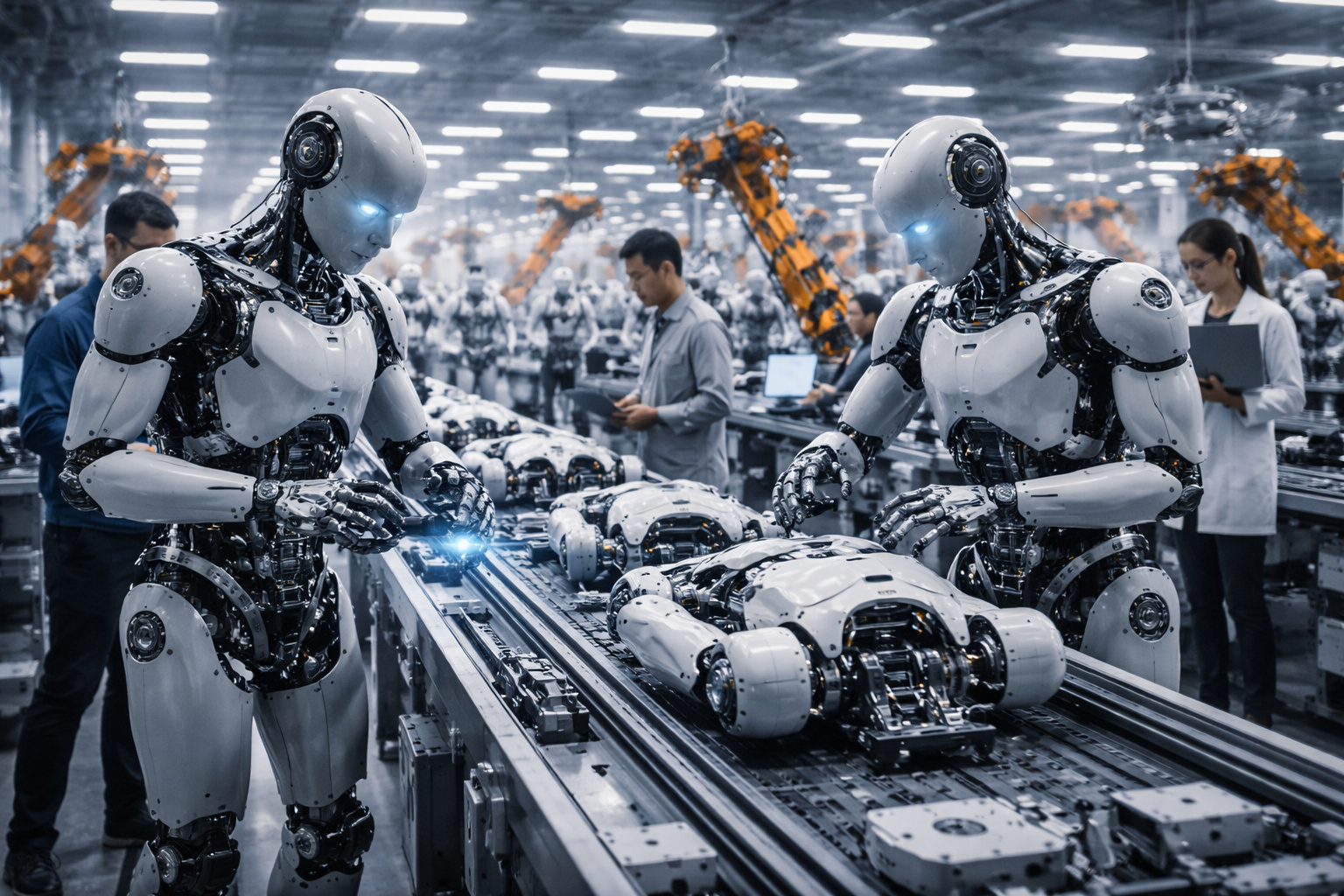
New unit in Foshan accelerates humanoid production, connects innovation to the shop floor, and expands China’s global presence in the technology sector
Initially, a new stage of industrial automation was achieved by China on March 30, 2026.
Thus, the country inaugurated its first factory where robots directly participate in the production of other robots, as reported by Chinese industrial authorities.
Furthermore, the unit was installed in Foshan, in Guangdong province. Thus, the annual capacity reaches 10,000 humanoid robots, with continuous and automated production.
At the same time, the production line allows for the manufacturing of one unit every 30 minutes.
Consequently, the industrial scale of humanoid robotics is accelerated.
-
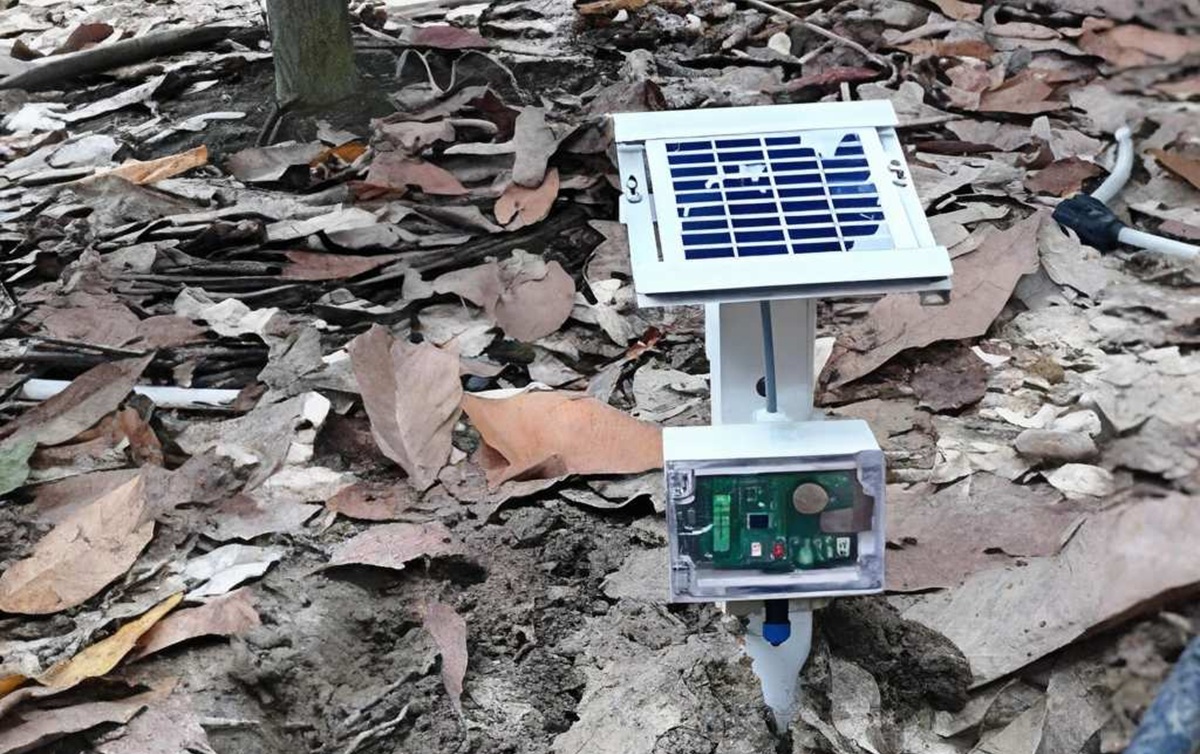
Researchers in Malaysia buried sensors at 15 and 30 cm and can now predict soil moisture with 95.49% accuracy, helping the field to irrigate only at the right time and reduce water waste.
-
Technology developed to protect military communications in the 1940s scrambled voices and today gives rise to the robotic sound that dominates current music.

-
If you look at the sky this Wednesday, you will see the Pink Moon shining at its peak at 10:11 PM, but before you get disappointed, know that the name has nothing to do with the color and instead refers to flowers that bloom at this time in the United States.

-
Discovery at USP reveals how Brazilian arnica can revolutionize the production of silver nanoparticles with less environmental impact.



Total automation redefines robot production
First, the system brings together 24 high-precision digital assembly stages.
Additionally, it incorporates 77 testing and quality control processes, ensuring safety and stability.
At the same time, smart sensors and computer vision systems coordinate all operations.
Thus, errors are reduced, and standardization is increased.
Moreover, the factory serves strategic sectors, such as:
- Industrial manufacturing
- Automated logistics
- Intelligent services
Consequently, technologies previously restricted to laboratories are now applied directly in the production environment.
On the other hand, the same line allows for the simultaneous assembly of different models.
Thus, costs are reduced, and the response time to the market is shortened.
Strategic plan boosts robotics and artificial intelligence
Subsequently, the inauguration occurred after the approval of the 15th Five-Year Plan (2026–2030).
According to the Chinese government, the plan was formalized in March 2026 during the Two Sessions.
According to President Xi Jinping, the plan ensures stable advancement of the country’s modernization.
Additionally, the focus is on economic transformation based on technological innovation.
Consequently, strategic areas are prioritized, such as:
- Artificial intelligence
- Advanced robotics
- High-precision manufacturing
At the same time, the plan connects to the modernization goal by 2035.
Thus, robotics takes a central role in productive transformation.
Industrial scale expands China’s global presence
Moreover, in 2025, about 13,300 humanoid robots were shipped globally.
In this scenario, Chinese companies expanded their international participation.
Among them, the following stand out:
- AgiBot
- Unitree Robotics
- UBTECH
Thus, the competitive differential lies in industrial-scale production.
Consequently, costs are reduced, and development is accelerated.
Additionally, internally, automation addresses structural challenges, such as:
- Aging population
- Reduction of the workforce
Consequently, productivity is maintained, and economic growth is sustained.
Training center expands practical application of humanoids
Subsequently, on March 28, 2026, China expanded its largest humanoid robot training center.
The unit is located in Shijingshan, Beijing.
During the Chinese Science Fiction Convention, the third phase was completed.
Thus, the center now has over 10,000 square meters.
In this environment, robots are trained in real scenarios, such as:
- Industry
- Agriculture
- Domestic services
- Health and hospitality
Moreover, human instructors guide repetitive tasks.
As a result, millions of data points are generated annually.
Consequently, learning systems are improved, and practical skills evolve.
At the same time, an alliance with over 40 institutions supports the project.
Additionally, regions like Henan and Qingdao are also developing similar centers.
Humanoid robots advance in the automotive industry
Finally, in March 2026, a humanoid robot began operating on a battery line at SAIC Motor.
Thus, one of the first industrial applications was recorded.
The model was developed by Zhiyuan Robotics.
Additionally, the estimated cost is around R$ 320,000 (400,000 yuan).
Among its capabilities, the following stand out:
- Complex movements
- High-precision cameras
- Accuracy of 0.1 millimeter
According to Zhang Yunfei, director of SAIC-GM, the robot intelligently adapts to production needs.
Thus, flexibility and efficiency are enhanced.
Moreover, with new components and data-driven training, the system can be quickly adapted.
Consequently, automation advances to different industrial sectors.
Finally, by the end of 2025, China had:
- More than 140 manufacturers
- 330 models of humanoid robots
Thus, the industry evolved from laboratory testing to real large-scale applications, consolidating its global technological strategy.







Seja o primeiro a reagir!