






 Portuguese
  Spanish


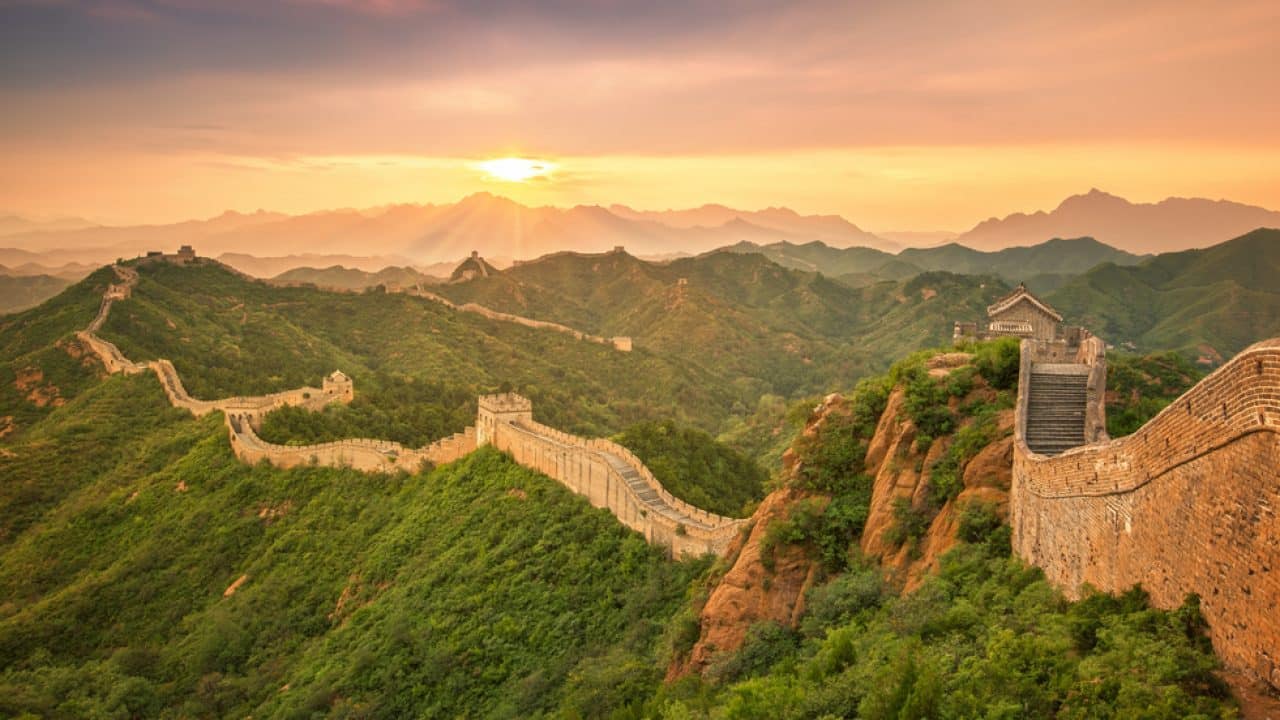


It stretches for thousands of kilometers, the Great Wall of China. An inestimable symbolic and cultural value, and today a World Heritage Site.
It stretches for thousands of kilometers, winding through mountains and valleys. The Great Wall of China. It is not just an imposing structure, but a historical enigma that intrigues generations. After all, why was the Great Wall of China built? The answer goes far beyond a simple physical barrier.
This colossal monument represents centuries of history, an inestimable symbolic and cultural value, and today it is a recognized World Heritage Site, attracting millions of visitors annually.
The true reason behind the construction of the Great Wall of China
The main motivation for the construction of the Great Wall of China was defense. Since the 7th century BC, different states and Chinese dynasties faced constant threats and incursions from nomadic peoples and northern warriors, such as the Xiongnu.
-
Workers renovating a playground in northern England uncover 176 World War II bombs buried underground; training artifacts still contained explosives.

-
Brazilian Architect Transforms Waste into Sustainable Homes with Solar Power and Rainwater Systems for 40 Years

-
Security Guard Becomes Doctor at Louisiana Hospital Where He Once Worked, Studied Chemistry Between Shifts

-
Woman Rescued from Luxury Complex in Brazil Worked Without Pay for 55 Years, May Be Entitled to Over $300,000




To protect their agricultural lands, cities, and emerging empires, it was imperative to create a robust line of defense. The concept of fortification developed over the centuries, starting with earthen walls and gradually expanding to the stone and brick structure we know today.
The large-scale construction of the Wall, as we know it, gained significant momentum during the Qin Dynasty (221-206 BC), under the command of Emperor Qin Shi Huang.
He unified the various feudal states and connected their pre-existing walls, initiating a work of epic proportions.
However, the project continued and was improved by subsequent dynasties, such as the Han and, more significantly, the Ming (1368-1644 AD), which built much of the most famous and well-preserved sections of the Wall.
For the Ming Dynasty, the main threat came from the Mongols, and the Wall was seen as the key to the security and stability of the empire.
A monument of resilience and national identity
More than just a simple military barrier, the Great Wall of China has acquired a profound symbolic and cultural value for the Chinese people. It has become an emblem of resistance, perseverance, and unity.
It represents a nation’s ability to protect itself and maintain its cultural identity in the face of external challenges. It is a testament to the ingenuity and organizational capacity of ancient civilizations.
Today, recognized by UNESCO as a World Heritage Site since 1987, the Wall attracts tourists from all over the globe, curious to witness its grandeur and understand its history.
Each brick and each watchtower tells the saga of emperors, soldiers, and peasants who dedicated their lives to its construction and defense.
It is not just an ancient structure, but a living reminder of a past of struggles and triumphs, and a perennial icon of China’s rich heritage.


