





 Portuguese
  English
  Spanish
  5 min of reading
  0 comments



A Diagnosis Of Industrial Hubs That Concentrate Production, Qualification, And Investment, Showing How Industrial Hubs Support A Decisive Portion Of State GDP, Expand Exports, And Create Jobs With Above-Average Wages
Brazil has industrial hubs capable of altering the economic trajectory of entire states. By concentrating factories, suppliers, logistics, and skilled labor, these ecosystems elevate productivity, attract investments, and maintain active export chains even in cycles of uncertainty.
In this article, we analyze ten industrial hubs with Disproportionate Impact on their regional economies, highlighting production scale, external insertion, and job quality. The scope combines sectoral specialization with sufficient diversification to sustain activity in the long term.
Manaus, AM: Electronics And Two-Wheelers At Scale That Shape The State’s Economy
The Industrial Hub of Manaus is a unique case of industrial activity concentration and high value-added chain formation.
-
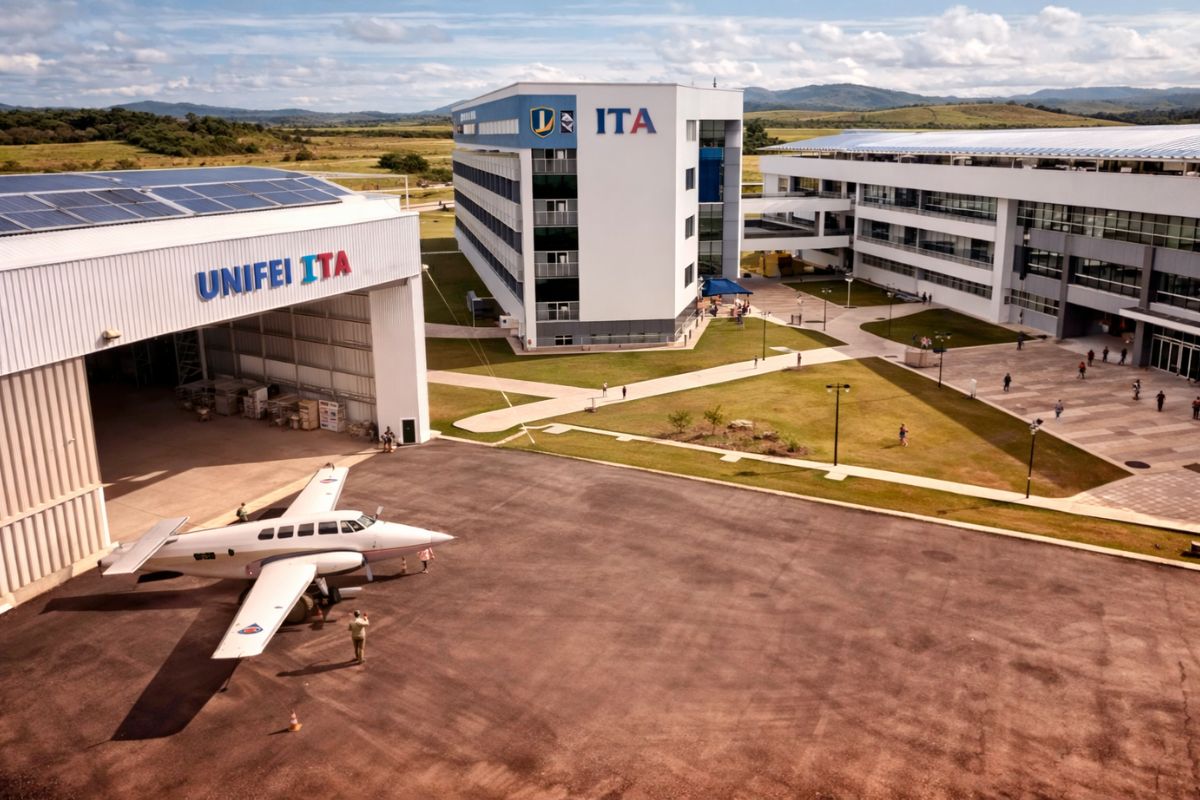
The institute that trained the greatest aerospace engineers in Brazil has just opened its first campus outside São Paulo after 75 years: ITA Ceará will have R$ 445 million, new courses in energy and systems, and classes are expected to start in 2027.
-
Luciano Hang, owner of Havan, goes to Juiz de Fora after the tragedy in February, brings R$ 1 million, hands out R$ 2,000 cards, and donates up to R$ 15,000 to victims in the region.

-
The Brazilian passport allows legal residence in dozens of countries without the need for a prior visa, and most Brazilians are unaware that they can apply for residency directly upon arriving in nations in South America, Africa, and even Europe.

-
Petrobras sends a message to Brazilian truck drivers after fuel collapse and reveals plan to have 100% domestic diesel.


Electronics, IT Goods, and Two-Wheelers make up the productive core, with large plants and technology-intensive assembly lines.
This arrangement generates direct and indirect high-income jobs for the region and sustains the dynamism of logistical and technical services.
The hub’s participation in state GDP is dominant, and the export profile reflects the sophistication of products, with increasing performance in South American markets.
Camaçari, BA: A Robust Petrochemical Industry In Transition To The New Industry
Camaçari consolidates one of the most important integrated industrial complexes in the country, historically anchored in chemistry and petrochemicals and now undergoing accelerated diversification.
Pulp, Tires, Copper Metallurgy, And Components For Wind Energy strengthen the productive matrix.
The arrival of new automotive and electric plants symbolizes the technological turnaround of the hub.
High-qualification jobs and above-average salaries reinforce the local multiplier effect, while diversified exports stabilize revenues across distinct global cycles.
ABC Paulista, SP: Automotive Cradle In Competitive Adaptation
ABC combines industrial legacy with productive restructuring.
The presence of automakers and an extensive auto parts network sustain the scale, while food, electrical materials, and chemicals enhance the hub’s resilience.
The export profile is intensive in value added, featuring tractors, chassis, cargo vehicles, and automobiles.
The density of suppliers and specialized services favors productivity gains and qualified jobs in engineering, maintenance, and processes.
Joinville, SC: Diversification As A Strategy For Stability
Joinville operates with plastics, textiles, metallurgy, chemicals, and pharmaceuticals, avoiding dependence on a single sector.
The multi-port and multi-airport logistics sustain delivery times and reduce shipping costs.
Industrial diversity ensures a broad export portfolio and a labor market with high technical qualification.
Above-average salaries and integration with technical and higher education structure a virtuous cycle of applied innovation.
Betim And Contagem, MG: Automotive And Metallurgical Hub With Logistical Orientation
The Betim-Contagem axis concentrates automakers, suppliers, and metallurgy, in addition to refining and distribution assets that enhance competitiveness.
Logistics centers and distribution bases strengthen the strategic position in the Southeast.
The external profile includes vehicles and electrical equipment, and the established industrial scale ensures stable and higher-income jobs.
Investments in capacity expansion indicate the maintenance of regional prominence.
São José dos Campos, SP: Aerospace And Defense With High Added Value
The city hosts a leading aerospace company, research institutions, and a highly specialized supplier chain.
Aircraft And Systems lead exports, with strong insertion in the United States and technology markets.
The hub demands STEM professionals at all levels, resulting in high income and continuous qualification.
Synergies Between Industry, Academia, And Government support the trajectory of innovation and productivity.
Caxias do Sul, RS: Metallurgy And Road Implements Focused On The External Market
Caxias do Sul has consolidated a dense metalworking ecosystem, with leading companies in implements, auto parts, and machinery.
Argentina And Other Mercosur Countries are among the main destinations for external sales.
The regional supplier chain reduces cycle times and strengthens price competitiveness.
In employment, technical training is a differentiator, with salary progression linked to proficiency in processes, welding, machining, and CNC.
Goiana And Ipojuca, PE: Automotive And Petrochemical Anchored In Port Infrastructure
Goiana has transformed the local economy with a platform for automotive and an integrated supplier park.
Ipojuca, anchored in the port and petrochemical complex, operates refining, chemicals, and logistics with a direct connection to export.
The axis combining automotive assembly and oil and derivatives chain diversifies state revenue.
Qualified jobs and above-average regional wages reposition the Northern Forest and Southern Coast on the industrial map.
Anápolis, GO: Pharma-Chemical With A Logistics Hub In The Midwest
Anápolis stands out in pharma-chemicals, with leading companies and a mature regulatory and production chain.
Automotive And Food complement the industrial base, leveraging dry port and railway corridor.
The combination of R&D, quality control, and mass production sustains diversified exports.
The hub demands technical and higher-level professionals, boosting salary and qualification in the microregion.
Curitiba, PR: Diversified Manufacturing Integrated Into An Innovation Ecosystem
Curitiba and its metropolitan region form a large-scale automotive platform, with food, machinery, and equipment gaining weight.
Innovation Environment and technology ecosystem reinforce productivity.
The state maintains a strong industrial trade balance, with relevant exports and formal employment above other activities.
Regional Leadership In Industrial Volume confirms the hub’s centrality to the South.
What Explains The Strength Of These Hubs And Why It Matters
In all cases, there are three common denominators. First, scale and specialization that create productivity and attract suppliers.
Second, logistics and external insertion, which mitigate domestic cycles. Third, human capital and higher income salaries, which sustain local consumption and services.
At the same time, intra-hub diversification reduces the risks of sector shocks.
Energy Transition, Industry 4.0, and Reconfiguration of Global Chains are already guiding investments, with new plants, process modernization, and professional qualification underway.
How To Transform Potential Into Permanent Gains
The consolidation of these hubs requires reliable infrastructure, stable regulatory environment, and continuous technical training.
Integration Between Industry, Technical Schools, And Universities accelerates technological diffusion and improves employability.
Management of Logistics And Climate Risks becomes a structural component of competitiveness.
For workers, technical and digital qualifications increase mobility and income.
For companies, local partnerships and applied innovation generate exportable products and sustainable margins.
For governments, horizontal productivity policies are more effective than diffuse incentives.
The ten cases show that strong industrial hubs elevate GDP, expand exports, and create high-income jobs, anchoring regional growth.
When Scale, Logistics, And Qualification Go Hand In Hand, the result is higher productivity and external competitiveness.
For you, which of these industrial hubs has the most accurate strategy for the next five years and why? Share your view.










Seja o primeiro a reagir!