





 Portuguese
  English
  Spanish
  4 min of reading
  0 comments


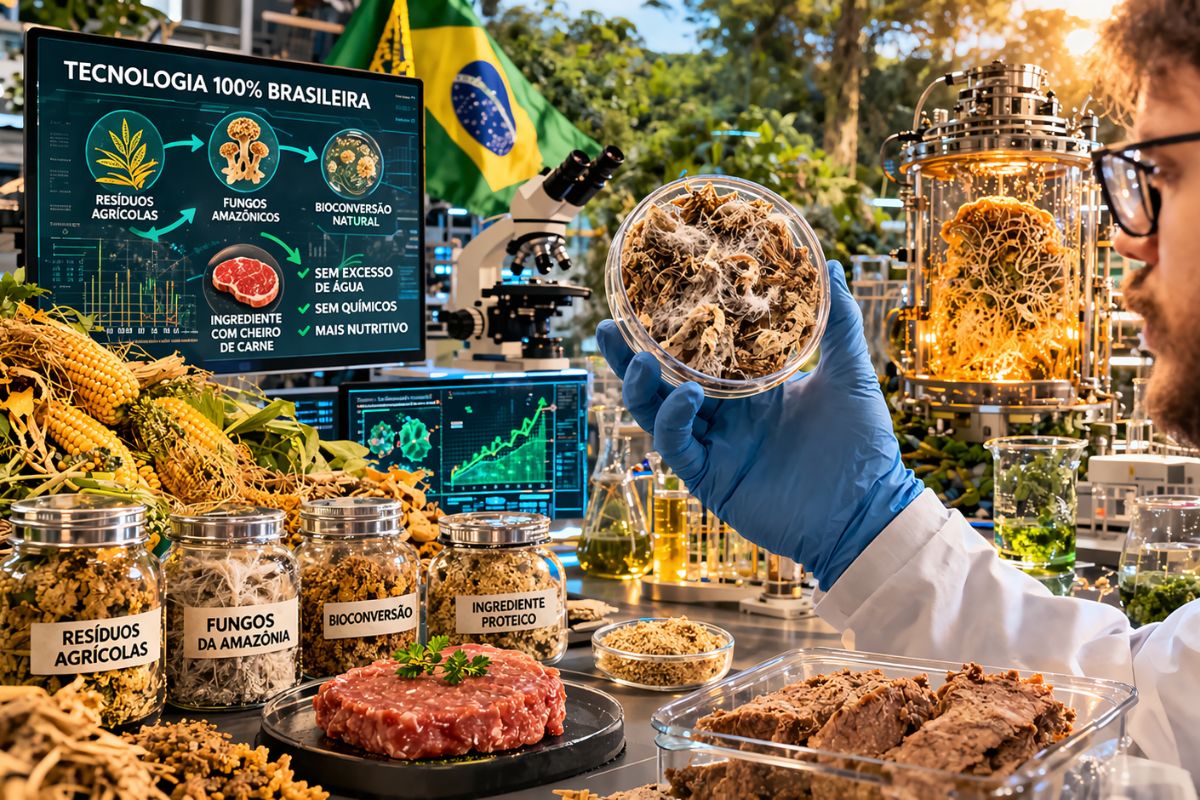
Researchers from Unicamp and Inpa discovered that Amazon fungi fermenting potato peels, oats, and açaí waste produce first a passion fruit aroma and then, when heated, release the smell of cooked meat in a sustainable process that eliminates solvents and could revolutionize the food industry.
Researchers from Unicamp and the National Institute for Amazon Research created a technology that uses fungi from the Amazon rainforest to transform agricultural waste, such as potato peels, oats, and even açaí leftovers, into an ingredient with the aroma of cooked meat. According to Revista Galileu, the process is entirely sustainable: it does not require large amounts of water, eliminates chemical solvents, and even improves the nutritional profile of the final product. The discovery arose from a challenge posed by the Good Food Institute Brazil and could reach the food industry in the future.
The most curious thing is that the result was not what the scientists were looking for. They aimed to create plant-based products that mimicked characteristics of meat, but when testing different combinations of Amazon fungi with organic waste, they first found an intense passion fruit aroma. It was when they decided to apply heat to the fermented material that the smell changed completely, and the surprise appeared.
How Amazon fungi transformed passion fruit aroma into meat smell

The team led by Juliano Lemos Bicas from Unicamp tested different strains of fungi collected in the Amazon rainforest in combination with various organic substrates. In some of these combinations, fermentation produced a strong passion fruit aroma—something unexpected, but which caught the researchers’ attention.
-
Psychology reveals that adults who avoid conflicts at all costs are not balanced individuals, but rather children who learned in the worst way that expressing emotions brought punishment and now live paralyzed by the fear of expressing themselves.

-
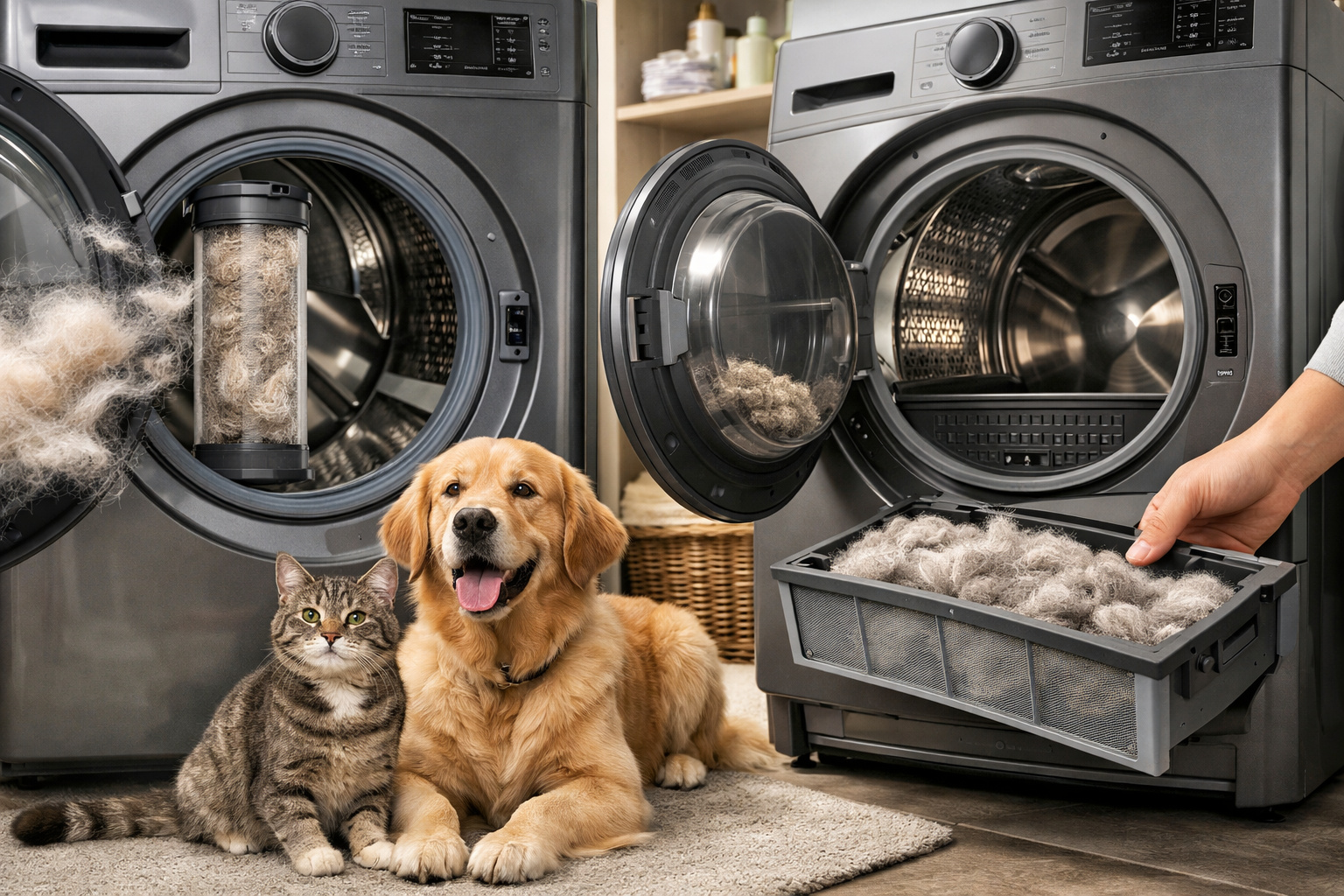
Goodbye pet hair on clothes: a washer with an internal filter promises to remove up to 5 times more hair than regular machines and uses an XL trap dryer system to capture what remains.
-
The most overlooked waste in the electricity bill doesn’t come from the refrigerator or the air conditioner; it escapes through almost invisible cracks in doors and windows, operating all day long and can steal up to 20% of the energy used for climate control, while a low-cost seal takes just a few hours to eliminate this loss.

-
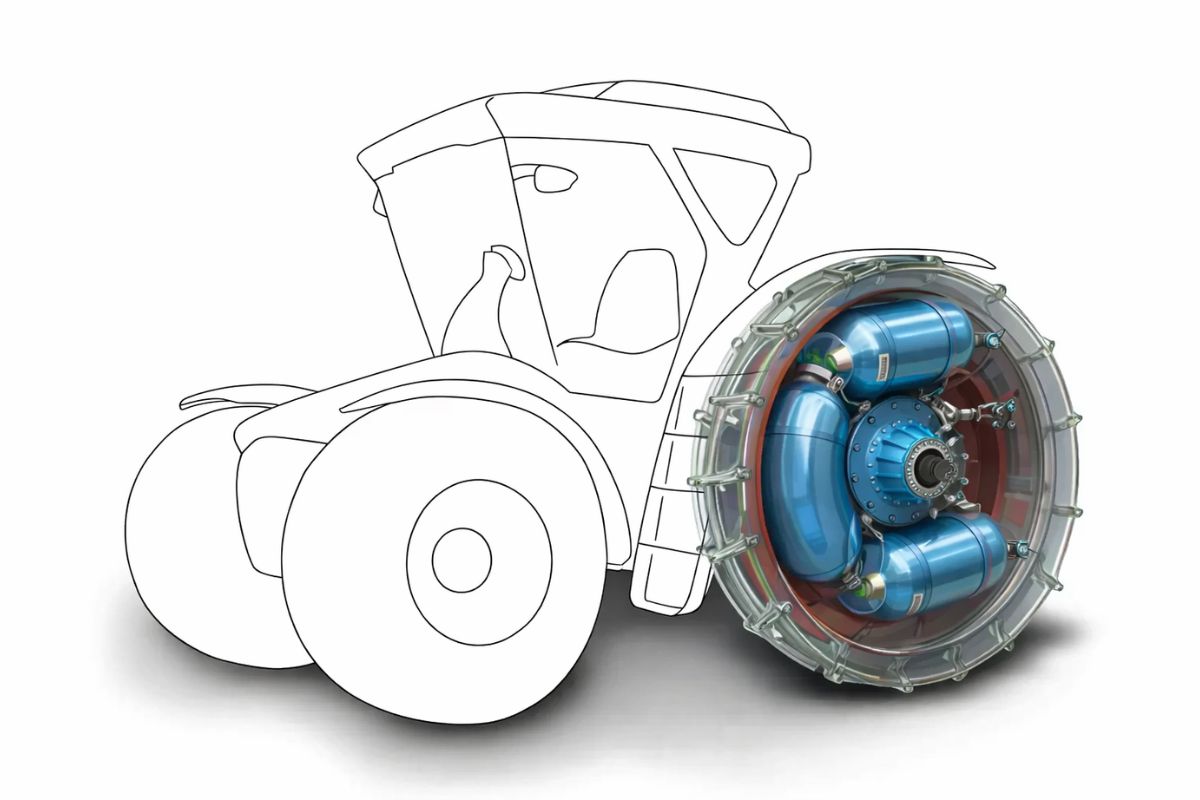
German engineers had an idea that no one had tried before: to hide the hydrogen tank inside the tractor’s wheels so that the machine can operate all day in the field without needing diesel.

The next step was decisive: by applying temperature to the fermented product, the fungi transformed the fruity aroma into something that directly resembles the broth of cooked meat.
Bicas explained that the logic behind the thermal test was simple: the smell of meat in nature only arises with cooking.
“To our surprise, the heat transformed the fruity aroma into something that resembles cooked meat. It was a surprising result that left us excited,” the researcher said. The Amazon fungi, combined with waste that would normally go to waste, produced a natural aroma classified by legislation as such, without any synthetic components.
Why fermentation with fungi is different from everything the industry does today
The method developed by Unicamp uses what scientists call solid-state fermentation. In this model, the fungi grow directly on the organic waste, such as potato peels or oats, without the need for large volumes of water or chemical solvents to extract the aroma.
This is radically different from the conventional industrial process, which typically needs to process tons of raw material to obtain a minimal amount of natural aroma, at extremely high purification costs.
The technology with fungi eliminates precisely the most expensive and polluting steps: extraction and purification. The fermented product can be used directly in food formulation, in the form of paste or flour.
Bicas makes a simple comparison: “It’s the idea of Roquefort: you don’t extract the aroma from the cheese to put in the sauce; you put the cheese itself.” This approach places the technology in a privileged position in the clean label market—the trend in the food industry for products with natural ingredients and clean labels.
Amazon fungi also improve the nutritional value of the product
The benefits of fungi go beyond aroma. According to Mário Roberto Maróstica Júnior, also from Unicamp, fermentation enriches the substrate nutritionally in ways that the food industry is just beginning to understand.
There are indications that the flour fermented by fungi has better emulsification and water retention capacity, which would make it a multifunctional ingredient for various types of products.
The biotechnological process with Amazon fungi operates on two nutritional fronts simultaneously. “In fermentation, we have double nutritional gains: first, we reduce antinutrients that prevent the absorption of vitamins and proteins; second, the fungi themselves enrich the matrix by producing their mycelium, generating new amino acids and vitamins,” explained Maróstica Júnior.
Agricultural residues with low protein content become high nutritional value ingredients—something especially relevant for the plant-based meat market, which seeks protein alternatives with a convincing sensory profile.
The industrial potential of fungi and the challenges that still exist
The “flour with meat aroma” produced by fungi has applications that go far beyond simulating plant-based meat. The multifunctionality of the ingredient opens doors for the snack, baking, and even animal feed industries—sectors that generate billions and are increasingly interested in natural ingredients with added nutritional value.
However, solid-state fermentation with fungi still faces scalability challenges. Producing in a laboratory bench is one thing; replicating it on an industrial scale is another.
But researchers remind us that products like sake, miso, and soy sauce—all based on solid fermentation—have been manufactured on a large scale for centuries.
The technology is not new; what is new is the combination of Amazon fungi with Brazilian agricultural waste to produce an ingredient that no one imagined was possible. If the process overcomes the scaling phase, Brazil could have in its hands a food innovation that unites Amazon biodiversity, sustainability, and cutting-edge science.
What do you think: would you eat a product made with Amazon fungi that smells like meat? Is Brazilian science on the right track? Let us know in the comments.








Seja o primeiro a reagir!