





 Portuguese
  English
  Spanish
  3 min of reading
  0 comments


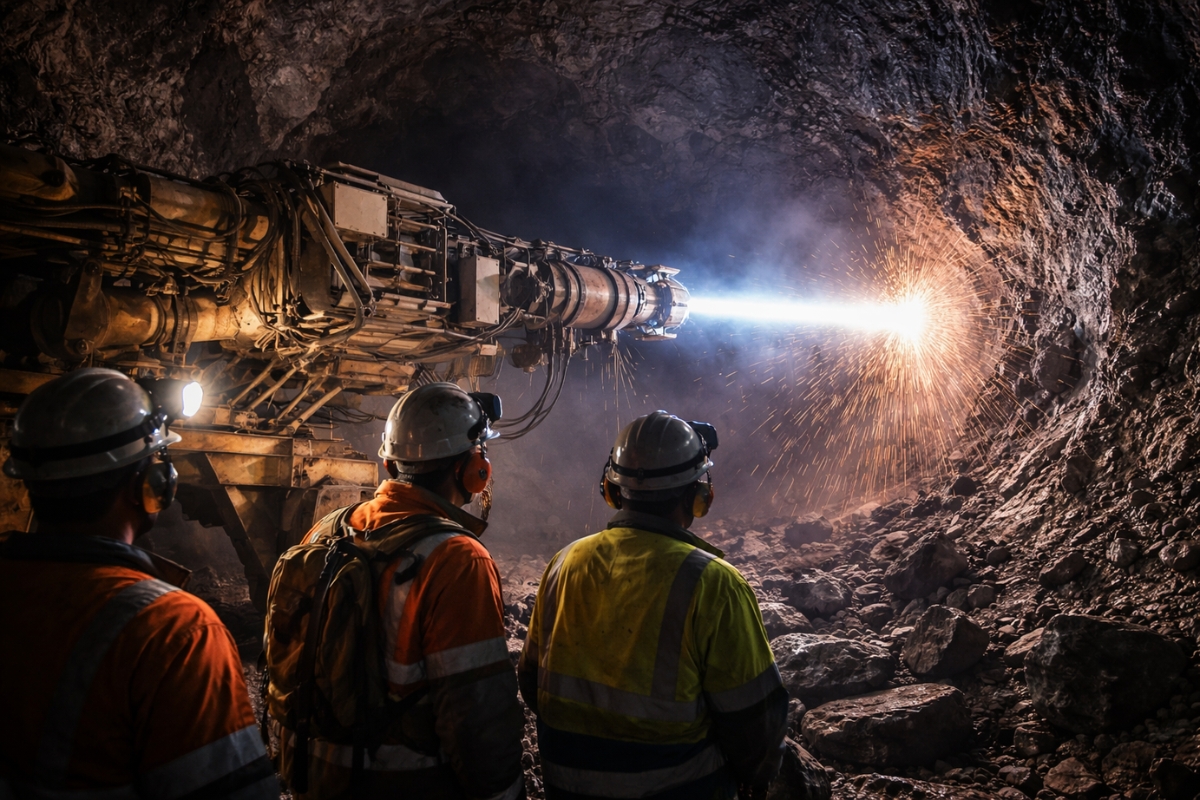
The new generation of high-power lasers is starting to transform heavy tasks by combining steel cutting, deep drilling, surface treatment, and split beams that elevate productivity to another level.
The race for high-power lasers has entered a more ambitious phase. Equipment that already operates above 50 kW and approaches 100 kW is beginning to gain traction in processes that require strength, precision, and speed.
This advancement could change operations in areas such as mining, tunnel construction, railway maintenance, and thick steel cutting. In practice, the promise is to reduce work time, increase yield, and take industrial processing to another level.
Congress in Aachen puts multi-kilowatt lasers at the center of the debate
The topic will be highlighted at AKL’26, an international laser technology meeting scheduled for April 22 to 24 in Aachen. The event will bring together manufacturers and users from various sectors, focusing on the power leap of these systems.
-
Thousands of people in poor countries are paid cents to film household tasks, label images, and operate systems remotely all day long, and this invisible work fuels a $17 billion market that trains the artificial intelligences of Google, Tesla, and Meta.

-
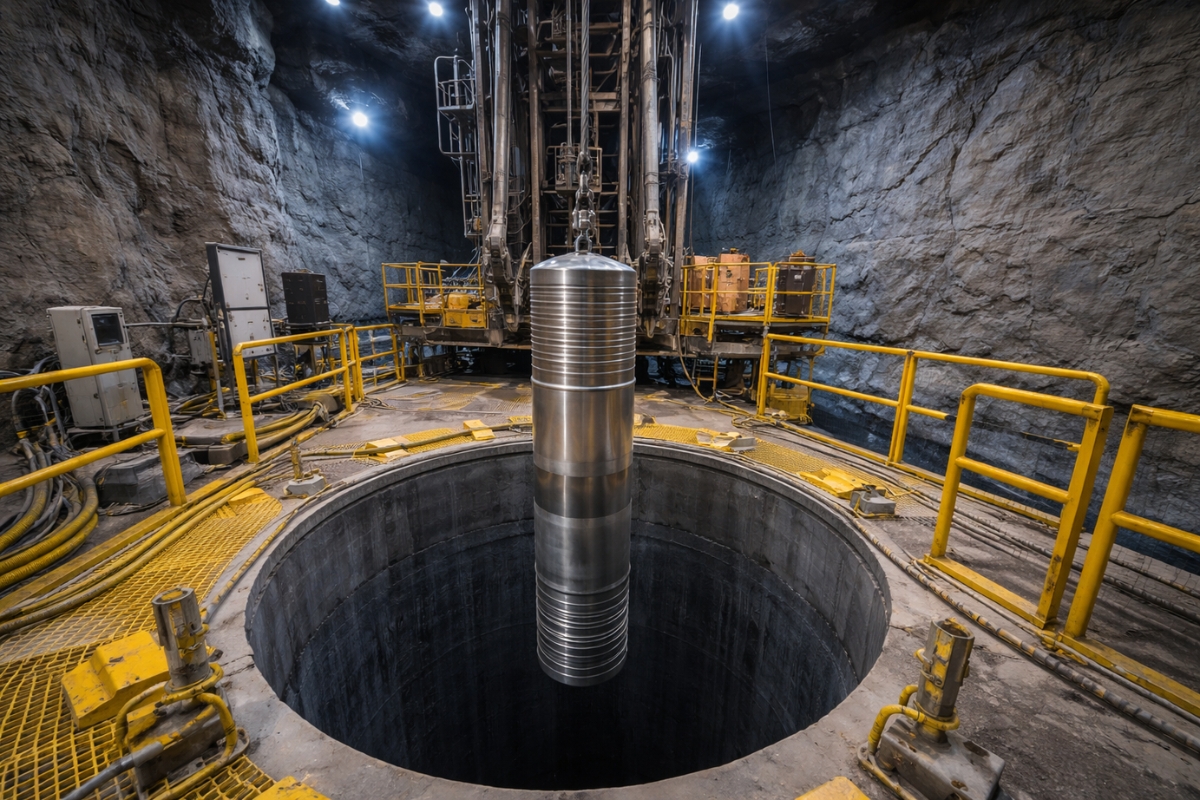
Technology created in the United States uses deep drilling to store high-level nuclear waste.
-
Dozens of Chinese research ships are discreetly mapping the ocean floor in three oceans – and naval analysts see a military pattern.

-
The winter of 2026 in Brazil will not be what you expect: meteorologists warn that the season will be warm and rainy at the same time due to the advance of El Niño, which is already warming the Pacific and changing the climate of the entire country.


The discussion revolves around two fronts. On one side, ultrashort pulse lasers, used for very precise work. On the other, continuous lasers, which are already reaching much higher energy levels for heavy tasks.
Higher power paves the way for tunneling, rock, and thick steel
With more energy available, lasers are now able to operate in environments previously considered too difficult for this type of technology. This includes breaking rock in deep excavations and faster advancement in tunnel openings.
In the shipbuilding industry and in large structures, the expected gain appears in cutting and joining thick and resistant materials. The most immediate result is faster production, with less waste and greater precision.

Split beam multiplies processing productivity
One of the most important changes is the ability to split a single beam of light into dozens. This feature allows for larger areas to be worked on simultaneously, without relying on line-by-line processing.
According to Fraunhofer ILT, the German research institute for laser technology, this combination of power and control opens up the possibility of drilling thousands of points in a single shot and treating entire surfaces in less time. This pushes productivity to a much higher level.
Artificial intelligence enters laser control
Increasing power alone does not solve everything. Researchers are also betting on artificial intelligence, precise beam modeling, and systems capable of adjusting the light shape according to the task.
This more refined control helps create complex three-dimensional patterns and improves energy utilization. It also reduces losses and prevents heat damage to sensitive materials, which is crucial for expanding industrial use.
New hardware speeds up work and improves precision


To support this advancement, the institute developed a galvanometric planar scanner aimed at ultra-fast beam direction. In simple terms, it is a system that directs light with greater speed and much more accuracy.
The structure was designed to operate with a multi-beam configuration and can outperform conventional scanners in performance. This reinforces the use of techniques like optical stamping, which processes entire surfaces at once.
Burst energy reduces heat and increases efficiency
Another front is the operation in burst mode, with sequences of pulses that remove material more efficiently. At the same time, this method helps limit excessive heating, one of the main challenges in the sector.
The fine-tuning of each pulse duration also improves energy delivery. This makes the process more controlled and can scale up in industrial operations that require high pace and precise finishing.
Signals point to a significant change in the use of high-power lasers. What once seemed restricted to technical niches is beginning to advance into areas of infrastructure, energy, and heavy manufacturing.
If this movement gains traction, the industry could cut thick steel, drill rock, and treat large surfaces with more speed and precision. It is a turning point that changes the strategic landscape.








Seja o primeiro a reagir!