





 Portuguese
  English
  Spanish
  3 min of reading
  4 comments


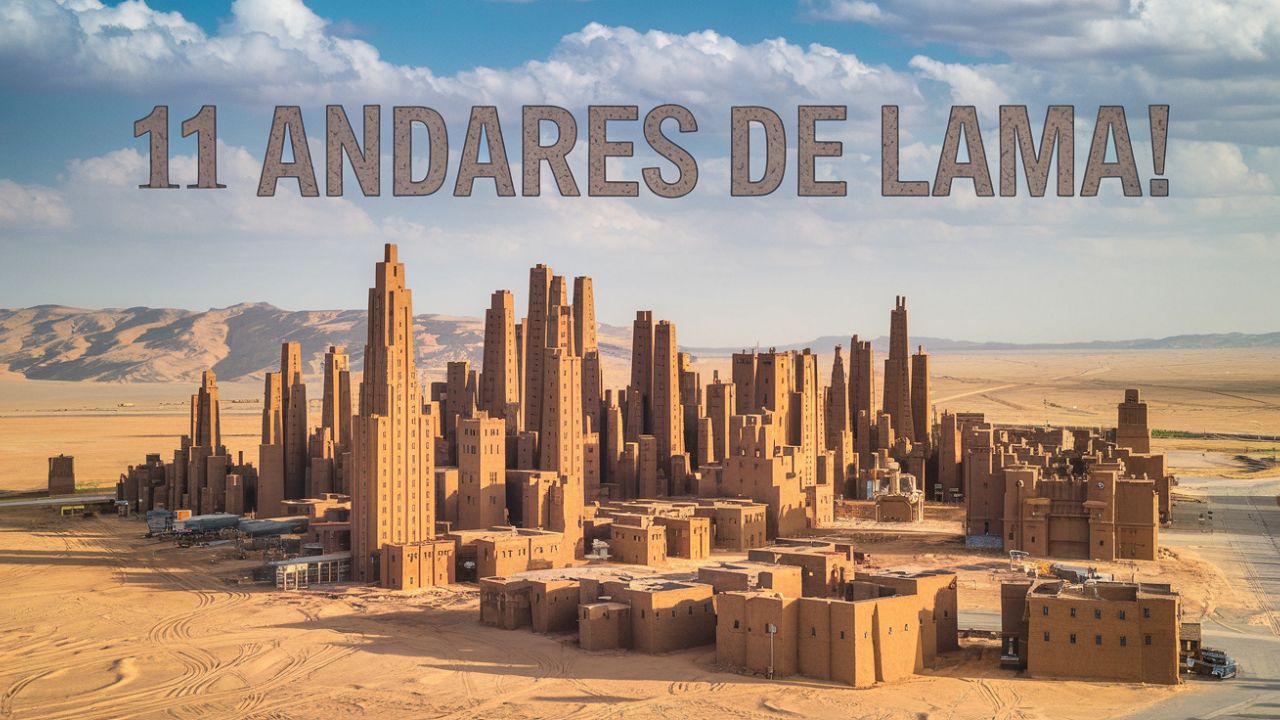


Discover How Adobe Skyscrapers Up to 11 Stories, Built Centuries Ago in the Heart of the Yemen Desert, Face the Threat of Collapse Due to Wars, Floods, and Abandonment.
Have you ever imagined adobe skyscrapers defying time in the middle of a desert? That is exactly what happens in Shibam, Yemen. Known as the “Manhattan of the Desert,” this historic city carries fascinating architecture but now faces serious threats of collapse. These buildings, up to 11 stories tall, made entirely of mud, are a testament to human ingenuity. However, time and adverse conditions put this unique heritage at risk.
The Fascinating Shibam and Its Adobe Skyscrapers
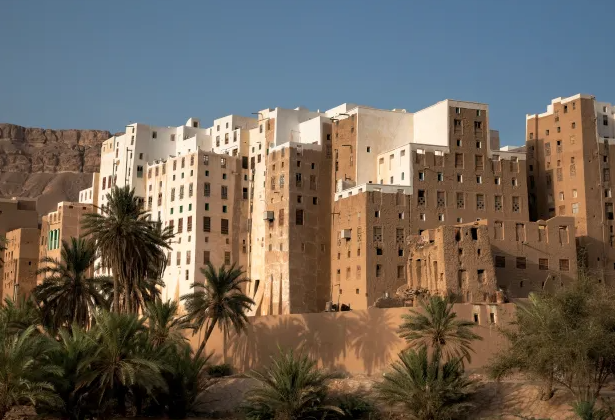
Shibam is not just another ancient city. With origins dating back to the 16th century, it was strategically built to protect its inhabitants from Bedouin attacks. Its adobe towers, seen from afar, resemble modern skyscrapers, hence the nickname “Manhattan of the Desert.” But here, sophistication lies in simplicity: soil, hay, and water were the materials used to create a landscape as impressive as it is fragile.
The logic behind these constructions was practical. In the desert, where space and resources were limited, erecting vertical structures was the best solution. Each building was designed with ground floors for storage and upper levels for socializing and living. It’s amazing how this sustainable solution predated modern concepts of urbanization!
-
New CCR concrete paving technology promises roads up to 3x more durable, less maintenance, and cost reduction in Brazil.
-
Made from recycled plastic, plastic wood is gaining space in the construction industry because it does not rot, resists moisture, and reduces maintenance costs over the years.

-
Florianópolis will receive a million-dollar BRT that will begin construction in 2026 with nearly 400 million in funding from the federal government and the Inter-American Development Bank, and the map already shows the routes for the exclusive bus corridors.

-
Without a blueprint, without an engineer, and using scrap from the dump, a father spends 15 years building an 18-room castle for his daughter, featuring tram tracks, 13 fireplaces, and over 700 m², which may now be demolished.

The Century-Old Adobe Construction Technique
Construction begins with a mixture of soil, hay, and water, transformed into bricks that are “baked” in the sun. This simple yet effective process creates materials that withstand the extreme heat of the desert. Despite their durability, these bricks require constant maintenance to face wear caused by wind and rain, especially in skyscrapers.
With walls up to 1.80 m thick at the base, these towers were designed for stability and thermal insulation. The upper floors have thinner walls to reduce weight. Each building is a masterpiece of functionality, combining safety, comfort, and efficiency.
The Modern Challenges of Shibam
In 2008, a devastating flood caused significant damage in Shibam, exposing the vulnerability of these constructions. As if that weren’t enough, rains and winds continue to erode the facades of the buildings, requiring periodic restorations.
The political instability in Yemen also exacerbates the situation. War and terrorism hinder preservation efforts, leading UNESCO to classify the city as a World Heritage Site in Danger. Without immediate action, the world may lose one of its most incredible architectural relics.
The Importance of Preserving the Manhattan of the Desert
After the damage caused by the flood, restoration programs began to be implemented. However, the continuity of these efforts depends on funding and stability in the region. Preserving Shibam, these adobe skyscrapers, is a global responsibility.
Shibam is more than a city; it is a living lesson on how humanity can thrive with limited resources. Its adobe towers are an example of sustainability and resilience, inspiring architects and environmentalists around the world.
Shibam reminds us that simplicity can be grand. Preserving this city is essential to keeping alive a significant part of human history. Want to help? Support organizations working in heritage preservation and spread the importance of Shibam.






A materia deveria ser escrita por um arquiteto, uma resalva, nao existe construçao com “lama” vc mesmo descreveu solo (argila) feno e agua, isso não é lama.
É porque o povo gosta de sensacionalismo, senão não “vende” e.. devia explicar de forma mais clara uma “contrução” feita de Adobe, porque a imagem da capa claramente foi feita no Adobe Photoshop com inteligência artificial.. ou qualquer outra ..
Esse povo do jornalismo parece viver o espetáculo da exposição, e cada nova matéria procura se superar no sensacionalismo. Talvez tenham se inspirado nos juízes criativos das Cortes Superiores…
Adobe é um bloco de barro.