





 Portuguese
  English
  Spanish
  5 min of reading
  2 comments


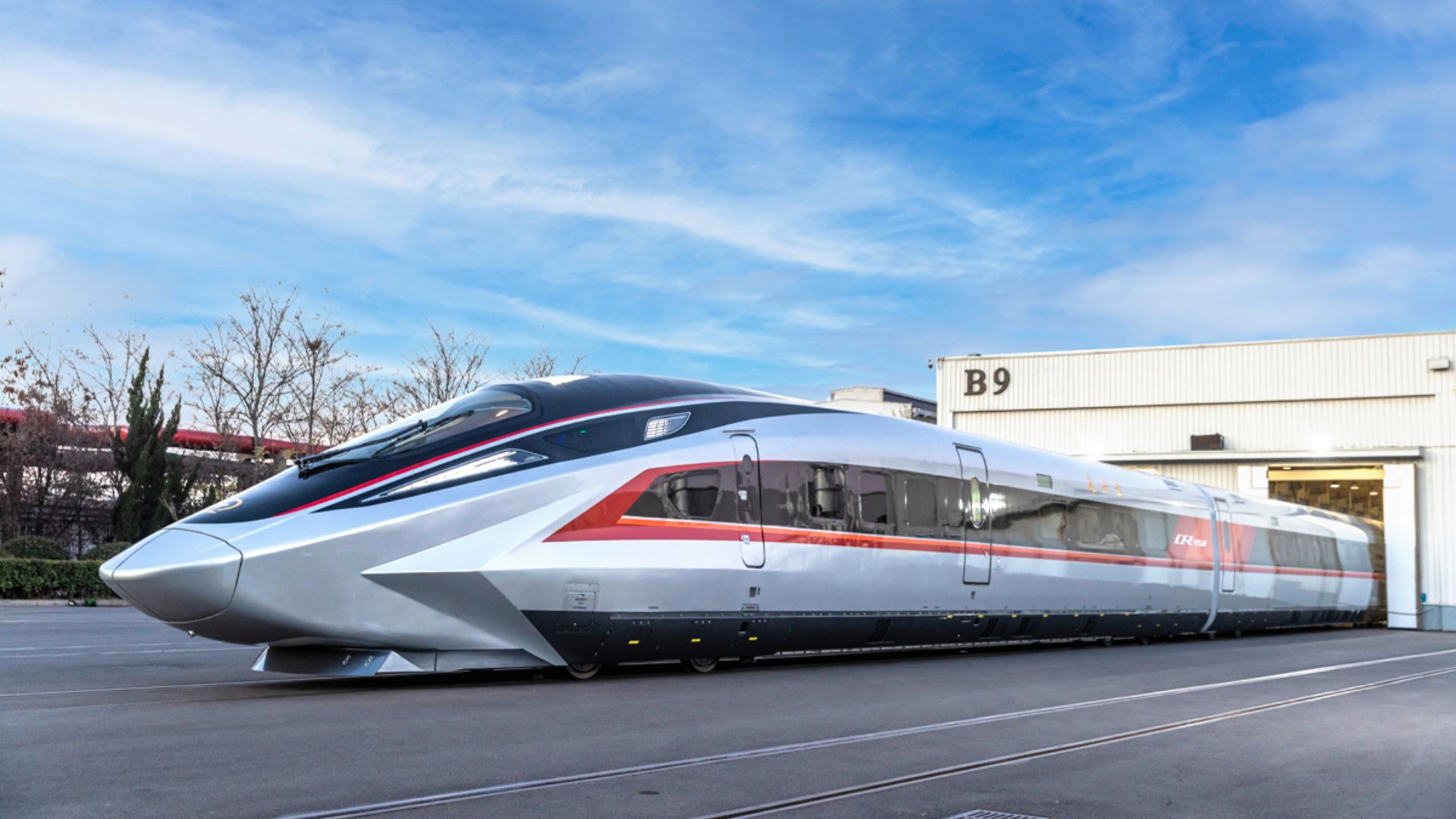
New Chinese Bullet Train Promises to Revolutionize Rail Transport With Record Speed, Aerodynamic Design, and Energy Efficiency, Bringing Major Cities Even Closer Together and Marking a New Phase in High-Speed Engineering.
The CR450, new bullet train developed by China Railway, has completed a decisive phase of pre-service testing by reaching 453 km/h and is on track to transport passengers as of 2026, after fulfilling the requirement of 600,000 kilometers of travel without failures under real conditions.
Designed to operate commercially at 400 km/h, the set is part of the Fuxing family and has been validated on the Wuhan–Yichang stretch, part of the Shanghai–Chongqing–Chengdu high-speed corridor.
Tests in Real Conditions and Performance Milestone
Since June, the CR450 prototypes have been conducting operational tests on the newly constructed Wuhan–Yichang segment, with departures from the Yichang North Station heading towards Wuhan, in the center of Hubei province.
-
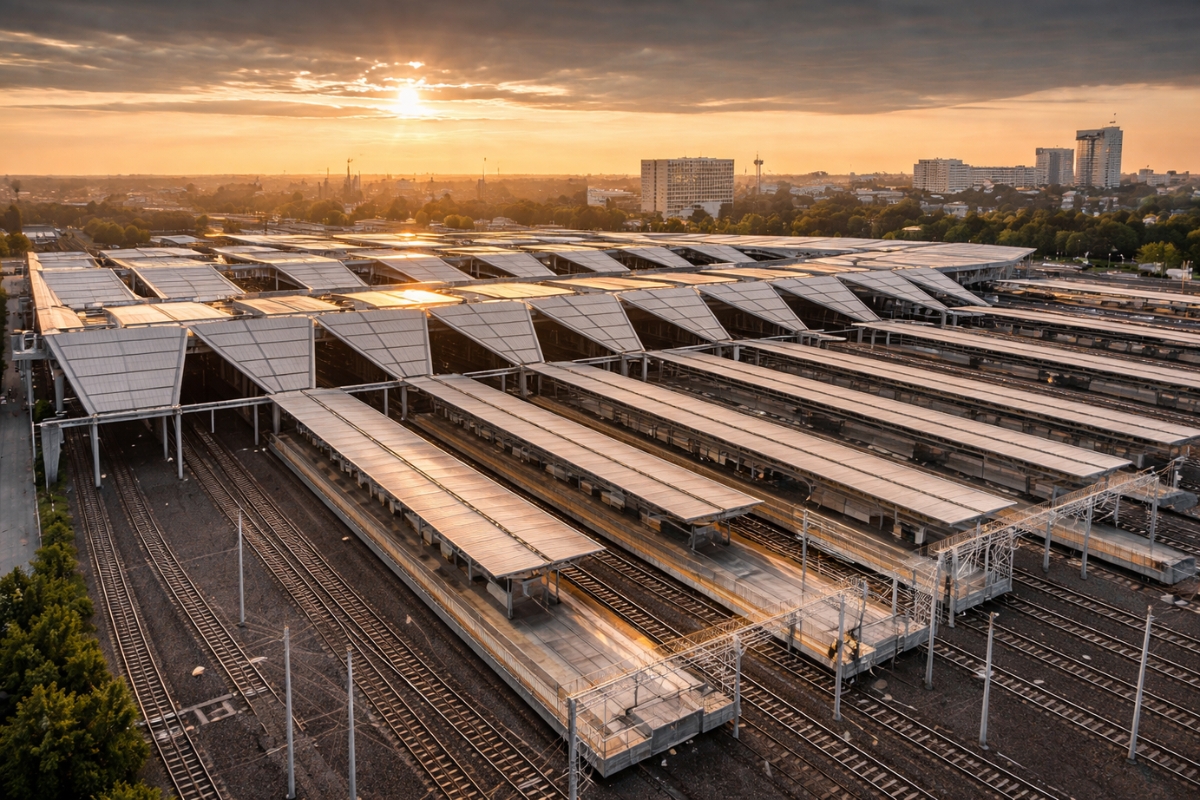
In A European City, The Country’s Largest Railway Junction Was Modernized Without Closing Its Doors, Kept Trains Running During Years Of Construction, Now Serves Up To 60,000 Passengers Per Day, And Installed Solar Panels That Generate About 30% Of Its Energy
-
Famous Brazilian Railway May Become a Parking Lot

-
The Country of “Punctual As a Train” Admits It Has Lost Control: High-Speed Trains Delay, Stop, Disappear from the Map and Turn 6-Hour Trips into 10, While Deutsche Bahn Promises Restructuring in 2026 But Faces 19th Century Infrastructure, Staff Shortages and Sections Closed for Months

-
With an Investment of R$ 700 Million in One of the Country’s Main Rail Networks, VLI Reinforces Infrastructure, Receives 8 New Locomotives, and Expands the Corridor Connecting 7 States, Boosting Jobs and the Transportation of Grains, Ore, and Oil Products to the Port of Santos


The line, measuring 313 kilometers, was designed for 350 km/h and has served as a laboratory to assess acceleration, braking, stability, and energy consumption before certification.
In October, the train recorded 453 km/h in pre-service, consolidating the status of “fastest in the world” on conventional tracks.
In addition to its top speed, the crossing tests yielded another milestone: two CR450s passed each other at a combined speed of 896 km/h, a record for passing in tests with rail wheel trains.
This procedure measures aerodynamic pressure and stability during a head-on encounter at high speed, a critical step for commercial release.
Design and Engineering of the CR450
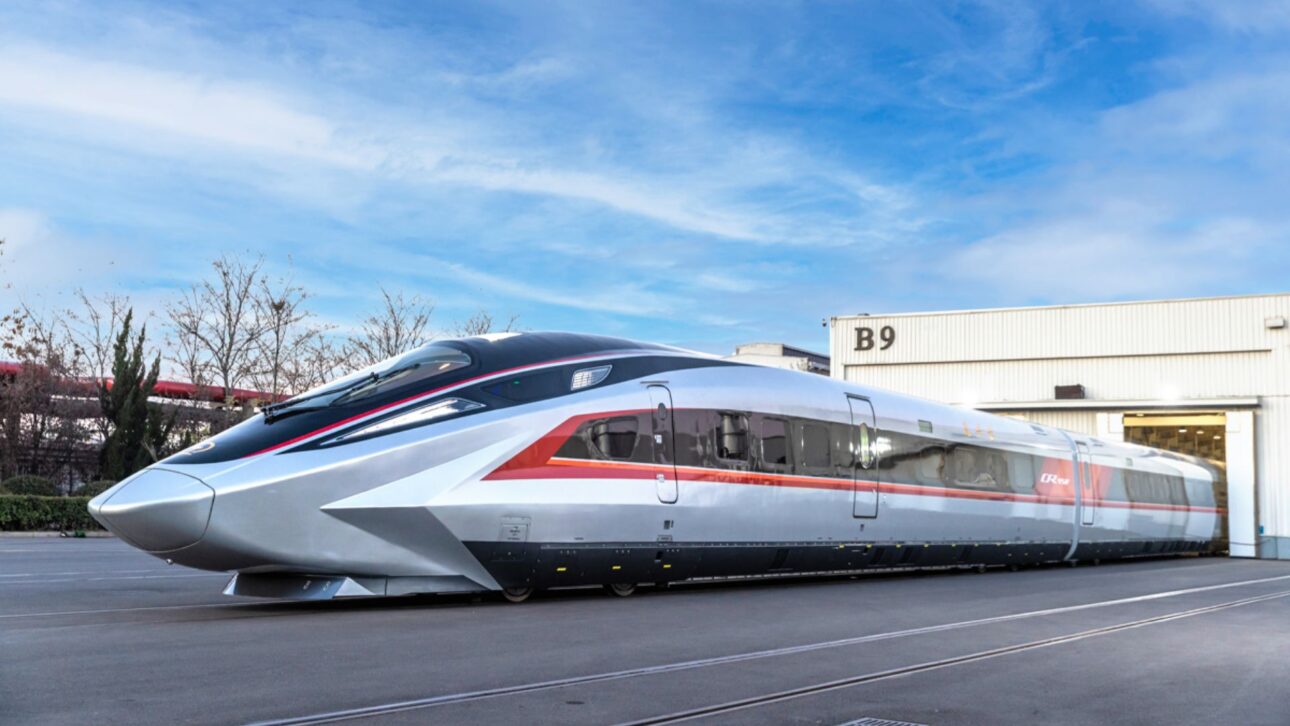
The evolution from the CR400, currently a reference on 350 km/h routes in China, begins with a 15-meter elongated nose — 2.5 m longer than the previous model.
The more streamlined silhouette, combined with a 20-centimeter lower profile and extensive use of lightweight materials, has resulted in a train about 50 tons lighter.
According to the manufacturer, the aerodynamic package reduces air resistance by 22%, improves energy efficiency, and decreases noise.
Another notable change is in the bogie: the set of wheels, axles, and suspension has been fairing under side skirts, a solution that minimizes turbulence and contributes to efficiency gains.
With the new powertrain, the CR450 also accelerates from zero to 350 km/h in 4 minutes and 40 seconds, a crucial parameter to maintain competitive travel times on corridors with many stops.
Certification and Debut Schedule
The certification plan requires that prototypes cover 600,000 kilometers without incidents to receive the passenger transport license.
The goal, communicated by the official press, is to complete this mileage during type and pre-service trials.
If the schedule is maintained, the commercial debut in 2026 is likely to occur on lines already prepared for the expected operating speeds.
The railway infrastructure sets the speed ceiling in service.
Currently, most of the Chinese high-speed network operates at 350 km/h.
The CR450 was designed for 400 km/h commercial cruising, but achieving this mark will depend on stretches with compatible geometry, signaling, and maintenance.
The Shanghai–Chongqing–Chengdu corridor, where the train is being tested, is a central piece of this gradual adaptation.
Technological Advancement and Energy Efficiency
The CR450’s proposal combines higher speed with energy efficiency.
The lighter set and reduced drag help lower consumption as the operational threshold rises from 350 to 400 km/h.
In parallel, the braking and traction control systems were designed to maintain stopping distances and safety levels equivalent to those observed today, despite the speed increase.
This balance is essential to enable daily operation with controlled costs and risks.
Meanwhile, performance in trials indicates that the train surpasses the CR400 in key speed and acceleration indicators.
In terms of international image, the new series reinforces China’s position in rail wheel train technology — distinct from maglev projects, which utilize magnetic levitation.
For the CR450, it is an incremental evolution based on a widely adopted design, facilitating adoption in existing corridors.
Testing and Real Operating Conditions
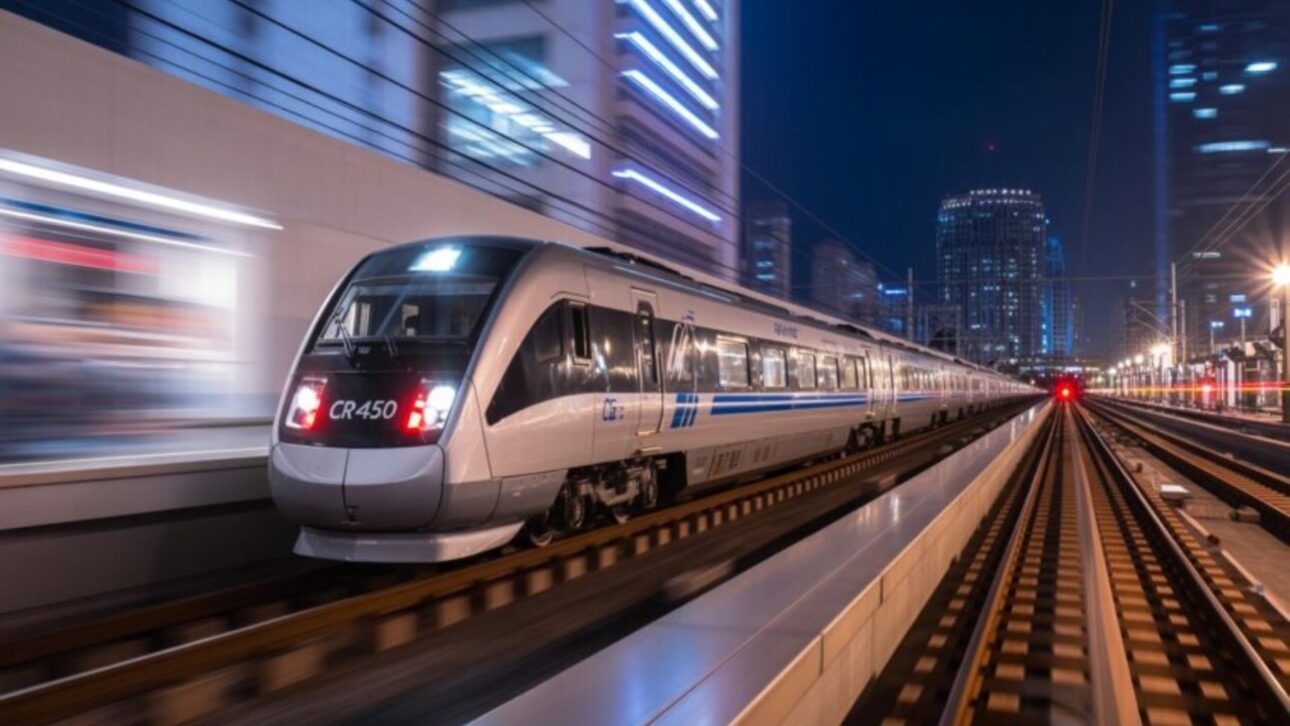
The tests on the Wuhan–Yichang segment prioritize sections with a high proportion of bridges and tunnels, useful for simulating pressure, temperature, and noise variations in challenging operational realities.
The segment connects Wuhan to Yichang, passing through cities like Jingmen, and has completed operational testing phases in 2025 to pave the way for the inauguration of regular service on the corridor itself.
As the network prepares, the CR450 prototypes continue to run to meet the certification mileage.
In parallel, the operator’s guidance is to maintain 350 km/h as the limit for most operating lines, with time gains coming from quicker acceleration, more efficient crossings, and possible incremental speed increases where the infrastructure allows.
This strategy provides a safety margin during the technological transition and reduces the need for immediate complex interventions.
Passenger Experience and Future of Operation
With the 15 m nose, lower body, and fairing bogie, the CR450 was designed to reduce vibration and noise perceived in the cabin, as well as optimize pressure in tunnels and crossings.
The internal architecture follows the standard of long-distance Chinese trains, with business, first, and second-class cabins, and intelligent monitoring systems for rolling stock, designed for predictive maintenance and higher availability.
The sum of these choices aims to shorten travel times without increasing acoustic discomfort or consumption per passenger.
Although travelling at 400 km/h depends on specific infrastructure tracks, stronger acceleration and stability at speed elevate time gains even on mixed corridors.
Thus, any debut in 2026 should prioritize lines with the greatest door-to-door time return, connecting population and production hubs without requiring a total redesign of the network.
Final Steps Before Commercial Operation
The coming months will focus on type trials, software adjustments, and verification of safety systems, including signaling and onboard communication, as well as resistance tests under different temperature and load regimes.
At the end of this phase, the railway authority will decide on the passenger transport license, the final step for entry into service.
If the release happens as expected, the new generation of trains could redefine travel times on the country’s strategic axes.
With the prospect of faster and quieter journeys, the question remains: when commercial operation begins, on which routes do you think 400 km/h will make the biggest difference in your daily life?









-

-

-

-

-

-

130 pessoas reagiram a isso.