





 Portuguese
  English
  Spanish
  6 min of reading
  0 comments


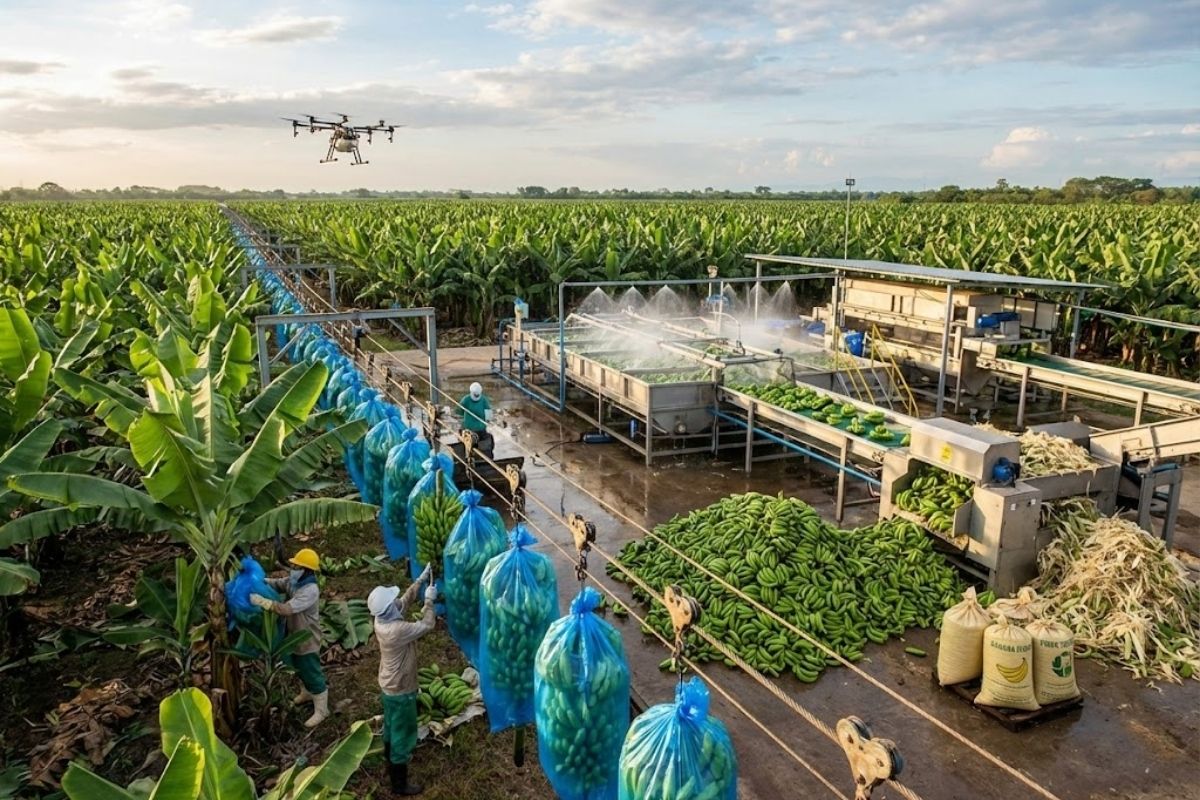
From Planting to Export, Bananas Require 11 to 16 Months of Management, Pruning, Pest Control, and Plastic Bag Protection. During Harvest, Two Workers Cut Bunches Weighing 29 to 45 kg, Wash Them in Tanks, and Use 105 to 158 Gallons of Water Per Kilo Before Turning Them into Chips and Flour.
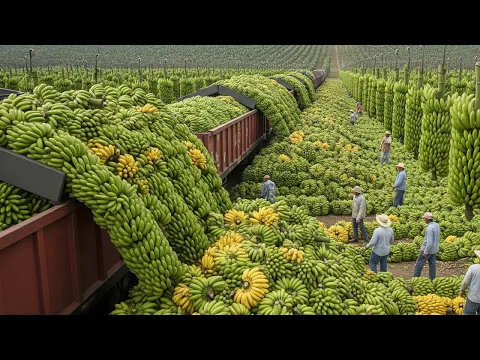
Bananas may seem simple on the plate, but the cycle to the bunch is long and full of technical stages: soil preparation, planting, training the seedling, pruning, pest protection, and harvesting decisions that begin long before the fruit turns yellow. The final result, according to the data in the report, is a supply chain that delivers 1.7 billion bananas per day after about a full year of work in the field.
In addition to fresh consumption, the same harvest feeds a processing line that transforms green fruit into chips and flour, and utilizes the trunk to produce textile fiber. Along the way, plastic bags are used on the bunches, drone spraying is employed on some farms, and the water usage can reach 105 to 158 gallons per kilo considering cultivation and processing.
One Year of Cultivation Until the Bunch

The cultivation of bananas begins with soil preparation to create stable conditions for the seedling.
-
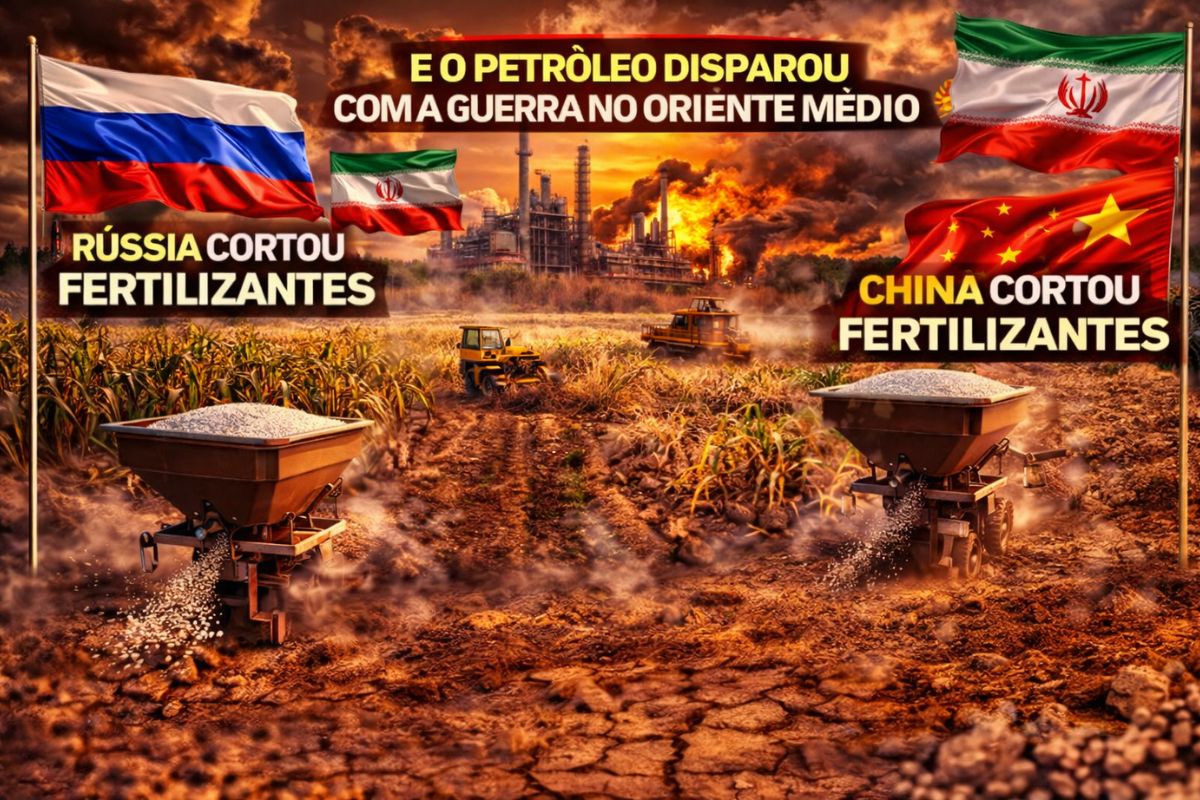
Russia cut fertilizers, China cut fertilizers, and oil prices soared with the war in the Middle East: sugarcane producers in the interior of São Paulo are seeing costs explode from all sides and warn that the effects will take months to be absorbed.
-
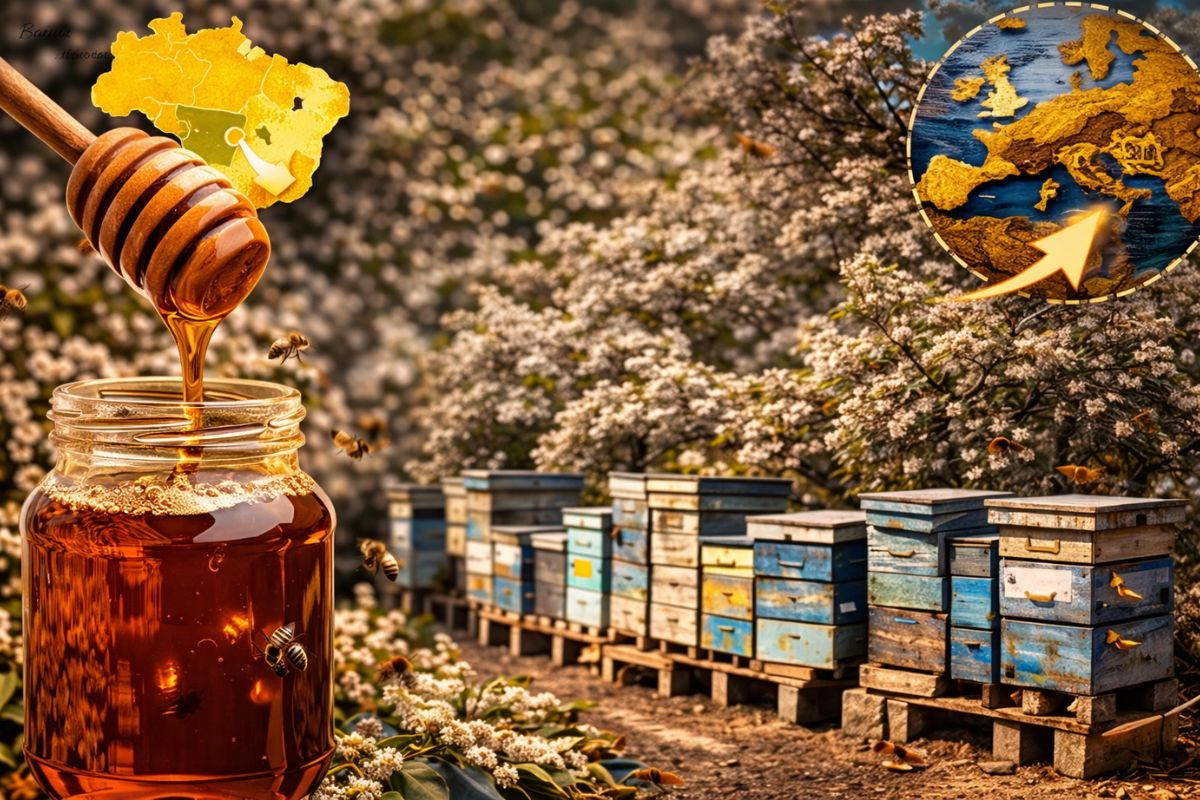
It does not come from flowers, is produced only every two years, and more than 90% goes straight to Europe: meet the bracatinga honeydew honey from Santa Catarina, considered one of the rarest in the world and overlooked by Brazil itself.
-
They said no to 26 million dollars and would do it all over again: mother and daughter from Kentucky reject a million-dollar offer from a mysterious company that wants to build the largest data center in the state on more than 2,000 acres of rural land.

-
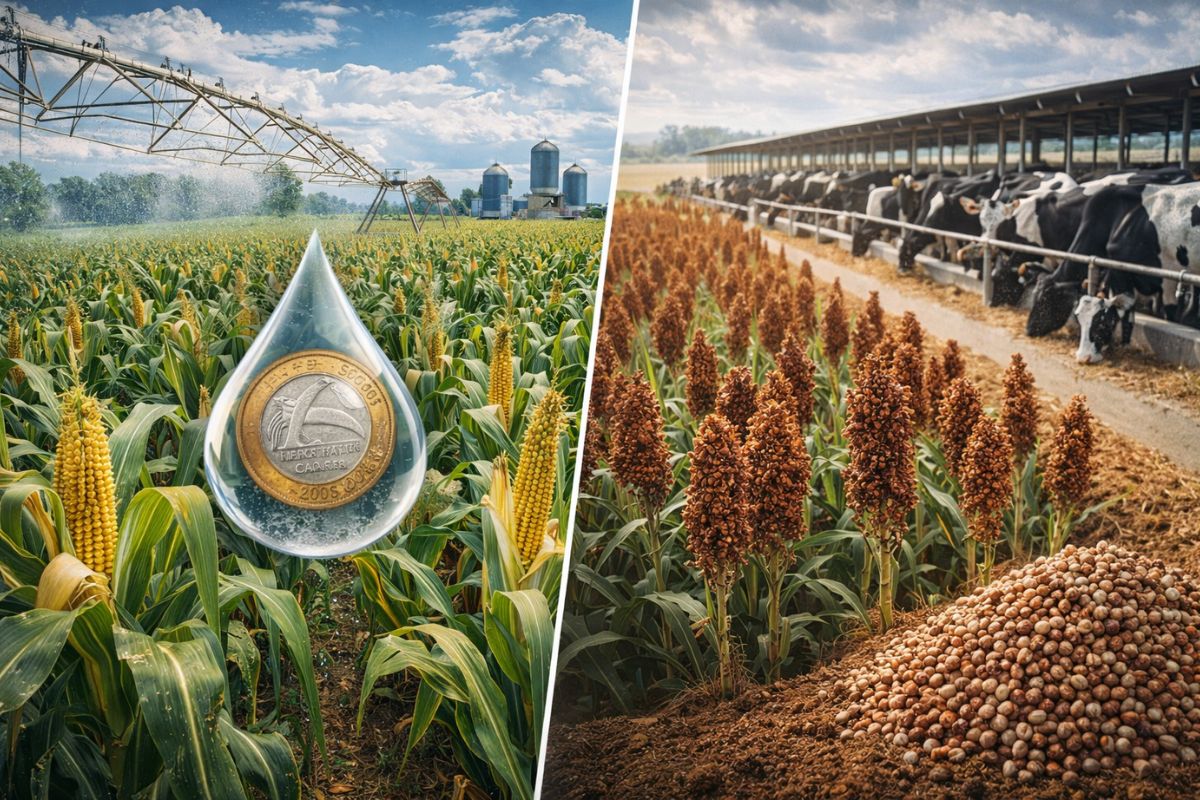
While corn requires rain and is expensive, sorghum produces almost the same volume per hectare at a cost up to 80% lower and uses less water, and it is revolutionizing dairy farming in the Triângulo Mineiro, where producers save hundreds of reais per hectare.
The planting follows a pattern described with seedlings about 28 cm deep, ensuring that the trunk remains firm to support heavy bunches and reduce the risk of tipping over.
The distance between plants is 2.05 to 3 meters, a measurement that seeks adequate sunlight during growth.
In modern farms, fine misting is also mentioned to help young plants absorb water.
The cycle is presented in three major phases. In the first 6 months, the banana plant forms a strong trunk, leaves, and roots.
In the next 3 months, floral stems emerge and the differentiation between male and female flowers occurs.
At this point, farmers usually cut the tip of the shoot and parts of the female flowers to accelerate the development of the bunch.
Then come another 3 months of young fruit formation, during which the management of the bunch becomes a daily routine.
Plastic Bags, Pruning, and the Focus on Productivity

During the fruiting phase, the bunches of bananas are wrapped in plastic bags to reduce damage from insects while promoting more uniform color.
The management also includes pruning excess fruit, a strategy to concentrate nutrients on the remaining fruits and keep the bunch clean, easier to care for, and focused on productivity.
This care is justified by the sensitivity of banana plants to diseases and pests, especially in humid tropical environments.
The report mentions diseases such as zantalmonas, wilt, and yellow sigatoka, which have the potential to reduce productivity by 35% to 50%.
Pests, Fungicides, and the Entry of Drones into the Field

To limit damage, regular removal of weeds is described, aimed at reducing the spread of bacteria and improving photosynthesis.
Pesticides against common pests found in banana fields, such as aphids, thrips, and mites, are also mentioned.
When the plant is already infected, the routine cited is to remove diseased or dead leaves and apply fungicides that may contain manganese or copper.
The critical point is operational: manual sprayers increase the risk of chemical exposure for those applying them near the treated area.
Therefore, in some locations, the agricultural drone is introduced, which expands coverage and reduces the worker’s direct contact with the chemical cloud.
When to Harvest: Why Bananas Come Out Green
The total time until harvest varies by variety.
For dwarf varieties, the described interval is 11 to 14 months from planting until harvest. For taller varieties, it’s 14 to 16 months until they are ready to fruit.
As the harvest approaches, the fruit changes from dark green to light green, the tips of the leaves wilt, and the tips of the flowers fall off.
The bananas become plump and firm, but harvesting is done before full ripening, while still green.
The justification is logistical: ripening during storage and transport reduces losses and maintains delivery standards.
Two-Handed Harvest: Bunches of 29 to 45 kg
The harvest requires a minimum team of two people. One cuts with a sharp knife, while the other holds the bunch.
The average weight reported is between 29 and 45 kg per bunch, and thus some workers use foam pads on their shoulders to reduce injuries.
Daily productivity is also reported with numbers: a worker can harvest about 500 bunches in a day.
After cutting, the bunches are taken to the collection point and hung on hooks from a cable system.
To avoid scratches, foam or paper pads are used. Each system can transport an average of 90 bunches at a time, speeding up the movement from the field to the warehouse.
Washing, Sorting, and the Weight of Water in the Process
Right after the harvest, bananas move on to preliminary processing. Large bunches are separated into smaller ones and submerged in tanks of water.
Then, they undergo another wash to remove any remaining dirt and impurities.
This is where the most sensitive indicator of the process comes in: the cultivation and harvesting of bananas are described as major consumers of water.
Each kilo can demand 105 to 158 gallons of water when summing cultivation and processing stages.
After being cleaned, the fruits are packed in boxes and sorted by standards, with the best ones directed for export.
The main exporting countries mentioned are India, China, Indonesia, Brazil, Ecuador, and the Philippines.
In the presented global landscape, cultivation occupies 13.8 million acres, with an annual production of about 135 million tons, and India leads with 30.5 million tons.
The Plant Fruits Once and Becomes a Circular Input
A little-known point highlighted in the report is that each banana plant fruits only once.
After the harvest, the mother plant is cut to make room for new shoots.
The described cut is horizontal, leaving a stem of 5 to 9 cm.
For thick and sturdy trunks, a specific cutting machine is recommended.
The trunk is not treated as mandatory waste: it can be chopped for composting or processed as animal feed.
The logic is to reduce waste and repurpose biomass within the production system.
Chips, Flour, and Textile Fiber: What Comes from Green Banana
In addition to fresh consumption, industrial processing appears in three main lines.
The first is banana chips: factories buy large volumes, peel, and slice them.
The report describes slices of 28 to 48 mm thick, fried in oil at 170°C for 2 to 3 minutes, with continuous stirring for uniformity.
Then, there is cooling, seasoning in a mixer, and, in some facilities, a centrifuge to remove excess oil.
The cited capacity reaches 15 tons per day per factory. In 2024, global chip production could reach about 190,000 tons.
The second line is green banana flour, made by drying and grinding until it becomes fine powder.
The described use is as an alternative to wheat flour in various recipes and as a gluten-free option, suitable for people with celiac disease or intolerance.
The third line is the fiber from the trunk.
The cited process involves cutting the trunk, removing outer layers, pressing, soaking to decompose the tissue and separate fibers, then washing, drying, combing, and spinning into fine threads for weaving.
The banana fiber fabric is described with natural luster, high durability, and no shrinkage in washing, with tensile strength of up to 1,500 Newtons per cm, and is also biodegradable.
The economic brake is the cost of production being cited as high, which limits scale and everyday use.
In your daily life, what surprises you most about this banana supply chain: the water usage of 105 to 158 gallons per kilo, the bunch weighing 45 kg, or the repurposing into chips, flour, and textile fiber?





-

-

-

-

-

20 pessoas reagiram a isso.