





 Portuguese
  English
  Spanish
  2 min of reading
  0 comments


The Change in Solar Taxation in 2024 Highlights the Dynamics and Challenges Faced by the Solar Energy Sector in Brazil.
The arrival of 2024 marks a turning point for the solar photovoltaic sector in Brazil, bringing to light an important review of the solar taxation policy. Technically known as TUSD (Distribution System Usage Fee) of wire B, this change stems from the implementation of Law 14300 of 2022, which came into force on the first day of January this year.
Understand the Change in Solar Taxation


The new legislation, Law 14300, introduced in 2022, is intended to establish a legal framework for the distributed generation sector, including solar photovoltaic energy. Aiming to bring legal certainty to the sector, the law also promoted a review of the cost structure, directly impacting the energy tariff injected into the grid by photovoltaic installations.
Composition of the Energy Tariff and the Inclusion of Wire B
The energy tariff consists of two main components: the TE, related to the generated energy, and the TUSD, related to the transport of that energy to the consumer. Within the TUSD, wire B stands out, which corresponds to the cost charged for the transport of energy in the distribution network, representing on average 28% of the total tariff.
-
Researchers discover a possible hydrogen deposit of up to 46 million tons beneath an ancient coal basin, and the volume could exceed half of the entire global production.

-
China bets on the Fishery-PV model and transforms fish farms into giant solar plants, covering ponds with panels that generate energy while utilizing the same space for large-scale aquaculture production.

-
Europe records strong euro economy with solar energy in March and sparks curiosity about which country leads growth that redefines the energy market and reduces costs.
-
Piauí reaches a historic milestone in energy transition: State records nearly 160,000 households powered by solar energy and leads growth in the Northeast.
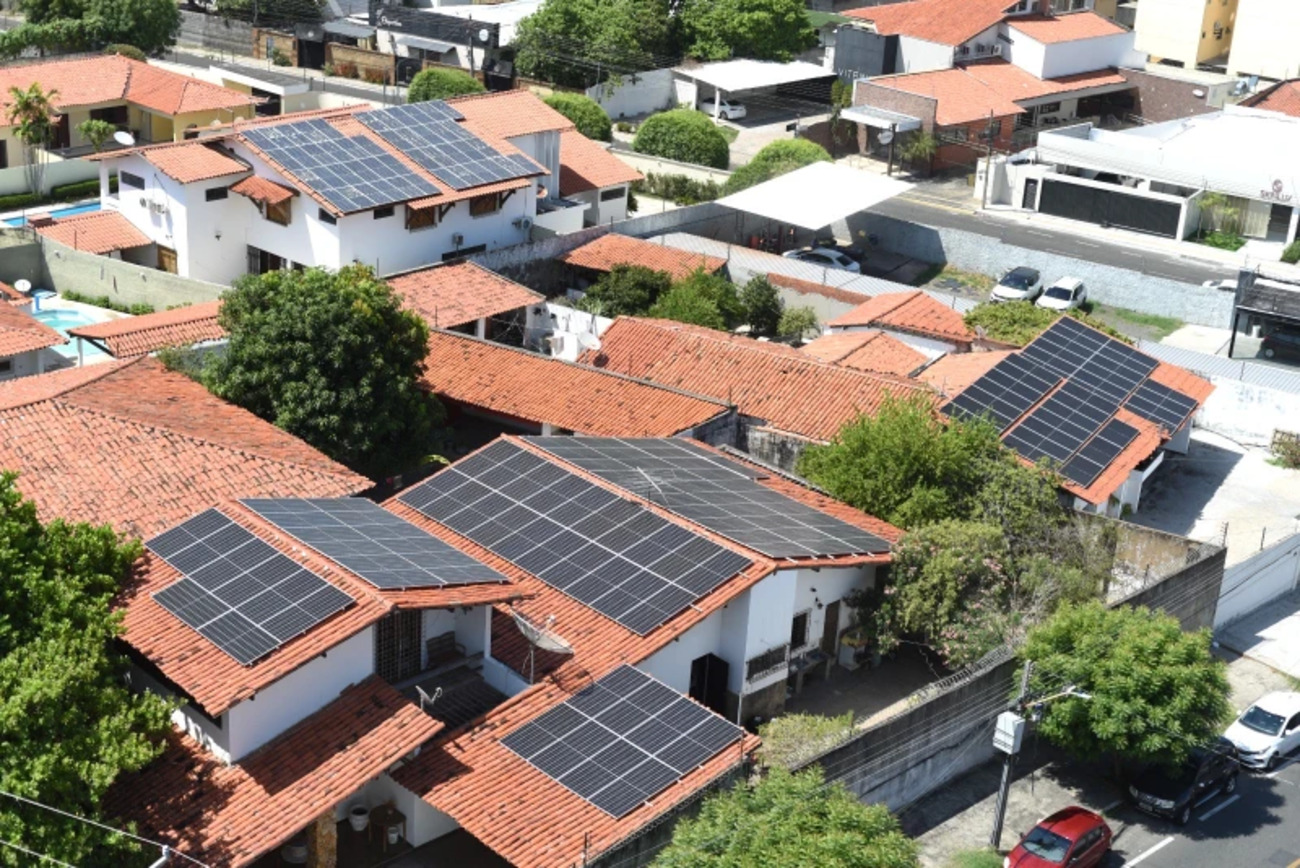

According to Law 14300, distributed generation projects submitted after January 7, 2023, are classified as GD2 and GD3, each subject to different impacts under the new taxation rules. Specifically, GD2 projects now face an increasing charge for the use of wire B, which started at 15% in 2023 and increased to 30% in 2024. This scaling will continue until it reaches 90% in 2028.
Practical Example of the Impact
To illustrate, considering a hypothetical value of R$1 per kWh and a photovoltaic system that injects 2000 kWh of surplus into the grid, in 2023, it would be possible to deduct 95% of this amount, resulting in a payment of approximately 4 cents per kWh due to the wire B charge. In 2024, with the increase to 30%, only 91 cents per kWh injected can be deducted, raising the cost to around 8 cents per kWh.
While projects classified as GD3, aimed at mini distributed generation, were fully impacted in 2023, GD2 projects remain in a transition period. This scenario emphasizes the need for adaptability and strategic planning for those involved in the solar photovoltaic energy sector, highlighting the importance of innovation and sustainable development in the country’s energy matrix.









Seja o primeiro a reagir!