





 Portuguese
  English
  Spanish
  5 min of reading
  0 comments


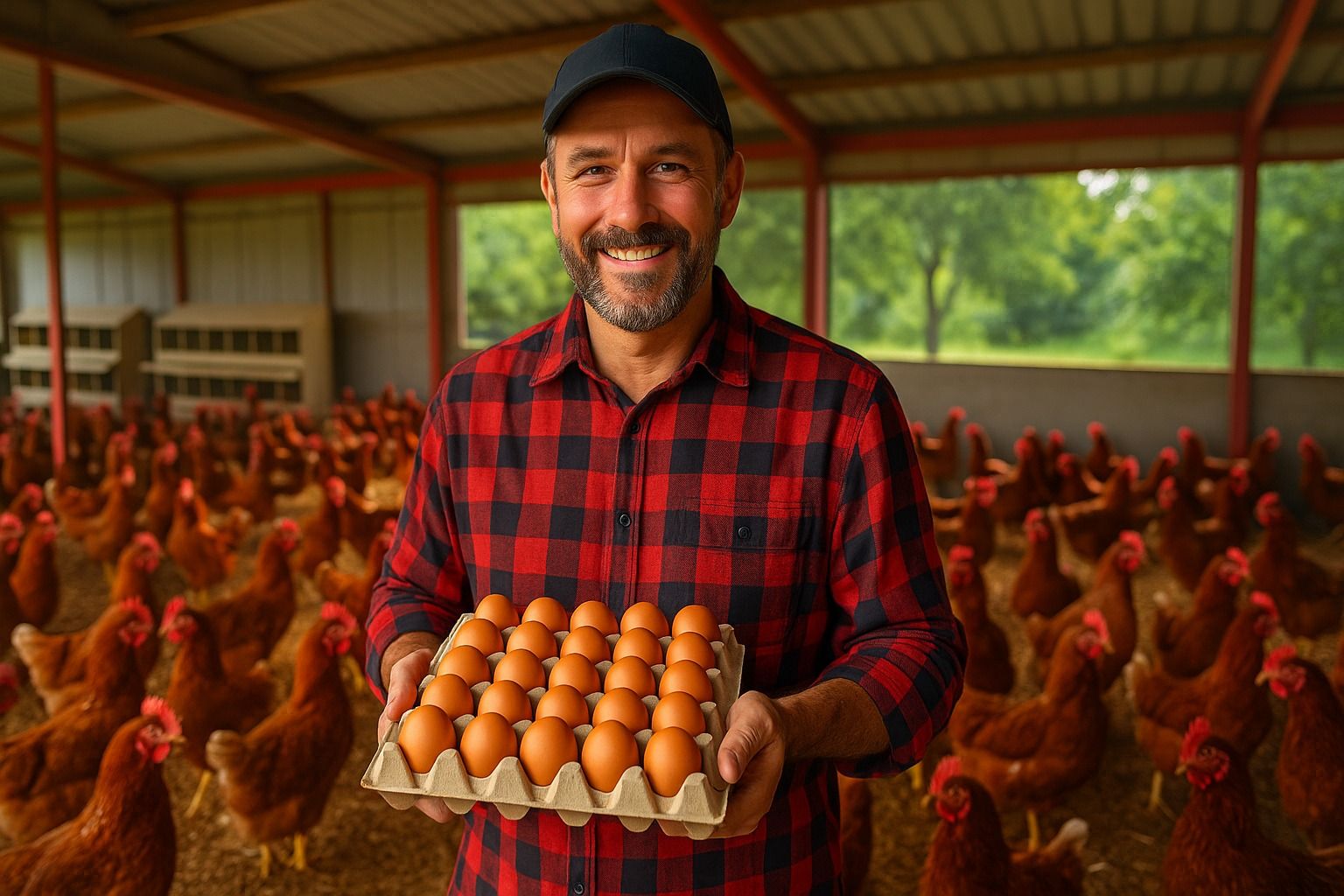
With an Initial Investment of R$ 18 Thousand, the Creator Shows How Much Can Be Earned and Profited Per Month with 300 Laying Hens Producing Free-Range Eggs in 200 m²
Professor César, content creator of the channel School of Poultry Farmers, presented a detailed analysis in a video of the profit obtained from raising 300 laying hens focused on the production of free-range eggs.
The experience, developed in a space of 200 m², practically shows how much can be earned and what the monthly net return that the activity can generate.
César explains that discussing profit requires caution, as various factors influence the outcome. He bases the information on his experience of 14 years in the sector, with a degree in animal science, a master’s, and a doctorate in the field.
-
The water that almost everyone throws away after cooking potatoes carries nutrients released during the preparation and can be reused to help in the development of plants when used correctly at the base of gardens and pots, at no additional cost and without changing the routine.

-
The sea water temperature rose from 28 to 34 degrees in Santa Catarina and killed up to 90% of the oysters: producers who planted over 1 million seeds lost practically everything and say that if it happens again, production is doomed to end.

-
An Indian tree that grows in the Brazilian Northeast produces an oil capable of acting against more than 200 species of pests and interrupting the insect cycle, gaining ground as a natural alternative in soybean, cotton, and vegetable crops.

-
The rise in oil prices in the Middle East is already affecting Brazilian sugar: mills in the Central-South are seeing their margins shrink just as ethanol gains strength.


The producer emphasizes that the numbers presented reflect his current reality and may vary depending on the structure of each creator.
Initial Investment and Start of Production
The producer claims that he spent R$ 18 thousand until the hens began laying, which occurs between the 18th and 20th weeks of life — approximately between the fourth and fifth month.
In the first days of production, the eggs are still smaller, but the size and regularity increase until the 26th week.
This R$ 18 thousand includes costs with chicks, feed, vaccines, electricity, heating gas, labor, and pecking and vaccination services. He emphasizes that he does not consider infrastructure and equipment in this figure, as the barn and utensils are used by several batches over the years.
Each chick cost about R$ 8, and each bird consumed approximately 8 kg of feed until it started laying. The average cost of feed during the period was R$ 2.50 per kg, varying according to the bird’s phase — the pre-initial feed, for example, cost up to R$ 3.70 per kg.
Monthly Operational Costs
With the batch already in production, the monthly fixed expenses amount to around R$ 3 thousand to R$ 3.1 thousand.
The average distribution includes R$ 2,200 for feed, R$ 600 for labor, and about R$ 300 for packaging. Each dozen eggs is packaged at a cost of R$ 0.55, and the feed consumption per hen is 122 g per day.
César explains that the management is partially automated.
The barn features automatic feeders, nip-type drinkers, and nests that allow for external collection, which reduces daily work time.
The labor is executed by a fixed employee, responsible for various tasks on the property, and the monthly cost is proportional to the time dedicated to the layers.
The spending on electricity is low, and the producer also adds R$ 0.20 in logistical cost per dozen to compensate for direct deliveries to clients.
Daily Production and Revenue
The current average production is 18 dozen eggs per day, with a laying rate of 90% among the 270 active birds. The producer, however, considers an average of 80% for the entire production cycle, taking into account the natural decline in laying after the peak.
The eggs are sold exclusively by the dozen, with an average price of R$ 12. In some cases, the price reaches R$ 14 or R$ 15, while resellers pay between R$ 10 and R$ 12.
All the production is sold, reflecting the high demand for quality free-range eggs.
With this performance, the gross revenue amounts to around R$ 6,500 to R$ 7 thousand per month. As the cost per dozen is approximately R$ 7, the profit margin remains around 40%, varying according to the period and selling price.
Net Profit and Profitability Margin
After deducting all monthly costs — including labor, electricity, feed, packaging, and logistics — the monthly net profit is between R$ 3,200 and R$ 4 thousand, an amount that the producer considers “net,” already accounting for all expenses.
César explains that the profitability margin currently achieved is 43%, slightly above the industry average, which ranges from 30% to 45%. He emphasizes that this rate depends on factors like selling price, input costs, and management efficiency.
The production cycle of the layers is approximately 100 weeks, which requires long-term economic analyses. The return on initial investment, according to him, occurs gradually over about two years.
Factors That Influence the Result
The professor emphasizes that each project must include a complete business plan, with projections for various batches and an economic viability analysis. He reminds that the School of Poultry Farmers offers courses and modules on the topic, covering financial planning, vaccines, management, and cost analysis.
César also highlights that infrastructure and equipment, although not considered in the presented calculation, should be included in the spreadsheet of any producer planning to scale the business. These items depreciate and impact the results in the long run.
Additionally, the producer notes that the free-range egg market requires attention to regularization and sanitary inspection. To sell on a larger scale or with an inspection seal, the entrepreneur will need to invest in an agroindustry and meet specific standards — points that are still not part of the current operation, described as informal but expanding.
Scalability and Prospects
With the current numbers, the creator emphasizes that it’s not possible to “get rich” with 300 hens in 200 m², but the business is a solid starting point. He claims that the net profit of R$ 3,500 per month is compatible with the farm’s size and demonstrates the growth potential.
The goal, according to César, is to gradually expand the structure and the number of birds. “Imagine if I go to a thousand birds? Then I can really make a nice profit,” he comments. He plans to follow the growth step by step, with technical support and record results.
The producer also emphasizes the role of automation and strict data control as differentiators. “I like to have everything perfectly, exactly all the details,” he states. The constant recording of costs and revenues allows for identifying bottlenecks and maintaining efficiency.
Conclusion: Small Space, Real Results
The case presented by César shows that, even in small spaces, raising laying hens can generate a consistent net income. With planning, automation, and financial discipline, the model becomes a profitable alternative, especially in smaller rural areas.
The experience also reinforces that volume is key: profit grows proportionally to the number of birds and the consistency of laying. Although the initial investment and regularization represent barriers, the demand for quality free-range eggs keeps the market active and ensures quick sale of the production.
At the end of the video, the professor invites the audience to participate in a free live class scheduled for November 6th at 8 p.m. The event will cover strategies for those who wish to start or expand the free-range egg business in small spaces, reinforcing the central proposal of the project: transform technical knowledge into practical and sustainable results.









Seja o primeiro a reagir!