





 Portuguese
  English
  Spanish
  4 min of reading
  1 comment




Discover Which Countries Have The Largest Rare Earth Reserves In The World, How They Exploit These Strategic Resources And Why They Are Essential For The Advancement Of Clean Energy And Global Technology.
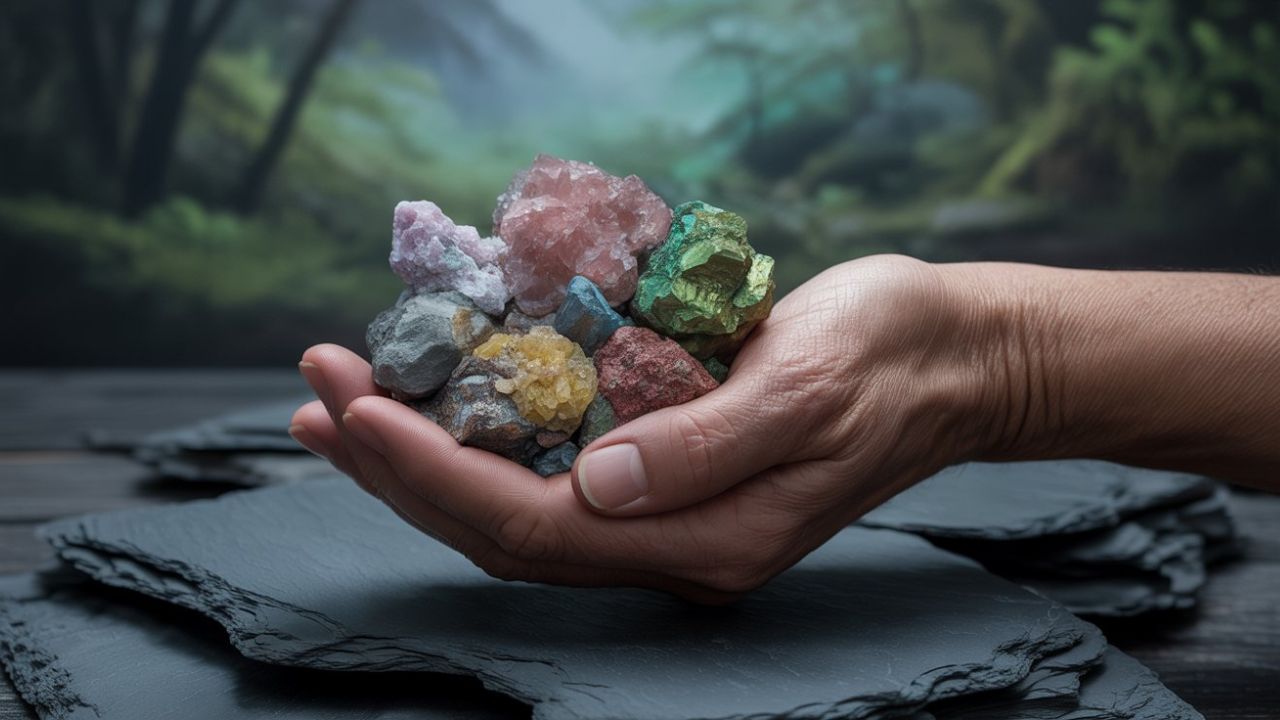
As the world moves towards an economic model based on clean energy and technological advancements, the search for rare earth reserves intensifies. These elements, although called “rare,” are found in various places around the planet. However, economically viable deposits for mining are scarce.
These metals play a fundamental role in the manufacturing of permanent magnets, used in electric vehicles, wind turbines, electronics, medical equipment, and even in defense technologies.
According to the latest survey from the United States Geological Survey (USGS), global rare earth reserves amount to 130 million metric tons.
-
Mothers and daughters come together, create an ‘express’ beauty salon and turn the idea into a network with 21 units, revenue of R$ 16.7 million and 12,000 subscribers.

-
End of the 6×1 schedule: how the reduction of hours can affect service companies, industry, and agribusiness.

-
Brazil Ignores Trump’s threats to BRICS, Buys 42 tons of gold and reduces the Dollar’s share by 6.45% in international reserves.
-
Havan buys historic football land in Blumenau for a million-dollar amount protected by a confidentiality clause and is already planning to change even the layout of streets to build a megastore in half-timbered style costing 80 million reais.
However, the distribution of this resource is unequal, concentrating in a few countries that, consequently, exercise great influence over their supply chains.
Find Out Which 5 Countries Have The Largest Rare Earth Reserves
China: Consolidated Leadership And Strategic Control
China holds a dominant position in this sector.
With about 44 million metric tons in reserves, the country not only leads in volume but also concentrates the largest global production, with 270 thousand metric tons extracted in 2024.
This dominance is not by chance.
The Chinese government adopts strict policies to protect its reserves and control the market. This includes combating illegal mining, forming national stockpiles, and even restricting exports.
In 2023, for example, China banned the export of technology for manufacturing rare earth magnets, further strengthening its strategic power in the sector.
Brazil: Unexplored Potential And Great Expectations
With 21 million metric tons in reserves, Brazil is the second country with the largest volume of rare earths in the world. However, production is still modest — only 20 metric tons in 2024.
This reality is expected to change in the coming years. In Goiás, the company Serra Verde began commercial production in 2024 and aims to reach 5 thousand tons annually by 2026.
The Pela Ema deposit, where the operation is located, is one of the largest of its kind in ionic clay in the world and produces essential elements for manufacturing magnets, such as neodymium, praseodymium, terbium, and dysprosium.
Brazilian potential is enormous and could transform the country into a global protagonist in the supply of rare earths, especially in a scenario of increasing international demand.
India: Investments To Expand Competitiveness
India ranks third, with 6.9 million metric tons in reserves and a production of 2,900 tons in 2024.
The country holds about 35% of the mineral deposits of beach and sand, important sources for extraction.
In recent years, the Indian government has been investing in research and development to expand its participation in the sector.
Among the projects, the construction of the first plant for metals, alloys, and magnets in the country stands out, an important step to reduce dependence on imports and strengthen the national industry.
Australia: Alternative Supply Outside Asia
Australia ranks fourth, with 5.7 million metric tons in reserves and a production of 13 thousand tons in 2024.
The mining of rare earths in the country began in 2007 and is expected to grow with the expansion of the Mount Weld mine, operated by Lynas Rare Earths, considered the largest supplier outside China.
Another relevant project is the Yangibana mine, from Hastings Technology Metals, which is set to start operations in 2026, reinforcing Australia’s position as one of the main alternative suppliers to the Asian market.
Russia: Plans Interrupted By Geopolitical Tensions
With 3.8 million metric tons in reserves, Russia rounds out the group of the five countries with the largest volume of rare earths.
However, this number underwent a significant downward revision in 2024, dropping from 10 million the previous year.
Despite maintaining stable production of around 2,500 metric tons, the country faces challenges in expanding its exploration.
An investment plan of US$ 1.5 billion was announced to compete with China, but the impacts of the war in Ukraine seem to have significantly delayed these objectives.
Technical And Environmental Challenges Of Exploration
Despite its importance, rare earth mining is not simple. The extraction process involves complex chemical separations, as these elements have very similar properties.
Additionally, many deposits contain radioactive elements, such as thorium and uranium, which increases environmental risks.
The impacts can be devastating. Regions of China and Myanmar suffer from environmental degradation caused by illegal mining, river pollution, and landslides.
A report from Global Witness revealed that, in Myanmar, there are more than 2,700 illegal leaching pools, covering an area equivalent to the size of Singapore.
This situation directly affects the availability of drinking water and local biodiversity.
Global production of rare earths has grown from just over 100 thousand metric tons a decade ago to 390 thousand tons in 2024.
This trend is expected to continue with the high demand for electric vehicles, renewable energy, and electronic equipment.
Countries with large reserves but still limited production, such as Brazil and Vietnam, have the potential to become new protagonists in the market.
However, China remains the center of the supply chain and technology, which fuels trade tensions with major consumers, such as the United States, who rely heavily on the Asian country.
With information from Socientifica.





Milho na terra rara deve dá u quê ?
Para podermos almejar algo neste sentido teríamos,primeiro, que efetuar investimentos pesados em educação coisa que nunca interessou a estes governos que temos. Povo inculto, **** fácil de ser manipulado. Viva a “progressão continuada” e o sistema de cotas.