Portuguese
  Spanish


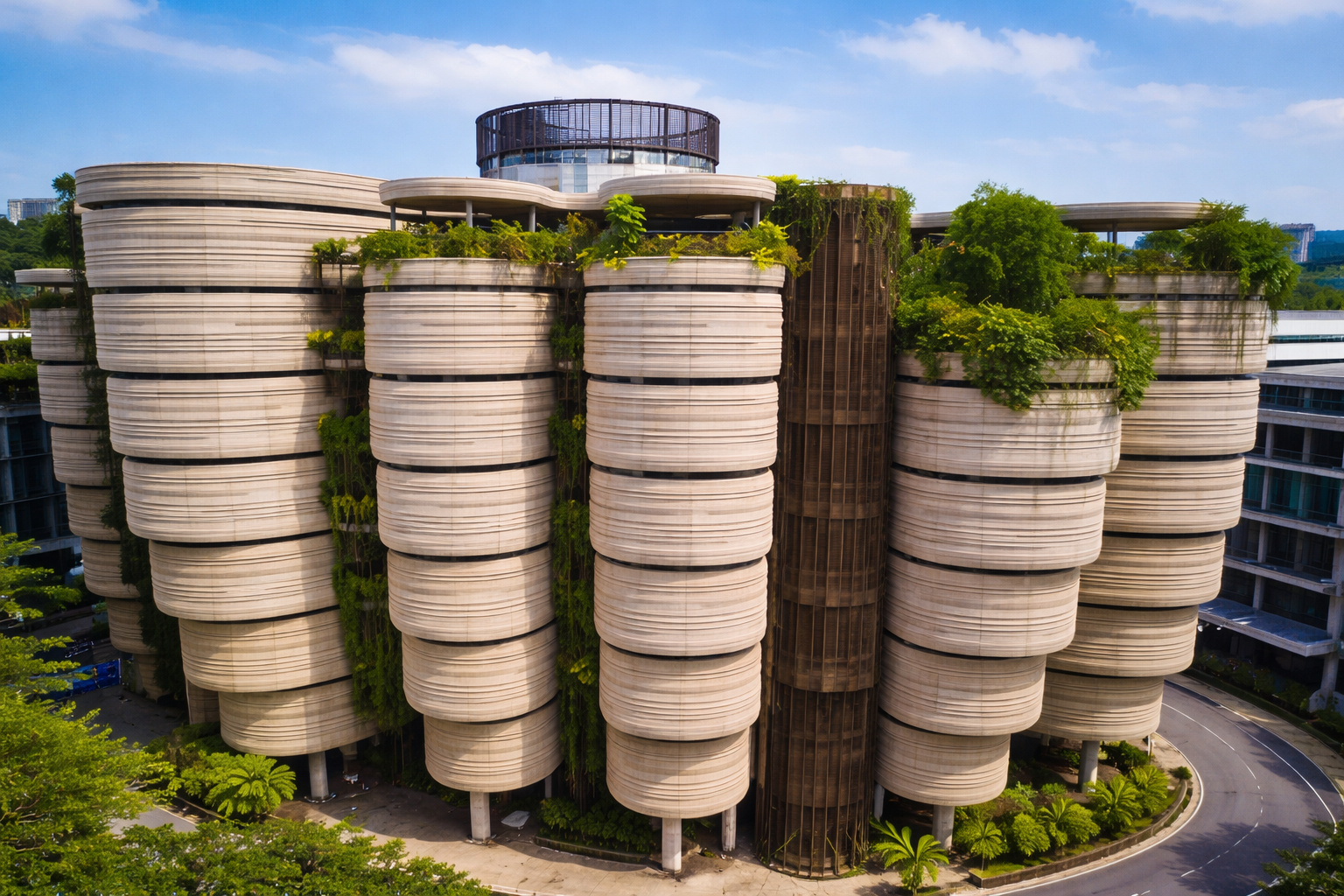

Construction of Nanyang Technological University in Singapore combines a design with no corners, inspired by honeycomb and features large-scale collaborative learning
The building known as The Hive immediately draws attention for its unusual appearance, resembling a giant honeycomb and standing out on the university campus in Singapore. The curious look is not just aesthetic but is part of an innovative teaching concept.
With an investment of S$45 million, the building was designed to eliminate physical barriers and transform the way students learn and interact. The proposal breaks away from traditional classrooms and creates an environment focused on collaboration.

The Nanyang Technological University, an internationally recognized higher education institution for academic innovation, uses the space as a symbol of a new educational model that integrates architecture and learning.
-
Japanese Botanist’s Miyawaki Method Grows Native Forests in Small Spaces in Just Years, Not Decades

-
800-Year-Old Cliffside Temple in Greece Amazes with Secret Cave, Drawbridge, and Stunning Views

-
Japan’s “Akiya” Homes: Abandoned Properties Attract Foreign Buyers as Locals Shun Them
-
Lawyer Turned Entrepreneur Earns $60,000 Annually Selling Brazilian Cheese Bread: Athena Rodrigues Started with $400 and Founded Dona Zelda, Bringing a Taste of Minas Gerais to São Paulo’s Heart


A building that looks like a giant honeycomb and has become a global reference
The Hive is located on the university’s main campus at 52 Nanyang Ave and was completed in 2015. Since then, it has become one of the most photographed and talked-about buildings in the area.

Designed by Heatherwick Studio, led by Thomas Heatherwick, the building marked the architect’s first major project in Asia. Its organic shape quickly generated comparisons to a “dim sum basket.”
The visual impact is just the beginning. The concept of the building was designed to change the relationship between physical space and learning.
Construction without corners and without traditional walls changes the way of teaching
The great differentiator of The Hive lies in its 56 classrooms, which have no corners. This feature completely alters the experience within the academic environment.
Without right angles, the space becomes more open and encourages group discussions. The configuration promotes active participation and reduces the sense of hierarchy common in conventional classrooms.

The proposal eliminates the rigidity of traditional structures and creates a more fluid environment, where interaction occurs naturally.
The building has 12 towers and creates a sense of integrated vertical city
The building consists of 12 towers, each with eight floors, organized around a central public atrium.
The towers taper at the base and vary in height, reinforcing the visual effect of a large honeycomb. This arrangement also facilitates circulation and promotes encounters among students.
The absence of a single roof contributes to the entry of natural light and enhances the feeling of open space within the building.
Art spread throughout the building reinforces the creative identity of the space
The concrete and stair cores display about 700 drawings created by artist Sara Fanelli.
These illustrations are part of the experience of the place, making the environment more dynamic and stimulating for those who circulate through the building daily.
The Nanyang Technological University, an internationally recognized higher education institution for academic innovation, incorporated artistic elements as a way to enrich the academic daily life.
Sustainability helps reduce energy consumption in the building
The Hive received the Green Mark Platinum Award in 2013, recognition aimed at energy efficiency.

The building features vertical vegetation, green terraces, and natural shading strategies that help control the internal temperature.
The ventilation system with cold water coils allows energy savings and reduces the need for air conditioning, contributing to a more sustainable environment.
A university model that goes beyond the impressive appearance
More than just a different building, The Hive represents a change in how teaching can be structured within universities.
By eliminating corners, reducing physical barriers, and encouraging constant interaction, the space creates conditions for more active learning.
The impact goes beyond architecture and shows how the environment can directly influence the construction of knowledge.
The The Hive brings together design, technology, and education in a single space that draws attention for its size, shape, and proposal.
If this innovation surprised you, share it with others and leave your opinion about this teaching model in the comments.