





 Portuguese
  English
  Spanish
  6 min of reading
  6 comments


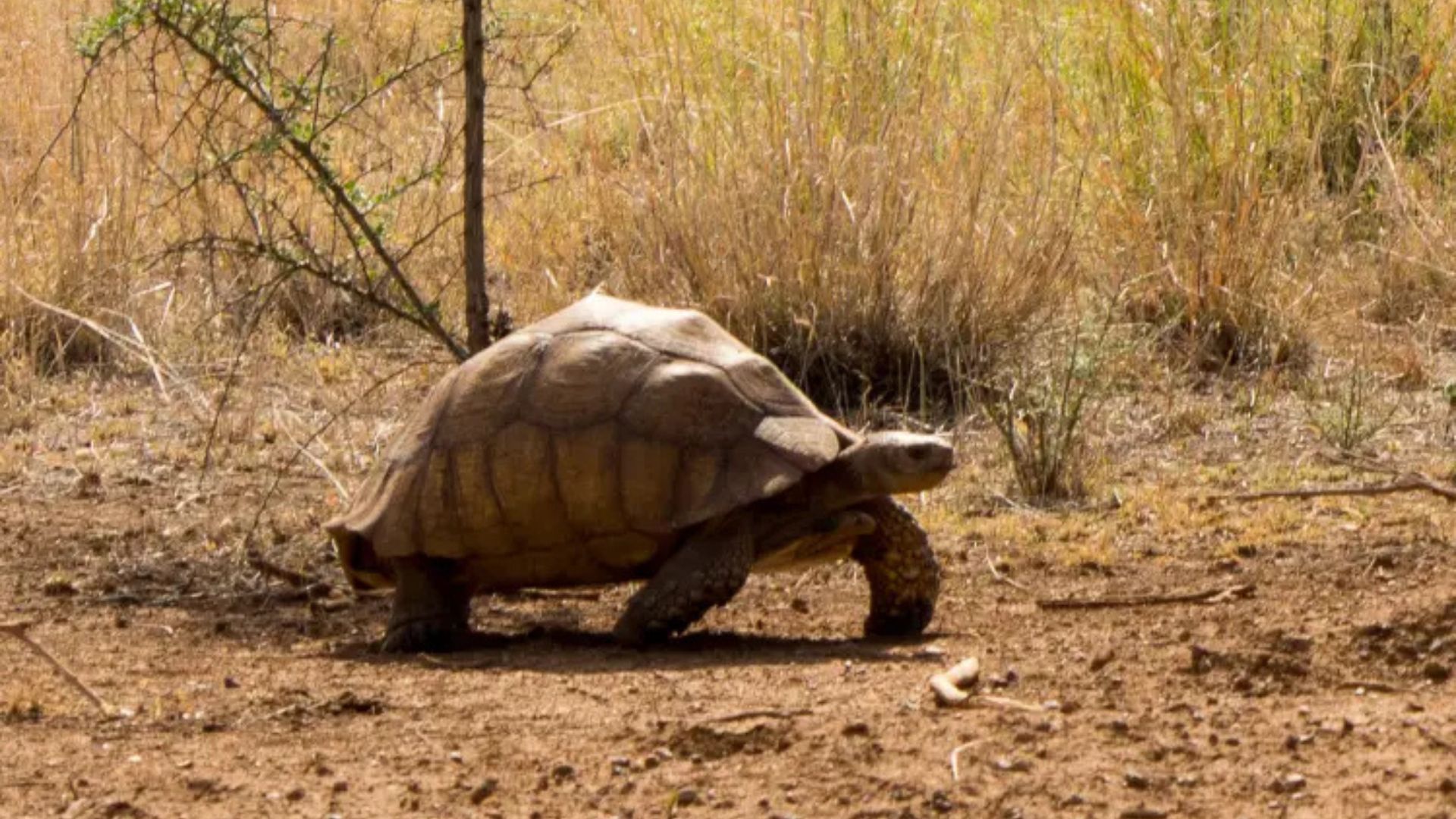


Environmental Experiment in the Sahara Reveals Unexpected Effects of Native Fauna Reintroduction, with the Emergence of Deep Tunnels, Gradual Vegetation Recovery, and Signs of Soil Regeneration Detected by Satellite in Areas Previously Dominated by Sand.
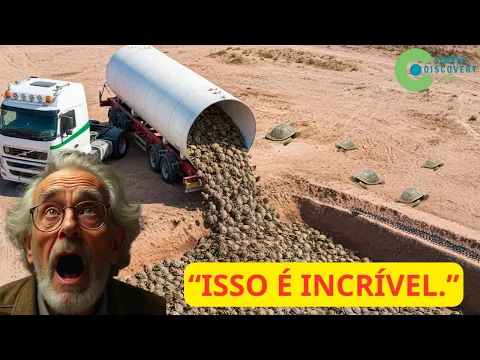
The release of around 500 African Sulcata Tortoises in arid areas associated with the Sahara Desert has been observed as an unusual environmental restoration experiment.
According to a report by the Simple Discovery channel, in approximately five years, underground tunnels of up to 10 meters in length, patches of vegetation where there was once only sand, and signs of detectable ecological transformation were observed through satellite images, results that surprised the scientists involved in the monitoring.
These initiatives are part of a global alert scenario.
-
He started running at 66 years old, broke records at 82, and is now a subject of study for having a metabolic age comparable to that of a 20-year-old, in a case that is intriguing scientists and inspiring the world.

-
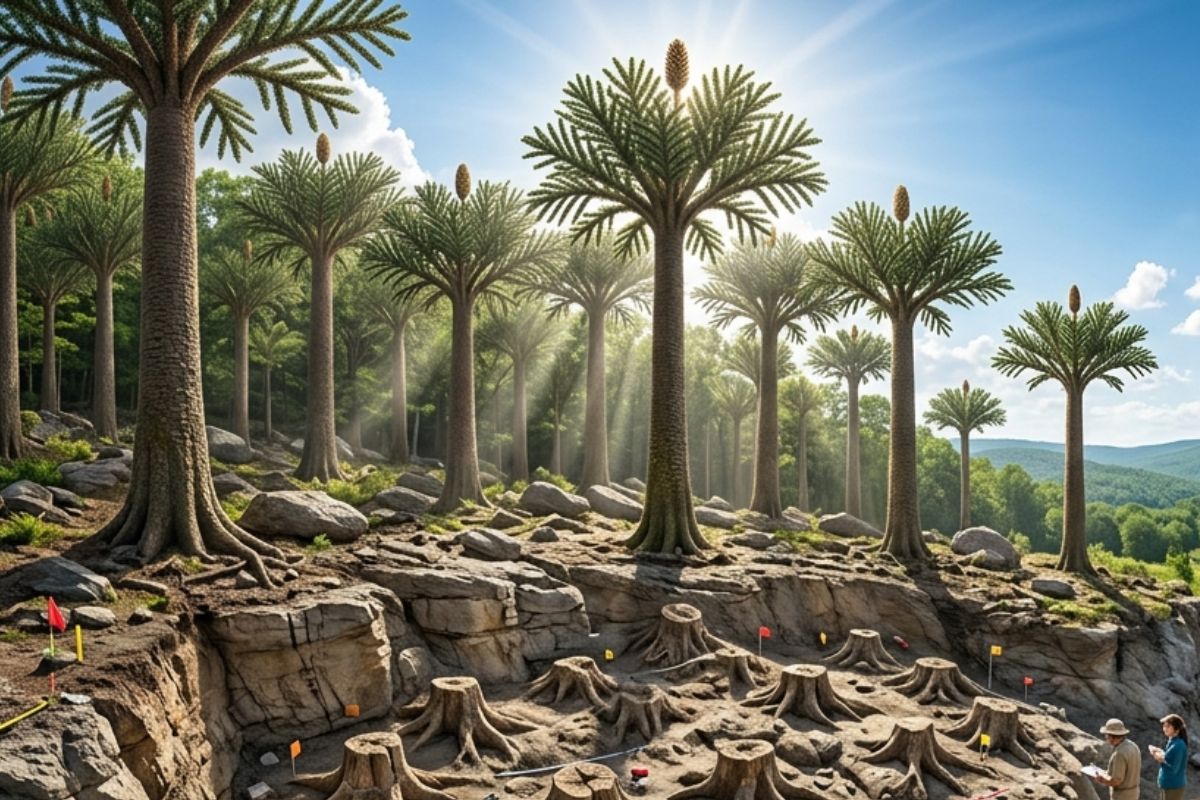
Oldest tree on the planet reappears after 130 years of searches: Wattieza, 385 million years old, was 10 meters tall and had no leaves or seeds; Gilboa fossils in New York solved the mystery in 2007.
-
A 48-square-meter house assembled in hours with 4,000 bricks made of recycled plastic that does not absorb moisture, has natural thermal insulation, and costs less than 90,000 reais in a complete kit.

-
Luciano Hang revealed that Havan’s air fleet has already accumulated more than 20,000 landings, 10,000 flight hours, and 6 million kilometers traveled, and he says that without the planes, the company would never have grown so quickly.


According to data gathered by Simple Discovery, more than one hectare of fertile soil disappears every second on the planet.
Today, more than 40% of the world’s land is already degraded, while about 33% of the land surface is comprised of desert or semi-arid areas.
The advancement of desertification has ceased to be a localized problem and has begun to mobilize governments, researchers, and international organizations.
Global Fight Against Desertification and Loss of Fertile Soils

The response to the accelerated loss of productive soils has taken various forms.
The text presented by Simple Discovery cites China, where the project known as “Great Green Wall” has been implemented, an extensive band of forests planned to contain the advance of the Gob Desert over thousands of kilometers.
In Israel, according to the channel, drip irrigation has transformed the Negev Desert into productive agricultural areas.
This example is highlighted as a demonstration of how technology and efficient water management can alter arid landscapes.
In North America, however, the described strategy follows a different path.
Simple Discovery reports on the reintroduction of bison and beavers, animals that, through their natural behaviors, contribute to soil and vegetation regeneration.
In Africa, however, the reported proposal has gained an unexpected element.
Instead of relying solely on machines, irrigation, or reforestation, researchers have begun to observe the potential of a land animal as an environmental restoration agent: the African Sulcata Tortoise.
Extreme Conditions in the Sahara Desert and the Sahel
Simple Discovery describes the Sahara Desert as the largest and hottest in the world, with an area nearly equivalent to that of the United States.
During the day, temperatures can exceed 50 degrees, while at night they drop to around 10 degrees.
Annual precipitation ranges between 5 and 10 centimeters, a volume considered extremely low.
On the southern edge of the Sahara lies the Sahel, a strip of approximately 5,400 kilometers treated as a transition line between habitable areas and the advance of the desert.
According to the channel, in the last 50 years, the region has lost about 650,000 km² to desertification.
The area is compared to the territorial extent of Poland.
Today, around 80% of the lands in the Sahel are considered degraded, posing a direct risk to the livelihoods of over 100 million people.
Traditional Techniques and Limits of Environmental Megaprojects
In light of this scenario, different strategies have been tested.
In the Sahel, where many farmers do not have access to modern machinery, Simple Discovery highlights the traditional technique of Zaï.
The method consists of digging small holes in the soil, filling them with organic matter to retain rainwater and nourish the seeds.

The farmer from Burkina Faso Yacouba Sawadogo is credited with perfecting this technique.
According to the text, the results include productivity increases of up to 500% and the recovery of millions of hectares of degraded lands.
Despite this, the effort required limits the scale of the practice. Each hole must be manually dug.
At the continental level, Africa launched in 2007 the Great Green Wall project.
The initiative aimed for a strip of 7,700 kilometers in length and 15 kilometers in width, with the goal of restoring 100 million hectares.
According to Simple Discovery, by 2023, only 18% of the target had been achieved.
The greatest advancements occurred in countries such as Ethiopia and Nigeria.
Prolonged droughts, sandstorms, and lack of financial resources have reportedly led to the death of millions of seedlings.
Even with the adoption of strategies such as natural regeneration and agroforestry, the project has reportedly recovered about 30 million hectares.
African Sulcata Tortoise as an Ecological Engineer
In this context, the proposal emerged to resort to nature-based solutions.
Simple Discovery points to the African Sulcata Tortoise as a central element of this approach.
The species is entirely terrestrial and is considered the third largest tortoise in the world, behind only the Galápagos and Aldabra tortoises.
An adult can weigh between 80 and 90 kilograms, reaching up to 120 kilograms in some cases.
Adapted to extreme environments, it withstands temperatures above 50 degrees during the day and dry cold at night.
Despite this adaptation, the species faces a risk of extinction.
The text attributes population decline to competition with livestock, sheep, and goats, as well as hunting and illegal trade as a pet.
As a result, the Sulcata would now survive in only 17% of its original range, which stretches from Senegal to Ethiopia.
Reintroduction and GPS Monitoring Project

According to Simple Discovery, the pilot project began in 2006, in the Ferlo Biosphere Reserve in Senegal.
Hundreds of tortoises were released to assess not only survival but ecological impact.
Initial data indicated that 80% of the animals survived.
Shortly thereafter, the first hatchlings were born.
The initiative expanded to Mali, Niger, Chad, and Burkina Faso.
The project received support from international organizations and local communities.
Each tortoise was fitted with a GPS chip, allowing tracking of movements, tunnels dug, and areas in regeneration.
Subterranean Tunnels, Water in the Soil, and Seed Dispersal
Initial transformations are linked to the physical characteristics of the species.
The front legs of the Sulcata are described as large, strong, and covered with hard scales.
With these, the animals dig tunnels of up to 3 or 4 meters deep and around 10 meters long.
When it rains, water seeps into these tunnels.
Simple Discovery reports that this brings moisture and oxygen to the deeper soil layers.
These microenvironments favor the return of insects, birds, and small mammals.
Additionally, the Sulcatas act as natural seed dispersers.
They feed on grasses, shrubs, cacti, and desert flowers.
The slow digestion allows seeds to pass through their bodies intact.
The feces, rich in nitrogen, phosphorus, potassium, calcium, and magnesium, increase the chances of germination.
Results Observed by Satellite and Persistent Threats
Reports cited by Simple Discovery, attributed to the International Union for Conservation of Nature and an agency identified as CN, indicate a 30% to 40% increase in vegetation cover in areas with tortoises over five years.
Satellite images in the Ferlo region show green patches around reintroduction points.
The phenomenon is described as an “ecological signature”.
A mentioned study from 2018, conducted in Niger, indicates that the number of insects doubled in these areas.
With the insects, birds began to appear.
Subsequently, herds of goats and cattle approached the new pastures.
Despite this, the text emphasizes that tortoise trafficking continues.
The degradation caused by overgrazing and unsustainable agriculture also persists.
Combined with climate change and recent food insecurity crises, these pressures raise a central question: how to expand nature-based initiatives without them being restricted to isolated areas?







Eso demuestra completamente que programas como este de salvación a la naturaleza funcionan, por lo que no se debe esperar mucho más tiempo para que puedan ser implementados muchos otros más.
Não lhes envergonha divulgar tal matéria? Tartarugas gigantes colocadas num deserto. Inverossímil e facilmente comprovável. Super fake E para comentar ainda necessita colocar meu e-mail. Quantos equívocos
Sí hay tortugas gigantes en el desierto y están en peligro de extinción.
Estranho que falam em uma grande **** **** que está separando região da África formando um abismo que se forma um grande rio subterrâneo nestas regiões.