





 Portuguese
  English
  Spanish
  5 min of reading
  2 comments


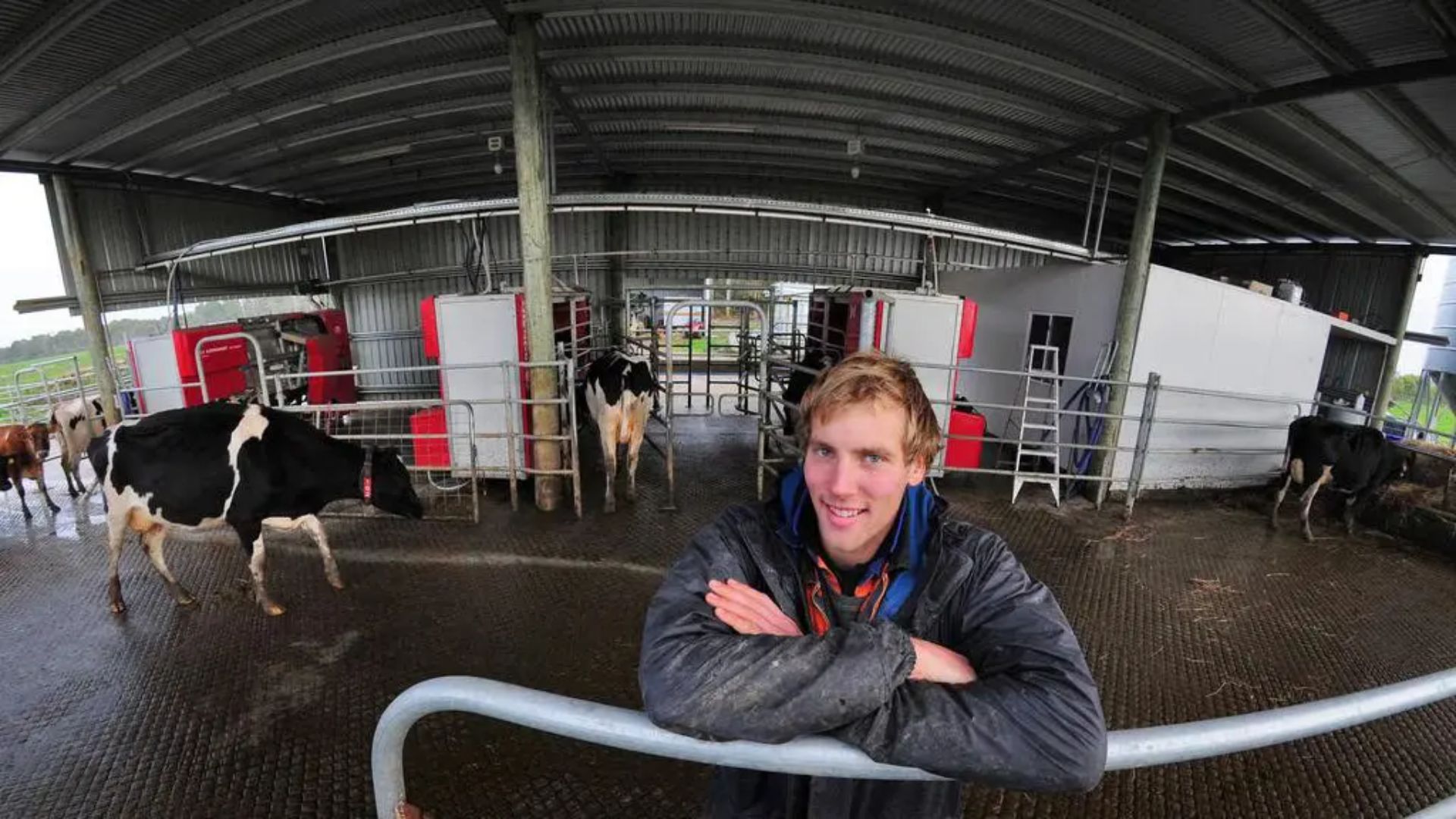


A Farm in Tasmania Uses Total Automation to Operate Day and Night With Just One Employee, Integrating Robots, Data, and Precision Management to Achieve Rare Efficiency in Modern Dairy Farming.
A dairy farm in northwestern Tasmania has been attracting attention in the sector by operating almost autonomously, day and night, with just one employee to care for a herd of about 500 cows.
With eight robots in permanent operation and intensive use of data, the producer Arjan van Adrichem, from Togari, has raised the efficiency of the property to a rare level in the dairy sector and was recognized with the Innovation Award at the Cadbury Farmer of the Year Awards.
Automation and Robots in Tasmania’s Dairy Farming
Located in a region with a humid climate and a strong dairy tradition, the van Adrichem family farm has undergone an accelerated transition to complete automation.
-
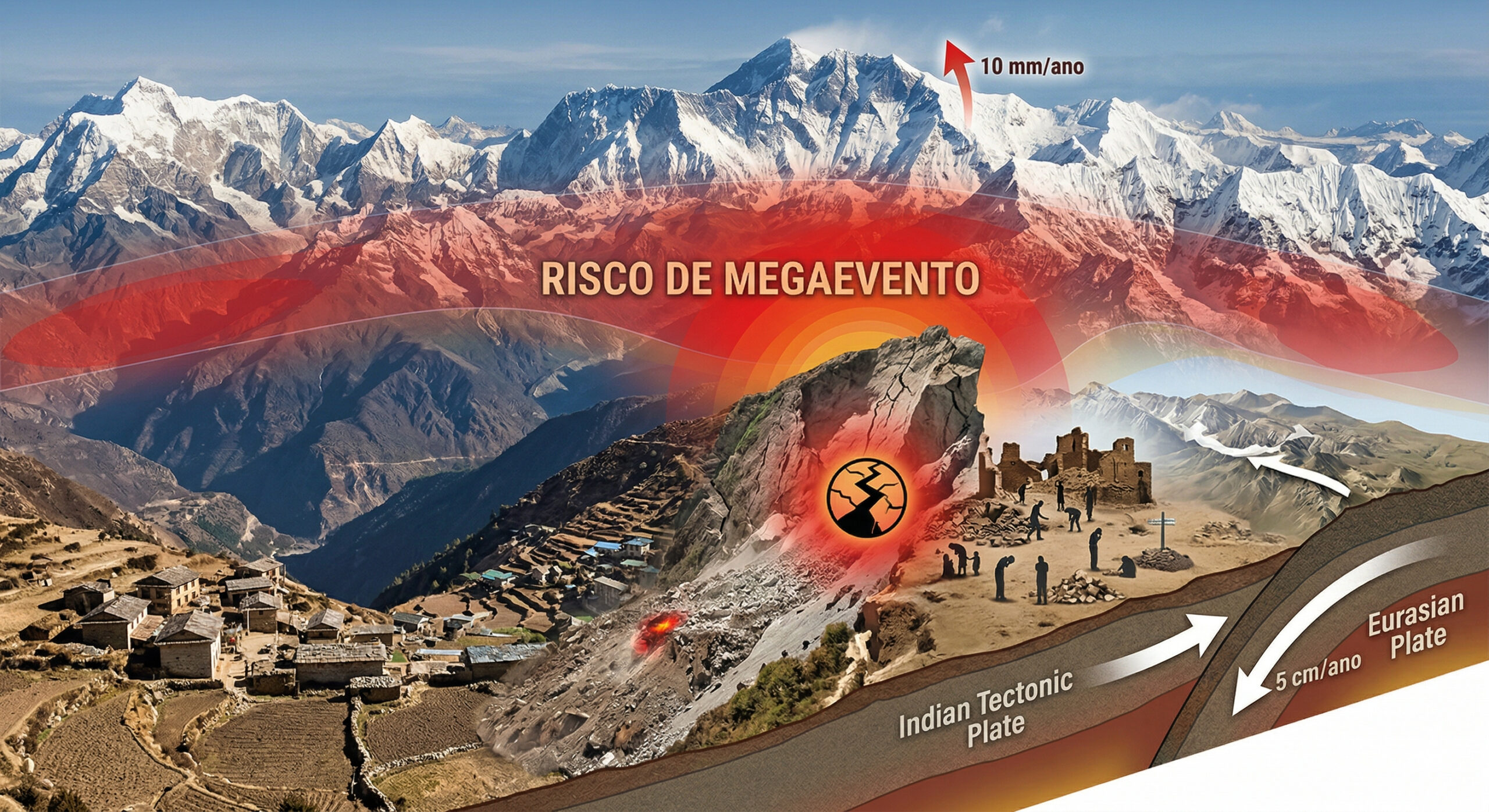
The Himalayas continue to grow to this day, with tectonic plates advancing 5 cm per year, mountains rising up to 10 mm annually, and the 2015 earthquake that killed 9,000 people may have increased the risk of an even larger seismic mega-event.
-
At an altitude of 400 km by astronauts from the International Space Station, Paris transforms at night into a golden mesh so precise that it reveals the outline of the Seine River, avenues, and entire neighborhoods like a luminous map drawn over the Earth.

-
iPhone 17 reaches historic low price with 256 GB, 120 Hz display, and drops to R$ 5,703 on Shopee, featuring A19 chip, dual 48 MP cameras, battery life of up to 30 hours, and advanced AI features.

-
Trip to Mars getting closer: Pulsar Fusion, from the UK, advances with plasma ignition in fusion engine and could drastically reduce space travel time, making crewed missions faster, safer, and economically viable.


Instead of the conventional system, with milking at fixed times and significant dependence on labor, the producer implemented a set of eight milking robots, which attend to the herd 24 hours a day.
These devices allow each cow to choose when it will be milked, according to its own physiological rhythm.
Upon entering the stall, the system identifies the animal, performs sanitation, connects the milking units, and automatically records milk volume, composition, and time of withdrawal.
The entire process is recorded in real-time on a management platform that centralizes herd data.

Automation is not limited to milking.
The robots also continuously monitor indicators such as feed intake, weight, and locomotion patterns, generating alerts when something deviates from the norm.
As a result, potential health issues can be identified before they become serious cases, which benefits the well-being of the cows and the stability of milk production throughout the year.
Productivity and Efficiency Above the Australian Average
While the average in Australian dairy farming is approximately one worker for every 120 cows, the system installed in Togari allows one person to manage, for most of the year, all routines related to about 500 animals.
In practice, the producer operates in a model similar to that of a “one-man farm.”
The need for additional staff arises mainly during calving weeks in spring, when managing cows in labor and calves requires more presence in the field.
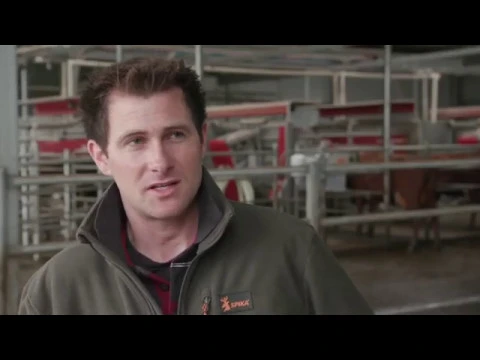

Outside of this period, most of the work focuses on monitoring indicators on the computer screen, intervening in specific cases flagged by the system, and adjusting routine feeding and pasture management.
The difference in terms of labor efficiency is significant.
In a scenario of rising costs and difficulty in hiring and retaining employees in dairy farming, van Adrichem’s property stands as an example of how automation can help maintain profitability without expanding the workforce.
Continuous Monitoring and Precision Dairy Farming
The set of robots functions, in practice, as a large permanent clinical examination of the herd.
Each cow generates a series of data throughout the day, which are compiled into reports on productivity, health, fertility, and feed consumption.

As these indicators change, the system points out animals that require special attention.
When there is a drop in production, a change in milk composition, or a sudden change in behavior, the software issues alerts.
This allows for early interventions, reducing losses, preventing severe cases of disease, and decreasing the need for more expensive treatments.
The same logic applies to reproduction.
Constant monitoring helps to identify estrus more accurately, improving pregnancy rates and the regularity of calving.
This model, known as Precision Dairy Farming, also helps keep costs under control.
With minimized waste and decisions made based on data, the producer can better manage the use of feed, supplements, and veterinary inputs.
Feeding Management and Soil Protection
Another pillar of the operation in Togari is feeding management.
Instead of relying solely on open pasture, the farm uses covered feeding platforms, where the herd is fed during heavy rain or adverse weather conditions.
This type of structure reduces waste of silage and concentrates to nearly zero, as the feed is not exposed to mud and water.

At the same time, it prevents tractors from traveling over soaked soil, decreasing compaction and degradation of forage production areas.
Improvements in silage management and combating food waste were central to the recognition received in the Cadbury award.
According to the awards organization, the producer was highlighted for raising feed quality and adopting practices that strengthen long-term sustainability.
Innovation Award and Environmental Program
The performance of van Adrichem’s farm was highlighted at the Cadbury Farmer of the Year Awards 2025, which honors the brand’s milk suppliers in Tasmania.
At the ceremony held in Devonport, the producer was announced as the winner of the Innovation Award, in recognition of the pioneering use of technology to improve silage management, reduce waste, and increase system efficiency with eight robots in operation.
The event was attended by Tasmania’s Premier, Jeremy Rockliff, and executives from Mondelez, the owner of the Cadbury brand.
On this occasion, the company’s president for Australia, New Zealand, and Japan, Toby Smith, stated that he could not “overemphasize the importance of Tasmania to Cadbury.”
During the same ceremony, the company announced a 200,000-dollar sustainability program, lasting two years, to support producers in measuring and reducing carbon emissions without compromising farm profitability.

The initiative aims to finance monitoring tools and projects that make production systems more efficient in terms of energy and input use.
Awarded Producers and Advances in the Dairy Sector
In addition to the Togari farm, four other producers in the northwestern Tasmania region were honored by Cadbury.
The Farmer of the Year award went to Catherine Furzer from Elliott. The Young Producer award recognized Josh Smith from Cuprona.
The Sustainability award was given to Rob Frampton from Gawler. Meanwhile, the Milk Quality trophy was awarded to Anthony Grey from Redpa.
The group of awardees indicates a moment of strong dynamism in the dairy chain in Tasmania, with producers seeking to combine raw material quality, environmental management, and technological innovation.
Initiatives include the use of milking robots, automated feeding systems, carbon metrics, and advanced soil and water management practices.
In this context, a crucial question arises for producers and industries: to what extent can experiences like that of the farm with 500 cows, eight robots, and one employee become a benchmark for other dairy regions, including Brazil?





No Brasil. A Agropecuaria leiteira esta praticamente ainda no estagio 0 Sendo a maioria de tiradores de leite manuais e sem condicoes financeiras de investirem no negocio
Estou até sem palavras… A tecnologia me impacta. Sou além de neto, sobrinho e filho de produtores de leite.