





 Portuguese
  English
  Spanish
  3 min of reading
  0 comments


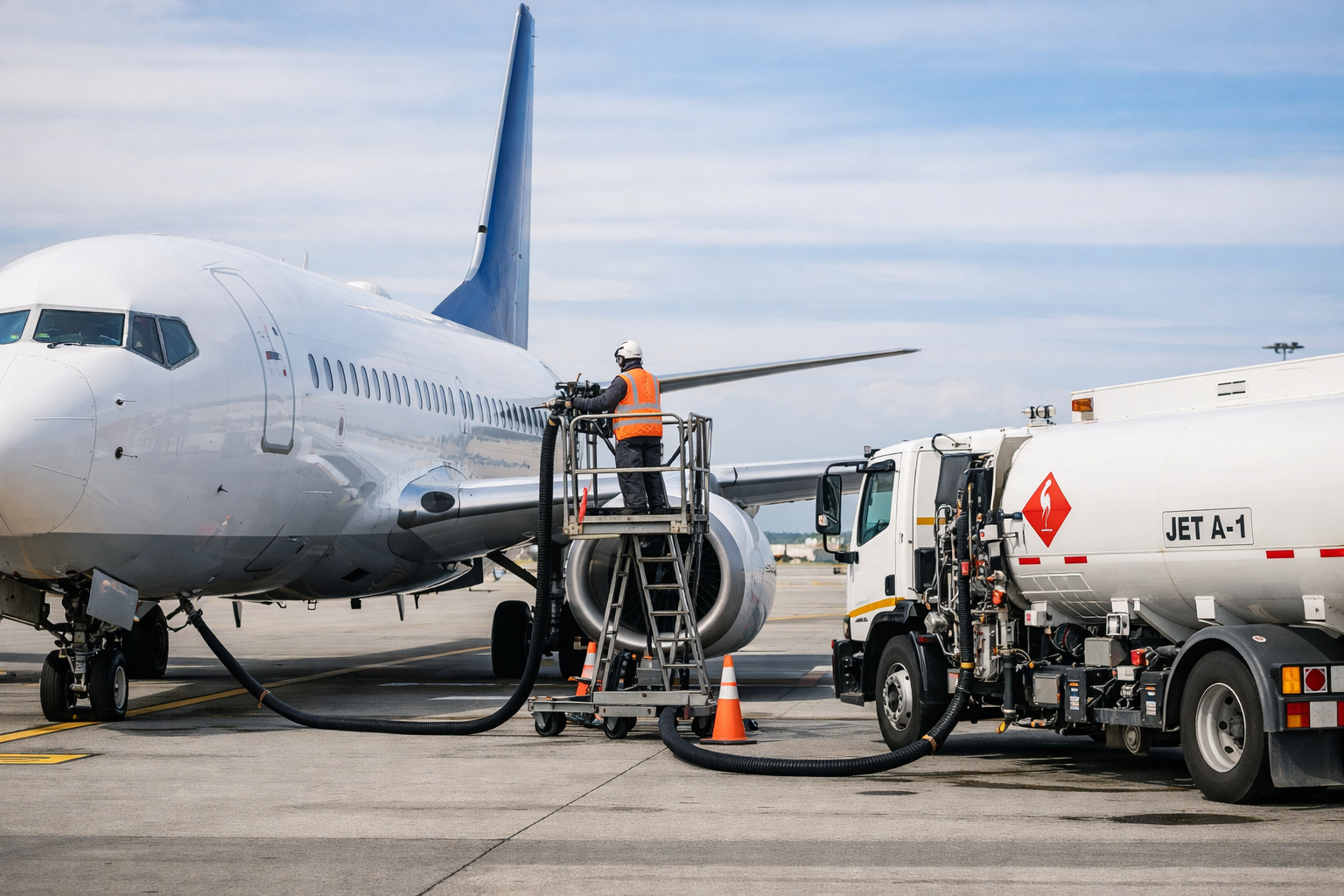
High aviation kerosene pressures airline costs, leads government to evaluate tax reduction and emergency measures to contain pass-through to consumers
The increase in the price of aviation fuel is already raising an alert in Brazil and may directly impact the price of airline tickets in the coming months. In light of this scenario, the federal government has begun to evaluate measures to reduce pressure on the sector and prevent the cost from being fully passed on to consumers.
The information was disclosed by authorities in the aviation sector and by proposals developed by the National Civil Aviation Secretariat (SAC), which were forwarded to the Ministry of Finance for analysis.
The fuel, known as aviation kerosene (QAV), is one of the main costs for airlines and, following the recent increases announced by Petrobras, now represents about 45% of the operational costs of companies, according to the Brazilian Association of Airlines.
-
Government prepares billion-dollar discount on electricity bills: Aneel will return R$ 5.5 billion to consumers in the North, Northeast, Mato Grosso, Minas Gerais, and Espírito Santo in the form of reduced energy tariffs.

-
Starting June 7, 27 European countries prohibit asking about previous salary in interviews, and Brazil has chosen a different path.

-
Billionaire Anne Marie Werninghaus, heir to WEG with R$ 9.1 billion, inaugurated the a.marie store at Casarão Emmendörfer in Jaraguá do Sul.

-
While millions of Brazilians still face unemployment and low wages, Chinese companies are increasing the hiring of foreigners, bringing more than a thousand Chinese people to Brazil each month, and changing the industrial reality of Bahia.


Expensive fuel pressures sector and threatens ticket prices

Firstly, the impact of the increase in QAV is immediate for airlines. This is because fuel is an essential input and highly sensitive to price fluctuations.
Thus, any significant increase tends to directly pressure operational costs. Consequently, there is a risk that this increase will be passed on to the final consumer through more expensive tickets.
In this context, the Brazilian Association of Airlines highlighted the need for mechanisms that reduce the impacts of this scenario.
According to the entity, support measures are essential to ensure:
- The development of air transport
- National connectivity
- The economic sustainability of operations
Government evaluates package of measures to contain impact
In light of the rising costs, the Ministry of Ports and Airports sent a series of proposals to the Ministry of Finance to alleviate pressure on the sector.
The document, prepared by the National Civil Aviation Secretariat (SAC), suggests several strategic actions, including:
- Temporary reduction of taxes on aviation kerosene (QAV)
- Reduction of IOF on financial operations of airlines
- Reduction of Income Tax on aircraft leasing operations
Additionally, another measure under consideration is the creation of a new line of the National Civil Aviation Fund (Fnac), aimed at purchasing fuel by companies, on a temporary basis.
According to the Ministry of Ports and Airports, these actions can preserve the competitiveness of the sector, prevent excessive increases for passengers, and maintain air connectivity in the country.
Government monitors international scenario and economic impacts
Meanwhile, the Ministry of Finance reported that it continuously monitors the international scenario, especially the developments of the conflict in the Middle East, which directly influences fuel prices.
According to the ministry, any decision will be made responsibly, based on data and respecting the fiscal limits of the country.
Furthermore, the government emphasized that monitoring of economic variables is constant, precisely to assess possible impacts in Brazil and define appropriate measures.
What could happen to ticket prices
In light of this scenario, experts point out that the increase in fuel costs may generate chain effects.
On one hand, airlines need to balance their operations to avoid losses. On the other hand, consumers are already facing a tighter budget scenario.
Therefore, the definition of the measures under study will be decisive in determining whether the impact will be absorbed by the sector or passed on to the public.
Additionally, the behavior of the international market will continue to be a determining factor in the coming months.
Have you felt that flying has become more expensive in recent months?









Be the first to react!