





 Portuguese
  English
  Spanish
  3 min of reading
  0 comments


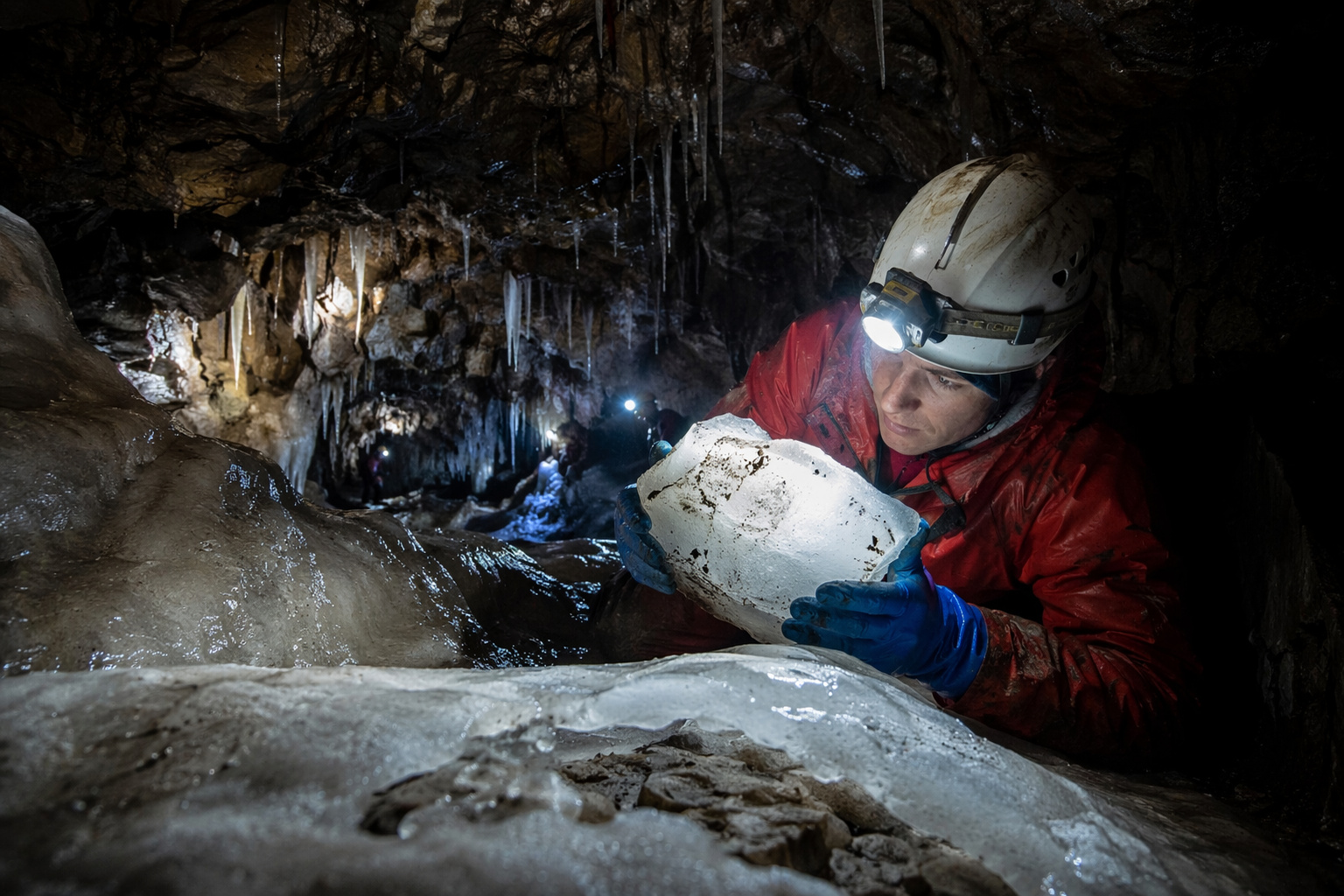
Preserved microorganism in ice reveals that bacterial resistance emerged thousands of years before modern medicine and may impact the future of treatments
A recent scientific discovery has caught the attention of the international community in Romania.
Scientists found a bacterium approximately 5,000 years old preserved in a block of ice inside a remote cave, according to analyses conducted in 2024.
The study revealed that the microorganism already possesses resistance to modern antibiotics, widely used in the treatment of severe infections.
-
5,000-year-old bacteria found frozen in a cave in Romania already shows resistance to modern antibiotics and raises a global scientific alert about the future of infections.
-
Scientists thaw microbes trapped in Alaska for 40,000 years, discovering that they reorganize, become active again, and start releasing greenhouse gases in a troubling climate alert.
-
China is erecting a mega project in Tibet worth $167 billion and 60 GW that could become the largest individual source of energy in the world and, at the same time, one of the biggest geopolitical bombs in Asia.

-
Alone in space, a wandering planet without a star is consuming 6 billion tons per second, setting a record that challenges astronomy and reignites the debate on how planets and stars actually form.

Researchers claim that this result changes the understanding of the evolution of diseases and raises concerns about the effectiveness of current treatments.
Furthermore, the finding confirms that bacterial resistance did not emerge recently but has existed as a natural mechanism for millennia.
Genetic investigation reveals surprising resistance
Scientists analyzed the genetic material of the bacterium after its removal from the ancient ice.
The results released in 2024 identified genes capable of neutralizing modern chemical compounds, even before the creation of antibiotics.
This data shows that microorganisms already had natural defense systems long before contemporary medicine.
Additionally, the extreme environment of frozen caves directly contributed to the development of these adaptations.
Over thousands of years, bacteria faced hostile conditions and developed highly efficient survival mechanisms.
Impacts on infection control
The study raises important questions about the durability of current treatments.
If bacterial resistance already existed before antibiotics, then medical protocols require constant updates.
Experts warn that the potential exposure of these microorganisms to the modern environment may create new challenges in infection control.
Moreover, scientific teams have intensified monitoring of areas with permanent ice since 2024, according to international reports.
This monitoring aims to prevent the uncontrolled release of ancient pathogens.
What the genome revealed about extreme survival
Genetic sequencing identified essential characteristics for the prolonged survival of the bacterium.
Among the main observed factors are:
• Ability to remain dormant for long periods at extremely low temperatures
• Presence of enzymes that degrade complex chemical compounds
• Cell membranes reinforced against aggressive external agents
These characteristics help scientists better understand bacterial resistance.
Additionally, this data allows for advancements in the development of more effective new medications.
Global warming increases biological risks
The rise in global temperatures accelerates the melting of frozen regions.
This process may release microorganisms that have been isolated for thousands of years.
As a result, current populations may come into contact with unknown biological agents.
Experts point out the main risks:
• Dissemination of pathogens through water currents
• Rapid adaptation to new environments
• Difficulty in diagnosis due to lack of complete genetic data
In light of this scenario, scientific authorities have reinforced, since 2024, the importance of surveillance in frozen regions.

Scientific preparation for new challenges
Advancements in genetic sequencing prove essential to face these threats.
Moreover, the responsible use of antibiotics remains a fundamental measure.
Experts emphasize that studying ancient microorganisms helps anticipate future risks.
Understanding these organisms allows for the creation of more effective prevention and treatment strategies.
Finally, the discovery of this ancient bacterium confirms that biological resistance is a complex and persistent phenomenon.
In light of this, is current medicine prepared to deal with microorganisms that have survived for thousands of years hidden in ice?










Seja o primeiro a reagir!