Portuguese
  Spanish


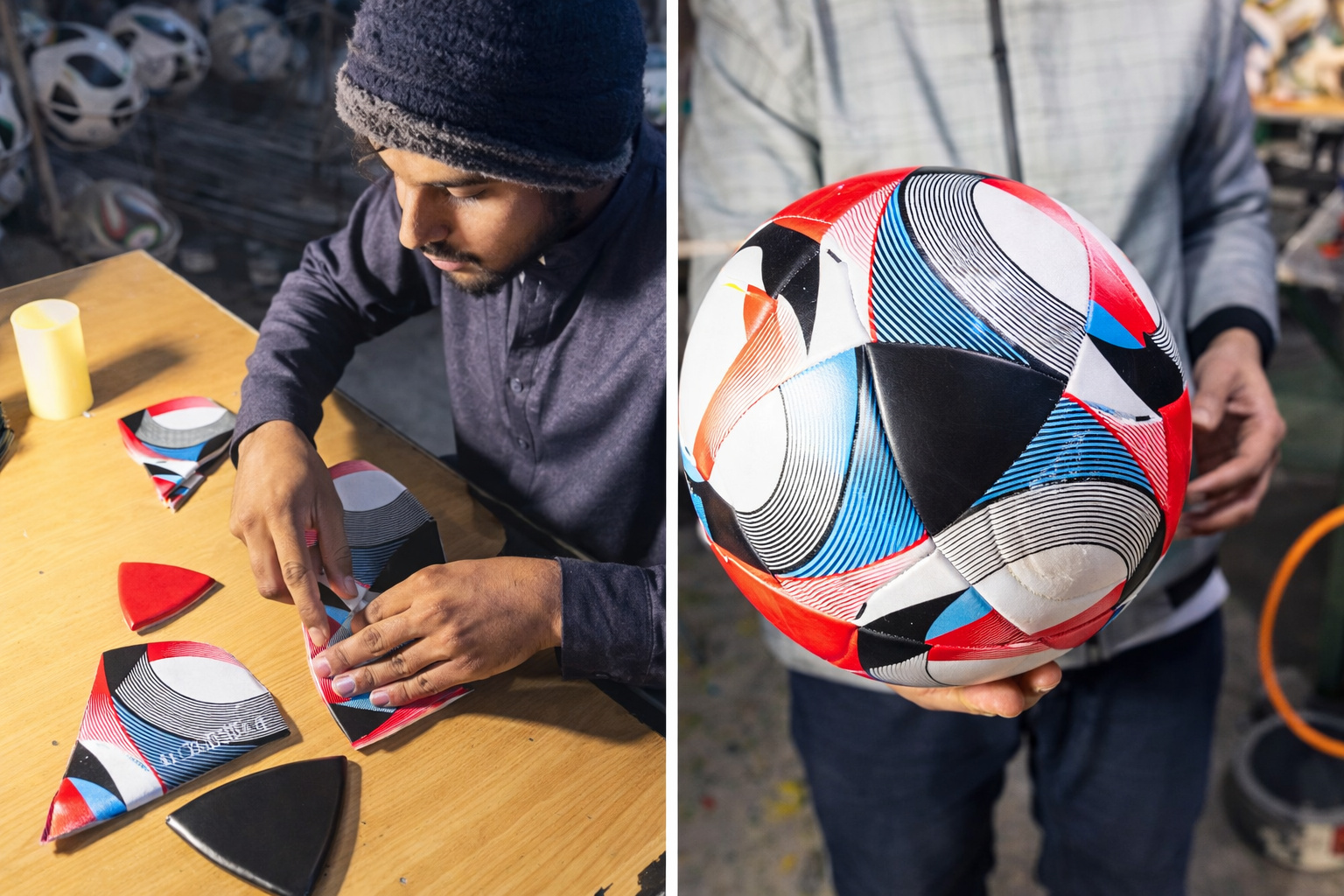

Learn how the soccer ball factory works with latex, from the inner chamber to the final tests that ensure professional quality
The manufacturing of soccer balls draws attention for involving technology, precision, and manual labor in various stages. The process transforms simple materials into a product used in professional competitions and in the daily lives of millions of people.
The impact lies in the final quality of the ball, which needs to meet strict standards of weight, durability, and shape. Each phase of production directly influences performance on the field.
According to Manufacturing Lab, a channel specialized in videos of industrial processes, the complete process shows how simple materials are transformed into professional balls used in official matches.
-
Award-Winning Korean Electric Scooter Concept Folds to Briefcase Size, Eases Transport Challenges

-
YouTuber Discovers Surreal Collection in 400-Year-Old Italian Fortress Near Florence: 419 Anvils, Giant Walruses, Ancient Church, and WWII Tunnels

-
Creative Uses for Toilet Paper Rolls That Will Change Your Perspective
-
Crab Trapped in Plastic Bottle for 62 Days Near Okinawa Highlights Little-Known Impact of Marine Pollution on Small Animals


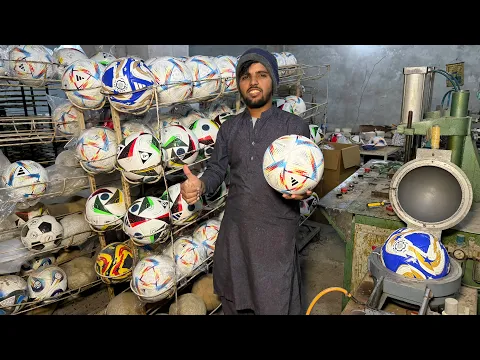

How the manufacturing of soccer balls begins with the production of the inner chamber
The first stage of manufacturing soccer balls involves creating the inner chamber, known as the bladder. It is made from rubber or latex, molded into a rounded shape.
After that, the structure receives an important reinforcement. Polyester threads wrap around the chamber to increase durability and help maintain its shape.
This detail is essential to ensure that the ball maintains stable pressure and a spherical shape, even after multiple impacts during use.

Cutting and preparation of the panels form the external part of the ball
The external part of the ball is formed by the so-called panels. They are produced from synthetic materials such as polyurethane, known for their durability.
These materials are then cut into specific shapes, such as hexagons and pentagons, or even larger shapes in more modern models.
Additionally, the panels receive colors, designs, and logos. This process is done with techniques that ensure the paint does not wear off easily with use.
Assembly defines whether the ball will be stitched or made by thermal fusion
Assembly is one of the most important phases of manufacturing soccer balls. There are two main methods used by the industry.
In the stitched model, the panels are joined with thread, forming the external structure. In the modern method, thermal fusion occurs, where heat joins the pieces without stitching.
The choice of method directly impacts performance. Seamless balls have lower water absorption and a smoother surface, which improves control during the game.
Molding with heat and pressure ensures perfect shape of the ball
After assembly, the ball undergoes a molding process. It is inflated and placed in a spherical metal mold.
At this moment, heat and pressure are applied, ensuring that the ball acquires the ideal shape. This step is essential to meet the technical standards required in the sport.
After cooling, the ball undergoes pressure adjustments and shape verification to ensure balance and precision.
Quality tests simulate real use before distribution
The final stage involves rigorous testing. The balls are evaluated on criteria such as bounce, resistance, and durability.
These tests simulate real game conditions, including repeated impacts. The goal is to ensure that the final product can withstand constant use.

This phase is crucial to ensure that the ball meets the standards required for professional competitions.
Industrial process transforms simple materials into high-performance sporting products
The manufacturing of soccer balls shows how technology and manual labor complement each other. Each stage plays an important role in the final quality of the product.
The result is a ball that meets strict standards and offers good performance on the field, whether in professional or amateur games.
If this type of content caught your attention, share it with others and leave your comment telling what surprised you the most about this process.