





 Portuguese
  English
  Spanish
  3 min of reading
  0 comments


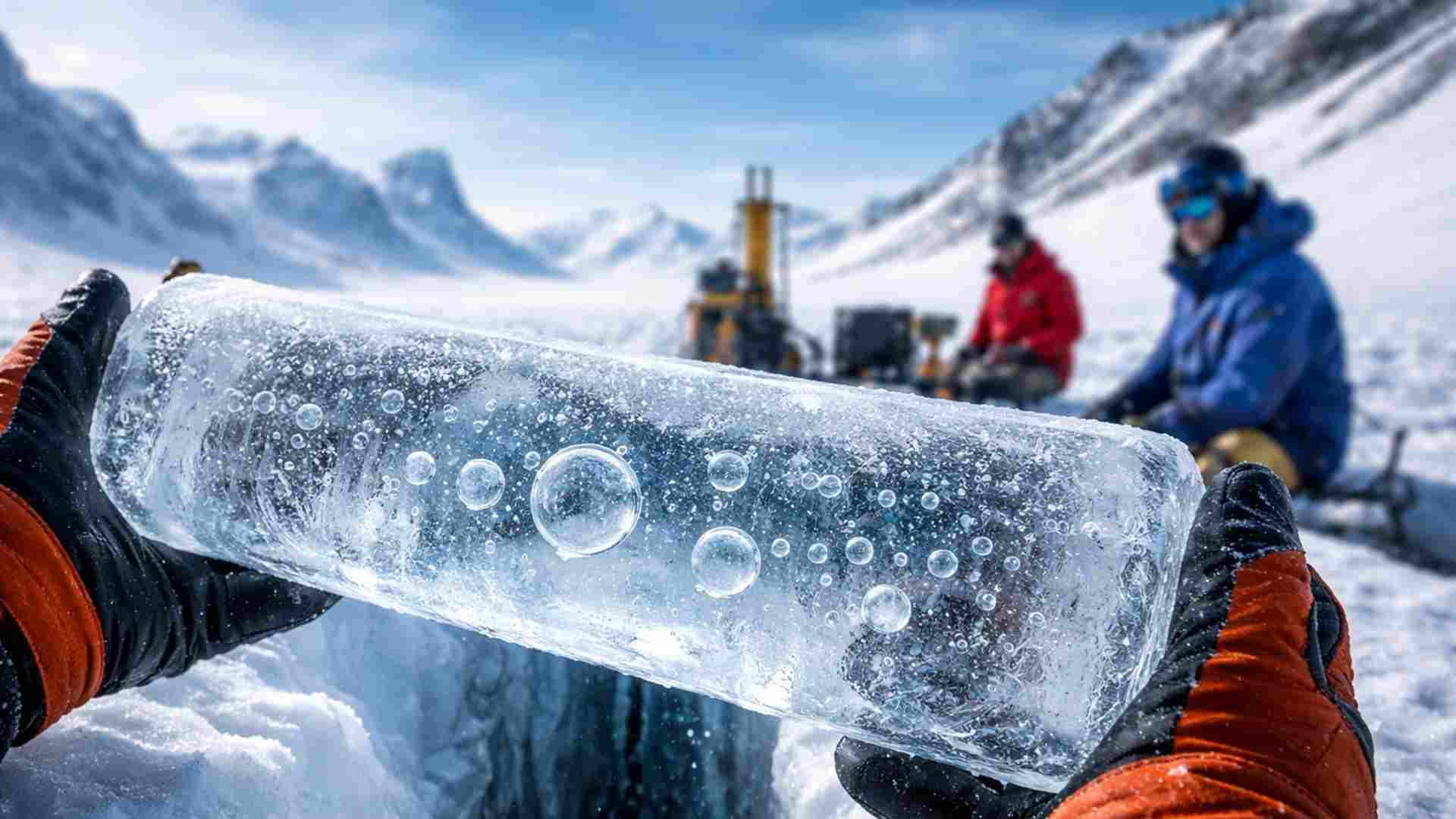
The Discovery Of A 6 Million-Year-Old Ice Core In Eastern Antarctica, Dated Directly By Isotopes And Containing Air Bubbles From The Miocene Period, Doubles The Known Climate Record And Offers New Evidence About The Thermal Evolution Of The Planet Over Millions Of Years.
Scientists identified in Eastern Antarctica an ice core that is 6 million years old, the oldest with direct dating ever recorded, containing trapped air from the Miocene period, expanding climate records and providing new evidence about the thermal evolution of the planet.
The find was detailed in a study published on October 28 in the journal PNAS. The samples are more than twice the age of the previously known oldest ice cores, which were about 2.7 million years old, according to the authors.
The research was led by Sarah Shackleton, assistant scientist at the Woods Hole Oceanographic Institution in Massachusetts. The work analyzed ice and air bubbles preserved naturally for millions of years.
-
With a cost per shot close to zero, the DragonFire laser could change naval warfare in 2027 and provide British ships with nearly unlimited defense against drones.

-
A British startup creates tires that generate electricity in electric vehicles when passing over potholes, speed bumps, and cracks.

-
Scientists have created robots made with living cells that have their own nervous system, swim on their own, explore the environment, and self-organize without any genetic engineering, and now they want to do the same with human cells.

-
Students create a solar-powered ambulance that operates without a plug, without fuel, and still keeps medical equipment running in remote areas.


Record-Breaking Ice Discovery In The Allan Hills Region
The record-breaking ice was found in the blue ice area of Allan Hills, Eastern Antarctica, during campaigns conducted between 2019 and 2023. The region is situated about 2,000 meters above sea level, as described in the study.
Allan Hills is known for exposing ancient ice near the surface, allowing for the collection of deep samples without the need for extreme drilling. Nevertheless, the environment is considered one of the most hostile for fieldwork.
Drilling, Direct Dating, And Isotopic Methods
To obtain the samples, researchers drilled between 100 and 200 meters deep into the ice layer. The extracted cores underwent direct dating based on the radioactive decay of argon isotopes present in the trapped air bubbles.
Moreover, analyzing the oxygen isotopes allowed for the reconstruction of the thermal evolution of the region.
The data indicate a steady cooling of about 12 degrees Celsius over the last 6 million years, according to the authors.
Climate Record From The Miocene Period
The analyzed ice and air date back to the Miocene period, between 23 million and 5.3 million years ago. During that period, Earth experienced higher temperatures, higher sea levels, and ecosystems dominated by species now extinct.
Among the animals that inhabited the planet during that time were saber-toothed tigers, giraffes similar to okapis, Arctic rhinoceroses, and the first mammoths, as described in the study material.
Ice Preservation And Scientific Implications
The exceptional preservation of ice in Allan Hills is attributed to a combination of factors, including the nearly static movement of surface ice, rugged topography, and extreme environmental conditions such as strong winds and intense cold.
According to the researchers, these characteristics prevent the accumulation of recent snow and reduce ice movement, creating unique conditions. Even so, scientists admit there are still uncertainties regarding the exact mechanisms of this preservation.
The authors claim that the analysis of these cores allows for a better understanding of ancient greenhouse gas levels and ocean warming. This information helps identify natural factors that influenced climate changes throughout Earth’s history.
The statement from Oregon State University, which also participated in the research, highlights that Allan Hills is one of the best places in the world to find ancient ice at shallow depths, although it is one of the most difficult for long scientific expeditions.








-

-

3 pessoas reagiram a isso.