





 Portuguese
  English
  Spanish
  6 min of reading
  0 comments


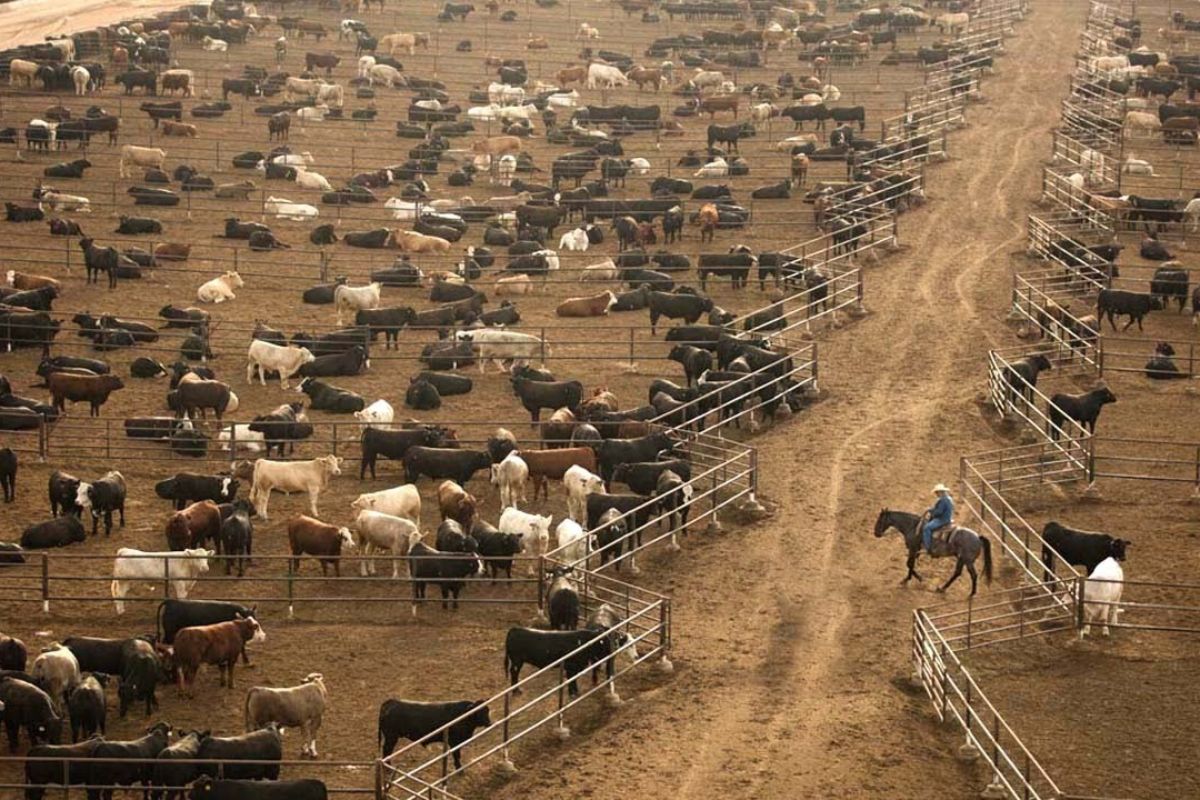
In The United States, Cattle Have Become An Open-Air Industry: There Are 700 Thousand Ranchers And 91.9 Million Heads, With Texas Leading In Pastures. The System Mixes Breeding, Traditional Branding, Free Range And Fattening With Corn And Grains Before Slaughter And Processing That Shapes American Beef.
The cattle in the United States operate on a continental scale: there are 700 thousand ranchers and 91.9 million heads, with Texas established as a powerhouse thanks to vast pastures and a model that combines tradition and efficiency.
In practice, the plan sustaining this machine combines breeding on open pasture, traditional branding for identification, routines conducted by cowboys, and a fattening stage with corn and grains to enhance the quality of the meat, at a pace that resembles an open-air industry.
Texas Becomes A Cattle Powerhouse And Drives The Cattle Belt

Texas appears as the great symbol of cattle in the U.S. due to a combination that has been repeating for over 300 years: favorable climatic conditions and extensive pastures.
-
Unable to pass through Hormuz, Brazil activated a plan B that uses Turkey as a gateway to the Middle East: the route through Gibraltar and the Mediterranean is longer and more expensive but ensures that chicken, beef, and corn continue to reach Arab markets.

-
You grew up hearing that the good coffee from Brazil goes all abroad and the bad coffee stays for Brazilians, but this story has completely changed, and the numbers show that in the 1980s, thirty percent of the coffee sold here was adulterated with corn and barley.
-
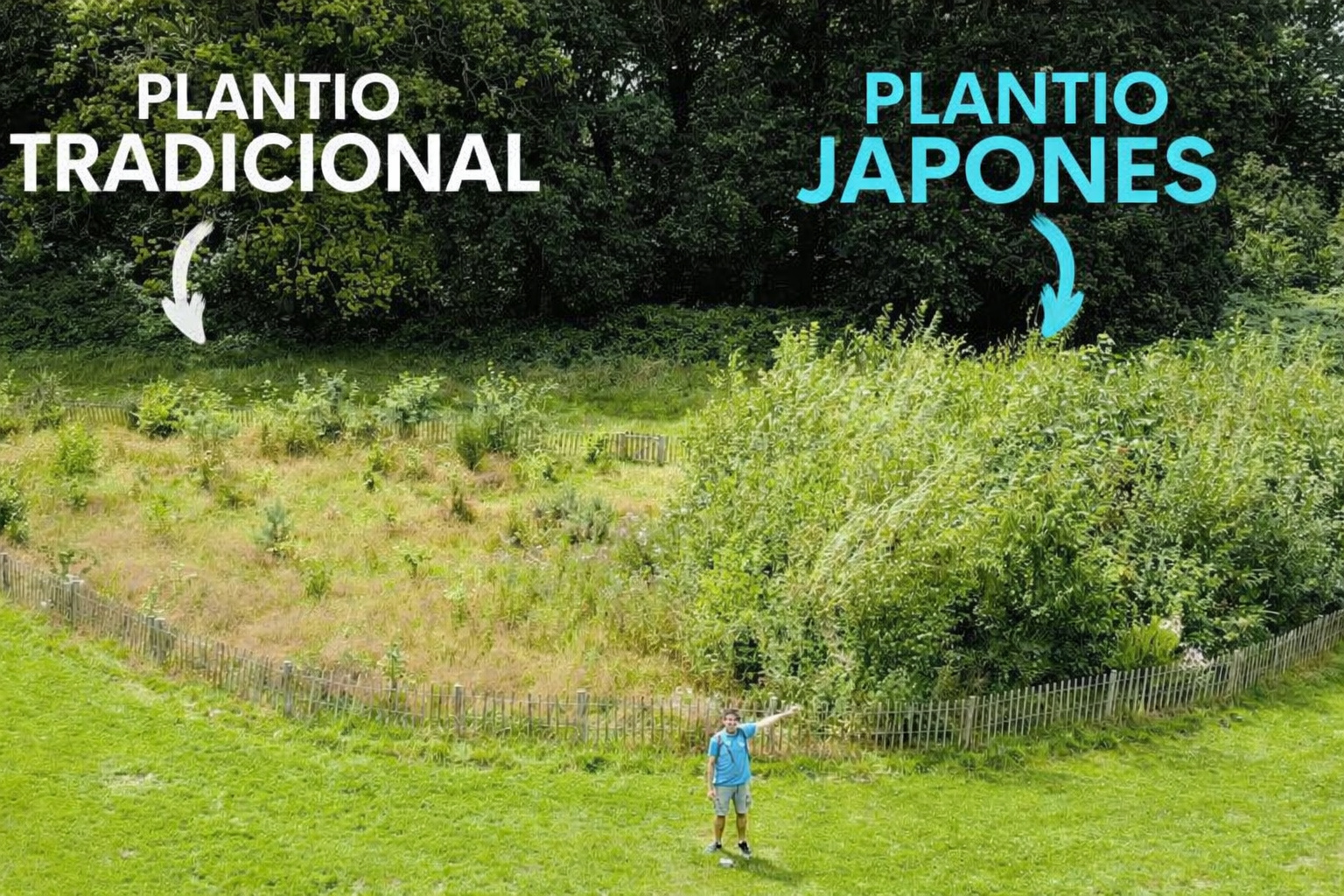
Engineer creates reforestation method that transforms small plots into dense forests in a few years using local biomass and can reduce environmental recovery costs.
-
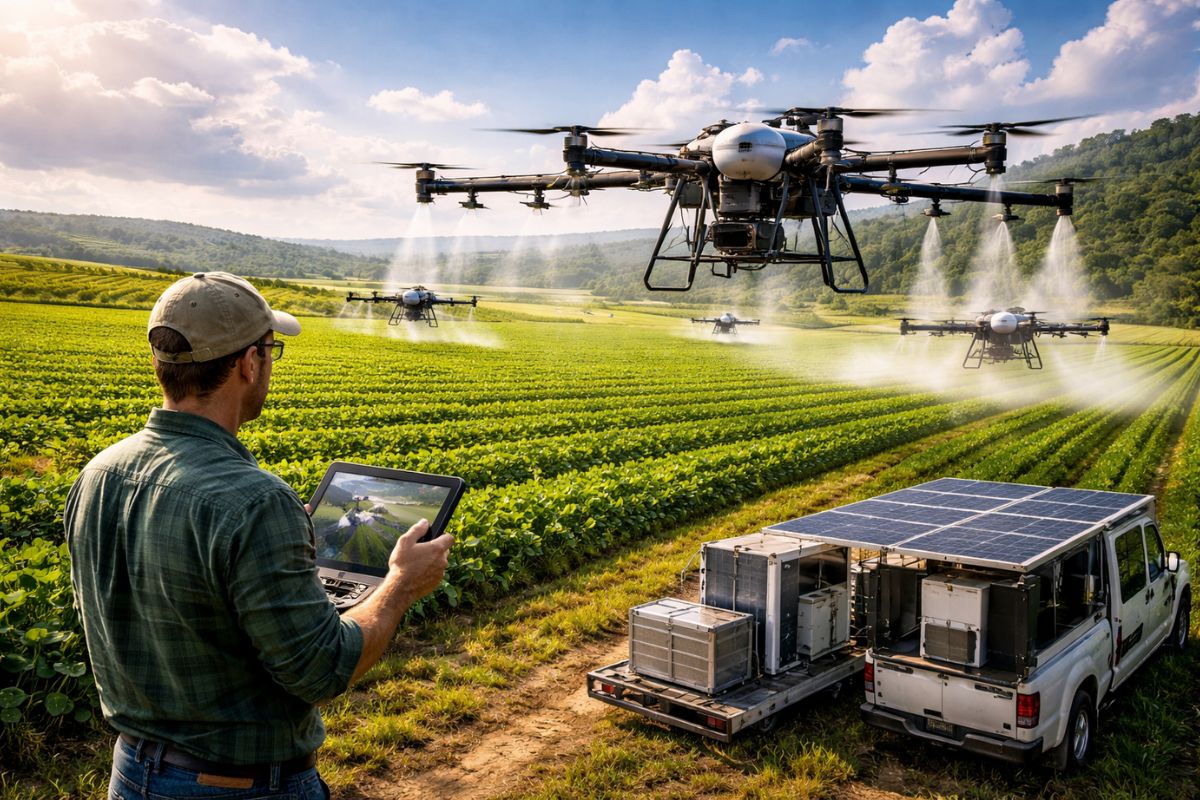
Alone, the producer applies 7,400 hectares with the T100 drone in an optimized structure, replaces the generator with a silent battery, and demonstrates how technology reduces costs, increases productivity, and even challenges the uniport in the field.

In this scenario, the state stands out alongside Nebraska, Kansas, and Oklahoma, cited as the states with the highest number of ranchers.
This territorial base helps explain why cattle are spread in immense herds and why raising is integrated into very clear daily routines.
In the morning, cowboys release the cattle to feed in the pastures, and at night, some of the animals are brought back for rest and to reduce the risk from predators.
91.9 Million Heads And A Pasture Map That Seems Infinite
The scale of cattle depends not only on individual farms but also on the size of the territory dedicated to grazing.
The U.S. has about 614 million acres of land used for cattle grazing. Within this total, Texas alone has 130 million acres, which represents 21% of the country’s area.
This pasture map sustains the logic of a widespread cattle farming system, in which cattle move, feed, and are managed over vast areas.
It is a production that takes place outdoors, with a steady rhythm, rather than relying solely on closed structures.
More Than 70 Breeds And A Name That Dominates Pastures
Genetic diversity is part of the design. In the United States, there are more than 70 different breeds of cattle, notably Beefmaster, Longhorn, Hereford, and Angus. Among these, Angus is noted as the most common breed in Texas pastures.
In practice, this variety allows cattle to be selected according to the environment, production goals, and market preferences.
The result is a flexible system capable of supplying different chains without abandoning the pasture base.
Mass Births: 35.8 Million Calves Born Each Year
The beginning of the cycle is as significant as the rest of the system. Each year, about 35.8 million calves are born in the United States, and up to 11 million of those births occur in Texas.
At birth, calves typically weigh between 60 and 80 pounds.
In some Texas farms, calves stay with their mothers for about three months before weaning.
This initial period is part of the management that prepares cattle for the next stages, already focused on herd organization and identity control.
Traditional Branding: The Detail That Keeps Cattle Traceable
Between one and three months of age, calves undergo the branding process. The function is straightforward: to allow farmers to identify their cattle in case they mix or lose them in another herd while grazing.
The noteworthy point is the cultural persistence. Many Texas ranchers still use traditional cattle branding, as they did in 1800, regarded as part of the history of cattle ranching. It is an ancient practice sustaining a modern operation.
Free Range And Fattening: When Corn And Grains Come Into Play
Feeding starts in the pastures, but doesn’t end there. In addition to free feeding, millions of cattle are also fed with corn and grains to enhance the quality of the meat.
This supplement boosts weight gain and standardization, bringing the process closer to a production line.
There is a comparison that dimensions the weight of this consumption: it is reported that the amount of corn and grains consumed by cattle in the U.S. could feed 800 million people each year.
It is a figure that underscores the scale and cost of the system.
Slaughter Age And The Shift To The Meat Industry
The majority of cattle in Texas are considered fully mature and eligible for meat consumption when they reach the age of two to three years.
This milestone organizes management, logistics, and animal destination decisions.
On the industrial end, the numbers are also significant. In 2020, the number of cattle slaughtered in the United States was about 33.3 million heads, and the total meat production was 27.3 billion pounds.
It is the confirmation of a cycle that begins in the pasture and ends in large-scale processing.
Australia Enters As A Contrast: Cattle Export By Ship
The logic of scale is not exclusive to the U.S., and the comparison arises with Australia. Every year, Australian cattle farms export about 1.3 million heads, and 80% of this is sent to China.
The logistics are described as coordinated operations: ranchers use helicopters to herd thousands of animals to the collection area, then the cattle are transported by truck to the port and loaded onto ships for export. It is another form of open-air industry, focused on international flow.
Dairy Cattle: 9.4 Million Cows And 220 Billion Pounds Of Milk
In addition to beef cattle, there is a specific block of cattle geared towards milk. The United States is cited as the fourth largest country in the world in terms of dairy cows, with about 9.4 million heads and an annual production of 220 billion pounds of milk.
After birth, calves are separated from the mother cow and workers take over the care.
Risk numbers also appear in the cycle: each year, about 8 million calves are born, and around 500 thousand die shortly after.
In addition, 450 thousand cows die during the lactation process. Animals with health issues are kept separately for medical care, and in their first month of life, calves are completely kept in closed environments.
Where Dairy Cattle Concentrate And How The Diet Works
California, Wisconsin, Idaho, and Texas are cited as the four states with the highest number of dairy cows, and only California has 1.7 million cows. Cows are considered mature when they reach 13 to 15 months of age.
The diet also shatters a common notion: more than 60% of the feed for dairy cattle in the U.S. is grass and corn silage.
And the scale of input reappears: annually, cattle farms in the United States consume about 315 million tons of silage.
Texas In Dairy: 351 Farms And A Routine Of Feeding Twice A Day
In Texas, there are currently 351 dairy farms, with about 600 thousand cows and an annual production of 15.1 billion pounds of milk.
The routine is described objectively: dairy cows are fed twice a day, in the morning and at night.
There is also a mentioned management detail: thousands of dairy cows are also massaged to relax, with the idea of keeping them in the best state of mind, which would affect their ability to produce.
Milking At Scale: 7.5 Gallons Per Day And A “Production Line” Of Milk
In daily production, the average dairy cow in the U.S. produces more than 7.5 gallons of milk per day. If she were producing only enough to feed her calves, she would produce about one gallon per day.
In small quantities, a machine can be used; in large quantities, hundreds of cows are brought to the milking area, described as a process resembling people sitting in a stadium.
After that, thousands of gallons of milk are sent to dairy processing plants or cheese factories. It is cattle supporting another industrial chain, with daily logistics.
Cheese: 13.25 Billion Pounds And Global Leadership
In 2020, the total cheese production in the U.S. was about 13.25 billion pounds. Wisconsin leads with 3.36 billion, followed by California with 2.5 billion pounds.
The United States is also cited as the country with the highest cheese production in the world, with Germany, France, and Italy following behind.
Cattle, here, cease to be just meat or milk and become the basis for a complete food industry.
Do you think that this continental scale cattle model, with pasture, traditional branding, and fattening with corn, is likely to set the global meat standard in the coming years?








-

-

-

-

4 pessoas reagiram a isso.