





 Portuguese
  English
  Spanish
 2 min of reading


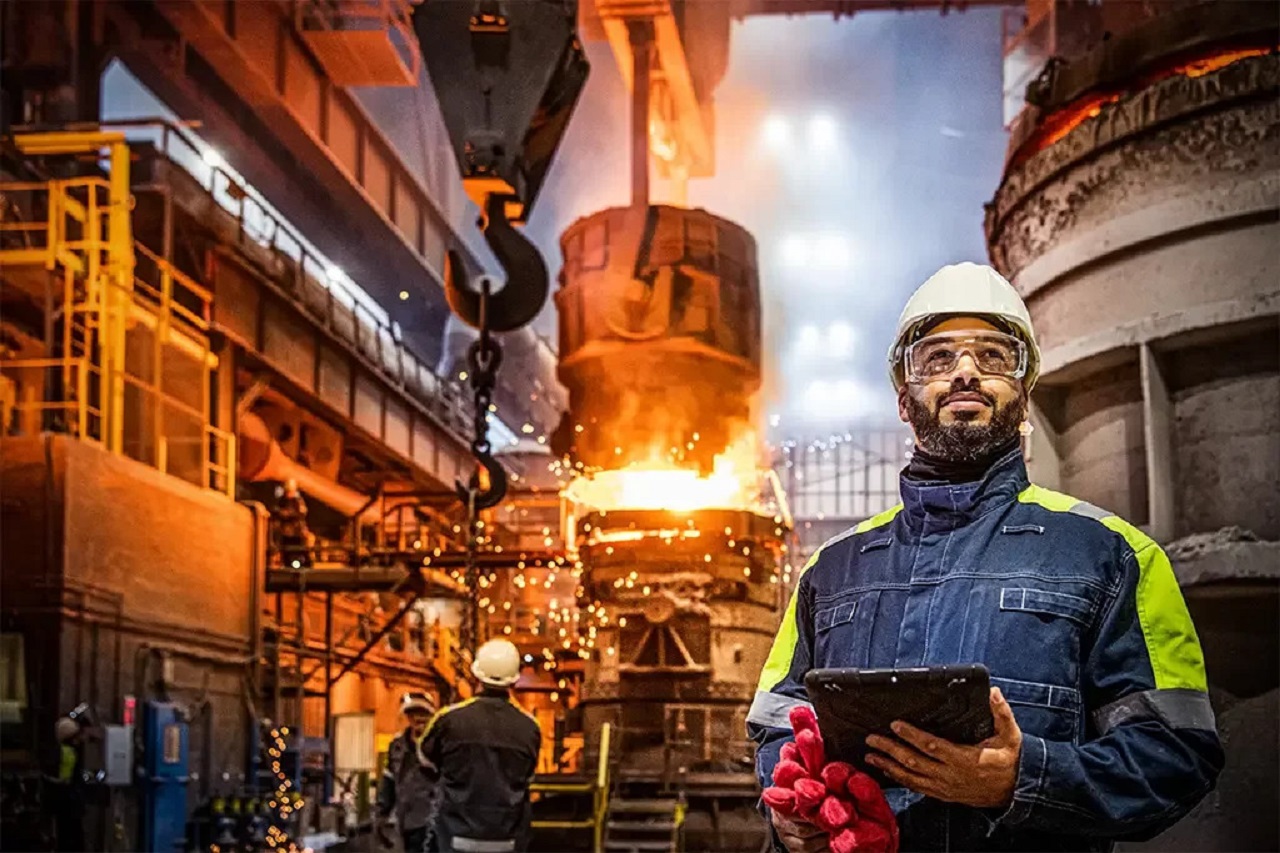
Percentage Is the Highest Since 2014 and, in Most Cases, Funded With Own Resources. This Year, the Main Focus of Investment Plans Is the Domestic Market
The survey Investment in Industry 2021-2022, by the National Confederation of Industry (CNI), shows that 79% of large industries made investments in 2021, the highest percentage since 2014. This figure represents a significant increase compared to 2020, when 69% of large industrialists invested. According to the survey, there was also a reduction in the frustration of investment plans: 62% of companies executed their plans as planned. In 2020, the percentage was 47%.
The CNI’s Economic Analysis Manager, Marcelo Azevedo, explains that the three main types of investments were: acquisition of new machines and equipment, followed by expenditures for maintenance or upgrading of machines and equipment, and finally, improvement of the plant, factory, or warehouse.
“Companies that failed to make investments cite causes such as: raw material costs, uncertainty in the economic context, and decreased revenues. This year, it is quite possible that the main source of frustration will also be the high cost of raw materials,” explains Marcelo Azevedo.
-
With the new law, shopping malls will no longer operate on Sundays, similar to supermarkets; the rule imposes closure by 9 PM, foresees a fine of R$ 15,000, suspension, and even revocation of the license in Salvador.

-
Only 7 ships have crossed the Strait of Hormuz in the last 24 hours when the normal is 135 per day, and the United Arab Emirates confirms that 230 oil tankers loaded with oil are ready to depart but are prevented from leaving while Iran turns the waterway into a sovereign control post.

-
Trump sent a treaty on critical minerals to Lula in early 2026, and the document is sitting in the president’s drawer unsigned because the Brazilian government considers the proposal too generic and refuses to turn the country into a mere exporter of raw materials.

-
R$ 7 billion forgotten in the FGTS may finally be released after failures in the 2025 measures, while millions of workers find out they may have unclaimed money.

Own Resources Remain the Main Source of Financing
The data shows that 74% of companies surveyed by the CNI used their own resources as the main source of financing. Since 2015, this indicator has been above 70%. Financing from official development banks represents 7% of the sources of financing. The peak participation of development banks occurred in 2011, when it accounted for 22% of the total sources of financing for investments made.
Financing from private commercial banks, at 11%, has remained the second main source of financing since 2018. Together, the public offering of shares, the establishment of joint ventures or partnerships, and the use of bond issuance did not reach 1% of the sources of financing.
75% of Companies Plan to Invest in 2022
Industrialists are more cautious when talking about investments in 2022. 75% of companies reported that they intend to invest. The last time this indicator fell below 80% was in 2017.
Among the planned investments, productivity continues to guide the industry’s investment plans (the improvement of the production process remains the main objective of the planned investment). Meanwhile, the pursuit of increasing production capacity has lost importance in investments, while the intention to invest in maintaining productive capacity has increased considerably.
Furthermore, the domestic market remains the main focus of industry investments: 62% of companies claim that the focus of investments is solely or mainly the domestic market. This percentage was as high as 75% in 2011 and 2013.
Source: National Confederation of Industry









Seja o primeiro a reagir!