





 Portuguese
  English
  Spanish
  5 min of reading
  0 comments


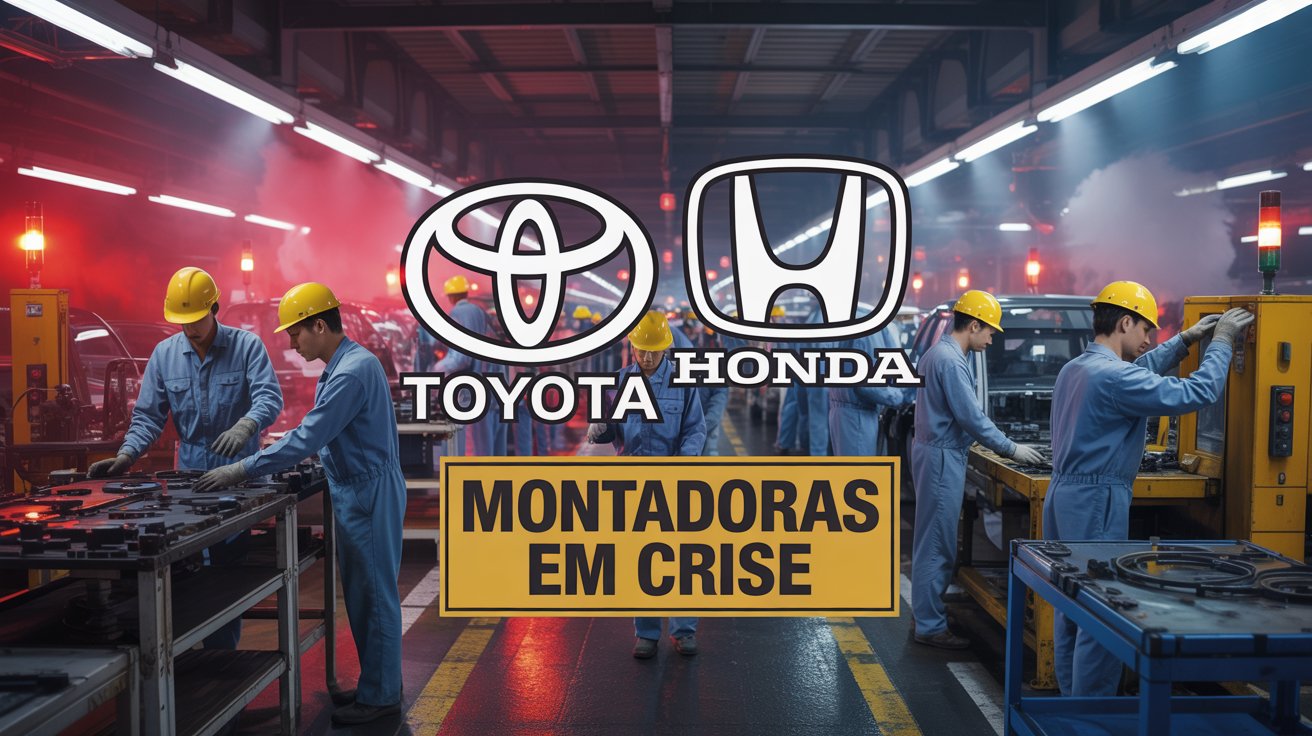
New Trade Offensive Between United States and Japan Threatens Jobs, Billion-Dollar Investments and Could Change the Course of the Global Automotive Industry. Understand How This Dispute Is Causing Instability in Key Markets.
The crisis between the United States and Japan reached unprecedented levels in 2025, threatening not only bilateral relations but also the foundation of the global automotive industry.
The recent decisions by the U.S. government, involving high tariffs on Japanese vehicles and diplomatic pressures to restrict the sale of sensitive technologies to China, shook the industry and put at risk 840,000 jobs linked to the operations of Toyota and Honda in the U.S. territory, according to a report published by the YouTube channel Mobility Channel.
At the center of the impasse is the tightening of U.S. trade policy, which imposed tariffs of up to 25% on cars manufactured by Japanese automakers.
-
The institute that trained the greatest aerospace engineers in Brazil has just opened its first campus outside São Paulo after 75 years: ITA Ceará will have R$ 445 million, new courses in energy and systems, and classes are expected to start in 2027.
-
Luciano Hang, owner of Havan, goes to Juiz de Fora after the tragedy in February, brings R$ 1 million, hands out R$ 2,000 cards, and donates up to R$ 15,000 to victims in the region.

-
The Brazilian passport allows legal residence in dozens of countries without the need for a prior visa, and most Brazilians are unaware that they can apply for residency directly upon arriving in nations in South America, Africa, and even Europe.

-
Petrobras sends a message to Brazilian truck drivers after fuel collapse and reveals plan to have 100% domestic diesel.


According to Mobility Channel, companies like Toyota, Honda, Nissan, and Mitsubishi account for a significant share of direct and indirect job creation, benefiting more than 840,000 American workers in factories, offices, dealerships, and supply chains.
Japan’s Reaction and Economic Impacts
The dispute intensified when the U.S. government, under the justification of national security and trade rebalancing, began treating Japanese vehicles as potential strategic threats.
At the same time, Washington requested that Tokyo halt the export of semiconductor manufacturing machines to China, deepening the diplomatic discomfort.
As reported by Mobility Channel, tensions increased further after restrictions on imports of Japanese rice and additional barriers were demanded in sensitive sectors.
The Japanese government expressed dismay at the new barriers, labeling the measures as “extremely disappointing.”
Prime Minister Shigeru Ishiba publicly stated in May 2025 that the crisis required an unprecedented response.
According to Finance Minister Katsu Nobukado, the imposed tariffs have the potential to harm both Japan’s economic recovery and global financial stability, as well as threaten the industrial production systems in both countries.
Bilateral Relations and Eroded Trust
Experts point out that the relationship between the United States and Japan, built over more than seven decades of commercial, military, and technological cooperation, faces its greatest challenge since World War II.
During this period, Japan opened markets for U.S. companies, allowed the establishment of military bases on its territory, and collaborated on regional strategies.
Now, however, the Asian nation sees its trust eroded in light of what it considers a unilateral shift by Washington.
While the Japanese government demands a complete review of the tariffs to advance new negotiations, U.S. officials maintain that the barriers are necessary to “correct decades of trade imbalance.”
They further argue that U.S. automakers face regulatory and currency obstacles in Japan itself and that the measures aim to stimulate the development of locally produced electric and autonomous vehicles.
Production and Jobs in the United States
The impact on the U.S. automotive industry is broad.
According to estimates from the Japan Automobile Manufacturers Association, reinforced by Mobility Channel, only the factories located in states like Texas, Kentucky, Alabama, and Mississippi produce more than 3 million vehicles per year, primarily supplying the domestic American market.
In 2024, Toyota maintained its position as the best-selling brand in the United States, with 4.4 million units sold, reinforcing the relevance of these companies to the local economy.
The sector not only generates jobs but also injects billions of dollars into the U.S. economy.
According to information from the American Chamber of Commerce, employees of Japanese automakers receive over 90 billion dollars in annual wages and contribute around 30 billion dollars in taxes, essential resources for funding schools, hospitals, and infrastructure.
Reduction of Investments and Global Reallocation
The possible withdrawal or reduction of investments by Japanese automakers raises alarms for profound consequences.
Various American cities and communities, economically dependent on the factories of Toyota, Honda, and other brands, have already observed movements of production relocation to Southeast Asian countries such as Thailand, Vietnam, and Indonesia.
The Mobility Channel also pointed out that, in 2025, Toyota announced a 2 billion dollar agreement to build a new electric vehicle factory in Shanghai, China, expanding the geographic diversification of its production.
In light of this scenario, Japanese authorities have begun investing in contingency plans developed since the onset of trade tensions in 2018.
The strategies include reducing production of models most affected by the tariffs, as occurred at Nissan’s factory in Kyushu, and redirecting resources to markets considered more stable.
These movements indicate a medium-term trend: a gradual reduction in dependency on the U.S. market, now seen as less predictable.


Technological Dispute and Pressure on Semiconductors
In addition to tariff issues, the dispute involves the semiconductor industry.
The United States is pressing Japan to restrict the sale of advanced chip manufacturing equipment to China, as part of a broader strategy to limit China’s advancement in critical technologies.
According to Mobility Channel, the U.S. government warned, via confidential diplomatic correspondence, that the Chinese company Huawei is secretly expanding its semiconductor production capacity, which has been classified as a geopolitical risk.
However, industry experts point out that by pressuring historical allies like Japan, the United States could lose credibility among strategic partners in Asia.
Countries like South Korea, the Philippines, and India are closely monitoring the developments in the crisis, as they depend on bilateral agreements with Washington in defense and trade areas.
Analysts warn of the risk that by tightening trade rules, the United States could encourage closer ties between these countries and China, which continues to offer attractive market conditions.
Consequences for the Global Automotive Sector
The tariff escalation, besides not guaranteeing the expected outcome of protection for American jobs, is already showing unexpected side effects.
Much of the vehicles affected by the tariffs are produced in the United States, by local workers and with regional inputs, within the terms of the United States-Mexico-Canada Agreement.
Japan’s position, supported by industrial associations and government entities, remains inflexible: there will be no trade concessions while U.S. tariffs are in effect.
Meanwhile, Japanese automakers are diversifying their operations, seeking alternatives in other markets, and investing in innovation, especially in electric vehicles.
Given the risk of collapse of the automotive industry and potential factory closures, uncertainty is growing in both the United States and Japan.
With jobs, tax revenues, and supply chains at stake, the lingering question is: what will be the future of the global automotive sector and companies like Honda and Toyota in light of this unprecedented trade impasse?









Seja o primeiro a reagir!