





 Portuguese
  English
  Spanish
  5 min of reading
  0 comments


From Treacherous Currents to Lethal Gases, Discover the Places Where You Can’t Risk Your Life, According to the Incredible Channel
There are several places where you cannot even dip your toes, and they go far beyond shark-infested beaches. Although many may seem like paradise, they hide deadly dangers ranging from treacherous currents and submerged rocks to invisible threats, such as toxic gases and extreme acidity. The curiosity or bravado of an experienced swimmer is no match for the forces of nature present in these locations.
A survey conducted by the Incredible Channel detailed nine of these terrifying destinations, where a simple dip can cost you your life. Some gained notoriety due to legends of mysterious creatures, but most present real physical and chemical risks that have already claimed dozens of lives and animals over the years. Knowing these points is crucial to avoid a tragedy.
The Invisible Danger: Lethal Gases and Acidic Water
In California, Horseshoe Lake attracts visitors with sandy beaches and picnic areas, but it hides a lethal threat. According to the Incredible Channel, earthquakes that occurred in 1989 and 1990 opened fissures that allow carbon dioxide (CO2) to leak from the hot magma below the lake. This gas, when released into the air, kills trees and any living being nearby.
-
Sleeping at different times each day can be a bomb for your heart and even double your risk of having a heart attack.

-
Without help and without heavy machinery, a woman builds a house from scratch with stone, wood, and cement, erects a chimney, creates a complete leisure area, and transforms an empty lot into her dream home.
-
Couple transforms abandoned house after years of being closed; residence was overgrown with weeds, had a green pool, and a deteriorated structure in the interior of Rio de Janeiro.
-
Hidden marks on the walls of the site associated with the Last Supper of Jesus for centuries have been deciphered in Jerusalem, revealing medieval inscriptions left by pilgrims, European nobles, and travelers from the Middle East.


The biggest danger at Horseshoe Lake is its unpredictability. The levels of the lethal gas change randomly, meaning that a peaceful picnic can turn into suffocation in minutes. Even with numerous warning signs, the area remains a risk, proving to be one of the places where you can’t let your guard down.
In Montana, Berkeley Pit does not try to deceive anyone with its beauty. This artificial lake, an old open-pit copper mine, looks like a “blood lake”. The water is highly acidic and loaded with heavy metals such as cadmium, arsenic, lead, and copper, which leach from the surrounding rocks.
The toxicity is so extreme that it is prohibited even to touch the surface. A tragic incident highlighted by the Incredible Channel occurred in 1995, when a flock of 342 geese landed on the lake. All were found dead, with their internal organs showing severe chemical burns caused by the water.
Fatal Currents: When the Water Pulls You to Death


In England, a narrow part of the Wharfe River, known as Bolton Strid, is deceptively dangerous. The location is so narrow that it seems possible to jump across, but the Incredible Channel warns that this is a deadly idea. The river’s current is extremely strong, and due to the narrowness, it gains even greater force.
The force of the water has sculpted deep cavities in the limestone, much deeper than the rest of the river. Additionally, the current has weakened the banks underneath, making the soil unstable. No one who fell or tried to enter the Strid has survived, all being pulled to the bottom by this relentless force.
In Hawaii, Hanakapiai Beach on the Na Pali coast is another paradise that hides deadly currents. To get there, a steep three-kilometer trail is necessary, and there are no lifeguards due to its isolation. The real danger is the rip currents, described as so powerful that not even the most experienced swimmer could escape.
The area’s geography, with no reefs to protect the coast, means that currents are almost always present. If a swimmer gets caught, the nearest safe beach is 10 kilometers away. A grim sign on the beach records fatalities with over 80 marks, one for each drowning; the bodies of 15 of these victims were never recovered.
Predators, Bombs, and Legends at the Bottom of the Sea
Florida is home to New Smyrna Beach, a location that the Incredible Channel points out as the “shark attack capital of the world“, citing data from the Shark File. The presence of these predators is so dense that scientists claim anyone swimming there will be within 3 meters of at least one shark. The feared bull shark, one of the most aggressive species, is often seen in the area.
In the Gulf of Thailand, Samsan Hole is the deepest diving site in the area at 85 meters. It has become a “water grave” for divers due to a lethal combination of factors: it is in a high-traffic area for oil tankers and has very strong currents. Furthermore, visibility dramatically decreases as you descend, increasing the risk of encounters with aggressive barracuda that attack in schools.
As if that weren’t enough, the site is a dumping ground for ammunition. The United States Navy used to dump explosives there, and the bottom of Samsan Hole is literally covered with unexploded bombs, making any dive an extreme risk.
Also in Hawaii, Kipu Falls was closed to the public in 2011 after a series of deaths and injuries. Although some accidents were from jumps from the six-meter waterfall, many deaths remained unexplained. Witnesses reported that bathers simply disappeared beneath the surface for no apparent reason.
The bodies were later recovered from the bottom of the natural pool. Locals believe in legends, such as that of the water spirit “Mo’o”, who drags noisy tourists. Others suggest the existence of a powerful submerged whirlpool. Whatever the cause, the area is now protected and trespassing is punished.
Explosive Lakes and the Mystery of “Dead” Water
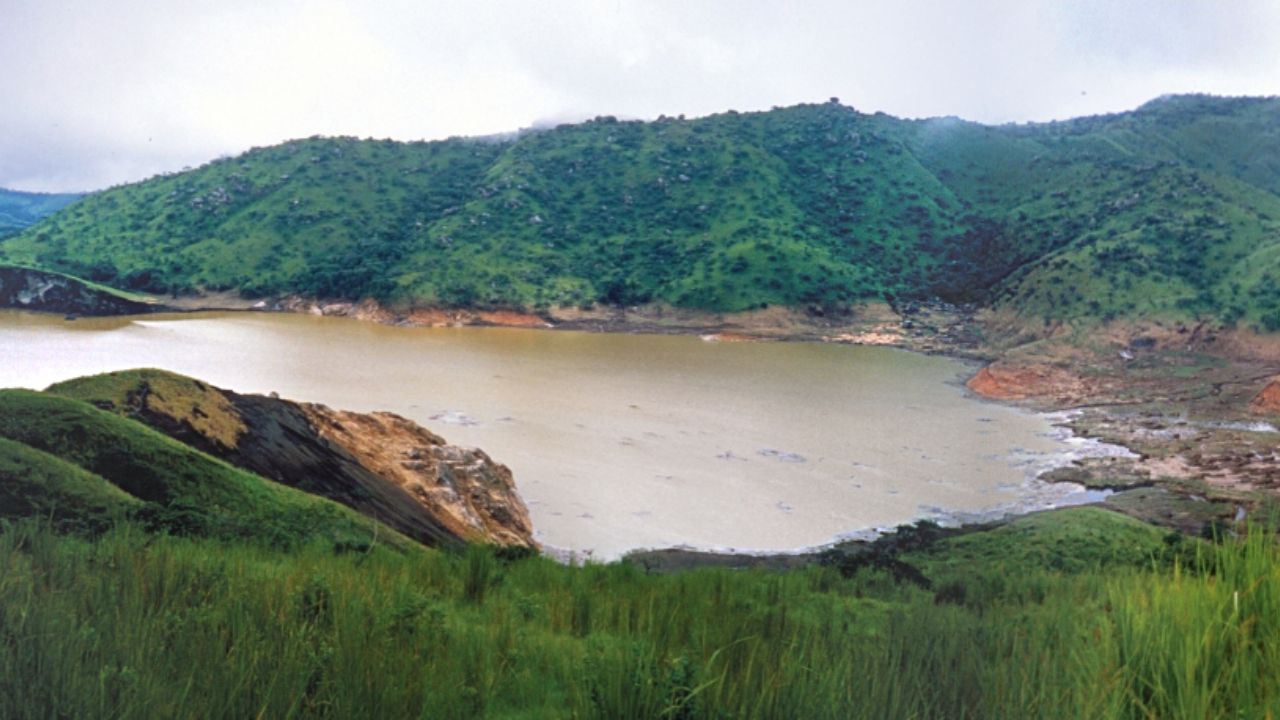
In Cameroon (Lake Monoun and Lake Nyos) and Rwanda (Lake Kivu), there are “explosive lakes”. They formed over pockets of magma that release methane and carbon dioxide directly into the water. Eventually, these gases violently erupt in an event known as limnic eruption.
This eruption releases a toxic cloud that kills everything around. The Incredible Channel recalls the tragedies: in 1984, 37 people suffocated in Lake Monoun; in 1986, an explosion in Lake Nyos killed 1,700 people and 3,500 heads of cattle.
In Western Siberia, Lake Pustoye (translating to “Empty”) presents a different mystery. The water is crystal clear and sweet, surrounded by beautiful forests, but there is an absolute absence of life. There are no fish, birds do not fly over the site, and animals avoid drinking its water.

The most intriguing thing is that scientists examined the water and found nothing toxic or dangerous. In experiments, robust fish (such as pike and carp) and aquatic plants were introduced into the lake, but all died or decayed quickly. The site remains a legend, one of the places where you cannot venture, even though science cannot explain why.






Seja o primeiro a reagir!