Portuguese
  Spanish



Use of B-52 Bombers in Iran Marks New Phase of Offensive, Increases Pressure on Tehran and Indicates Weakening of Air Defenses
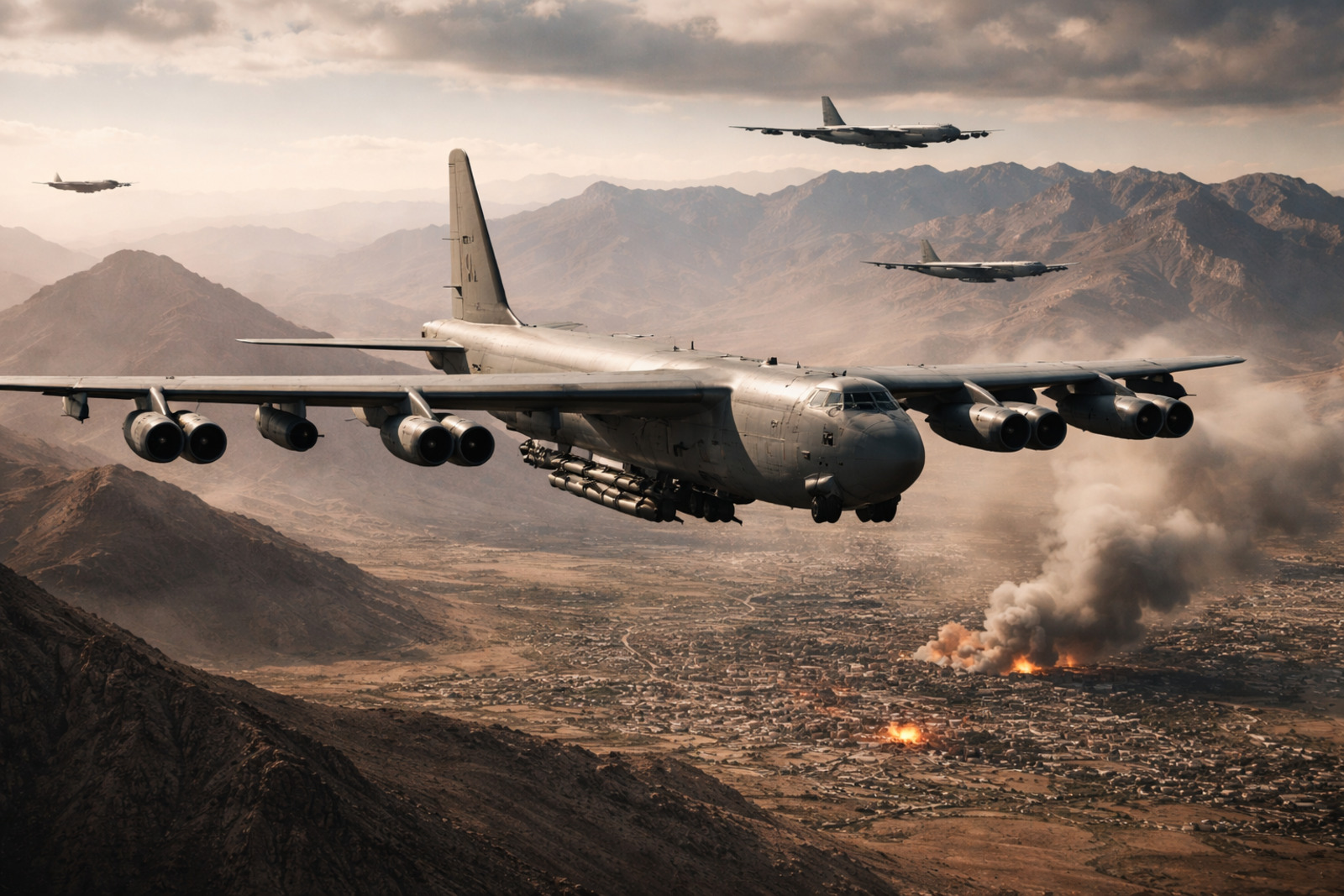
The American B-52 bombers have begun operating over Iran in Operation Epic Fury, a move that marks a new stage in the conflict, indicates degradation of the defenses in Iran, and expands the United States’ ability to conduct broad attacks without fear of losses.
B-52 Enter New Phase of Offensive
The confirmation of the use of B-52s in Iran represents an escalation in the conflict and suggests that Washington assesses it has sufficient air superiority to employ these bombers in direct missions over Iranian territory.
The presence of these aircraft also indicates that the U.S. considers Iran’s air defenses sufficiently degraded.
-
U.S. Military Intervention Risk in Brazil Raises Alarm, Highlights National Sovereignty Amid Tensions Over Washington’s Terrorist Designation of PCC and Comando Vermelho

-
Brazilian Air Force’s Sole KC-30 Aircraft Completes Strategic Mission to Spain for 105mm Anti-Tank Ammunition for Leopard 1A5 Tanks

-
Brazilian Air Force Seeks to Acquire More Gripen Fighter Jets
-
U.S. Air Force Launches Air-to-Air Missile Project with Range of Up to 1,850 km for Indo-Pacific Operations




Without this weakening, the use of the B-52 would be risky, as the aircraft is large, non-stealthy, and vulnerable.
The B-52 Stratofortress first flew in 1955 and remains one of the longest-serving American aircraft.
Over the decades, it has been used in conflicts such as the Gulf War, Afghanistan, and Iraq.
Capacity for Destruction and Support
Described as enormous flying bomb trucks, B-52s often support massive offensives and can destroy infrastructure on a large scale.
They can also provide air support to ground troops, delivering precision munitions as operational needs dictate.
In addition to its material effect, the B-52 also serves as a psychological warfare instrument. Its size and firepower enhance the impact of its presence and increase pressure on the enemy amid the campaign’s advance.
The B-52H variant, the most modern, can hit multiple targets simultaneously. Each bomber has the capacity to carry 31,751 kg of ordnance on a single mission, which enhances its value in prolonged operations.
How the Air Campaign Advances
Modern wars typically advance in phases. The first generally seeks to blind the enemy with stealth fighters, electronic warfare, cyberattacks, and cruise missiles aimed at radars, command centers, and ground-to-air systems.
In the second stage, the objective shifts to achieving air superiority. Non-stealth fighters and drones are employed to intercept enemy aircraft and eliminate remaining defensive systems that may still limit the advance of operations.
The current phase, identified as the third, involves the use of platforms like the B-52 for large-scale attacks.
This stage often includes ongoing bombing campaigns and marks the moment when wars intensify.
Probable Targets and Message to Tehran
Among the weapons that the B-52 can carry are conventional bombs Mk-82 and Mk-84, as well as guided munitions GBU-31 and GBU-38 JDAM.
The aircraft can also remain airborne for many hours and can launch cruise missiles.
Experts point out that the most likely targets in Iran include missile production sites and underground bunkers.
The bombers can also saturate and destroy airfields, command centers, and logistical hubs that remain in the country.
This use of the B-52 also has symbolic value. By deploying bombers considered vulnerable, the United States conveys to Tehran the message that it feels confident enough to strike anywhere and at any time.
With information from Interesting Engineering.