





 Portuguese
  English
  Spanish
  4 min of reading
  0 comments


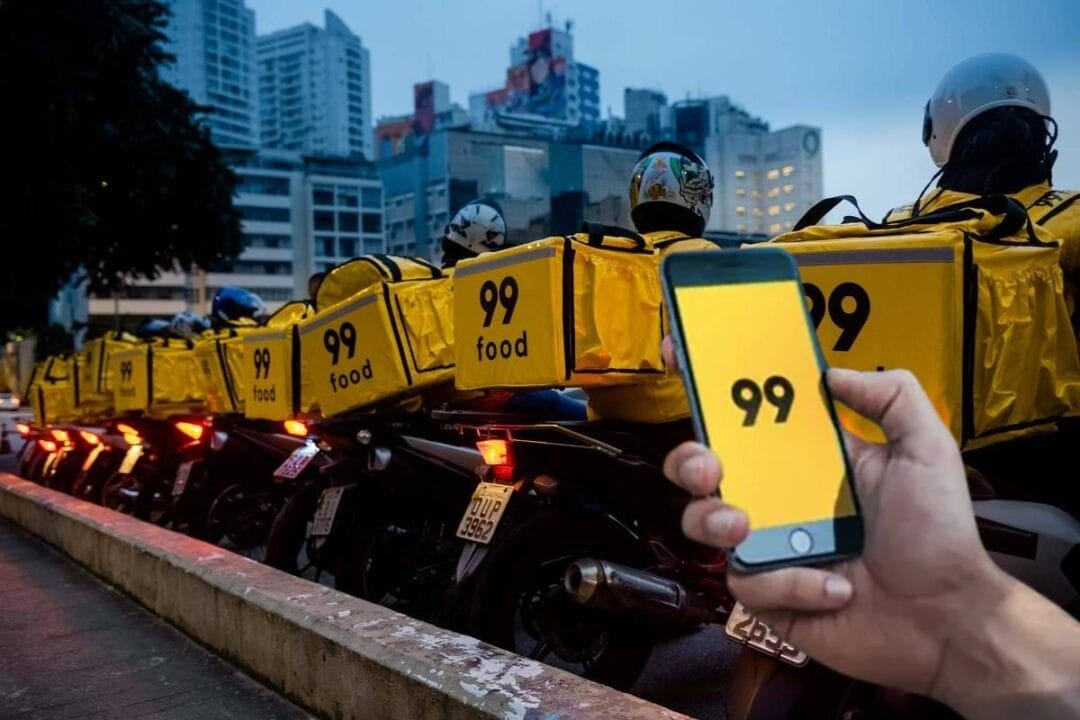
Delivery Platform Returns After Two Years Away From The Market, Driven By Billion-Dollar Investment From Didi Global. Goal Is To Create A Chinese-Style Super App, Integrating Rides, Payments, And Deliveries To Challenge The Dominance Of iFood.
The delivery service 99Food is back in Brazil in 2025. 99 (controlled by the Chinese giant Didi Global) announced the relaunch of its food delivery app, discontinued in 2023, as part of a R$ 1 billion investment to expand operations in the country.
The revamped platform is expected to be available to users starting in the middle of this year, integrated into 99’s main app, which already offers private rides, deliveries, and digital wallet. The company’s plan is to evolve its app into a super app for multiple services, following the successful model in China, thus competing on equal footing with market leaders like iFood.
Didi’s Billion-Dollar Strategy For The Return Of 99Food
The parent company Didi Chuxing confirmed a R$ 1 billion investment in Brazil, aimed at various business fronts, including urban mobility, fintech (99Pay), and the return of 99Food. Stephen Zhu, president of Didi’s International Business Group, announced the news in a meeting with Vice President Geraldo Alckmin, highlighting the company’s long-term commitment to the country.
-
The largest food company on the planet, JBS, has just opened a 4,000 square meter laboratory in Florianópolis to develop customized proteins that modulate muscle mass gain, immune response, and metabolic performance.

-
After nearly 30 bids and competition among industry giants, a Spanish company purchases one of the largest airports in Brazil for almost R$ 3 billion and takes over the management of Galeão in a concession that will last until 2039.

-
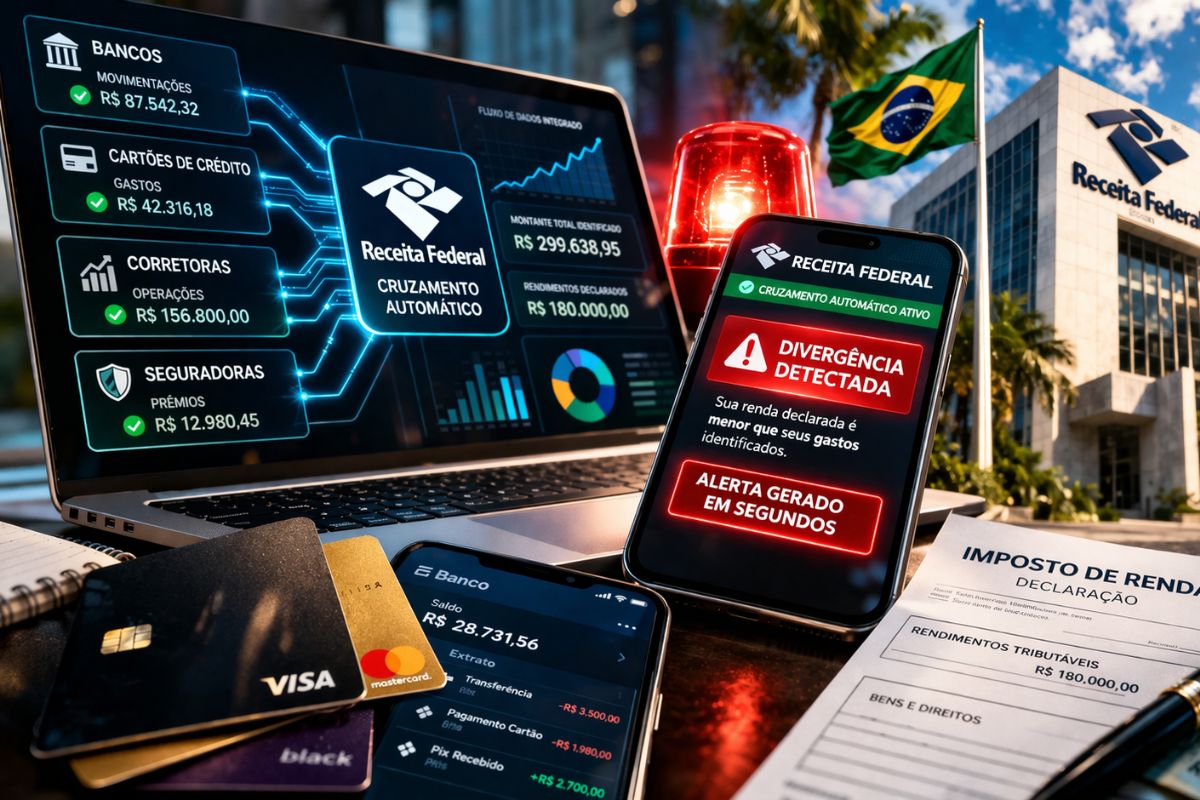
The Federal Revenue Service now automatically cross-references everything you declare with data from banks, credit cards, brokerage firms, and insurance companies, and any discrepancy between your income and your expenses triggers an alert in seconds.
-
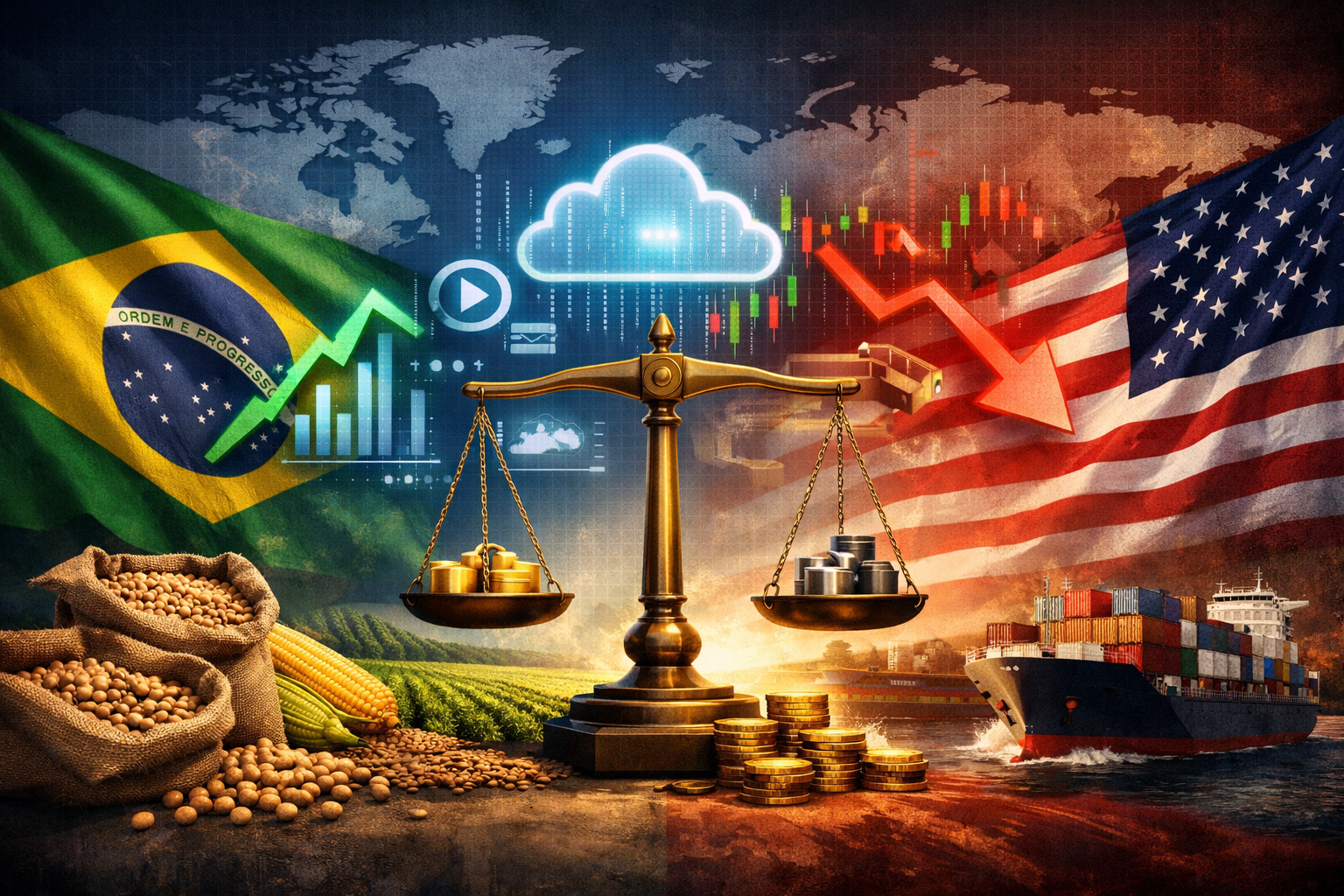
Amid global tensions, Brazil blocks the United States’ proposal at the WTO and paves the way for a trade crisis and possible retaliations.

“This investment reflects our long-term commitment to Brazil,” Zhu stated, emphasizing that 99 wants to offer affordable prices, better options, and quality across all services.
As part of the strategy, 99 will integrate food delivery into its main app – the same one used for calling cars and motorcycles – concentrating everything in a single platform. This approach simplifies logistics, as the company will be able to leverage its network of 1.5 million drivers, motorcyclists, and couriers already registered in 3.3 thousand cities in Brazil. Thus, a car driver or motorcyclist from 99 will be able to switch between passenger rides and delivery orders, increasing service reach.
History: From Promising Launch To Pause In 2023
Originally launched in late 2019, 99Food debuted in Belo Horizonte (MG) as its first operating city. In the following years, the platform expanded quietly to other locations, reaching operations in 32 cities in 2021. Nevertheless, months before halting activities, the company already had about 135 thousand registered restaurants in its database.
In April 2023, however, 99Food was discontinued in Brazil. The decision came about a year after Uber Eats exited the country. At that time, 99 informed restaurants that it would focus efforts on other areas of the business – especially in two-wheeled services like 99Moto and 99Entrega. The meal app was suspended, leading 99 to pause its competition in the food delivery sector at that moment.
99 Wants To Be A Chinese-Style Super App
Now, in 2025, 99 returns with the ambition to become a super app in the mold of Chinese platforms. This means offering multiple integrated services within a single app – from transportation to food deliveries and even digital payments. The strategy mirrors Asian examples like Meituan and Alibaba.
The billion-dollar investment from Didi will be used to consolidate the complete 99 ecosystem in Brazil. In practice, 99Food is back in Brazil not only as a delivery app but also as a key piece of a broader platform. The company highlights that it will have urban rides (99Pop and 99Moto), parcel deliveries (99Entrega), payments and digital wallet (99Pay), and again, meal delivery, all integrated.
This way, the goal is to create a seamless experience for users, who will be able to call a car, pay bills, and order food in a single digital environment. This “do-it-all” approach is inspired by the success of super apps in China and other Asian markets.
Low Prices And Partnerships To Face iFood
To face iFood, the absolute leader in the sector, 99Food is reborn with an aggressive pricing strategy, partnerships with restaurants, and improvements for delivery workers. According to 99, the platform arrives revamped to meet demands unmet by current players, betting on more affordable prices for consumers and logistical efficiency in deliveries.
The company emphasizes that it aims to “empower partner restaurants” and generate “new earning opportunities” for delivery workers. In practice, this means offering lower commissions, technical support, and ending the exclusivity requirement for restaurants, in addition to creating incentives for delivery workers, such as bonuses and quick payments through 99Pay.
A competitive advantage for 99Food in this return is precisely the more favorable regulatory scenario. In 2023, CADE prohibited iFood from maintaining exclusive contracts with restaurants for four years. This opened up space for establishments to operate on multiple platforms, creating a window of opportunity for new competitors.
Delivery Market In 2025: iFood Dominant And New Rivals
The return of 99Food takes place in a highly concentrated delivery market. Today, iFood leads with about 80% market share, executing about 120 million deliveries per month, with 60 million active users and over 400 thousand registered restaurants. The company has an average base of 360 thousand active delivery workers each month.
Despite the dominance, competitors are moving. Rappi, in second place, mainly operates in capitals and large centers. Meanwhile, Aiqfome, acquired by Magazine Luiza, has a strong presence in the interior of Brazil, with 2 million monthly orders across more than 700 municipalities.
Another name that promises to shake up the market is Meituan, the Chinese delivery giant, which plans to start operations in Brazil in 2025. In China, it handles 30 billion orders per year and dominates over 60% of the delivery sector.
The combination of the return of 99Food, the arrival of Meituan, and the regulatory adjustments is expected to reignite the competition for consumers and restaurants in a market valued in billions of reais.







Seja o primeiro a reagir!