






 Portuguese
  Spanish
  5 min of reading
  0 comments



In Meghalaya, living root bridges and ladders, with over 700 years of history, are essential for indigenous peoples to face the extreme climate and challenging terrain of the region
In one of the wettest and rainiest places on the planet, nature and human ingenuity intertwine in a unique way. In the Indian state of Meghalaya, indigenous peoples like the Khasi and Jaintia have built bridges and ladders using the roots of living trees, a practice that has been fundamental for survival and mobility in the region.
This natural architecture, which can be seen in the various living root bridges, is not only a solution to Meghalaya’s rugged geography but also a remarkable example of how indigenous communities use deep knowledge of nature to adapt the environment to their extreme climatic reality.
The challenging climate and the need for innovative solutions
Meghalaya is known for being one of the rainiest regions in the world. Located in eastern India, the region is affected by the monsoons that arrive annually between June and July, bringing torrential rains, landslides, and flash floods.
-
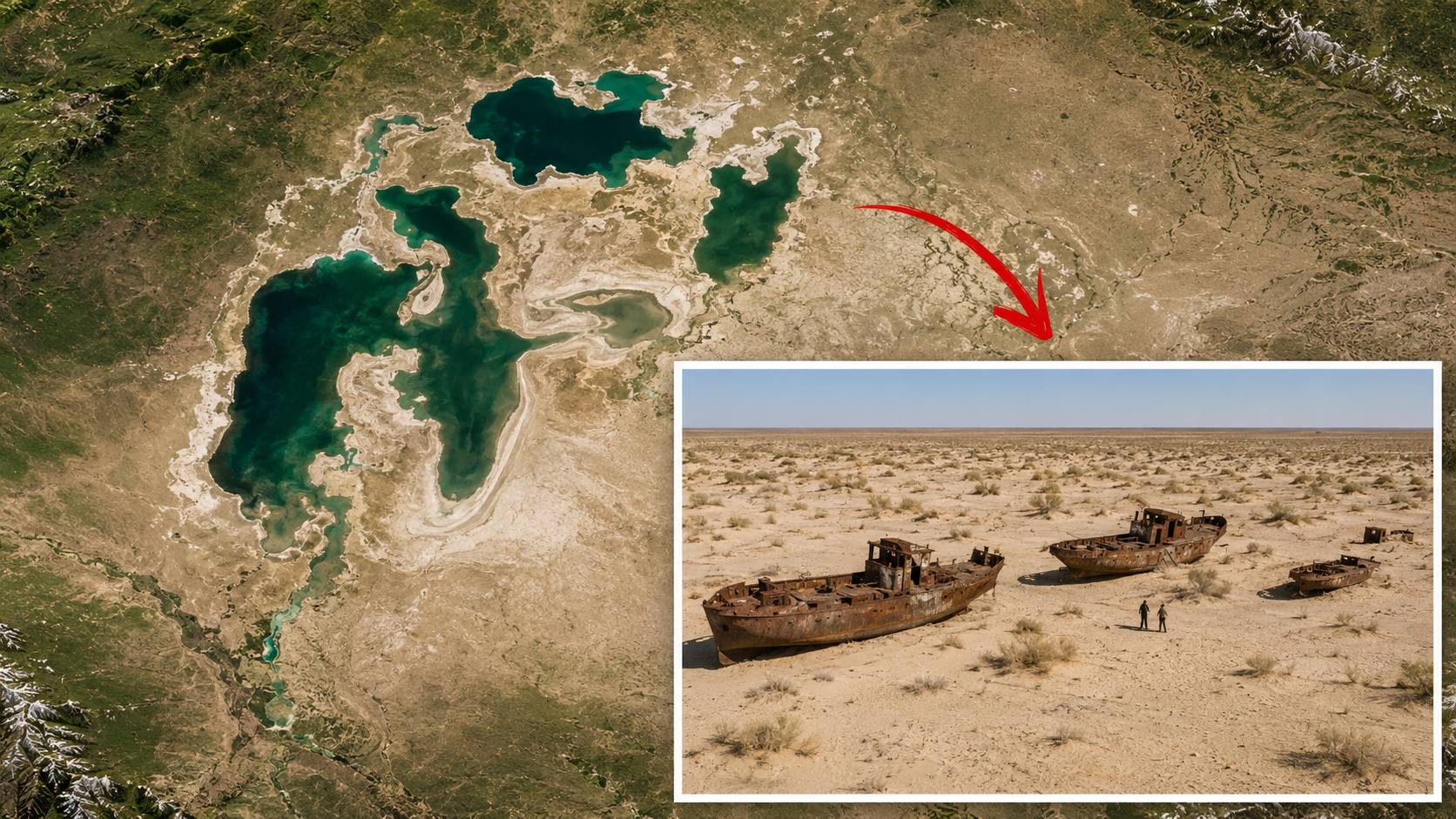
An entire sea disappeared from the map: the Aral Sea, formerly the fourth largest lake on the planet, lost more than 90% of its area in a few decades and left behind a toxic desert where fishing boats rust over 100 km from the water that once supported entire cities.

-
Mother of 4 children started as a salesperson and became the owner of 4 franchises: Pamela Oliveira took over the first unit, saw the revenue more than double, and turned a busy routine into proof that motherhood and business can grow together with organization.

-
Majestic castles of Slovakia reveal UNESCO heritage, the setting of Nosferatu, and medieval legends

-
Goodbye, iron gates: rain, sun, and moisture-resistant alternative combines low maintenance and modern look for facades


These natural events make living and traveling conditions extremely difficult. Villages, often located in hard-to-reach areas, rely on creative solutions to navigate steep slopes and turbulent rivers.
It was in this scenario that the Khasi and Jaintia peoples developed the living root bridges, primarily made from Ficus elastica, the rubber tree.
Over the centuries, the roots of these trees have been trained and cultivated to grow in ways that intertwine and become robust and durable structures, capable of withstanding heavy rains and ensuring safe crossings of rivers and valleys.
The construction of living root bridges: a millennia-old tradition
The living root bridges, some of which are hundreds of years old, are one of the most impressive forms of natural engineering.
The inhabitants of Meghalaya plant the seeds of Ficus elastica along the riverbanks, and as the roots grow, they are carefully guided to cross the rivers and other hard-to-reach areas.
The construction process is long and meticulous, taking decades or even centuries for the roots to intertwine and form strong enough structures to support the weight of people and loads.
In some regions, the roots are guided through hollow trunks of Areca catechu palms, while in others, they are tied with bamboo or other supporting structures.
The process of building these bridges involves the participation of multiple generations, with each new generation contributing to the maintenance and expansion of the bridges. Each bridge has unique characteristics, reflecting adaptation to the landscape and the needs of local communities.
The living root ladders: a solution for steep terrain
In addition to bridges, living root ladders also play a crucial role in the mobility of the Khasi and Jaintia communities. In many mountainous and steep areas, natural ladders made from tree roots serve as a safe means to ascend or descend cliffs and slopes.
These ladders, formed by intertwined roots, are as strong as wood and provide a solid base for people carrying heavy loads on their backs as they ascend and descend the steep terrain.
In some villages of Meghalaya, such as Nongblai, living root ladders are a common feature on the trails that connect homes to agricultural fields and rivers.
They are often sculpted to fit the local geography and provide a safe and effective means of access.
The presence of these ladders is one of the many manifestations of the intimate relationship between the indigenous peoples of Meghalaya and nature, where the land and trees play a vital role in daily life.
A heritage that withstands time and change
The practice of building bridges and ladders with living roots is a tradition that dates back centuries, and although the natural and social conditions of the region have changed over time, these structures remain a symbol of resilience and adaptability.
The living root bridges and ladders are not only means of transportation but also cultural landmarks that reflect the deep knowledge and wisdom of the Khasi and Jaintia peoples.
In 2022, the living root bridges of Meghalaya were included in the UNESCO World Heritage Tentative List, a recognition of the cultural and historical importance of these structures.
UNESCO highlighted the bridges as exceptional examples of how humans can work in harmony with nature, creating lasting solutions that are both functional and aesthetically impressive.
The future of living root bridges and ladders: preservation and adaptation
Although the living root bridges and ladders are a testament to indigenous ingenuity, they also face challenges over time. Many of these construction and maintenance methods require a deep knowledge of plants and environmental conditions, which may be lost as new generations move away from this practice.
Moreover, climate change and natural disasters threaten the integrity of these structures, which are vulnerable to heavy rains and rising temperatures.
The preservation of these living bridges and ladders is, therefore, a priority for local communities. Many of these structures are being cared for by families or community groups, who continue to ensure their maintenance and the cultivation of the roots.
UNESCO has also been working with communities to help protect and promote these constructions, recognizing them not only as cultural heritage but also as an architectural solution that can inspire new forms of sustainable building worldwide.
The bridges and ladders made of living roots in Meghalaya are a remarkable example of how indigenous peoples have adapted their construction techniques to the natural conditions of their region, creating structures that not only facilitate mobility but also help stabilize the terrain and preserve biodiversity.
These feats of natural engineering, which require patience, skill, and deep knowledge of plants, reflect the resilience and ingenuity of the Khasi and Jaintia peoples.
As the world faces increasing climate challenges, these living root bridges and ladders offer a valuable lesson on how to live in harmony with nature, respecting and utilizing natural resources sustainably.







Be the first to react!