





 Portuguese
  English
  Spanish
  5 min of reading
  0 comments


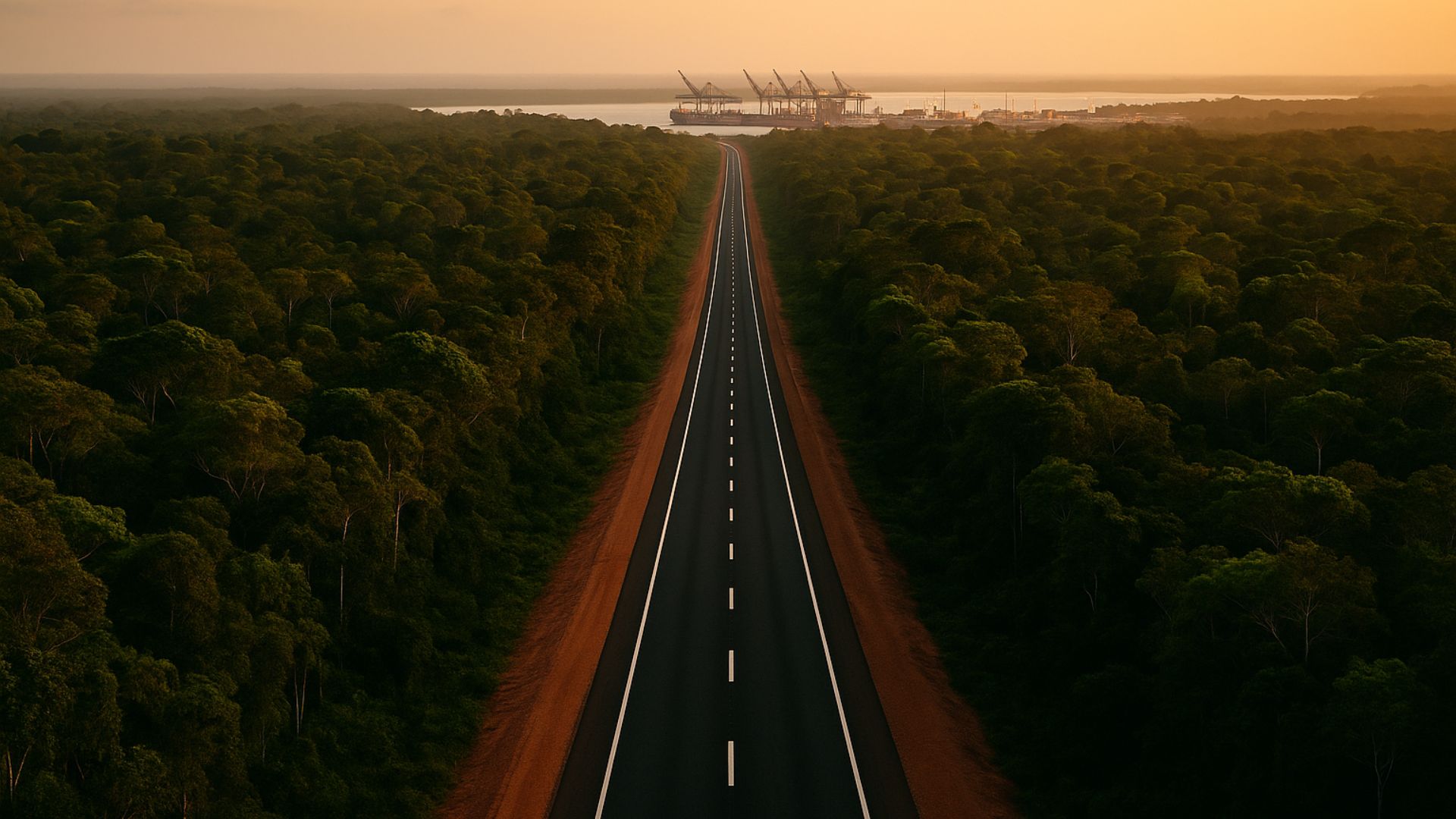
International Corridor Promises To Shorten Distances, Expand Access To The Atlantic, And Modify Logistics Routes Between Brazil And Guyana.
Guyana is building a superhighway of about 500 km, with an estimated investment of R$ 5 billion, which is pointed out by authorities as capable of reorganizing logistics in the far north of South America.
Combined with a new deep-water port on the Atlantic coast, the road shortens the path for Brazilian cargo heading to the sea, reducing a journey that could take up to 21 days to about 48 hours, according to projections from the Guyanese government and industry agents.
In practice, the project creates a continuous road corridor between the border with Roraima and the coastline of Guyana.
-
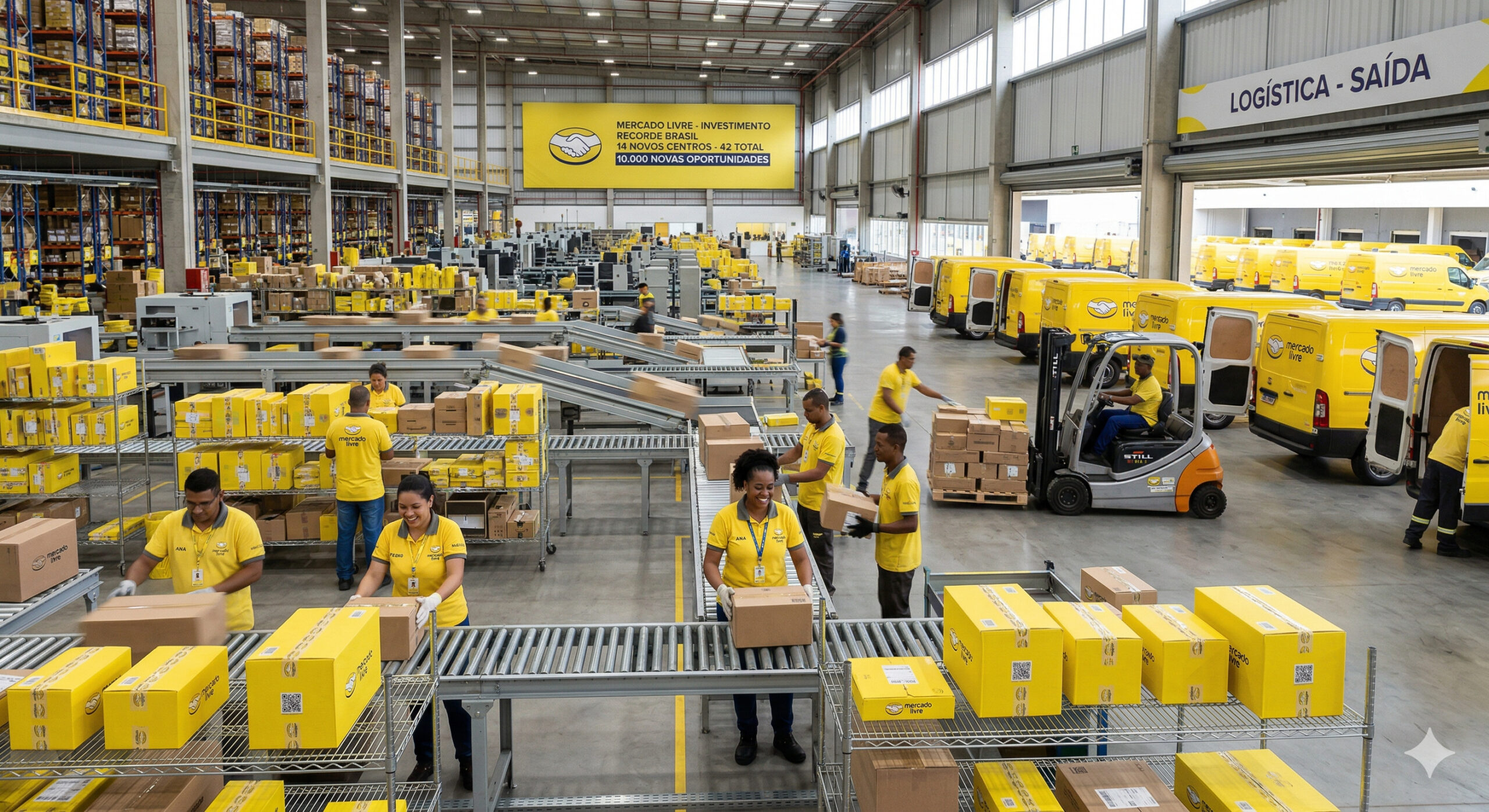
Mercado Livre “opens the vault” and announces a record investment of R$ 57 billion in Brazil in 2026, a value 50% higher than the previous year, with an expansion plan that includes 14 new logistics centers, totaling 42 units in the country and hiring an additional 10,000 employees.
-
How investment in technology can revolutionize the national economy and enhance industrial gains, according to a study that highlights the direct impact on productivity, innovation, and wealth retention within Brazil.

-
The largest food company on the planet, JBS, has just opened a 4,000 square meter laboratory in Florianópolis to develop customized proteins that modulate muscle mass gain, immune response, and metabolic performance.

-
After nearly 30 bids and competition among industry giants, a Spanish company purchases one of the largest airports in Brazil for almost R$ 3 billion and takes over the management of Galeão in a concession that will last until 2039.


It offers Brazil a land alternative to the traditional export via long river routes or more distant ports within Brazilian territory.
At the same time, it expands access to an estimated market of 20 million consumers in the Northern Arc region.
Brazil–Guyana Corridor And Logistics In The Northern Arc

Today, the journey between Georgetown, the Guyanese capital, and the border town of Lethem is mainly done by dirt roads.
These stretches have irregularities and are heavily influenced by the rainfall regime.
This complicates heavy transport, raises freight costs, and makes travel time unpredictable, especially during the rainy season.
With the complete paving of the Linden–Lethem corridor, road traffic is expected to become more stable throughout the year.
Trucks leaving from Boa Vista (RR) can reach the border via the bridge over the Tacutu River.
The bridge connects Bonfim (Brazil) to Lethem (Guyana).
From there, the route continues along the new superhighway to the Atlantic coast.
This coordination reduces the number of transshipments and travel time.
The interior stretch will, according to logistics experts, become part of an international export route.
The expectation is that, with the road completed, transport will gain enough predictability for cargo contracts with delivery windows of just a few days.
Palmyra Port And New Strategic Exit To The Atlantic
The superhighway is designed to converge in the region of Palmyra, in Berbice.
The Guyanese government plans a large port complex there focused on logistics operations, industrial activities, and natural gas exports.
During the construction phase, the official projection is to generate about a thousand direct jobs, in addition to indirect jobs in support services.
This deep-water port intends to accommodate larger draft ships.
The structure reduces dependence on smaller ports and stretches of rivers that require frequent dredging.
For Brazil, particularly for companies in the North that depend on long internal routes, this connection could open the door to shorter routes to the Atlantic.
This could have a potential impact on freight costs and international competitiveness, according to industry agents.
The logistical advantage results from the combination of paved roads, large bridges, and port infrastructure focused on exports.
This integration supports the goal of reaching the sea in approximately 48 hours.

Construction, Bridges, And Engineering Challenges
To make the superhighway viable, the Guyanese government divided the project into sections with distinct contracts and timelines.
One of the central segments is the Linden–Mabura Hill, which is about 121 km long.
This stretch was contracted in 2022 as an “all weather” road, prepared for heavy traffic even in heavy rain.
The current completion deadline is set for the end of 2025.
Another decisive front is the crossing of the Essequibo River.
Currently, many sections rely on ferries, limiting traffic flow and making operations sensitive to weather conditions.
The evaluated proposal foresees a dual-lane bridge with continuous operation.
However, progress faces technical and environmental challenges.
Parts of the route pass through areas of unstable soil, flood-prone regions, and dense forest areas.
The contracts include geotechnical studies, drainage projects, and structural reinforcement of bridges and culverts.
The licensing seeks to balance infrastructure expansion with environmental preservation.
Integration With Brazil And Impact On Regional Trade
The new link creates an alternative for the export of products coming from Roraima, Amazonas, and regions connected to the agribusiness of the Northern Arc.
The corridor can be used to transport grains, processed foods, agricultural inputs, construction materials, and fuels.
Guyana estimates that the road and port infrastructure can serve a market of 20 million consumers.
This takes into account the Guyanese population, part of Northern Brazil, and commercial flows linked to the Caribbean.
By reducing distances and diversifying routes, the corridor can decrease dependence on Brazilian ports close to the border.
The alternative also offers new routes for cargo coming from the Amazon interior.
Transport companies and exporters believe that a shorter route to the Atlantic could facilitate freight negotiations with international shipping lines.


Economy Of Guyana And Infrastructure Expansion
The decision to increase investments comes amid the rapid growth of the Guyanese economy.
The expansion is driven by offshore oil production.
In 2024, the country recorded 43.6% GDP growth, according to official data.
The performance is associated with increased oil exports and the growth of non-oil sectors.
Authorities state that projects like the Linden–Lethem link and the port in Berbice are essential to keep pace with economic growth.
Strategic Relevance And Territorial Reach
Besides the economic effects, the superhighway has strategic importance for Guyana.
A faster connection between the coast and the interior facilitates the movement of government teams and public services.
This includes operations in remote areas that currently rely on long and irregular routes.
A more frequent state presence can improve oversight in sensitive areas and service delivery to isolated communities.
The road network also gains relevance amid territorial disputes involving Essequibo.
With the advancement of construction, the combination of superhighway, bridge over the Tacutu, new crossings, and deep-water port may redraw the logistics map of the far north of South America.
The question that arises is how small producers, local businesses, and regional governments will organize to take advantage of the opportunities opened by this new route to the Atlantic in a balanced way?








-

3 pessoas reagiram a isso.