





 Portuguese
  English
  Spanish
 5 min of reading
  0 comments


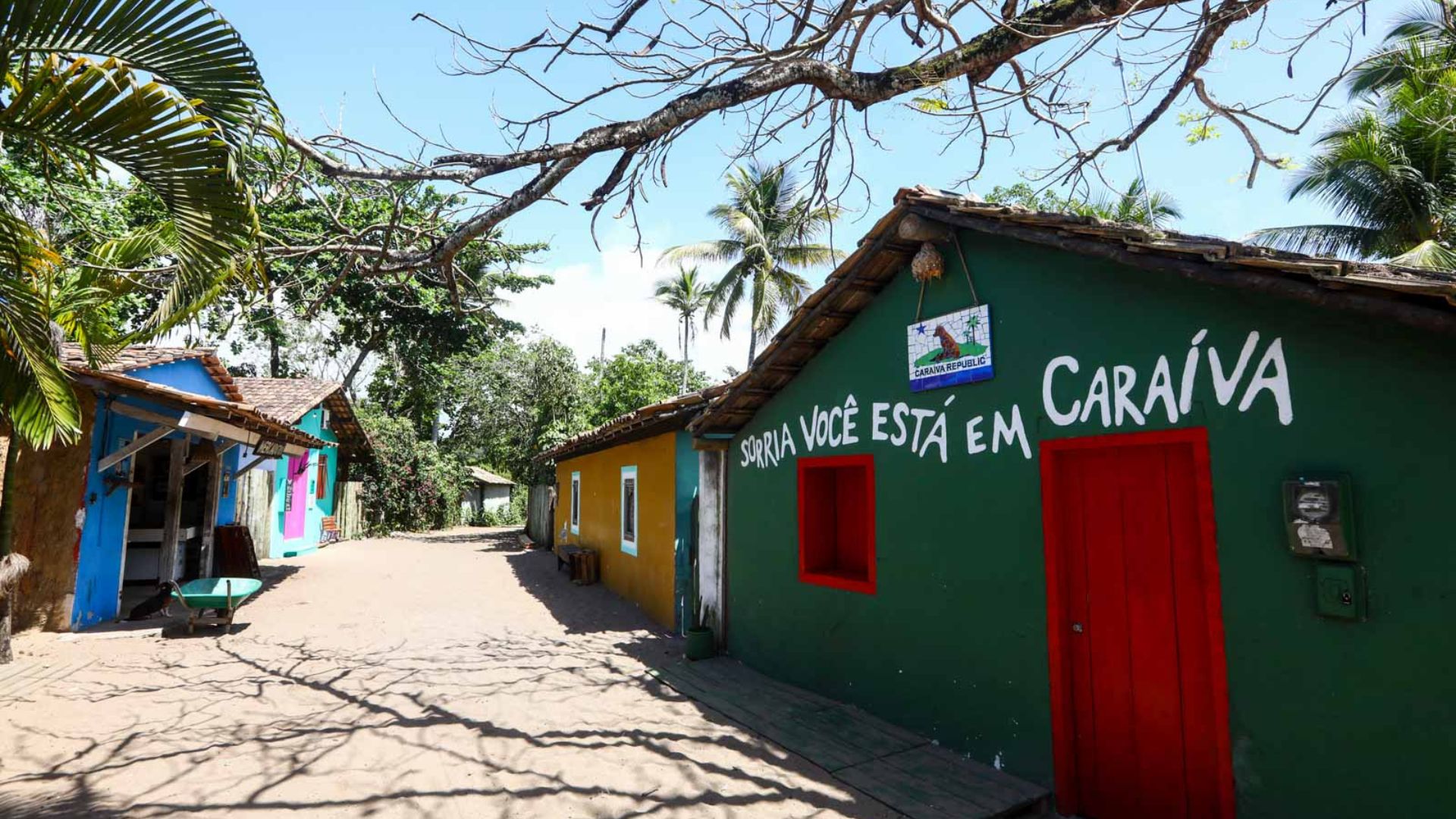
Sand Roads Without Cars, Canoe Crossing, and Forró Nights Shape the Experience in Caraíva, a Village Between River and Ocean in Southern Bahia.
Between the Caraíva River and the Atlantic, in the extreme south of Bahia, the village of Caraíva has established itself as a destination where the visitor’s routine changes upon arrival: there is no traffic of cars on the sand streets, and the last stretch to the “core” of the village is done in small boats, piloted by local boatmen.
The short crossing serves as a symbolic “portal” to a place where the tide dictates schedules, movement occurs on foot, and the night usually ends to the sound of forró.
Located on the Discovery Coast and linked to the municipality of Porto Seguro, Caraíva maintains its own pace, marked by a mix of riverside village and beach destination.
-
He started running at 66 years old, broke records at 82, and is now a subject of study for having a metabolic age comparable to that of a 20-year-old, in a case that is intriguing scientists and inspiring the world.

-
Oldest tree on the planet reappears after 130 years of searches: Wattieza, 385 million years old, was 10 meters tall and had no leaves or seeds; Gilboa fossils in New York solved the mystery in 2007.

-
A 48-square-meter house assembled in hours with 4,000 bricks made of recycled plastic that does not absorb moisture, has natural thermal insulation, and costs less than 90,000 reais in a complete kit.

-
Luciano Hang revealed that Havan’s air fleet has already accumulated more than 20,000 landings, 10,000 flight hours, and 6 million kilometers traveled, and he says that without the planes, the company would never have grown so quickly.


Those who disembark there find a scenery that combines river and sea bathing on the same day, walks on soft sand, and nights that extend into the early morning, especially during busier periods.
Meeting of the Caraíva River with the Sea at the Barra
The main postcard of Caraíva is also its daily “compass”: the meeting of the Caraíva River with the ocean, in the area known as Barra.
In this section, the visitor clearly perceives how nature organizes the local time.
The tide changes the landscape and influences what is most comfortable to do, whether entering the calmer waters of the river or seeking the sea’s waves.
Throughout the day, this back and forth translates into simple yet crucial choices for the experience.
In a single short journey, one can alternate between swimming, observing the movement of boats on the river, and walking along the sandy strip that connects bathing spots, restaurants, and inns.
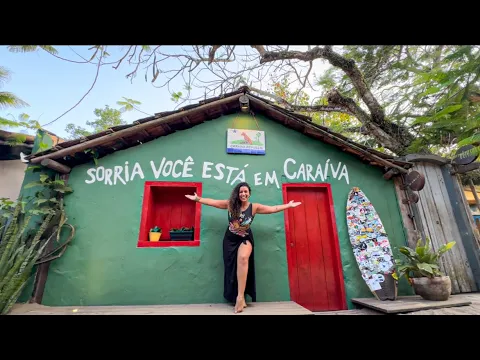

The result is a routine of little rush, where the movement becomes part of the outing.
Meanwhile, quieter stretches of the river, such as areas known for evening baths, tend to attract those who want to slow down away from the hustle of the water meeting.
In general, it is in this setting that the sunset becomes a fixed program, with the ebb and flow of people returning from the beach and spreading along the riverbank.
Pataxó Experiences and Community-Based Tourism
Beyond the landscape, Caraíva is sought by those who wish to engage with cultural experiences in the region.
Among the possibilities mentioned by local guides and itineraries, there are visits to spaces and Pataxó communities, such as Aldeia Pataxó Porto do Boi, frequently mentioned by travelers interested in rituals, body painting, and traditional cuisine.
This type of experience, however, depends on availability and rules defined by the residents themselves.
Therefore, it is best to seek updated information directly at the destination, with local guides and hosts, and to follow guidelines regarding times, costs, image registration limits, and appropriate ways to participate.
The dynamics are not a “ready-made attraction” and vary according to community organization.
Walks at Low Tide and More Secluded Beaches

The logic of Caraíva favors walking tours, especially when the tide allows routes along the sand.
This is how many visitors reach spots like Praia do Satú, known for combining the sea with stretches of freshwater in lagoons, in addition to natural formations that change appearance with the light and tide level.
Another common journey starts from the center toward quieter areas of the river, sought for bathing and contemplation.
In these stretches, the defining atmosphere is the contrast between the bustle of the little town and the feeling of isolation just a few minutes’ walk away, with less noise and more space to relax on the sand without haste.
For those wanting to expand the itinerary, Ponta do Corumbau emerges as one of the most popular day trips in the region, featuring calmer sea stretches and a view of clear waters at certain times.
The journey may involve a boat, and in authorized areas, specific vehicles may be used outside the village’s “on foot” logic, depending on the format of the trip.
Forró in Caraíva and Nights That Turn into Morning
If during the day Caraíva tends to be quiet, the night has a different rhythm.
Restaurants and bars cluster along the riverbank, and the movement usually increases after dinner.
In high season, it is common for the peak to occur later, when forró gathers locals and tourists alike.

Forró do Pelé is cited by travelers and guides as one of the most traditional addresses in this nightlife scene.
In recurring accounts, the music flows through the night, featuring xote, baião, and typical repertoire, in a dynamic that reinforces the place’s identity: party without hurry, with many people walking barefoot through the sand.
Starry Sky and Streets Without Public Lighting
A notable feature in Caraíva is the absence of public lighting poles on the sand streets.
This measure is linked to the choice to minimize visual impact and maintain the village’s aesthetics, with electrical infrastructure installed underground in specific areas, according to implementation and adaptation initiatives described by the government of Bahia.
In practice, this changes how people move around at night.
Visitors often rely on the light from establishments, support points, and occasionally, flashlights.
With less artificial light, the starry sky becomes more prominent, and walking turns into a sensory experience different from most urban destinations.
Climate in Caraíva and Best Time to Visit
Heat is frequent throughout the year, but climatic data helps to understand variations in temperature and rainfall and to plan the trip.
In Caraíva, historical averages indicate maxima around 24°C to 28°C in winter and 26°C to 28°C in hotter months, with significant changes in rainfall throughout the calendar.
According to Climatempo records, September shows an average minimum near 21°C and a maximum around 25°C, in addition to being one of the lowest average precipitation months of the year.
In contrast, November tends to concentrate higher volumes of rainfall in the historical series presented.
In the tourist’s routine, this usually means that periods with less precipitation favor long walks on the sand and activities that depend on tide and visibility.
Still, since it is a coastal destination, conditions may vary, and the practical recommendation is to check the forecast closer to the trip.








-

-

-

-

-

-

154 pessoas reagiram a isso.