





 Portuguese
  English
  Spanish
  6 min of reading
  0 comments


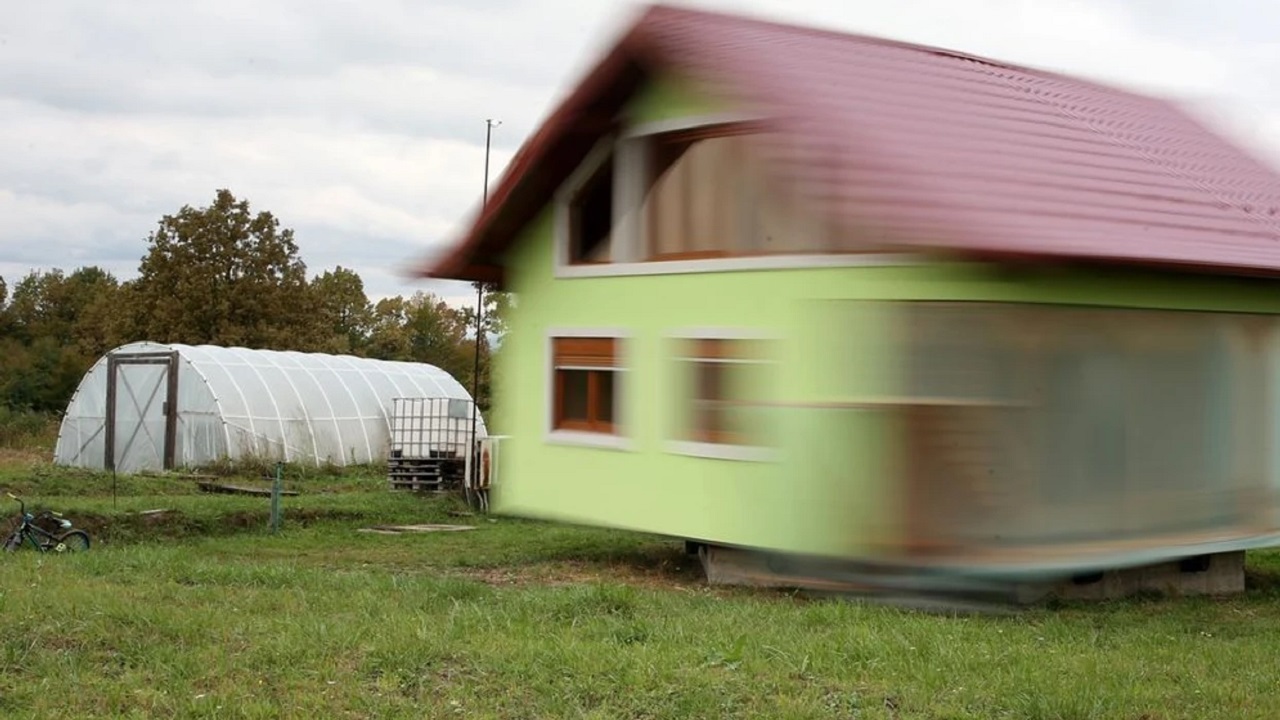
Japanese Engineer Creates 120 Sqm Rotating House That Follows The Sun, Reducing 70% Energy Consumption And Anticipating The Future Of Sustainable Architecture.
In Japan, a country known for the harmony between tradition and technology, an engineer decided to challenge the concept of a static house and create a work that literally moves with the sun. His name is Yoichi Sakamoto, and his invention — a 120-square-meter rotating house — is not science fiction and was created in mid-2021. Built in the city of Shizuoka, the residence was designed to smoothly rotate on its own axis, following the solar movement throughout the day, optimizing natural lighting, and drastically reducing energy consumption.
More than an engineering curiosity, the “Revolving House” (Kaiten Jūtaku, in Japanese) is a visionary example of how architecture can adapt to the environment, rather than the other way around. Created in the 1990s, it remains one of the most ingenious sustainable solutions applied in residences, long before artificial intelligence and solar panels dominated the debate over eco-friendly houses.
The House That Follows The Sun: An Idea Born From Observing Nature
Yoichi Sakamoto grew up in a mountainous region of Shizuoka, used to seeing extreme variations of light and temperature between dawn and dusk. Inspired by the flowers that turn toward the sun and the farms that oriented their crops according to the season, he decided to create a house that could slowly rotate, maximizing natural heating in winter and ventilation in summer.
-
The lack of welders, electricians, and operators becomes a structural threat in 2025, with the construction industry and manufacturing already suffering from delays, cost pressures, and labor shortages in Brazil.
-
Brazil and Paraguay are just 46 meters away from a historic union on the bioceanic bridge that promises to revolutionize trade between the Atlantic and the Pacific.

-
With 55 km over the sea, a cost of US$ 20 billion, and enough steel to build 60 Eiffel Towers, China’s largest project has connected Hong Kong, Zhuhai, and Macau in a colossal bridge that defies the logic of engineering.

-
A trick with joint compound transforms a Styrofoam ceiling into a plaster-like ceiling: leveled panels, wires and mesh at the joints, sand, paint, and change the environment while spending little today.


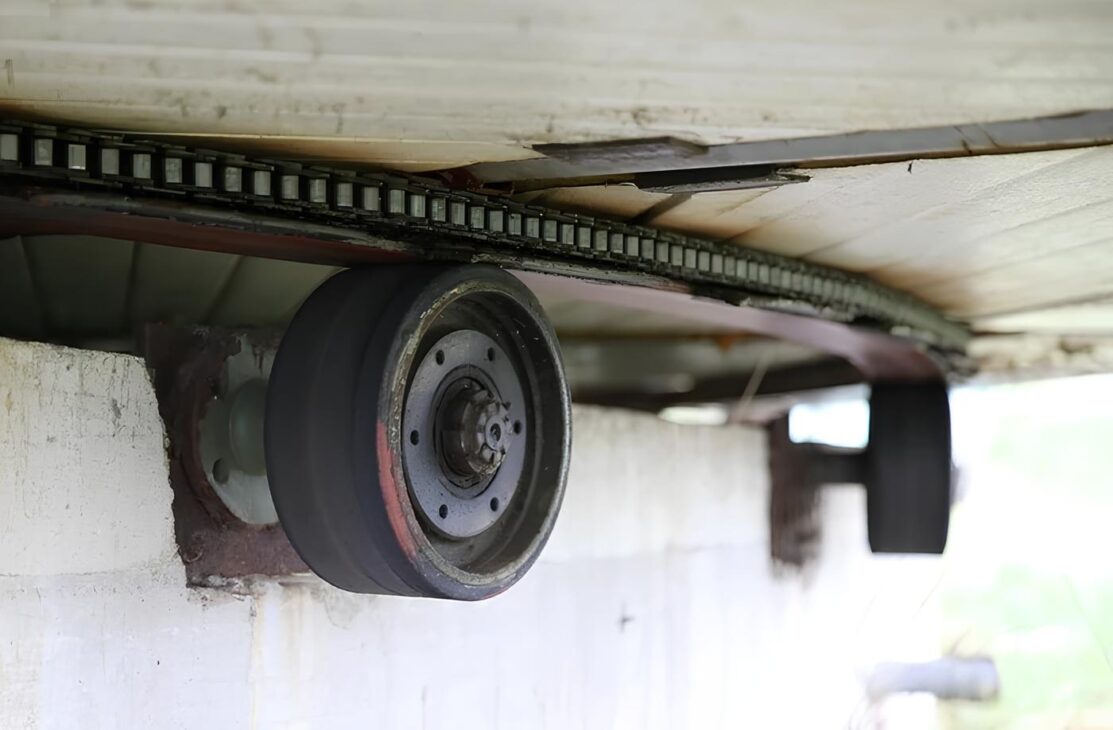
The result was a circular structure mounted on a motorized platform, capable of completing a full rotation in about two minutes, with total control by the resident.
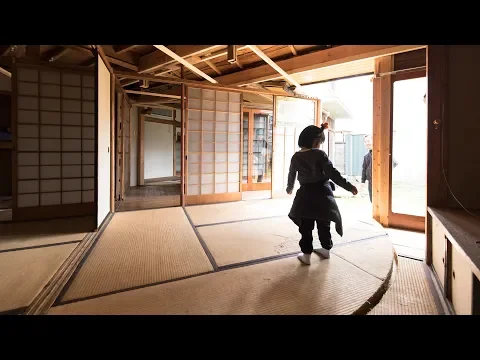

The rotation is so silent that the movement is hardly noticeable. The system is powered by low-consumption electric motors and sensors that calculate the ideal position in relation to the sun.
According to Sakamoto, the idea stemmed from a personal frustration: “I realized I spent more time adjusting curtains and windows than living in the house. So I thought: what if, instead of adapting to the sun, the house adapted to me?”
Precision Engineering: 120 Sqm On A Motorized Base
With 120 square meters of usable area distributed over two floors, the Revolving House was constructed with light steel structure and laminated wood, materials that ensure stability and flexibility — essential in a country prone to earthquakes.
The circular base has a 9-meter diameter and weighs about 40 tons, housing the motorized system and bearings that allow for smooth rotation. The design is so precise that, even after more than 25 years, the original mechanism continues to function.
The whole house is designed in modules. The bathroom and kitchen, for example, remain fixed at the center of the structure, while the external environments rotate around this core. This configuration ensures that pipes and electrical cables do not get entangled, even with continuous movement.
Energy Efficiency And Thermal Comfort
The rotation system is not just a technological trick — it has a clear purpose: reduce energy consumption.
By following the sun during winter, the house takes advantage of natural heating to maintain a pleasant temperature inside, while in summer it can be rotated to shaded areas, reducing the need for air conditioning.
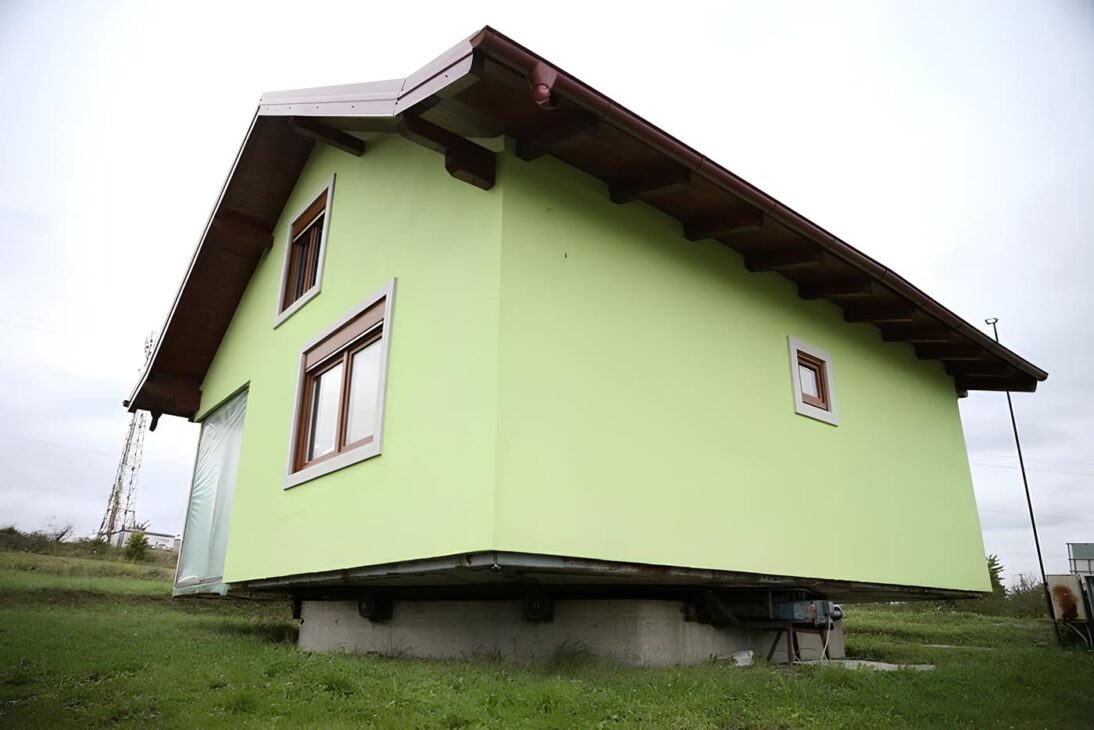
Studies published in the Japanese magazine Jutaku Kenchiku showed that Sakamoto’s model reduces electricity consumption by up to 70% compared to a conventional Japanese residence of the same size. Natural lighting is also amplified, allowing for larger windows to be used without compromising thermal comfort.
With this balance between light, ventilation, and efficiency, the project anticipates the principles of so-called bioclimatic architecture, a concept that is now the foundation for smart buildings worldwide.
The Global Impact Of The “Revolving House”
Yoichi Sakamoto’s invention attracted the attention of the Japanese media and quickly became the subject of reports on NHK programs and sustainable architecture exhibitions. The project inspired variations in Germany, Australia, and the United Arab Emirates, where engineers developed rotating buildings based on the same principle — but on a much larger scale.
One of the most famous cases is the Dynamic Tower, in Dubai, a rotating skyscraper designed by architect David Fisher, which envisions each floor rotating independently to optimize light and view. The concept was born directly from the pioneering ideas of the Japanese engineer, although Fisher’s project has never been completed.
Even decades later, Sakamoto continues to be cited at design and technology conferences as one of the pioneers of adaptable architecture, which seeks to create living and changing environments, in tune with climate and human behavior.
Sustainability Before It Was Trendy
In the 1990s, sustainability was still a term restricted to academics and environmentalists. But Sakamoto already viewed the house as a living organism. The Revolving House uses natural cross ventilation, passive heating, solar panels integrated into the roof, and recyclable materials.
The engineer also installed a rainwater harvesting and greywater reuse system, making the house partially self-sufficient. All of this at a time when solar panels were still very expensive and rare in Japan.
Today, researchers from the University of Tokyo and the Shizuoka Institute of Technology analyze Sakamoto’s model as a pioneering case of responsive architecture, that is, buildings that adapt to their environment without requiring constant manual control.
When The House Became A Cultural Symbol
Over time, the rotating house became a local tourist attraction in Shizuoka. Visitors from Japan and other countries began to include the Revolving House in technological tourism itineraries, especially after its showcase in the series Innovative Japanese Architecture, from NHK World Japan.
Sakamoto himself, now over 70, keeps the system running and receives groups of students to explain the fundamentals of the project. “I didn’t want to make a futuristic house. I wanted to make a house that understood time,” he states.
Currently, there is a new generation of Japanese architects and engineers revisiting the concept created by Sakamoto, but with the integration of artificial intelligence and real-time climate sensors. Some prototypes can already rotate automatically based on solar intensity, humidity, or wind direction — something the inventor envisioned, but could not implement at the time.
Companies like Misawa Homes and Daiwa House are already studying rotating systems for small modular homes aimed at the elderly, where the resident can adjust the environment without physical effort.
What once seemed an eccentric dream is now seen as a precursor to eco-friendly smart homes, showing that sustainability can be achieved with creativity and ingenuity, without relying on large corporations.
The Lesson Of Yoichi Sakamoto
More than a technical feat, Sakamoto’s project is a silent manifesto about how technology can serve nature. Instead of destroying the environment, he proposed that the home move with the rhythm of the planet.
In times when glass skyscrapers struggle against the heat they produce, the idea of a house that rotates to “follow the sun” seems almost poetic — and perhaps, finally modern enough to be understood.









-

Uma pessoa reagiu a isso.