





 Portuguese
  English
  Spanish
  3 min of reading
  0 comments


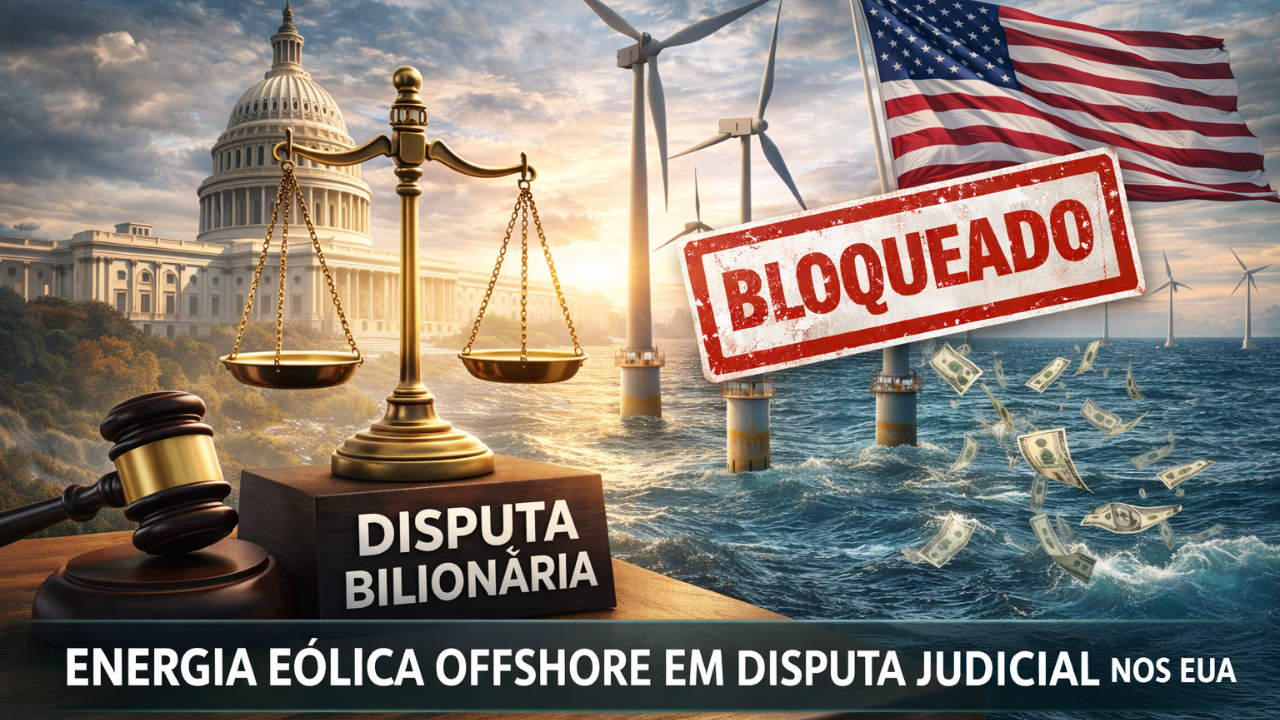
Companies Sue Trump Administration to Unlock Offshore Wind Energy Projects Valued at US$ 25 Billion as Regulatory Hurdles and National Security Claims Mount Uncertainty in the Sector.
The expansion of offshore wind energy in the United States has entered a new chapter of instability after industry developers filed a lawsuit against the Trump administration. The aim is to prevent the blockage of projects valued at around US$ 25 billion, deemed strategic for the country’s energy transition.
The lawsuits were filed by three companies directly involved in the development of offshore wind farms. According to the filings, decisions by the Department of the Interior resulted in the suspension of five major projects that, when completed, are expected to add around 6 gigawatts of installed capacity.
Advanced Projects and Growing Financial Losses
Among the projects mentioned are Revolution Wind, developed by Ørsted, with 704 megawatts, and Empire Wind, from Equinor, which anticipates 2 gigawatts of generation. Additionally, Dominion Energy filed a lawsuit on December 23, claiming losses resulting from the halt of the Coastal Virginia Offshore Wind project, which is 2.6 gigawatts and located off the coast of Virginia.
-
Giant of the winds in Rio Grande do Norte: Serra do Tigre Wind Complex receives new investments and accelerates the expansion of clean energy generation to supply millions of Brazilian homes.
-
Urgent energy transition: Greenpeace advocates for massive investments and points to Brazil as a global leader in wind energy production in the coming years.
-
Conflict in the Sertão: Rural communities in Rio Grande do Norte report issues with wind farms and the new challenges of clean energy in the semi-arid region.
-
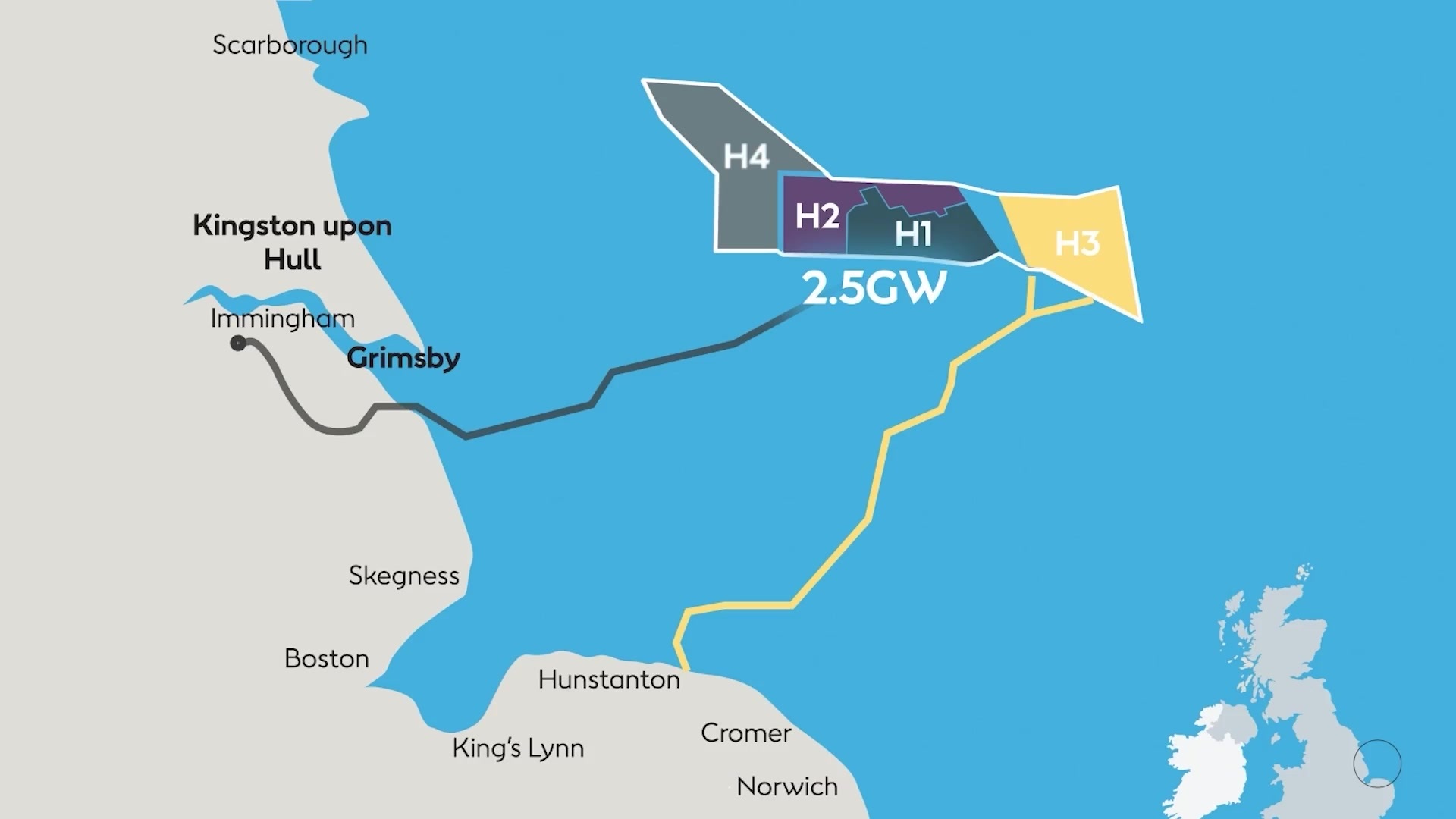
231 turbines of 260 meters at 160 km from the coast, monopiles weighing as much as nine blue whales embedded in the North Sea, and a crane ship taller than the Eiffel Tower: Hornsea 3 will be the largest offshore wind farm on the planet by 2027, and its first components have already arrived in England.

The numbers highlight the financial impact. Revolution Wind is about 90% complete. Meanwhile, Empire Wind and the Dominion project have reached approximately 60% execution. According to Dominion Energy, the interruptions have caused estimated daily losses of US$ 5 million.
Meanwhile, Avangrid, responsible for Vineyard Wind 1, has not yet filed a lawsuit. However, the project is already facing similar hurdles and has nearly half of its capacity in operation.
National Security Enters the Wind Energy Debate
The official justification from the Department of the Interior for suspending construction involves concerns related to national security. Although the government has not detailed the risks, sources indicate that the Trump administration raised possible interference of wind turbines on radar systems used in military and defense operations.
A report from the Department of Energy had already addressed the issue, highlighting that the rotating blades of turbines can indeed generate noise in radar systems. However, experts claim that technical solutions have been developed for over a decade to mitigate this type of interference.
Technical Solutions and Ongoing Negotiations
According to Vineyard Wind, the Bureau of Ocean Energy Management is working with the Military Aviation and Installation Guarantee Siting Clearing Corporation to analyze offshore wind energy projects on a case-by-case basis. The intention is to adjust locations and layouts of the farms, reducing impacts on sensitive installations.
Nicholas O’Donoghue, senior engineer at RAND Corporation, has stated that modern radar systems can filter out interference through adaptive processing algorithms. In some cases, industry companies have agreed to fund technological upgrades and even reduce operations when requested by the Department of Defense.
Political Changes Increase Uncertainty in the Sector
At the beginning of last year, the Trump administration suspended not only the works of Empire Wind and Revolution Wind but also new approvals for offshore wind projects. Some of these decisions were reversed after negotiations with New York state and a court ruling that overturned the suspension order for Revolution Wind.
Even so, the episode reinforces the scenario of regulatory insecurity surrounding offshore wind energy in the United States. For developers and investors, the judicialization of the sector highlights how political and institutional factors continue to directly influence the pace of renewable energy expansion in the country.





Seja o primeiro a reagir!