





 Portuguese
  English
  Spanish
 5 min of reading
  18 comments


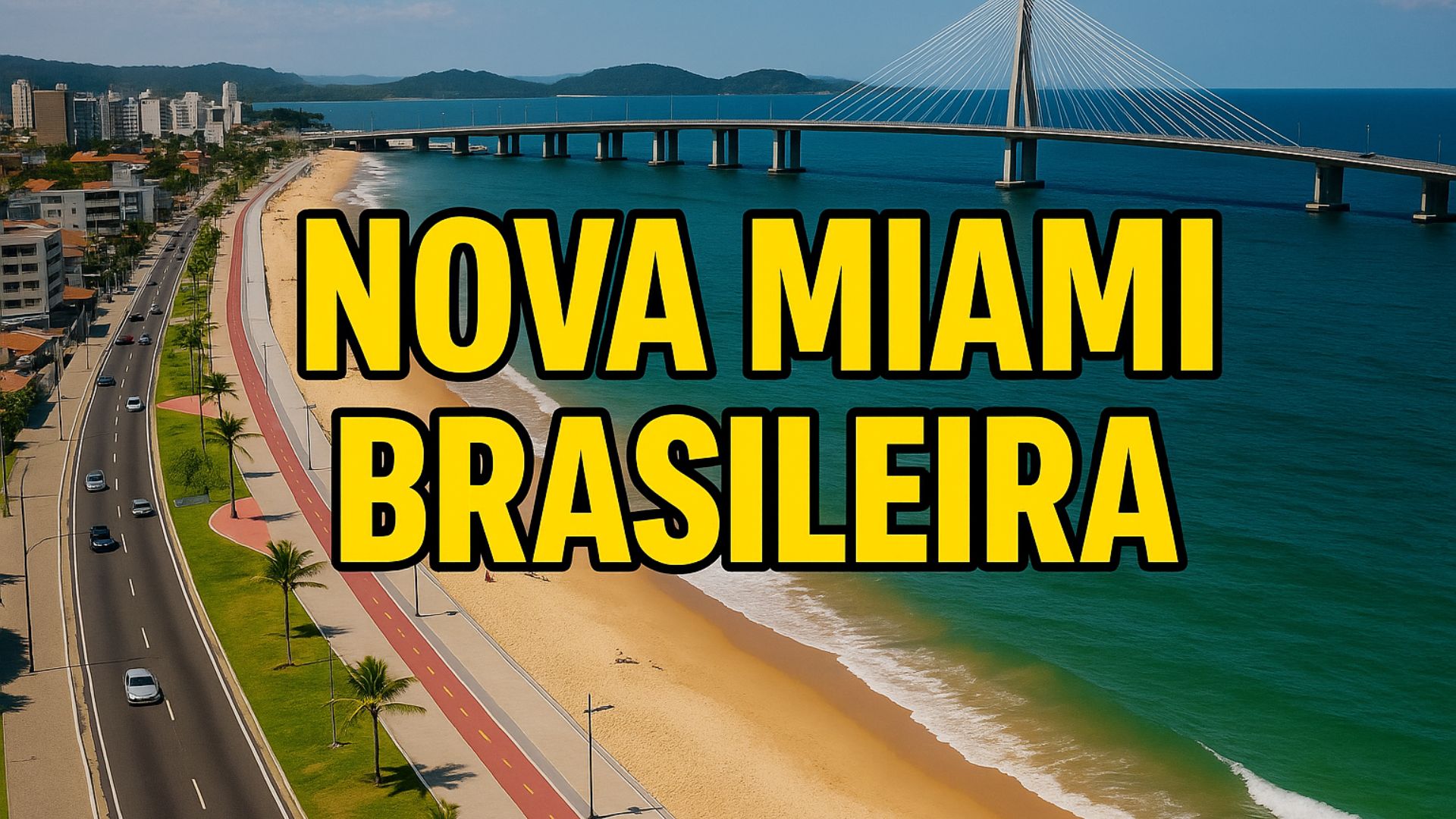


The Coast of Paraná Undergoes Structural Changes That Redesign Its Mobility, Expand Beaches, and Redevelop Entire Cities, in a Cycle of Works That Promises to Alter the Tourist and Economic Dynamics of the Region.
The coast of Paraná is undergoing one of the largest cycles of public works in its recent history, an estimated investment of 1.7 billion reais aimed at reversing decades of urban neglect.
The information was presented in a video published on the Urbana channel, which details why a historically underdeveloped coastal area has begun to receive large-scale interventions and how these works may reposition the region on the country’s tourist map.
According to the content released by Urbana, the contrast between the preserved natural beauty and the precarious infrastructure has marked generations of residents and visitors.
-
The largest food company on the planet, JBS, has just opened a 4,000 square meter laboratory in Florianópolis to develop customized proteins that modulate muscle mass gain, immune response, and metabolic performance.

-
After nearly 30 bids and competition among industry giants, a Spanish company purchases one of the largest airports in Brazil for almost R$ 3 billion and takes over the management of Galeão in a concession that will last until 2039.

-
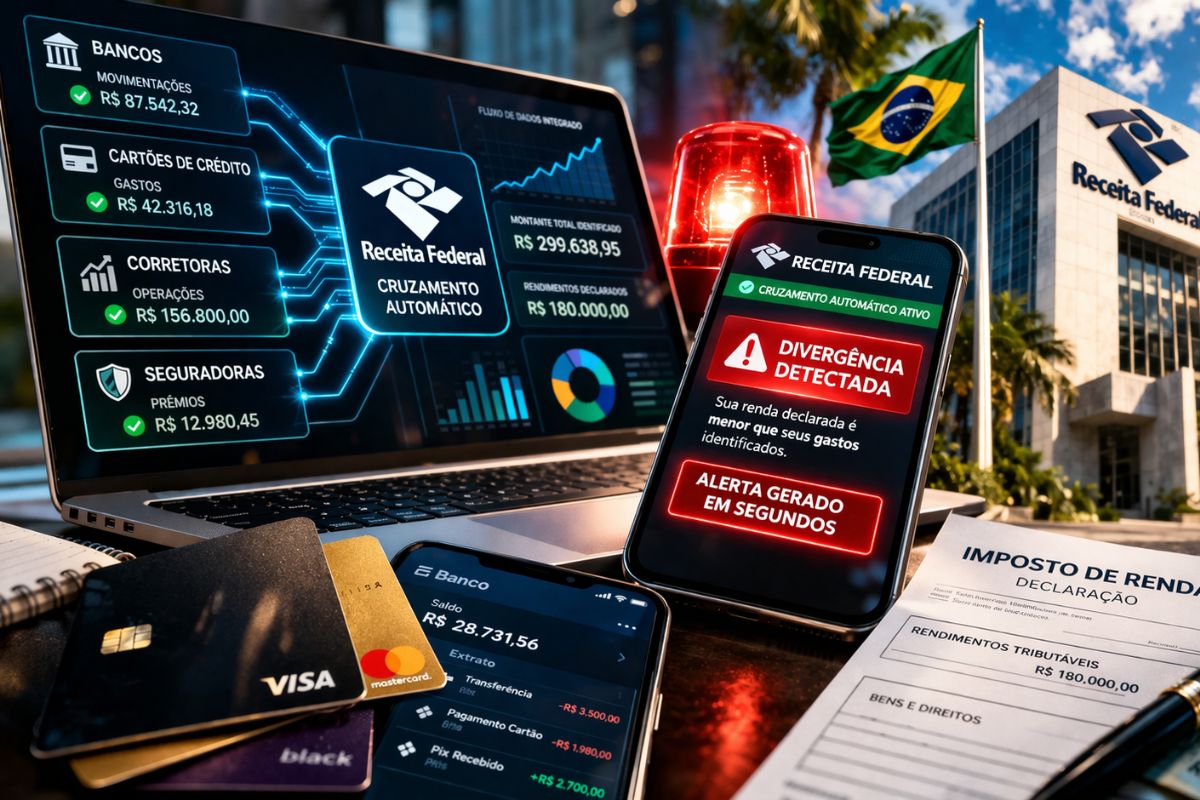
The Federal Revenue Service now automatically cross-references everything you declare with data from banks, credit cards, brokerage firms, and insurance companies, and any discrepancy between your income and your expenses triggers an alert in seconds.
-
Amid global tensions, Brazil blocks the United States’ proposal at the WTO and paves the way for a trade crisis and possible retaliations.


Despite having stretches of Atlantic Forest, sheltered bays, and open beaches, the coast of Paraná has seen little growth, with simple boardwalks, limited drainage, inadequate access, and a lack of robust urban planning projects.
As highlighted by the channel, this combination has compromised tourist development and reinforced unfavorable comparisons with Santa Catarina, where cities like Florianópolis, Itapema, Bombinhas, and Balneário Camboriú have established themselves as national destinations.

Putting this history into context, Urbana recalled that Paraná has only about 98 kilometers of coastline, which naturally limits its capacity to spread large resort areas.
Clusters gather in a few spots, such as Matinhos, Caiobá, Praia de Leste, Pontal do Paraná, and Guaratuba, which has made mobility or infrastructure failures impact the region even more intensely.
The Political Turning Point and the Start of Mega Projects
The video also recalls the phrase that became a political landmark.
In a June 2021 interview, Governor Ratinho Júnior stated that “he could no longer stand seeing Santa Catarina turn into Miami and Paraná turn into Haiti”, a declaration that, according to the channel, crystallized a collective feeling of stagnation and publicly demanded structural changes.
From then on, a series of announcements and works began to reshape the region.
According to Urbana, this package includes simultaneous interventions: modernization of waterfronts, beach nourishment, deep drainage, road duplications, a meteorological radar, urban requalification, improvements at the airport, as well as the construction of a bridge considered strategic for regional integration.

The set of investments, according to the video, forms a coordinated transformation and not isolated actions.
Matinhos and the Reconstruction of the Waterfront With International Engineering
The first axis of this process is Matinhos.
The channel describes that for many years the municipality was seen as a “beautiful beach in a mistreated city,” due to frequent flooding, narrow sandy beaches, and deteriorated urban areas.
According to Urbana, the requalification of the waterfront uses hydraulic fill, a technique applied in international destinations like Miami and Dubai, to expand and stabilize the sandy area.
Dredges, pipelines, and pumping systems work to reconstruct stretches of the beach, alongside deep drainage works, a new boardwalk, modern lighting, bike paths, and revitalized access.
Furthermore, according to the channel, this set exceeds half a billion reais and structurally alters the urban landscape.
Guaratuba Bridge and the New Coastal Integration

On the other hand, this transformation only makes sense with the advancement of connection works.
The construction of the Guaratuba Bridge, as reported by Urbana, eliminates one of the main geographical barriers in the region.
The crossing that previously depended on ferries will now be replaced by a structure over 1.2 kilometers long with four traffic lanes.
The channel emphasizes that this bridge creates a continuous tourist corridor between Matinhos, Pontal, and Guaratuba, enhancing mobility and integrating local economies that were previously separated.
Duplicated PR-412 and the Reorganization of Mobility
Meanwhile, the duplication of PR-412 completes the circulation logic.
According to the video, this highway, once narrow and congested, is receiving additional lanes, new turns, service roads, and bridges, with an investment exceeding 270 million reais.
The channel notes that the road functions as the circulatory system of the coast, allowing improvements at the beaches to result in greater tourist flow and attraction of investors.
Pontal do Paraná and the Potential Finally Coming to Life
Pontal do Paraná also emerges as an essential piece in this puzzle.
According to Urbana, the municipality has always carried the perception of “dormant potential,” due to its large territorial extension and the presence of many resorts.
The current works include urban requalification, drainage, paving, modernization of lighting, retaining walls, and a new beachfront design.


The channel also highlighted that the advancement of public infrastructure has attracted the interest of construction companies and real estate firms, which have begun to see the location as a new expansion hub.
A Completely Reconstructed Coast
Together, the interventions form what Urbana calls a “mega-invisible structure”, in which each work connects to another to completely reshape the urban dynamic of the coast.
The impact, according to the video, is not only in the appearance of the beaches but in the new economic, tourist, and mobility logic that emerges from these improvements.
The channel notes that while the term “Brazilian Miami” is often used informally, the expression has gained new meaning in light of works that prioritize organized urbanization, efficient mobility, expanded sandy areas, environmental planning, and annual tourism stimulation.
For Urbana, this transformation represents less of an aesthetic comparison and more the construction of a solid tourist identity, something unprecedented in the recent history of Paraná.
In light of this scenario, the question posed by the video and now directed to the reader remains: does the coast of Paraná really stand out towards a new tourist level, or should the resources invested have been applied to other priority areas of the state?






Parabéns Governador, nosso Litoral Merece esses investimentos e o Parana tambem😁👏👏
Miami. Menos né. Bem menos. 🤣. Tá querendo Ibope pra tentar se eleger a novos cargos.
Litoral ficando muito bom, parabéns ao governo. Queria saber se tem alguma coisa em pauta sobre as melhorias do trecho de praia entre o Balneário Florida e o Monções. Calçada, ciclovia, algumas travessas sem asfalto e tudo mais que está precisando de cuidados.
Tem razão! Já tem projeto e orçamento. Quando iniciam as obras?