





 Portuguese
  English
  Spanish
  5 min of reading
  8 comments


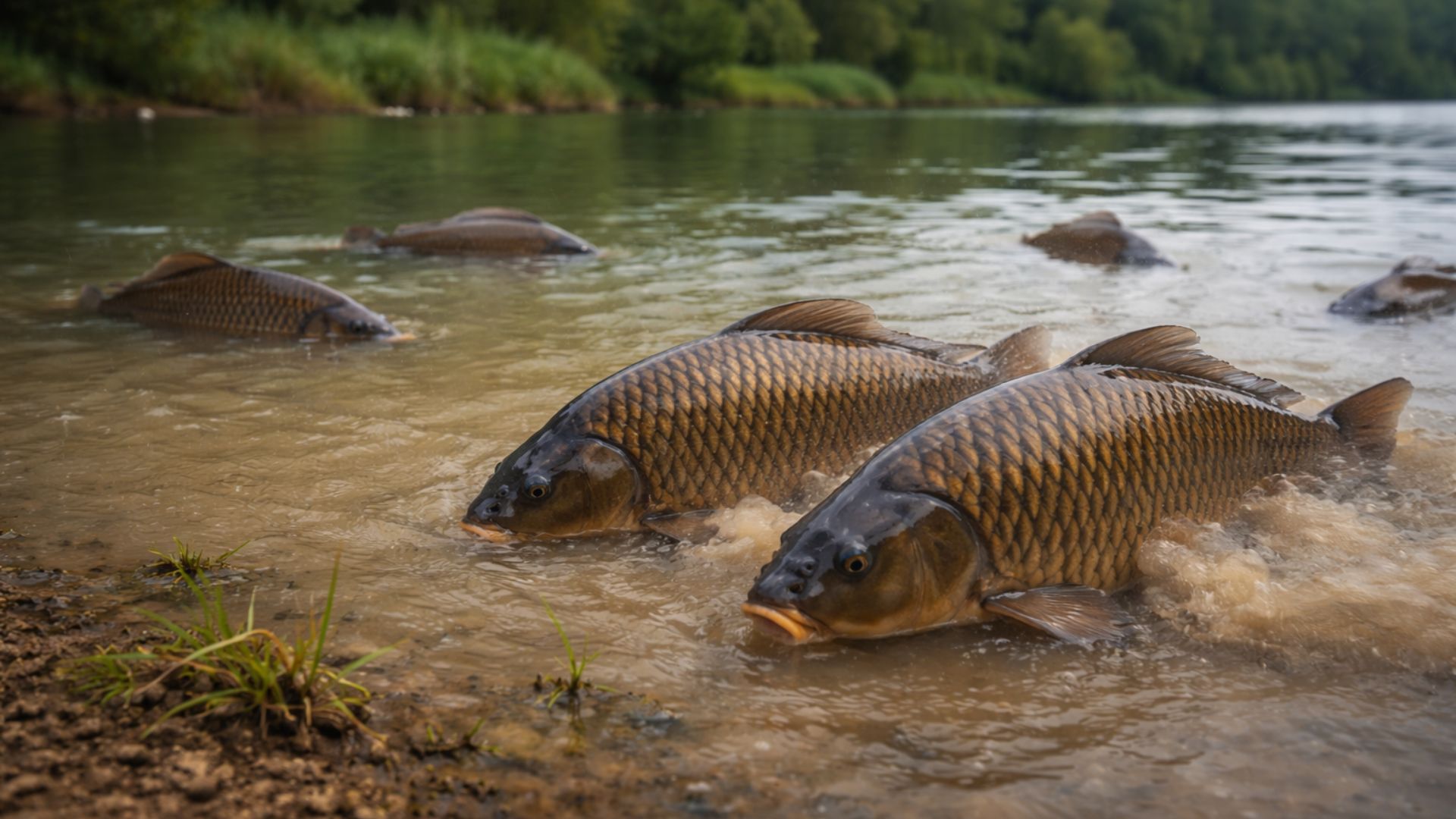


Widely Known Fish In Lakes And Reservoirs Can Change Water Clarity By Turning Sediments, Weakening Submerged Plants And Reorganizing Nutrient Dynamics. Bottom Feeding Behavior And Constant Movement Help Explain Why Some Environments Become Cloudy And Hard To Recover.
The Common Carp (Cyprinus carpio) is a fish known in various parts of the world for appearing in lakes, reservoirs, and slow-moving rivers, often associated with fishing and aquaculture.
What is not always evident outside of the scientific community is that, when it establishes in large numbers in environments where it is not native, the species can change the appearance and functioning of the ecosystem, increasing water turbidity, turning sediments from the bottom, and reducing the submerged vegetation that supports part of the local biodiversity.
The mechanism is physical and repetitive: the carp feeds and moves close to the bottom, “digging” through the substrate in search of organisms and organic matter.
-
He started running at 66 years old, broke records at 82, and is now a subject of study for having a metabolic age comparable to that of a 20-year-old, in a case that is intriguing scientists and inspiring the world.

-
Oldest tree on the planet reappears after 130 years of searches: Wattieza, 385 million years old, was 10 meters tall and had no leaves or seeds; Gilboa fossils in New York solved the mystery in 2007.

-
A 48-square-meter house assembled in hours with 4,000 bricks made of recycled plastic that does not absorb moisture, has natural thermal insulation, and costs less than 90,000 reais in a complete kit.

-
Luciano Hang revealed that Havan’s air fleet has already accumulated more than 20,000 landings, 10,000 flight hours, and 6 million kilometers traveled, and he says that without the planes, the company would never have grown so quickly.


This behavior tends to suspend fine particles that were deposited in the sediment, increasing the amount of material in suspension in the water column and making the environment cloudier.
Databases that compile results from scientific studies and field observations describe the effect as a habitat alteration, with records of murkier water and degradation of areas with aquatic plants in locations invaded by carp.
Turbidity, Light And Loss Of Submerged Vegetation

The increase in turbidity is not just an aesthetic change.
In shallow systems, water clarity is a component that organizes the ecosystem, as it defines how much light reaches the bottom.
When light decreases, submerged plants that rely on sunlight for photosynthesis may lose vigor, reduce cover, and in extreme situations, disappear from stretches where they were previously dominant.
The loss of these plants alters the physical environment immediately: it reduces shelter structure for young fish, decreases surfaces for invertebrates, and weakens the ecosystem’s ability to stabilize sediments.
In wetlands, ponds, and vegetated margins of lakes, this dynamic can amplify.
The “carpet” of submerged and emergent macrophytes, when healthy, helps keep the bottom more stable and the water clearer because it holds particles and reduces resuspension caused by wind and waves.
In contrast, in environments dominated by loose sediment and turbid water, the lack of plants leaves the bottom more exposed and easier to be disturbed by benthivorous fish.
This type of feedback is described in limnology as a state change in shallow lakes, in which the system begins to favor conditions of persistent turbidity and lower dominance of submerged plants.
Sediments, Nutrients And Eutrophication In Shallow Lakes
Reports and technical compilations also associate the presence of carp with impacts that extend beyond vegetation.
By turning the bottom, the fish can resuspend organic material and nutrients that were stored in the sediment.
When these compounds reach the water column, they become more available to microscopic producers, such as algae and cyanobacteria, which affects the base of the food chain and environmental quality.
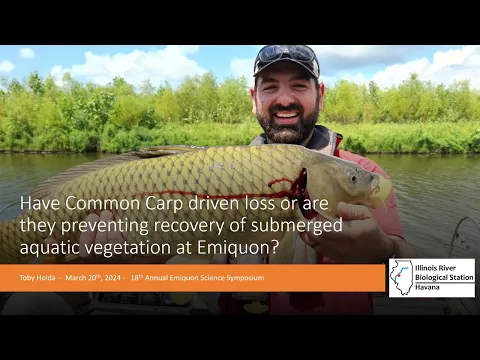

In a compilation of impacts, there are records of experiments in ponds in the state of Illinois, United States, where the presence of carp increased turbidity and raised total phosphorus, a parameter widely used to indicate nutrient availability associated with eutrophication.
Food Chain And Species Tolerant To Turbid Water
The relationship between turbidity, nutrients, and ecological structure helps explain why carp can function as a “engineer” species in invaded environments.
With cloudier water, predators that depend on sight may have more difficulty locating prey, while species more tolerant of low visibility gain an advantage.
At the same time, the reduction of submerged plants changes the distribution of microhabitats, with consequences for native fish, amphibians, and aquatic invertebrates that use vegetation as feeding, refuge, and reproduction areas.
An important part of the biodiversity of lentic systems depends on these structural elements, and habitat simplification can reorganize entire communities.
Introduced Species And Global Expansion
The Common Carp is native to regions of Eurasia and has been spread to numerous countries over time for various reasons, including food, fishing management, and, in some cases, ornamental maintenance of cultivated varieties in garden ponds and lakes.
The combination of environmental tolerance and the ability to establish in altered environments facilitates its expansion, especially in places where the water is already influenced by fine sediments and nutrient inputs.
In technical compilations, the species is frequently found associated with slow and turbid water environments, including those receiving agricultural runoff or urban effluents, a scenario in which its effects on turbidity and aquatic plants tend to be more visible.
Environmental Management And Ecosystem Services
This “ecological engineering” has implications for environmental management because changes in turbidity and loss of submerged vegetation affect ecosystem services that are of direct interest to society.
Water transparency, for example, influences recreational use, perception of environmental quality, and, in some reservoirs, treatment costs for supply.
Submerged vegetation also serves as a natural nursery for fish and as support for food chains that sustain artisanal fishing and fauna associated with floodplain areas, including birds that depend on vegetated environments for feeding and reproduction.
Debate About Impact And Remodeling Force In Shallow Environments

In many places, the debate over carp involves a known tension regarding introduced species: an organism that may have economic or cultural value in certain contexts, but that, outside its original environment and when dominating natural areas, becomes regarded as a habitat degradation agent.
The database of the United States Geological Survey compiles evidence of impacts on water quality, habitat structure, and food webs, with records of sediment resuspension, increased turbidity, and destruction of rooted plants due to feeding and movement activities of the species.
What makes the topic particularly relevant is the ease with which the phenomenon disguises itself as “naturally turbid water” or as a result solely of sediment brought by rain and erosion.
In systems invaded by carp, turbidity can be maintained by a combination of factors, and the fish acts as a biological component capable of sustaining the turbid state by continuously disturbing the bottom, preventing the recovery of submerged plants, and contributing to the increase of suspended particles and nutrients.
In other words, it is not just a fish present in the ecosystem, but an organism that can act as a remodeling force in shallow and sensitive environments.
If the carp is capable of consistently altering the water and bottom of a lake, why is it still so common for turbidity to be treated as a “problem without biological cause” when the species is already established in the location?







POR ISSO MESMO É QUE DEVEMOS FICAR(CRIAR) CADA VEZ MAIS COM O PINTADO BRASILEIRO, SURUBIM, CACHARA, PINTADO GAÚCHO, ETC!
PORQUE ALÉM DE TER UM FILÉ DE PRIMEIRA, PRATICAMENTE SEM ESPINHAS!
NÃO PROVOCA ESTES ESTRAGOS TODO NO FUNDO DOS RIOS LAGOS, E TANQUES PRÓPRIOS PARA O DESENVOLVIMENTO DESTAS(ESPÉCIES(BAGRES BRASILEIROS)!!!
Estão querendo criminalizar a carpa mesmo, o que esquecem é que a carpa é parte , apenas, do ecossistema, se somente há um ser soberano em um lago, as ações naturais ,executadas por ele não recebem complementação, e/ou finalização que seja positiva. Entendem isto?
Não. Não entendi. O que é uma finalização positiva?
Qual é a sugestão final ? Parar de criar a carpa ? Mais uma pergunta : A carpa comum é a carpa capim ?
A introdução de espécies foraneas acostuma a deixar estes sem depredador natural… Tal vez poderiamos considerar a introdução de un novo depredador, só que antes teria de ser estudados os possiveis inpactos sobre outras espécies locals, estes espaços já degradados, às vezes perderam depredadores autóctonos que poderiam ser reinteoducidos.
Quiz dizer reinteoducidos
“Reintroducidos”
Fiquem tranquilos…. só a traíra já dá equilíbrio no habitat.