





 Portuguese
  English
  Spanish
  4 min of reading
  1 comment


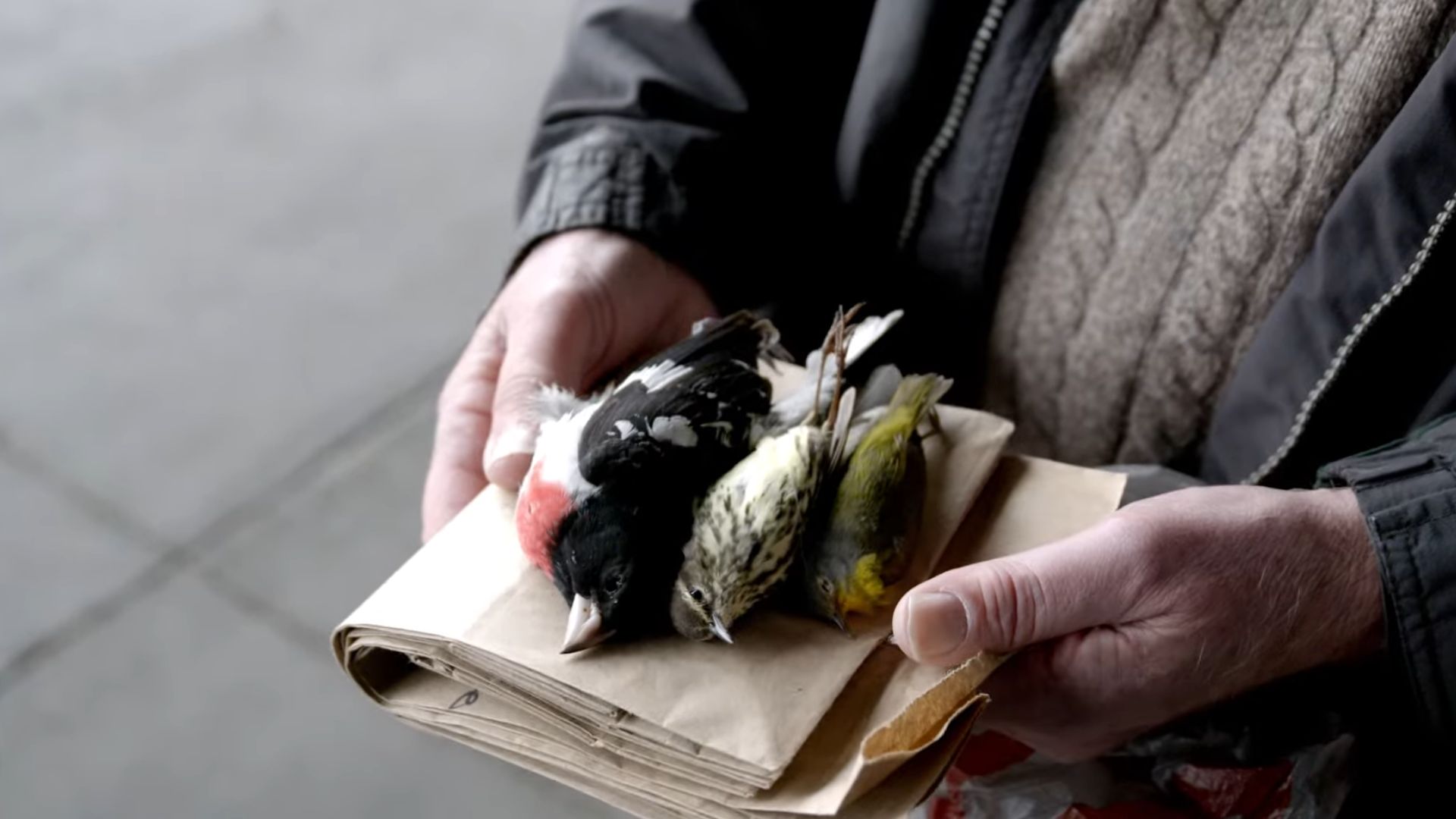


Convention Complex in the United States Dramatically Reduced Bird Deaths by Combining Nighttime Lighting Control and Visual Treatment on Glass Facades, After Decades of Scientific Monitoring Identified the Site as One of the Main Collision Points During Migration Routes.
For decades, one of the largest convention complexes in the United States concentrated a silent and recurring problem: thousands of migratory birds died colliding with its glass facades.
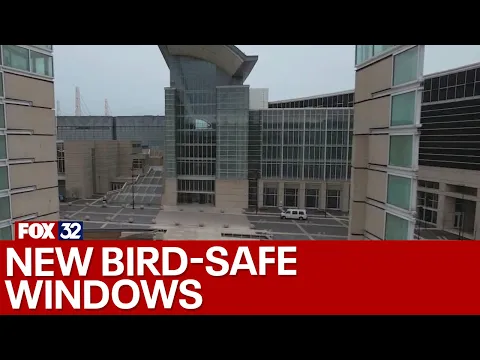
The building, McCormick Place, located in Chicago, became one of the most documented places in the world for bird mortality associated with artificial lighting and extensive glazed surfaces.
The situation began to change when simple measures were adopted, resulting in over a 95% reduction in recorded collisions.
-
He started running at 66 years old, broke records at 82, and is now a subject of study for having a metabolic age comparable to that of a 20-year-old, in a case that is intriguing scientists and inspiring the world.

-
Oldest tree on the planet reappears after 130 years of searches: Wattieza, 385 million years old, was 10 meters tall and had no leaves or seeds; Gilboa fossils in New York solved the mystery in 2007.

-
A 48-square-meter house assembled in hours with 4,000 bricks made of recycled plastic that does not absorb moisture, has natural thermal insulation, and costs less than 90,000 reais in a complete kit.
-
Luciano Hang revealed that Havan’s air fleet has already accumulated more than 20,000 landings, 10,000 flight hours, and 6 million kilometers traveled, and he says that without the planes, the company would never have grown so quickly.

How Artificial Light Disorients Migratory Birds
The phenomenon occurs mainly during night migration, when many species use natural signals, such as the position of stars, for navigation.
In urban areas, intense artificial lights interfere with this process, attracting birds to illuminated regions and disorienting entire flocks.
At dawn, glass facades worsen the risk, as reflections of the sky and nearby vegetation create the illusion of open space, while transparency prevents the obstacle from being perceived in time.

Continuous Scientific Monitoring Revealed Clear Patterns
In the case of McCormick Place, the severity of the problem was evidenced by continuous monitoring carried out by researchers and volunteers associated with the Field Museum.
Since the late 1970s, the site has been systematically monitored, with the collection and cataloging of dead birds after collisions.
This history allowed the identification of clear patterns between nights of intense lighting, favorable weather conditions for migration, and peaks of mortality.
Critical Episode Exposed the Scope of the Impact
Public attention intensified after a widely documented episode in which hundreds of birds died in a single night colliding with the facade facing Lake Michigan.
The event reinforced something that the accumulated data had already indicated: the combination of large areas of glass and constant nighttime lighting turned the building into a trap for migratory birds crossing the region each year.
Practical Measures Taken After Public Pressure
In light of the repercussions, the complex’s manager initiated operational and structural changes.
One of the first actions was to reduce visible light emission to the outside during critical migration periods, through the use of internal curtains and turning off non-essential lighting at night.
The initiative aligned with urban “lights out” programs, which encourage buildings to reduce lighting during known migration windows.

Glass Treatment Made Facades Visible to Birds
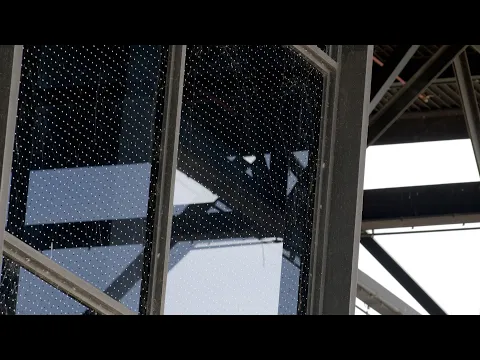
In parallel, the external glass underwent a specific treatment.
A film with regular visual markings was applied, designed to make the surface perceptible to birds without significantly compromising transparency for people.
The pattern breaks continuous reflections and eliminates the “invisible wall” effect, allowing birds to identify the obstacle and adjust their route before impact.
Reduction of Over 95% in Recorded Collisions
The results were rapid and measurable.
Observers who have monitored the site for decades reported that, in previous seasons, the annual collision count frequently reached about a thousand individuals.
After the combination of reduced nighttime lighting and glass treatment, records dropped to just a few dozen in a migration cycle, representing over a 95% reduction compared to historical figures.
Scientific Evidence Confirms Relationship Between Light and Collisions
These empirical observations are supported by scientific research published in the Proceedings of the National Academy of Sciences.
The study analyzed long-term data from McCormick Place itself and correlated the illuminated area of windows with the number of collisions.
Researchers demonstrated that nights with higher light emission were associated with peaks of mortality, while the decrease in lighting coincided with sharp declines, even when other environmental factors were considered.
Simple Solutions with Immediate Impact
The evidence reinforces a conclusion repeatedly stated by scientific institutions: controlling artificial light at night is one of the most effective tools to reduce bird collisions in urban areas.
When this measure is combined with physical solutions that make glass visible, the effect is amplified, especially in large buildings located near migration routes.
Environmental Management Without Major Structural Reforms
In addition to the environmental impact, the case draws attention to the practical aspect of the intervention.
The actions taken did not require the reconstruction of the facade or deep structural changes.
Curtains, operational lighting adjustments, and films applied externally were sufficient to transform a historical mortality site into an example of mitigation with concrete and measurable results.








Incrível como ciência associada com consciência ambiental e respeito à natureza podem gerar resultados maravilhosos!! Parabéns a todos os envolvidos!