





 Portuguese
  English
  Spanish
  4 min of reading
  1 comment


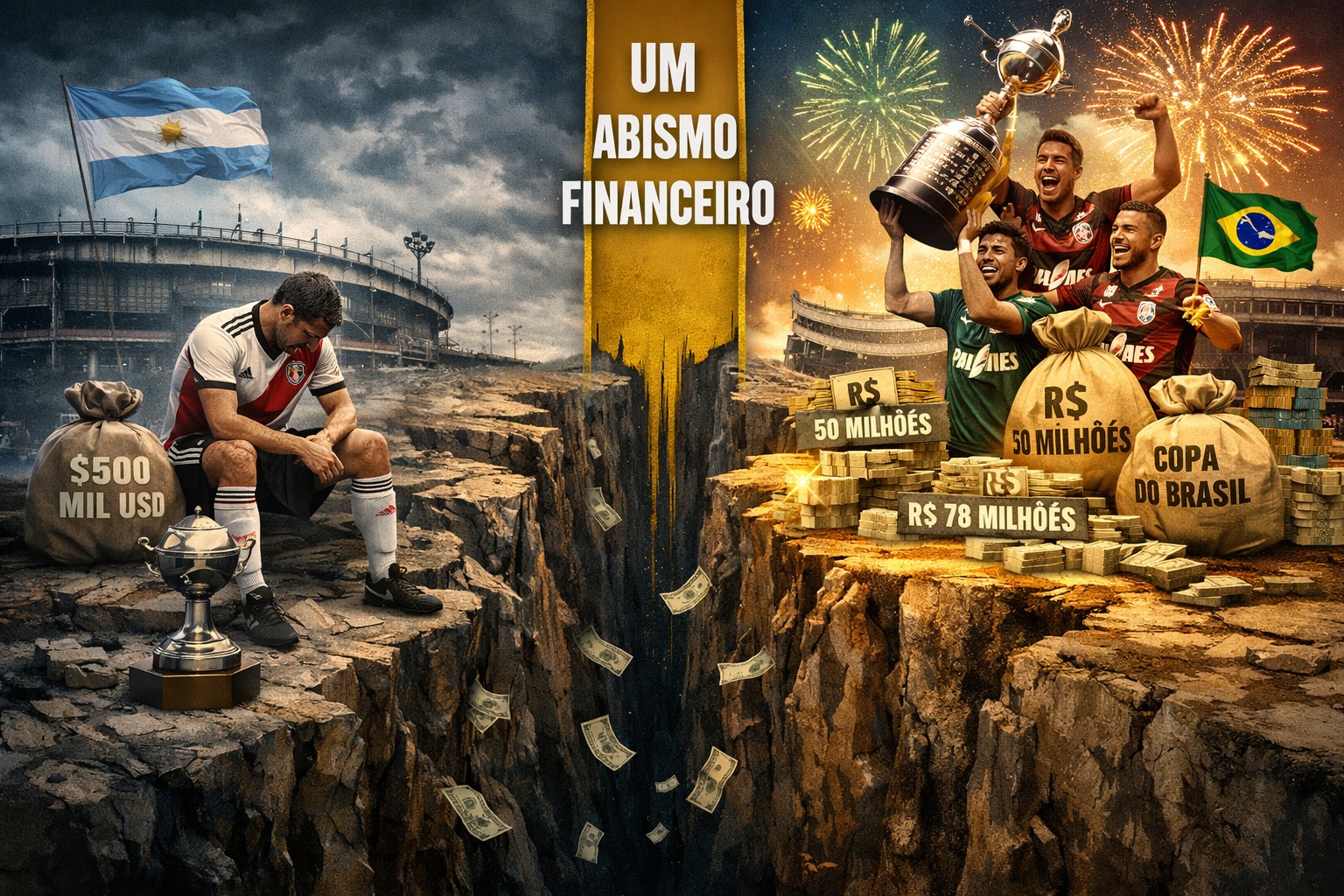


Brazil and Argentina Tie in Libertadores Titles, But Revenue Difference Reaches R$ 260 Million Annually, National Prizes Vary from R$ 78 Million to US$ 170 Thousand and Brazilian Dominance Is Consolidated Since 2019
Brazilian football has matched Argentina’s historic number of Libertadores titles, but has opened a wide financial, technical, and structural advantage, reflected in prize money, sponsorships, and recent performance, with absolute dominance since 2019 and much higher domestic revenues.
Brazil and Argentina continue to share the highest shelf of the Libertadores in tradition, but the similarity is limited to the past, as the current gap both on and off the field has become evident.
The contrast appears in national prizes, as the Argentine champion receives less money than the winner of Brazil’s Serie B, highlighting the disparity between the markets.
-
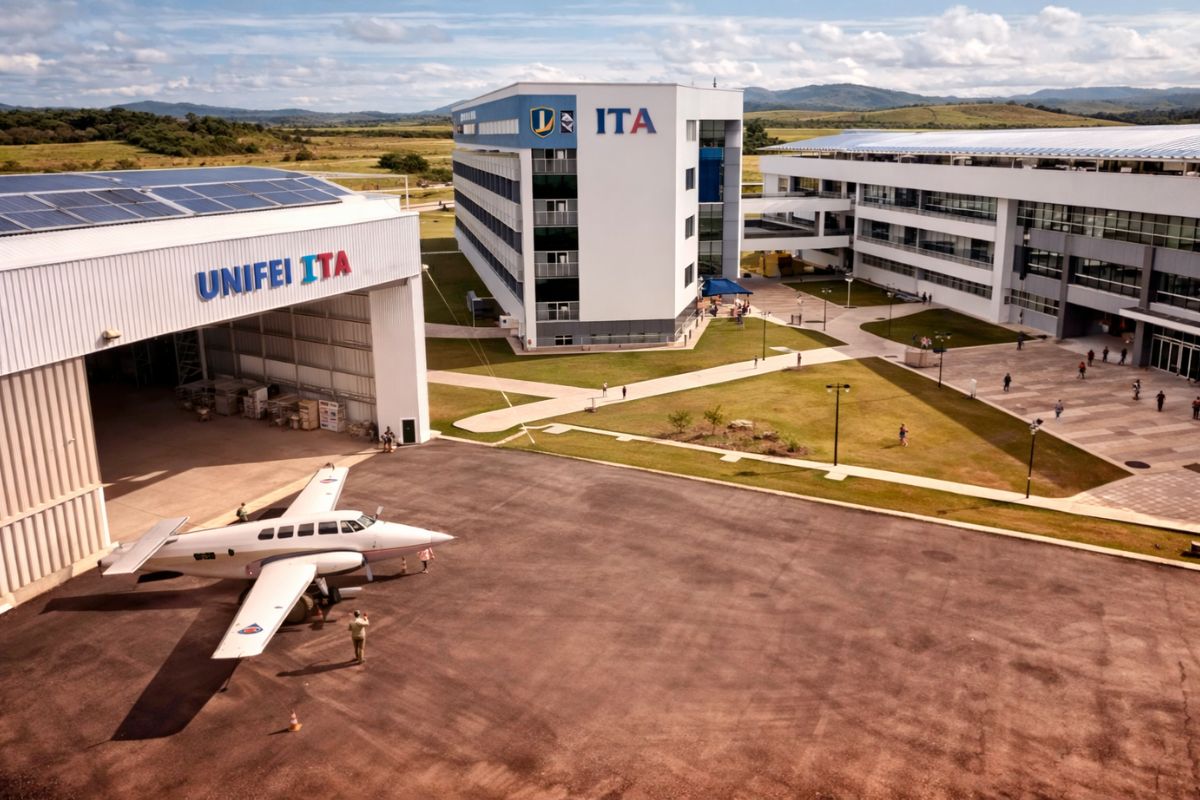
The institute that trained the greatest aerospace engineers in Brazil has just opened its first campus outside São Paulo after 75 years: ITA Ceará will have R$ 445 million, new courses in energy and systems, and classes are expected to start in 2027.
-
Luciano Hang, owner of Havan, goes to Juiz de Fora after the tragedy in February, brings R$ 1 million, hands out R$ 2,000 cards, and donates up to R$ 15,000 to victims in the region.

-
The Brazilian passport allows legal residence in dozens of countries without the need for a prior visa, and most Brazilians are unaware that they can apply for residency directly upon arriving in nations in South America, Africa, and even Europe.

-
Petrobras sends a message to Brazilian truck drivers after fuel collapse and reveals plan to have 100% domestic diesel.

In the current season, Brazilian football has matched Argentina’s number of titles in the Libertadores, but the historical balance does not withstand recent analysis.
Since 2019, only Brazilian clubs have won the continental trophy, consolidating a cycle of dominance sustained by greater economic capacity and more efficient management.
In the last seven editions of the tournament, of the 14 finalists, only two were Argentine, River Plate in 2019 and Boca Juniors in 2023.
Recent Dominance and Change in Competitive Landscape
Brazil’s predominance has become routine, indicating a structural change in South American football, in which sports results reflect unequal financial conditions between countries.
Sports management experts point out that the technical difference seen on the field is directly due to an expanded financial gap over the last decade.
According to Guilherme Bellintani, former president of Bahia and current CEO of Squadra Sports, Brazilian dominance combines Argentine economic decline and structural rise of national clubs.
Bellintani states that the lack of financial modernization in Argentina contrasts with larger crowds in the stadiums, more sponsorships, and better rights negotiations in Brazil.
The executive also highlights that, in football, the main difference is not between SAFs and associative clubs, but between well-managed and poorly-managed institutions.
Sponsorships Widen the Gap Between Markets
The disparity is clearly seen in the sponsorship contracts signed by the main Brazilian clubs involved in recent Libertadores finals.
Flamengo, the current champion of the continental tournament, exceeds R$ 260 million annually in sponsorships, driven by robust commercial agreements.
Palmeiras, the Libertadores runner-up, records revenues close to R$ 110 million per year, maintaining relevant contracts with betting houses.
In Argentina, River Plate, the main local powerhouse, receives about R$ 40 million annually from the same sponsor as Flamengo.
This amount is nearly seven times lower than that of the Rio club, illustrating the limitations of commercial revenues in Argentine football.
Revenue Structure and the Role of National Leagues
Moises Assayag, managing partner of Channel Associados and a finance specialist in sports, explains that the contrast is not isolated, but structural.
According to Assayag, broadcasting rights, sponsorships, and a larger domestic market allow Brazilian clubs to operate at a different level of investment.
He adds that the advent of the SAF law has opened a new horizon for investments, further widening the gap between Brazil and Argentina.
The differences become evident when observing the prizes of national leagues based on the values practiced in 2024.
In Brazil, the national champion is expected to receive about R$ 50 million, while the winner of the Copa do Brasil reaches approximately R$ 78 million.
Argentine Prizes and Direct Comparison
In Argentina, Vélez Sarsfield, the national champion in 2024, received only US$ 500 thousand, about R$ 2.8 million at current exchange rates.
The winner of the Copa Argentina, Independiente Rivadavia, received approximately US$ 170 thousand, an amount close to R$ 920 thousand.
These amounts are modest even when compared to prizes from lower divisions of Brazilian football.
For comparison, Coritiba, the champion of the Serie B of Brasileirão, received about R$ 3.5 million in prize money.
Meanwhile, Internacional, the last club to escape relegation in Serie A, is expected to earn around R$ 17 million just in prizes.
Reaction of Leaders and Future Scenario
Dissatisfaction with this scenario is already manifesting among Argentine leaders, reflecting concern for the financial sustainability of local clubs.
Upon winning the Argentine League, Estudiantes received the same US$ 500 thousand awarded to the national champion in 2024.
At the time, the club’s president, Juan Sebastián Verón, commented on social media that the amount does not even cover transportation costs for supporters.
Between symbolic prizes and increasingly pressured coffers, Argentine football sees its main clubs losing competitiveness on the continental stage.
With information from CNN.









Que triste, espero que continue assim.