





 Portuguese
  English
  Spanish
  5 min of reading
  0 comments


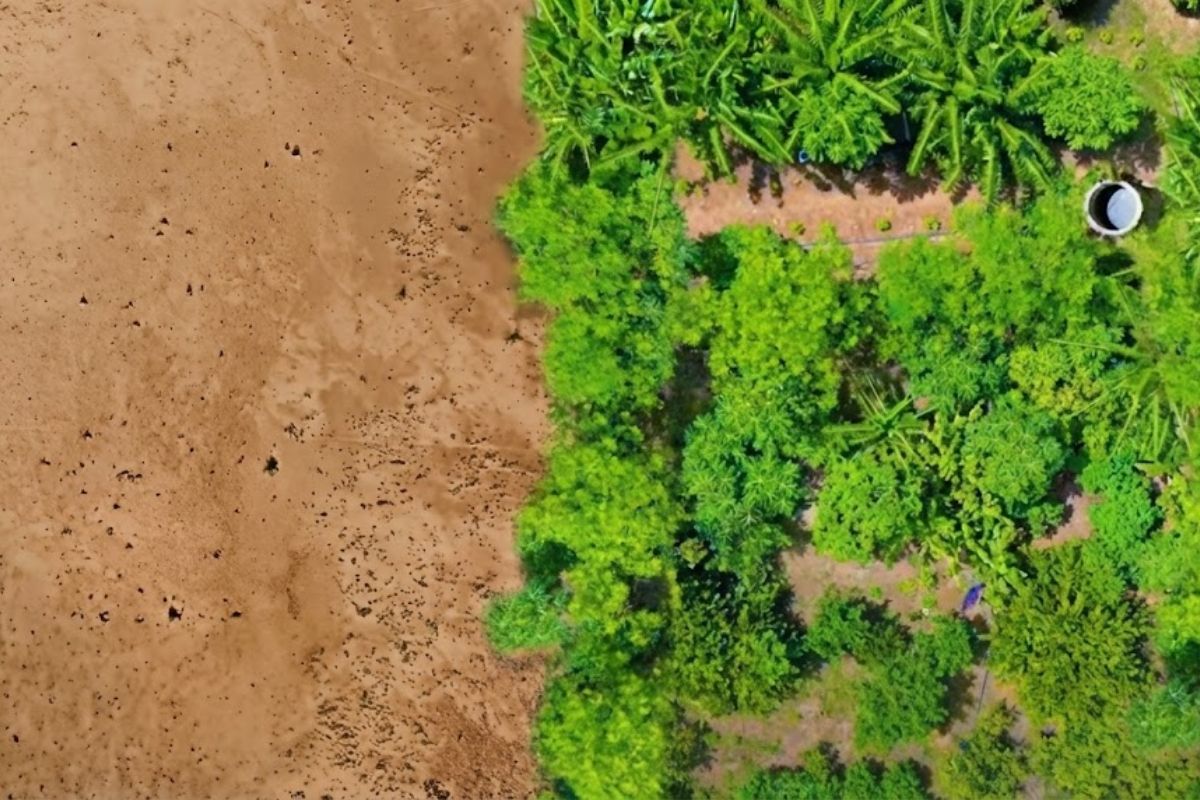
Forest Gardens Advance in Senegal with Trees for the Future: 40,000 Trees in Small Family Farms, Permaculture Technique without Fertilizers or Pesticides, Live Fence, Nitrogen Fixation, and Fruits All Year Round. In an Area with Nine Months of Drought, Income Rises 400% and the Desert Recedes.
The forest that is emerging on small farms in Senegal combines trees, fruits, and vegetables to produce food year-round, restore degraded soils, and reduce vulnerabilities in a region where the dry season lasts nine months and, for long periods, almost nothing grows.
The model, known as forest gardens, is associated with a four-year training program that empowers farmers to transform barren land into fertile and permanent systems. The promise is simultaneously social and environmental: average income 400% higher, increased biodiversity, carbon capture, and containment of desert encroachment in the sub-Saharan belt.
Senegal Between Tropical Light, Degraded Soil, and Nine Months of Drought

Senegal has about 17 million people and is in the tropical zone, where abundant sunlight accelerates tree growth like few regions on the planet. Still, in the tropical south, the landscape is described as more red than green.
-
With a cost per shot close to zero, the DragonFire laser could change naval warfare in 2027 and provide British ships with nearly unlimited defense against drones.

-
A British startup creates tires that generate electricity in electric vehicles when passing over potholes, speed bumps, and cracks.

-
Scientists have created robots made with living cells that have their own nervous system, swim on their own, explore the environment, and self-organize without any genetic engineering, and now they want to do the same with human cells.

-
Students create a solar-powered ambulance that operates without a plug, without fuel, and still keeps medical equipment running in remote areas.


The combination of deforestation and unsustainable agriculture has degraded the soil in many areas. The stress is compounded because the dry season extends for nine months, putting pressure on local families and wildlife, with unstable agricultural production and the risk of malnutrition when rains fail.
The Forest That Feeds Born from System Design, Not Isolated Planting

The central principle is straightforward: planting correctly matters more than planting a lot. Instead of putting a seedling in the ground and waiting, the system prioritizes diversity, local ownership, and continuous economic benefit to ensure permanence for decades.
The forest of forest gardens mixes trees, shrubs, vegetables, fruits, and grains in an arrangement that mimics natural ecosystems. No monoculture. Diversity increases resilience because different species exchange shade, nutrients, shelter, and water retention, reducing collapse when a crop fails.
Permaculture and 100% Organic Management with Year-Round Production

The associated technique is permaculture, defined as the opposite of monoculture fields and forests. The proposal is to operate in an organic and circular way, without chemical fertilizers and pesticides, relying on natural processes of the land.
A decisive component is the preference for perennial plants, which return year after year. This reduces the need for annual plowing, preserves soil microorganisms, and avoids the degradation cycle that often pushes farmers into reliance on chemical inputs.
How the Forest is Assembled: Live Fence, Nitrogen, Shade, and Natural Pest Control
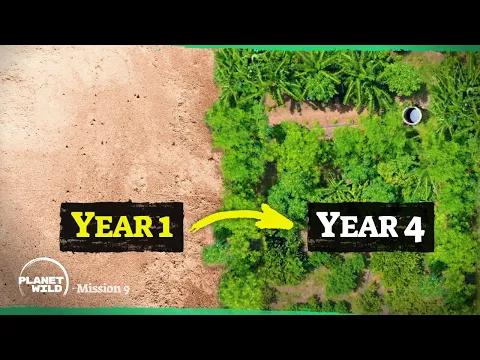

The system starts with the planting of dense, fast-growing pioneer trees around the property, forming a live fence. The function is to create protection against wind, sun, and storms, preparing a microclimate for the subsequent stages.
Next, nitrogen-fixing trees are planted at specific distances to boost fertility. Then come fruit and nut trees, vines, and shrubs, which build a shade cover for the topsoil. There is an example of papaya trees at two years old reaching five to six meters in height, aided by the tropical sun and the rapid canopy formation.
In pest control, the system replaces pesticides with herbs that have antifungal and repellent properties, such as mint, basil, and lemongrass. The logic is to reduce vulnerabilities with biological management and species diversity.
400% Higher Income and Food Security When Rain Fails
The described economic impact is explicit: food forests increase average income by 400%, creating surplus for sale in the market and the capacity to meet basic needs, including medicine.
There are reports of families that previously skipped meals due to lack of food and have started to harvest and sell fruits. At the same time, continuous productivity reduces the risk of nutritional collapse when extreme weather events hit the rainy season, because diversity allows other species to sustain the diet when one fails.
40,000 Trees, Over 50 Species, and Connection to the Great Green Wall
The mentioned initiative involves a partnership with Trees for the Future to plant 40,000 trees and transform barren lands into forest gardens. The planting has been described as part of a larger effort linked to the Great Green Wall, a project aimed at creating a forest frontier across Sub-Saharan Africa.
The scope of biodiversity also appears in numbers: over 50 species of trees have been planted, with the potential to support another 50 species of shrubs, crops, and vegetables, expanding habitat and ecological stability on a regional scale.
The Forest as a Barrier to the Desert and as a Policy for Staying in the Countryside
Besides food and income, the forest provides shade, water retention, and protection against erosion, with a direct effect on families’ ability to remain in the countryside. There is the case of a farmer who almost gave up the farm when almost nothing grew and began producing fruits year-round, even sharing seedlings and plants with neighbors.
The social effect includes the return of people who migrated to the city due to lack of prospects. When the land again supports the family, rural work ceases to be synonymous with certain loss and becomes a strategy for autonomy, with gradual expansion of productive areas.
The forest of forest gardens in Senegal brings together a rare equation of simultaneous gains: year-round production, restoration of degraded soil, 100% organic system, species diversity, income increase of 400%, planting of 40,000 trees, and integration into the Great Green Wall to halt the advance of the African desert in a region marked by nine months of drought.
In your view, what weighs more for this forest to succeed in Senegal: the 400% higher income, year-round production, or the ability to hold back desertification?








-

-

-

-

-

18 pessoas reagiram a isso.