





 Portuguese
  English
  Spanish
  5 min of reading
  15 comments


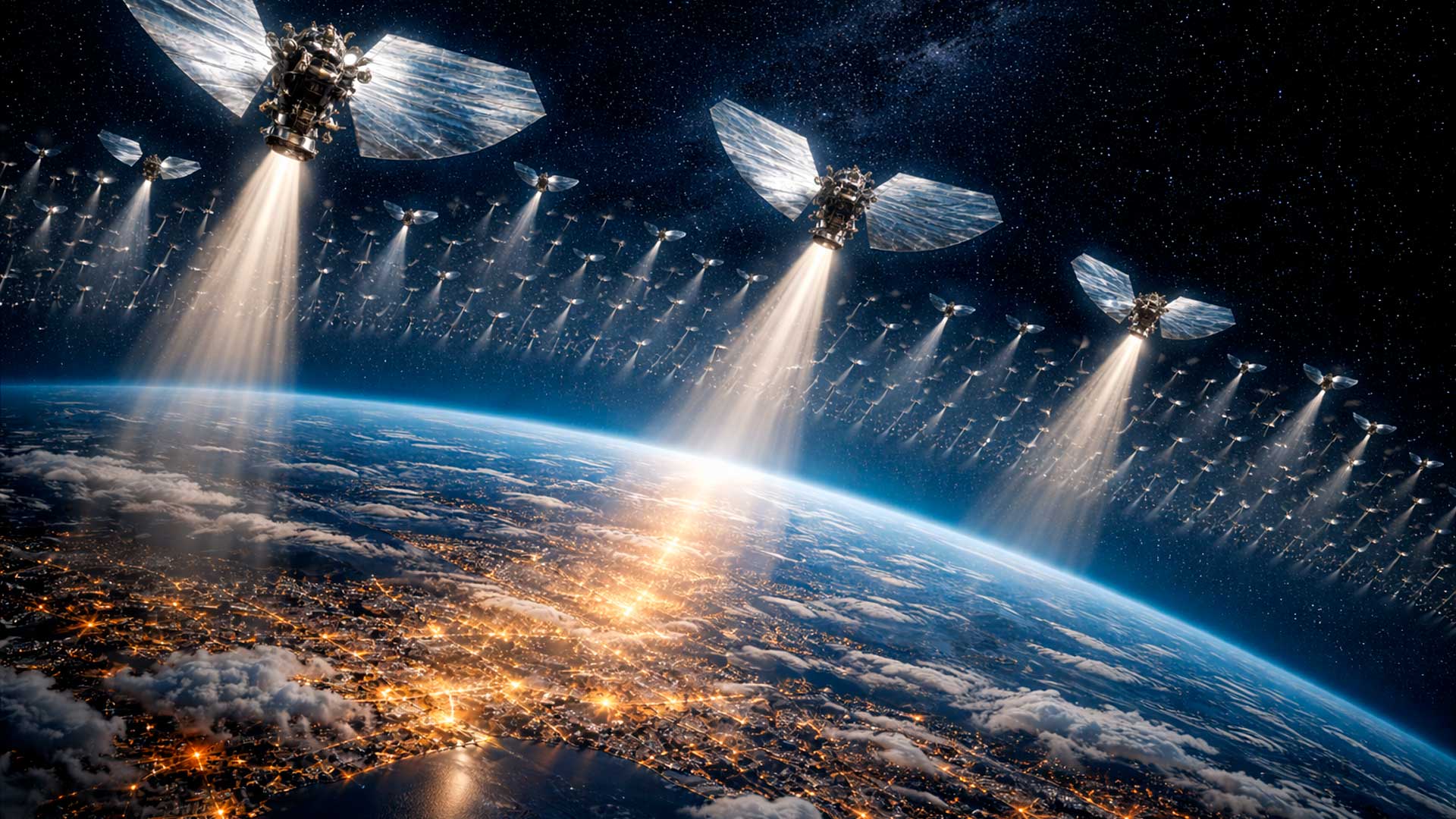


The Proposal From Startup Reflect Orbital Wants to Sell “Solar Light on Demand” at Night, but the FCC Analysis Occurs Amid Criticism From Astronomers and Warnings About Environmental, Ethical, and Operational Risks. The Case Gained Momentum Because the Company Talks About a Constellation With More Than 50,000 Satellites by 2035.
The idea of partially ending the darkness of night has left the realm of fiction and entered the regulatory debate in the United States. The American startup Reflect Orbital submitted a request to the U.S. Federal Communications Commission, the FCC, related to the demonstration satellite Earendil-1, presented as the first step toward a future network of orbital mirrors capable of reflecting solar light to specific areas of Earth during the night.
According to the American Astronomical Society, the long-term proposal disclosed by the company itself aims for more than 50,000 satellites by 2035. On the Reflect Orbital website, the company describes the service as “sunlight after dark” and states that the lighting could be adjusted from levels comparable to moonlight to intensities close to daylight, focusing on specific areas.
At this moment, the central issue is not authorization to illuminate the entire planet at once, but the regulatory process of a project that is already mobilizing public reaction. The AAS reported that the deadline for public comments on Reflect Orbital’s application is March 9, 2026, a date when the discussion reaches a decisive moment.
-
The largest fortress on the planet is located in a city with 10 km star-shaped walls, 300 hectares protected, an aqueduct with 843 arches and 7 km long, strategic forts, and a UNESCO title that intrigues specialists.

-
USS Gerald R. Ford: the floating city of $13 billion where 5,000 sailors serve 17,000 meals a day, sleep in stacked bunks, take 10-liter showers, and keep 75 fighter jets ready.

-
Spain surprises the world by erecting 62 artificial dunes, mixing sand with natural remains of posidonia, and causing the structure to lose only 1.4% of its volume in 1 year.

-
Meta and YouTube condemned for addiction to social media: ruling links the operation of the platforms to the worsening of anxiety and depression.

How The Reflect Orbital Proposal Works and Why It Gained So Much Attention
According to Reflect Orbital, each satellite would use ultra-light reflectors in orbit to redirect sunlight to a specified area on the surface. The company speaks of localized beams, with an initial area in the range of 5 km in diameter, as well as configurable brightness and operation on demand via an app or online platform.
In the timeline published by the company, the ambition grows rapidly. Reflect Orbital plans to start with 2 satellites in 2026, advance to dozens in 2027, surpass 1,000 in 2028, reach more than 5,000 in 2030, and exceed 50,000 satellites by 2035. In the same material, the company cites brightness goals ranging from 0.1 lux, comparable to a full moon, to 36,000 lux per hour, a level associated with daylight.
The company presents the technology as an alternative for disaster response, support for rescue operations, enhancement of solar energy generation, industrial use, agricultural applications, and even replacing some public lighting. In its commercial narrative, this could reduce additional terrestrial infrastructure and expand the use of solar energy outside conventional hours.
The Role of the FCC and What Is Actually Being Reviewed in the United States
The FCC is the American regulatory body responsible for authorizations in communication areas involving radio, satellites, and other related infrastructures. In the case of Reflect Orbital, the commission is analyzing the request associated with the demonstration satellite, while the public debate has already gone beyond the initial test and reached the possibility of a megaconstellation orbital on an unprecedented scale.
The regulatory debate in the U.S. itself shows that the environmental impacts of space operations remain contested. In a 2025 document, the FCC explicitly recognized concerns related to satellites that reflect sunlight, as well as risks of orbital debris resulting from collisions in space, while discussing how its environmental rules should address this type of activity.
This detail is important because it reveals that the discussion is no longer limited to technological viability. The crux of the impasse is whether proposals capable of altering the night sky on a large scale can proceed without much more rigorous environmental and public scrutiny.
Astronomy, Light Pollution, and Space Debris Are Among the Main Criticisms
The most immediate criticisms come from the astronomical community and organizations dedicated to preserving the night sky. NOIRLab, a center linked to the NSF of the United States, states that large satellite constellations fundamentally change optical and infrared astronomical observation, while the AAS and DarkSky warn that a system created precisely to reflect light at night could drastically increase light pollution.
DarkSky states that orbital illuminations of this kind would create a new source of artificial nighttime light, with broad consequences for ecosystems, public safety, and quality of the dark sky. The organization also argues that projects of this magnitude should undergo robust environmental testing and review before any green light.
Another sensitive point is Earth’s low orbit. NASA highlights that the volume and speed of debris in LEO already pose risks for current and future space operations. Meanwhile, technical studies presented at ESA events indicate that megaconstellations increase the complexity of collision analysis and could worsen the orbital environment if failures, fragmentations, and new debris occur.
Wildlife, Human Sleep, and Ethical Dilemmas Amplify the Controversy
The concerns do not stop in the sky. Scientific reviews on artificial light at night show that the alteration of the natural light-dark cycle can affect behavior, reproduction, migration, and ecological balance in different species. The literature also links nighttime exposure to light with circadian disturbances and changes in human sleep.
In practice, a technology capable of projecting light over specific areas at night raises questions that still lack clear answers. Who would decide which cities, farms, industrial facilities, or emergency zones would receive this resource first? And what would be the rule to prevent abusive, commercial, or geopolitically sensitive uses?
There is also the question of jurisdiction. The night sky is shared by all humanity, but the initial authorization of the system goes through a national body, the FCC. It is precisely this mismatch between global reach and local regulation that has made the project one of the most controversial cases in the new commercial space race.
In the end, Reflect Orbital brings together two opposing forces. On one side, the promise of an unprecedented technological solution for energy, emergencies, and localized lighting. On the other, the risk of transforming the night into yet another space of commercial exploitation without sufficient scientific, environmental, and ethical consensus.
The proposal divides opinions and touches on a sensitive point. The night should remain night or can it become an on-demand service sold by private companies? Share your opinion in the comments and say whether you see it as a useful innovation or an excess that could irreversibly change the planet.







“Ai o Projeto Blue Beam é só teoria da conspiração”
Vocês querem que seja esfregado na cara de vocês para entenderem? É só esperar até 2035 😉
tem que ter fezes no lugar no cérebro pra achar essa idéia minimamente interessante
Tem coisa escondida atrás disso aí, estão querendo enganar os terráqueos.
Projeto Blue Beam em andamento
Pesquisa oq é Projeto Blue Beam.