






 Portuguese
  Spanish
  3 min of reading
  0 comments


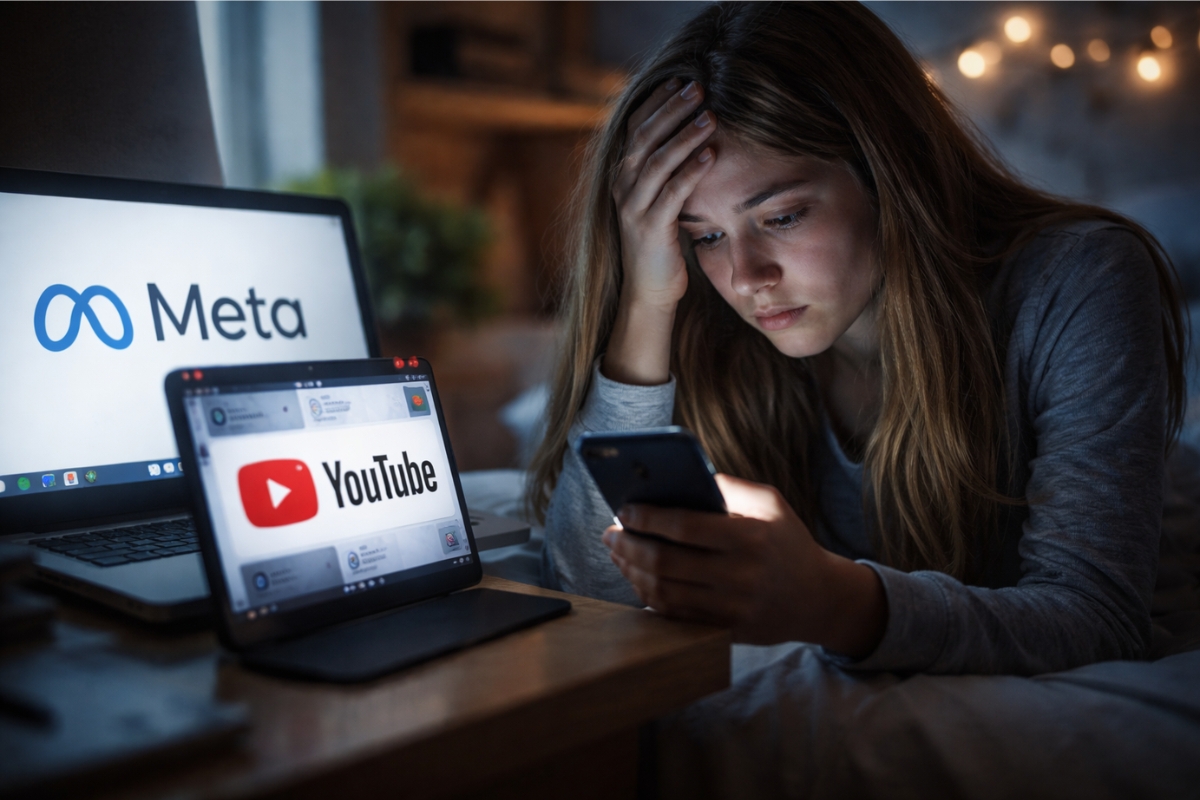
Jury in the United States convicts Meta and YouTube for platform design failures, sets payment of 3 million dollars, and paves the way for a new wave of lawsuits against digital giants.
Meta and YouTube were found negligent in the way they designed their platforms, in a decision that increases pressure on technology giants in the United States.
The case revolves around a young Californian woman aged 20, who attributed part of her mental health issues faced during adolescence, including anxiety, depression, and body image distortion, to social media.
Jury holds platform design responsible for digital addiction
The decision recognizes that internet companies can be held accountable when the operation of their apps encourages compulsive use and leads to serious emotional consequences.
-
Survivor of 1966 SS Daniel J. Morrell Shipwreck in Lake Huron Recounts 38-Hour Ordeal in Extreme Cold

-
The Greatest Hoax in World Cup History? The Film That Denied Brazil’s 1958 Victory and Exposed How Fake Evidence Can Seem Convincing on TV
-
Fake South Korean Online Stores Offer Shopping Thrill Without Spending Money or Receiving Products
-
The War of Jenkins’ Ear: How a Severed Ear Sparked One of the 18th Century’s Most Unusual Conflicts


In this case, the focus was not on the content viewed by the user, but on the product’s format. The understanding was that the design of the platforms encouraged continuous consumption, with a particularly sensitive effect among minors.
3 million compensation divides burden between Meta and Google
The initial compensation set by the jury was 3 million dollars. Of this total, Meta will bear 70 percent, while the Alphabet company, which controls Google, will be responsible for the remainder.
Even with this amount already established, the deliberation was not yet fully concluded. The jury continued to evaluate the possibility of imposing additional payments, including heavier financial penalties.
Teenager reported depression, anxiety, and body dysphoria
The plaintiff, publicly identified only by her first name, Kaley, argued that the use of social media played a direct role in the worsening of her mental health throughout adolescence.
Meta’s defense attempted to shift responsibility to external factors. Among the arguments presented were the divorce of the young woman’s parents and difficulties at home, cited as more relevant elements for her emotional state.
Internal studies influenced the verdict
According to Adrián Raya, a journalist covering the case, the evidence presented indicated that Meta was aware of the addictive potential of the platform, especially among teenagers, and nevertheless did not warn users.
The accusation also pointed out that the company, formerly known as Facebook, conducted studies on behavior within the platform and identified ways to increase usage time among younger users.
TikTok and Snap reached a settlement and avoided conviction
Meta and YouTube were not the only companies sued, but they ended up being the only ones to take the dispute to trial. TikTok and Snap opted for an out-of-court settlement.
This choice now carries even more weight. By avoiding the verdict, the two companies escaped a conviction that could serve as a practical reference for similar future legal battles.
Verdict increases pressure on thousands of lawsuits in the United States
Although the decision does not create an automatic rule for all cases, it serves as an important reference in a landscape already marked by thousands of lawsuits against digital platforms.
Meta itself had already acknowledged the financial impact of disputes related to youth safety in its 2026 accounts. With over 100,000 lawsuits filed since the end of 2024, the verdict reinforces a growing risk environment for the sector.
The company stated that it respectfully disagrees with the decision and is exploring legal avenues. Google had not publicly commented at that time.
The outcome goes beyond the amount set in court. It strengthens the argument that the way platforms are built can create direct liability when it affects teenagers and amplifies emotional harm.
As a result, the trial ceases to be an isolated episode and begins to influence the understanding of the limits of the current digital model. It is a movement that pressures the sector and changes the strategic outlook.





Be the first to react!