





 Portuguese
  English
  Spanish
  4 min of reading
  0 comments


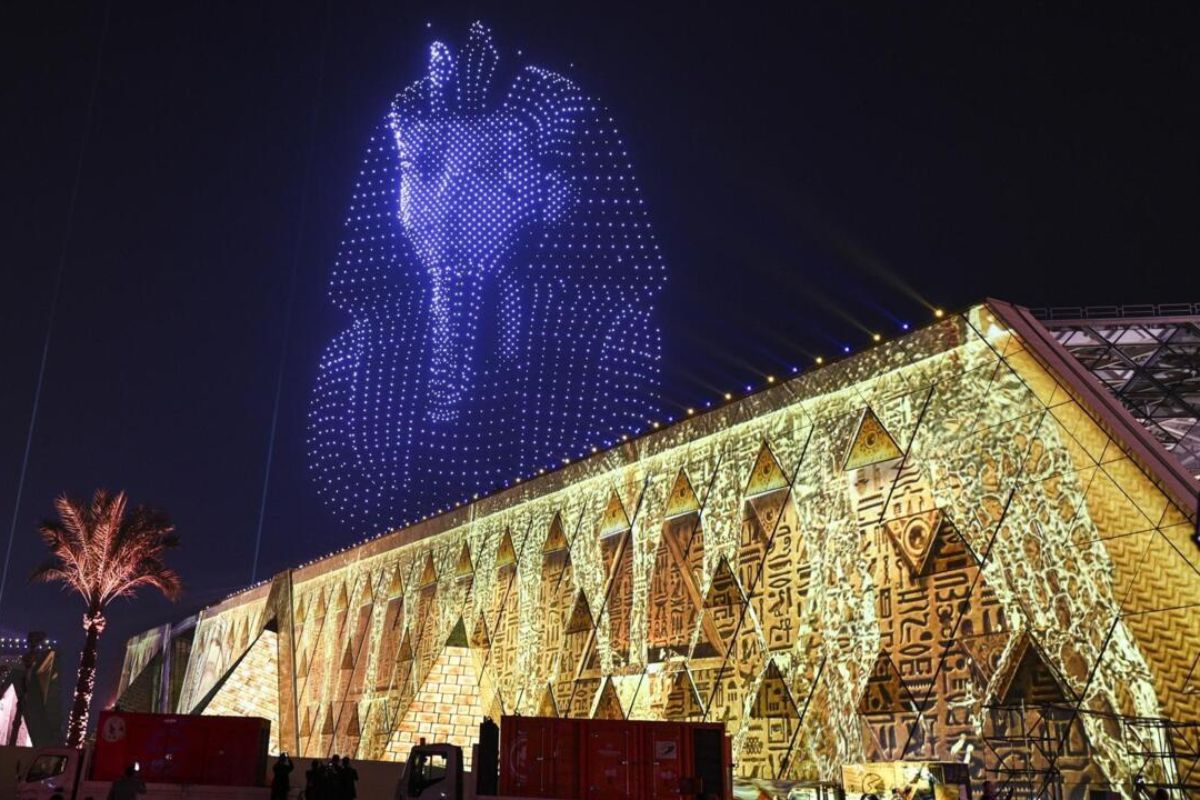
With Presence of President Abdel Al Sisi, Heads of State and Royal Family Members, the Grand Egyptian Museum Was Inaugurated at a Monumental Event of Lights, Orchestra, and Dance, Bringing Together for the First Time the Legendary Treasure of Tutankhamun and Over 100 Thousand Pieces Celebrating Five Millennia of History.
The inauguration of the Grand Egyptian Museum established Cairo as the new global center of archaeology and pharaonic culture. The event, led by President Abdel Fattah Al Sisi, transformed the museum’s esplanade into a stage of cinematic proportions, featuring lasers, symphonic music, choreographies inspired by ancient frescoes, and golden symbols of royalty. The ceremony gathered kings, international leaders, and diplomats in a celebration that united technology, tradition, and symbolic power.
More than a political act, the opening of the Grand Egyptian Museum represents a historic milestone in the reconstruction of the national identity and the affirmation of Egypt as the guardian of one of the world’s oldest civilizations. Al Sisi’s speech highlighted the timeless nature of Egyptian culture and its importance for the future: “We are writing a new chapter in the history of this ancient homeland”, he stated before the golden-lit pyramids of Giza.
Monumental Architecture and Strategic Location
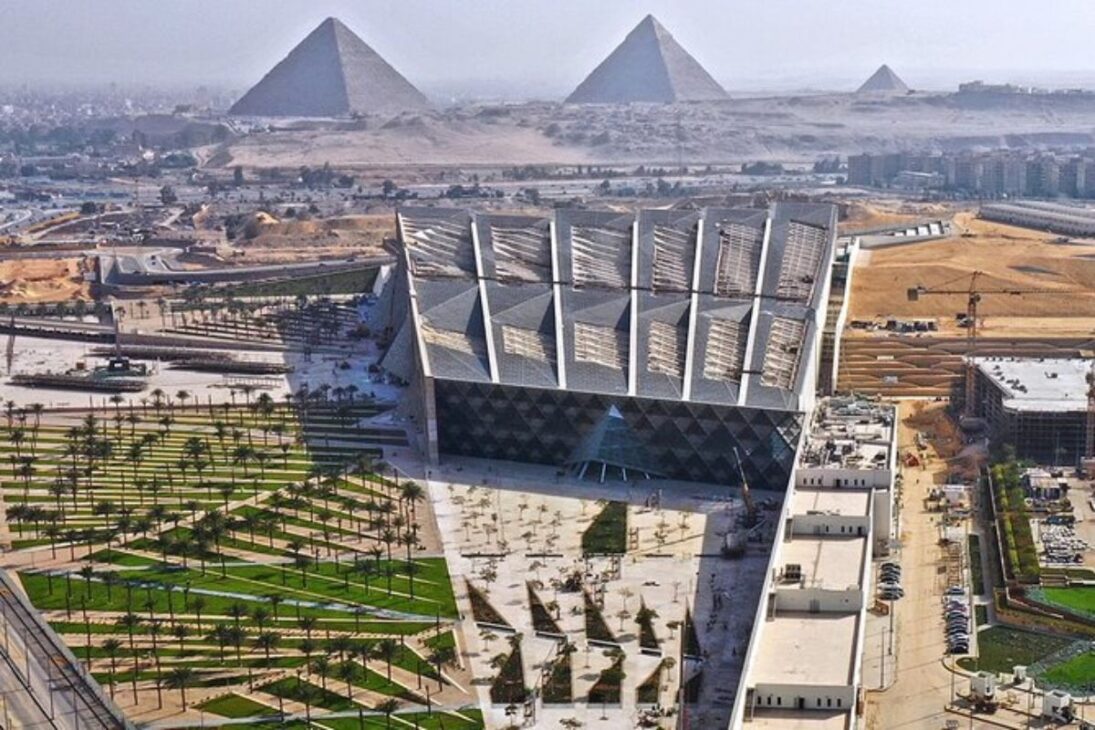
Located at the entrance of the Giza plateau, the Grand Egyptian Museum occupies an area of 500 thousand square meters, becoming the largest cultural complex dedicated to a single civilization.
-
These living root bridges and ladders are over 700 years old and help indigenous people survive in one of the rainiest regions in the world.

-
From sertanejo star to international investor: Ana Castela invests millions in a mansion in the USA, creates a themed accommodation in Orlando, and shows that the “boiadeira” also wants to grow away from the stage.

-
The 10 most stunning motorhomes in the world: a $3 million trailer with a rooftop nightclub and garage for a Ferrari, “palaces on wheels” with Italian marble, private cinema, and five-star hotel luxury for billionaires.

-
Trump wanted to spend $400 million on the White House, but the courts prohibited the million-dollar construction.

The glass and stone structure was designed to create a visual continuity between the building and the pyramids, integrating the millennia-old past with the modernity of contemporary architecture.
The construction took around 20 years and required an investment exceeding US$ 1 billion, an amount equivalent to R$ 5.3 billion.
The project was conceived not only as an exhibition space but also as a research, preservation, and restoration center, with specialized laboratories and educational areas dedicated to the study of Egyptian history.
The Treasure of Tutankhamun and the Unprecedented Collection
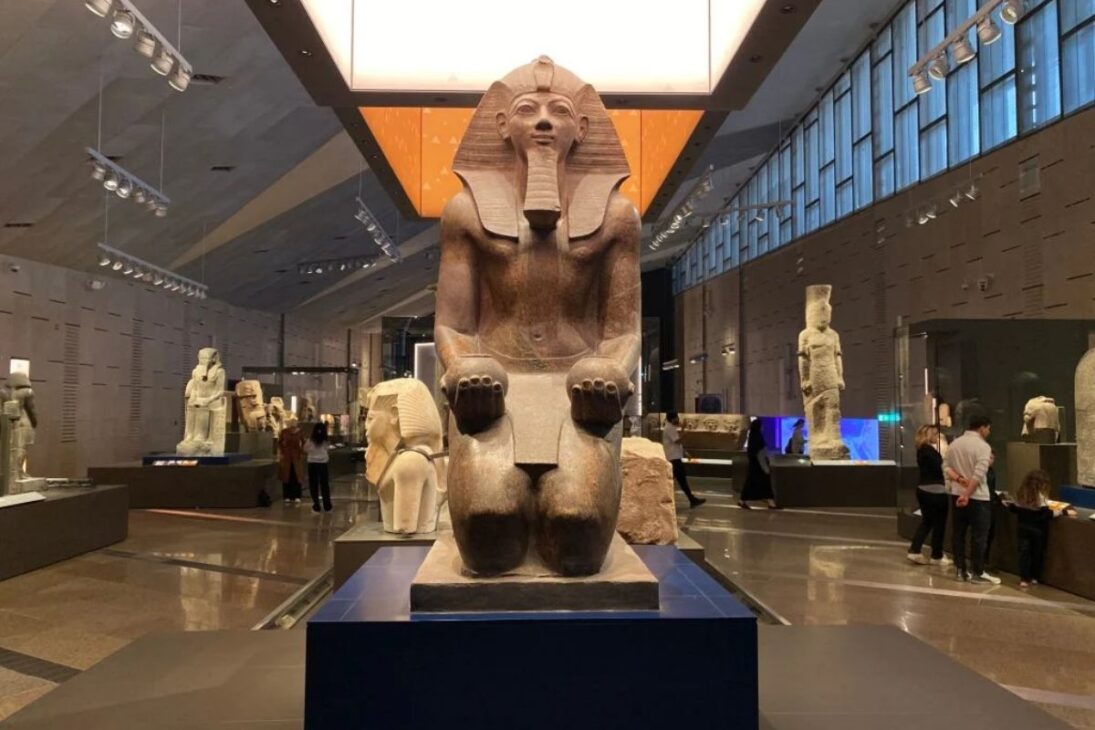
The absolute highlight of the Grand Egyptian Museum is the treasure of Tutankhamun, displayed in its entirety for the first time since its discovery in 1922, in the Valley of the Kings.
The collection, consisting of about 5 thousand funerary artifacts, includes the famous golden sarcophagus, masks, jewelry, carriages, and ritual objects that depict the power and aesthetics of Ancient Egypt.
In total, the museum’s collection exceeds 100 thousand archaeological pieces, of which about 50 thousand will be on display in permanent exhibitions.
The exhibitions are organized into chronological and thematic axes, allowing visitors to traverse five millennia of history and understand the evolution of the 30 pharaonic dynasties that shaped the civilization of the Nile.
A New Cultural Centrality for Egypt
In addition to attracting visitors, the Grand Egyptian Museum is part of a broader strategy for cultural and economic revitalization.
The Egyptian government aims to reposition Cairo as a global center for historical and scientific tourism, connecting the museum to routes that include Luxor, Aswan, and the Red Sea.
The inauguration also reinforces Egypt’s role in cultural diplomacy. Heads of State and representatives from international organizations attended the ceremony, highlighting the symbolic value of the event.
The space was designed to host conferences, festivals, and temporary exhibitions, consolidating a new era for the preservation of archaeological heritage.
The Union Between Past and Future
More than a building, the Grand Egyptian Museum symbolizes a nation’s effort to reconcile heritage and innovation.
The use of conservation technologies, lighting, and augmented reality redefines the way we observe Ancient Egypt, allowing immersive experiences that combine scientific precision and visual impact.
At the end of the event, the lights of the pyramids reflected the central message of the night: Egypt remains alive in every stone, in every writing, and in every gaze that contemplates its history.
The new museum is, at once, a tribute to the past and a promise of the future for global archaeology.
With its monumental architecture and unprecedented curation, the Grand Egyptian Museum inaugurates a new era for culture and tourism in the Middle East, reaffirming Egypt as the guardian of universal memory.
Would you like to visit the Grand Egyptian Museum and see the treasure of Tutankhamun up close?







Seja o primeiro a reagir!