





 Portuguese
  English
  Spanish
  3 min of reading
  0 comments


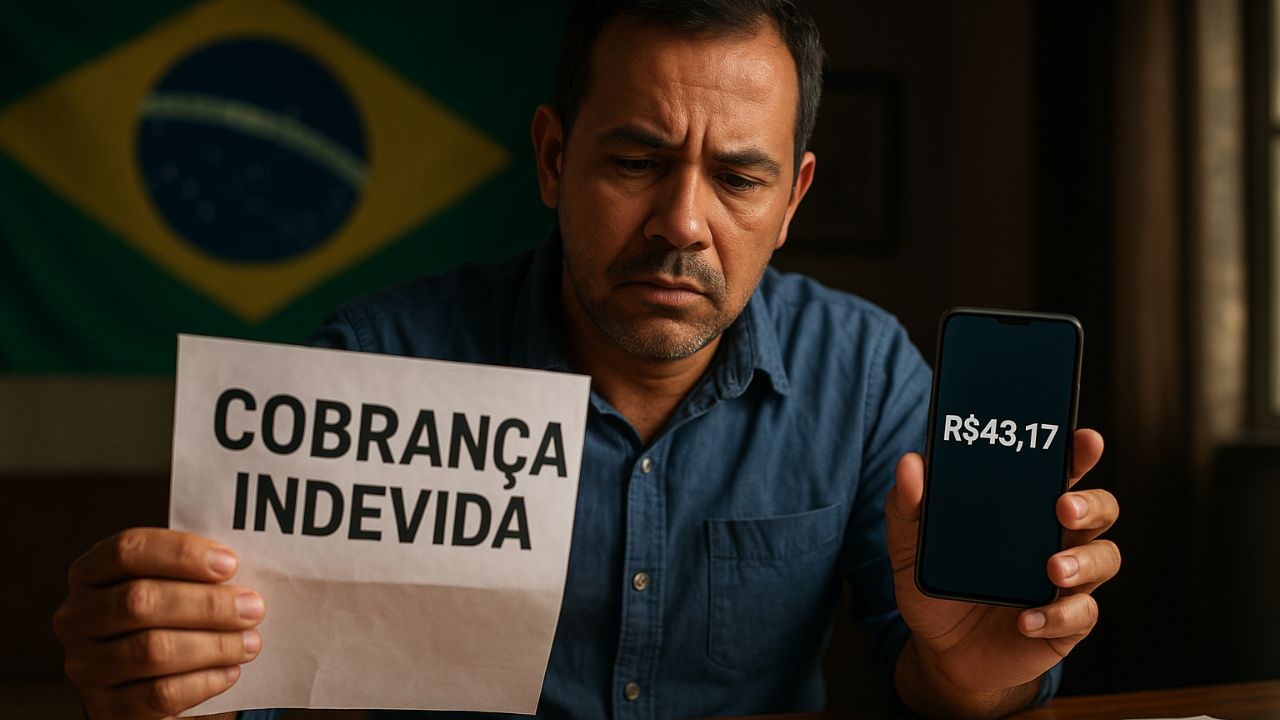
Mato Grosso Court Understands That Failure in Service Provision Caused Moral Damage After Improper Charge; Decision Was Unanimous.
An improper charge of R$ 43.17 resulted in a condemnation of R$ 5,000 for moral damages against a telecommunications company. The decision, confirmed by the 1st Chamber of Private Law of the Mato Grosso Court of Justice (TJ-MT), benefits a consumer whose name was negatively listed for a debt he claimed to have never incurred.
According to information from the Consultor Jurídico portal, the consumer discovered that the restriction on his name had already lasted four years, linked to a supposed contract he denies having signed. The first instance court had already ordered compensation and removal of the name from the delinquent registries, but the operator decided to appeal the verdict, bringing the case to the second instance.
The Failure to Prove the Contract
The central point of the decision, as highlighted by the case rapporteur at TJ-MT, Judge Clarice Claudino da Silva, was the telecommunications operator’s inability to prove the existence of the legal relationship. The company, which appealed the initial decision, did not present evidence that the contested contract was actually signed by the consumer.
-
The new Civil Code could revolutionize marriages in Brazil with “express divorce” and changes that could exclude spouses from inheritance.
-
Banco do Brasil sues famous influencer for million-dollar debt and intensifies debate on delinquency, risks of seizure, and direct impact on Gkay’s credibility.

-
The Senate approves a bill that criminalizes misogyny, hatred, or aversion towards women, and includes the crime in the Racism Law with a penalty of up to 5 years.

-
Chamber Approves Bill That Allows Pepper Spray for Women Over 16 and Imposes Strict Rules for Purchase, Possession, and Use as Self-Defense


The judge emphasized in her vote that “it is the defendant’s burden to prove the authenticity of the contract, especially when the signature is contested.” According to Consultor Jurídico, the rapporteur also mentioned that “the failure to produce expert evidence, when requested and granted, hinders the demonstration of the legal relationship.” In other words, the company had the chance to prove its version but failed to provide the necessary documentation.
Presumed Moral Damage from Negative Listing
The R$ 5,000 condemnation was upheld because, in the court’s view, the improper charge followed by negative listing generates “presumed moral damage”. This means that the consumer does not need to prove that he suffered embarrassment or loss; the mere fact of having an unjustly “dirty” name is sufficient to characterize the damage.
Judge Clarice Claudino da Silva was clear in stating that “the improper inclusion of the consumer’s name in the delinquent registry characterizes failure in service provision.” As cited by Consultor Jurídico, the rapporteur concluded that “the credit restriction, in itself, constitutes an injury to personality rights, especially when there is no just cause.” The decision of the 1st Chamber of Private Law was unanimous, confirming the previous sentence.
The TJ-MT decision serves as a warning for practices of improper charging and the importance of contract management by operators. Even amounts considered low, such as R$ 43.17, can lead to significantly higher condemnations when there is a failure in service provision and unjust negative listings.
Have you ever been through a similar situation with improper charging? Do you think that the amount of R$ 5,000 is fair for the negative listing that lasted four years? Leave your opinion in the comments; we want to know about your experience.









-

-

-

-

-

9 pessoas reagiram a isso.