





 Portuguese
  English
  Spanish
  3 min of reading
  1 comment


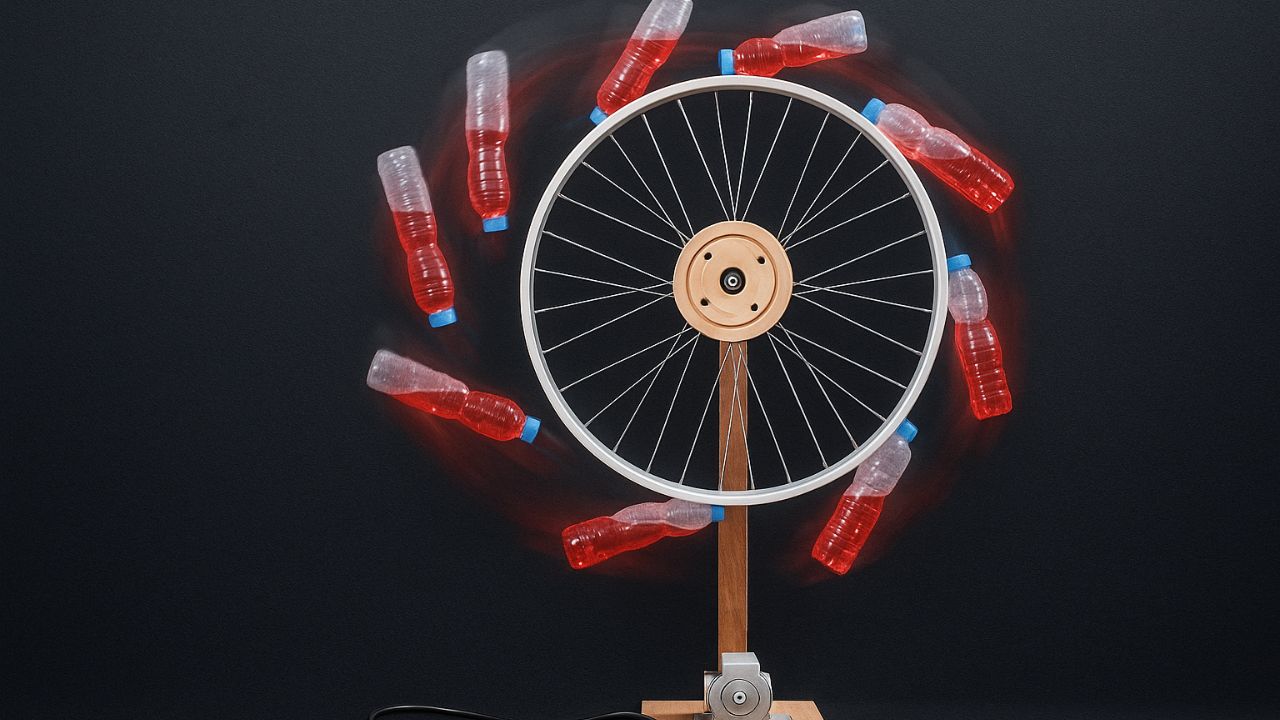


Viral Experiment With Bottles Recreates Da Vinci Project, But Test Proves Perpetual Motion and Infinite Energy Violate the Laws of Physics
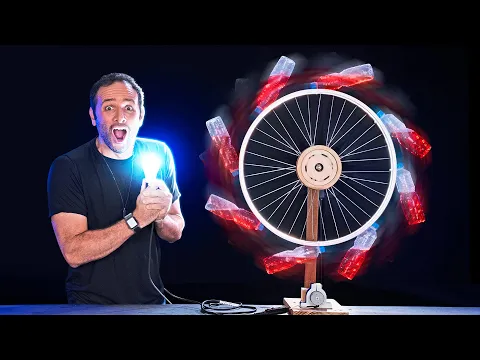
Recently, a curious experiment sought to replicate an ancient concept of perpetual motion based on the studies of the Renaissance genius Leonardo da Vinci. The construction used a bicycle wheel equipped with water bottles, promising infinite movement capable of generating electricity to light a bulb. The visually impressive proposal raised questions about the possibility of generating energy autonomously, but the practical test served to debunk the invention.
The demonstration proved that, although the idea is fascinating and has historical roots, the machine cannot operate without external help. By revealing the behind-the-scenes of the assembly, it became clear that physics imposes insurmountable limits on this type of mechanism.
What seemed to be an energy revolution was, in fact, a combination of creative engineering and illusion tricks, reinforcing that the dream of infinite energy created from scratch remains impossible.
-
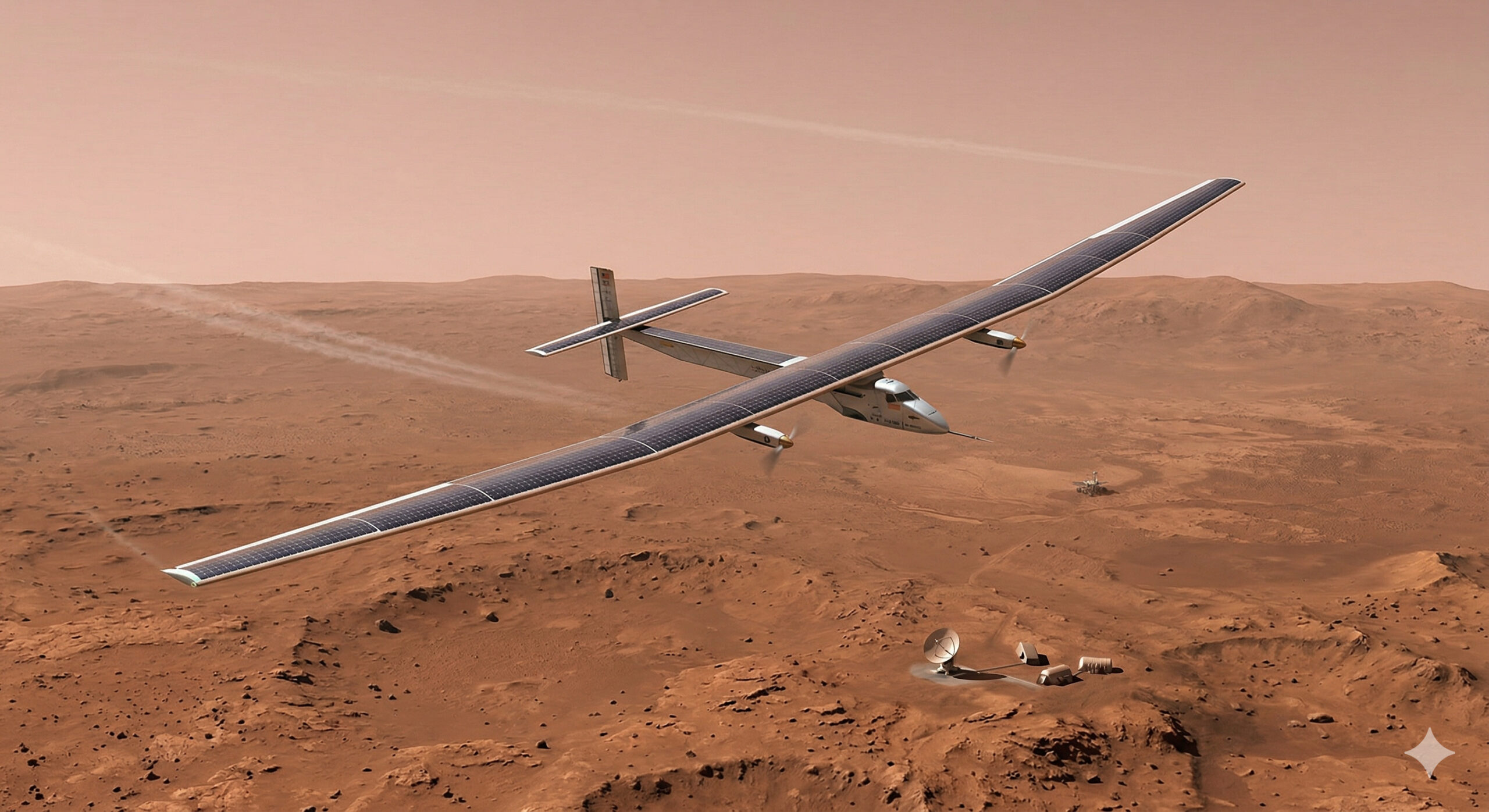
An engineer designs a solar plane to fly on Mars at an altitude of 1,000 meters and a speed of 300 km/h, covering 16,000 kilometers in a Martian year, 900 times the distance traveled by the Ingenuity helicopter in three years on the planet before experiencing a rotor failure, and NASA is already funding the feasibility study.
-
A new phenomenon of contactless magnetic friction intrigues scientists and questions a theory that has been valid since the 17th century.

-
An impressive phenomenon in Northern Brazil causes rivers of different colors to flow side by side, revealing secrets about sediments, currents, and biodiversity.

-
While many schools are still struggling with the basics, a teacher in China went viral for having elementary school students build a two-stage rocket using plastic bottles, water, and pressurized air in a science class that caught the attention of the entire world.

The Legacy of Da Vinci and the Modern Adaptation

Leonardo da Vinci, born in 1452 in the city of Florence, was one of the most important figures in history, working as a painter, engineer, and inventor.
In addition to creating masterpieces like the Mona Lisa and The Last Supper, he designed projects far ahead of his time, including sketches of parachutes and helicopters.
Da Vinci also studied the concept of perpetual motion, drawing diagrams with articulated hammers that, theoretically, would keep a wheel spinning due to weight imbalance.
However, Leonardo himself later concluded that friction in the system would prevent eternal motion. The current experiment adapted this original idea: instead of hammers, water bottles were used.
The logic was that the water, when falling inside the bottle during the spin, would push the wheel down, creating a continuous cycle. In practice, the wheel was connected by a belt to an electric motor, which was supposed to act as a generator.
The Tricks Behind the Infinite Energy
To make the system appear functional in the video, imperceptible tricks were used for a common observer.
The first secret was a hidden wire that passed underneath the support and connected to the motor. This wire was linked to a 5V computer power supply hidden under the table.
Therefore, the motor was not generating energy but rather consuming electricity from an external source to make the wheel spin. The system even had a foot switch to discreetly turn the mechanism on and off.
The second trick involved the LED bulb that seemed to be powered by the movement of the wheel. Since the 5V voltage from the motor would be insufficient to light it up, a special magic bulb was used, which has an internal battery.
This type of bulb automatically lights up when its metal contacts are closed, which was done with a piece of aluminum foil inside the socket. Thus, the light did not come from the motion but from the bulb’s own battery.
The Reality Imposed by Physics
Physics explains in detail why a genuine perpetual motion machine cannot exist. The initial kinetic energy applied to the wheel is lost in various ways. Friction in the bearings, air resistance against the bottles, and even the sound of the water moving represent energy loss.
If there is sound or vibration, it means that the energy of the movement is being dissipated, preventing the system from maintaining its original momentum indefinitely.
Moreover, trying to extract energy from this system would stop it even faster. A generator acts, in practice, like a magnetic brake; it requires force to spin and convert motion into electricity.
The laws of thermodynamics are absolute: energy cannot be created, only transformed. Real generators, such as those in hydroelectric or nuclear plants, merely convert a pre-existing external energy source, whether it’s falling water or atomic fission, into electricity.
Have you ever tried to build some crazy invention at home that didn’t work as expected?





“Energy can be created only when the applied force is the inherent Property of the Source”