





 Portuguese
  English
  Spanish
  5 min of reading
  0 comments


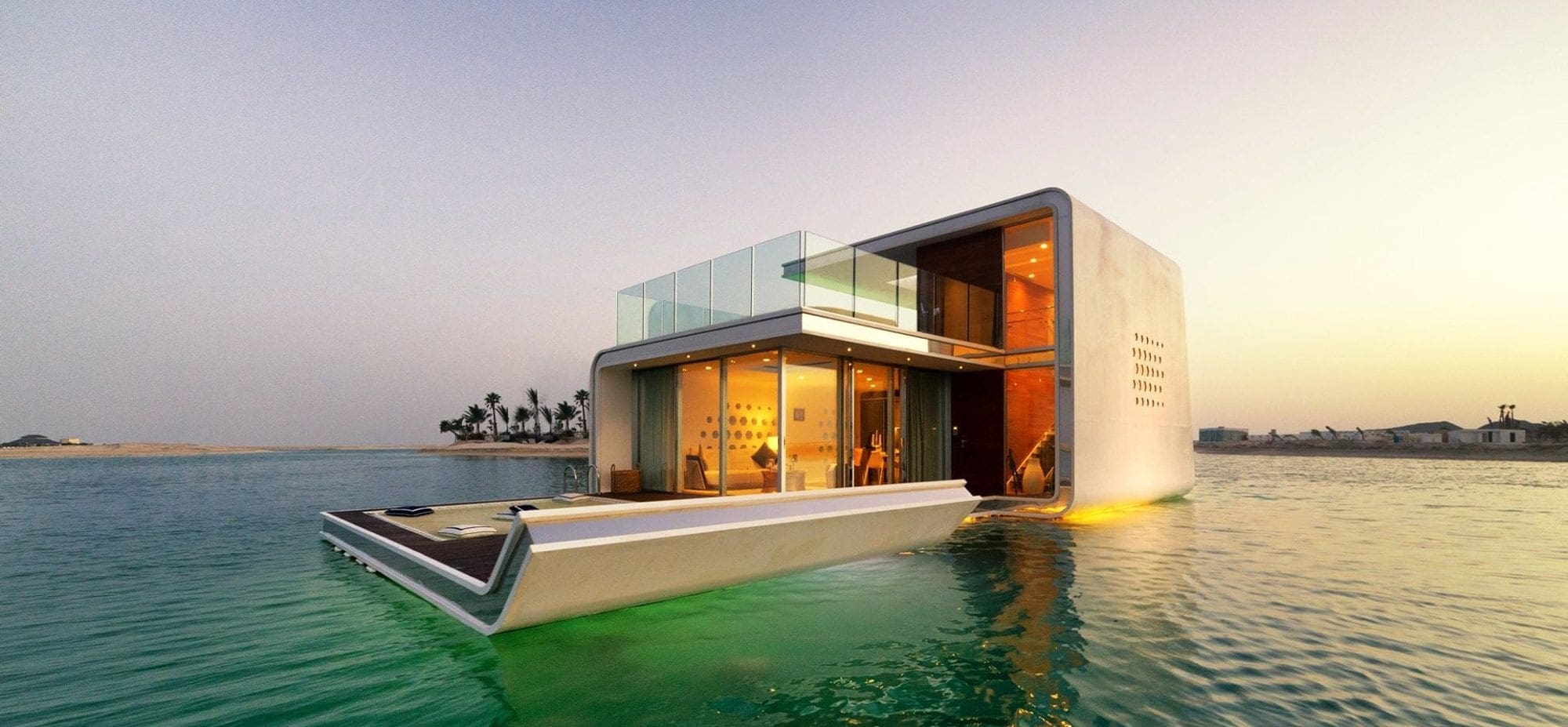
A Three-Level Floating House, With 370 m² and Submerged Bedrooms, Was Built in Dubai and Shows How the Ocean Can Become Permanent Housing.
On the coast of Dubai, amidst the artificial archipelago known as The World Islands, there exists a type of residence that breaks almost all classic references of housing. It is neither a boat, nor an adapted oil platform, much less a simple house on stilts. The Floating Seahorse Villas represent a deliberate attempt to transform the ocean into a permanent address, using maritime engineering, residential architecture, and a radical concept of spatial occupation.
The result is a floating house with three functional levels, approximately 370 square meters of built area, part of the structure submerged below the waterline, and an anchoring system designed to maintain continuous stability in open water.
A Residence That Starts Below Sea Level
The most impressive element of the Floating Seahorse is not on the upper deck, but at the lower level. Each unit features fully submerged bedrooms, positioned below the ocean’s surface, with glass walls facing directly into the water.
-
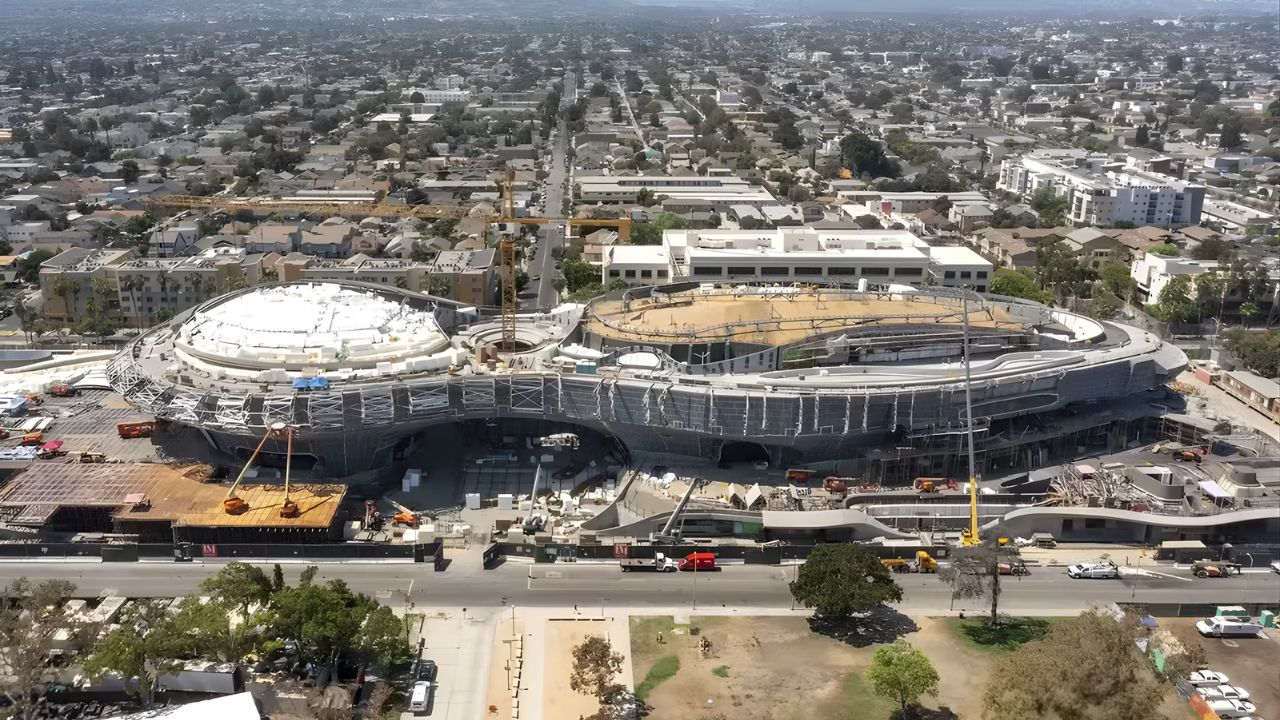
Created by George Lucas with over $1 billion, a futuristic museum in the shape of a spaceship with 1,500 curved panels is about to open in Los Angeles and will house one of the largest private collections of narrative art in the world.
-
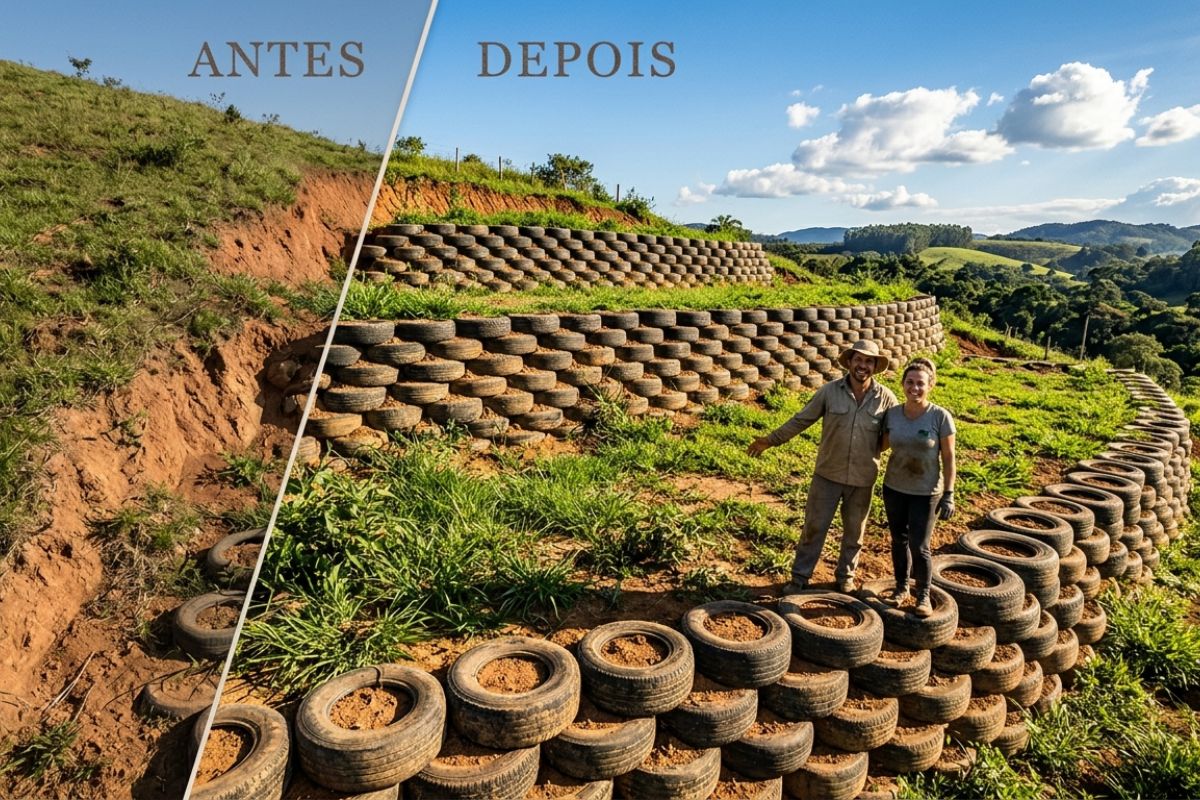
Couple shows how they built a retaining wall on their property using 400 old tires: sloped land turned into plateaus, tires are aligned, filled, and compacted with layers of soil, with grass helping in support and at almost zero cost.
-
Engineer explains drainage during the rainy season: the difference between surface water and deep water, ditches, gutters, and water outlets on the road, as well as drains and drainage mattresses, to prevent erosion, aquaplaning, and flooding at the construction site today.

-
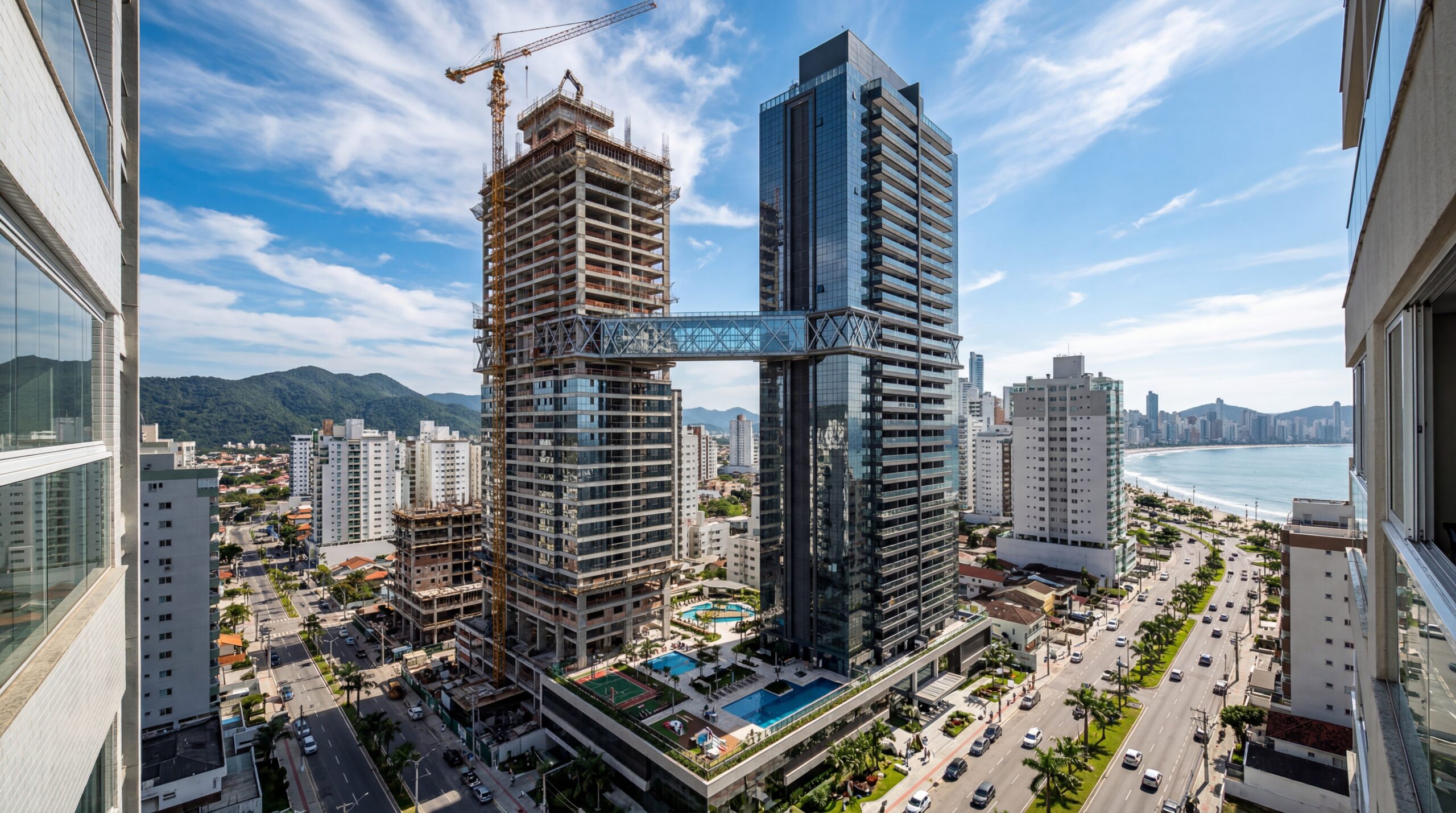
With 55 floors, 177 meters in height, a 15-meter walkway between the twin towers, ventilated facade, and 6,300 m² of leisure space, Ápice Towers already has one tower completed and another nearly at the top.

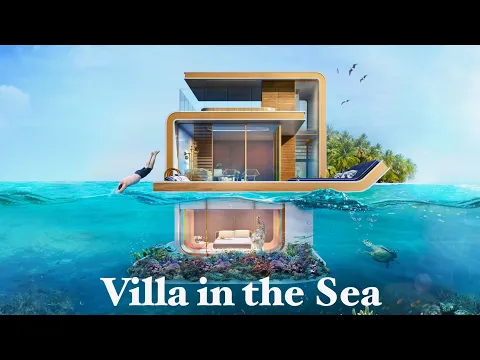

This lower floor is neither symbolic nor decorative. It is designed to be habitable year-round, equipped with humidity control, mechanical ventilation, and sealing similar to that used in permanent maritime structures. The experience is comparable to that of a private underwater observatory, something practically non-existent in conventional homes.
Three Levels, Three Distinct Functions
The spatial organization follows a well-defined vertical logic. The submerged level concentrates bedrooms and resting areas. The intermediate level, located exactly at the waterline, houses the living room, kitchen, and internal social areas. Meanwhile, the upper level functions as an outdoor deck, with space for leisure, shaded areas, and, in some models, a jacuzzi and solarium.
This division is not aesthetic; it directly responds to the demands of stability, weight, and center of gravity, fundamental for a floating construction designed for continuous residential use.
Floating Structure, but Permanent Anchoring
Despite floating, these houses are not mobile in the traditional sense. Each unit is positioned in its final location by specialized marine equipment and then anchored to the sea floor by fastening systems designed to withstand currents, tides, and light movements.
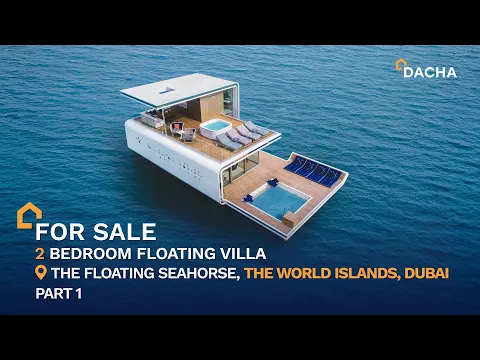
The hull is made of reinforced marine concrete, a common material in ports and coastal structures, chosen for its durability in saline environments. This differentiates the Floating Seahorse from houseboats or temporary platforms: they are designed as permanent constructions, even though they are not connected to the land.
Residential Engineering Applied to the Ocean
Transforming the sea into a foundation requires solving problems that ordinary houses never face. The Floating Seahorse incorporates typical solutions from naval engineering, such as controlled weight distribution, redundant buoyancy systems, and continuous structural monitoring.
Moreover, the building must deal with corrosion, hydrostatic pressure, constant humidity, and thermal variations. None of this is improvised. The design is closer to a habitable maritime structure than to a traditional house adapted to water.
Living Over the Sea, but Connected to the City
Although they challenge the classic concept of fixed housing, these houses are not isolated from the world. The complex is designed to operate connected to a larger infrastructure, with access via floating piers, regular water transport, and centralized services.
The proposal is not for absolute self-sufficiency, like in radical off-grid projects, but a reconfiguration of the urban address, shifting residence from solid ground to the maritime environment without completely breaking the logic of the city.
A New Type of Domestic Landscape
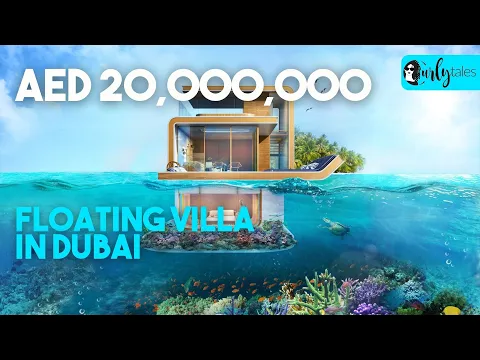
By inverting the relationship between house and environment, the Floating Seahorse create an unprecedented domestic landscape. The horizon is not a street or a backyard, but the ocean in all directions. The closest “neighbor” may be a school of fish, and the dominant sound is not traffic, but the movement of water.
This change in perspective is not merely aesthetic. It alters the perception of space, time, and isolation, raising profound questions about how and where human life may establish itself in the future.
Architecture as Extreme Experiment
Projects like this rarely emerge solely to address practical needs. They function as real-scale architectural experiments, testing technical, legal, and cultural limits. By constructing permanent residences over the sea, the project challenges urban codes, property models, and the very idea of land as the mandatory base for human life.
In a world marked by population growth, land scarcity, and rising sea levels, these experiences cease to be curiosities and become experiments for possible futures.
Luxury Today, Laboratory Tomorrow
Currently, the Floating Seahorse are associated with the luxury market and prices inaccessible to most of the population. Still, many technologies begin exactly like this: expensive, exclusive, and experimental, before becoming more accessible and replicable.
What is today a symbol of exclusivity may, in the future, serve as a reference for coastal housing solutions, resilient platforms, and new models of maritime occupation.
What This Project Really Challenges
More than the concept of a house, the project challenges the idea of territorial fixation. It suggests that housing does not need to be anchored to solid ground, that the sea can cease being merely a border or landscape and become a habitable space.
The Floating Seahorse are not a definitive answer to global urban problems. But they present a clear provocation: if we can live comfortably over the ocean, perhaps it is time to rethink everything we consider essential in a house.
A Sign of Where Architecture Can Go
Looking at these floating houses, it becomes evident that the architecture of the future may be less about forms and more about extreme adaptation. Climate, space, and resources are changing rapidly, and projects like this show that the answer may lie in places once considered impractical.
Dubai has transformed the ocean into an address. The real impact of this decision may only be understood in the coming decades, when living over water ceases to be an exception and becomes a concrete alternative.









-

-

-

-

-

-

60 pessoas reagiram a isso.