Portuguese
  Spanish


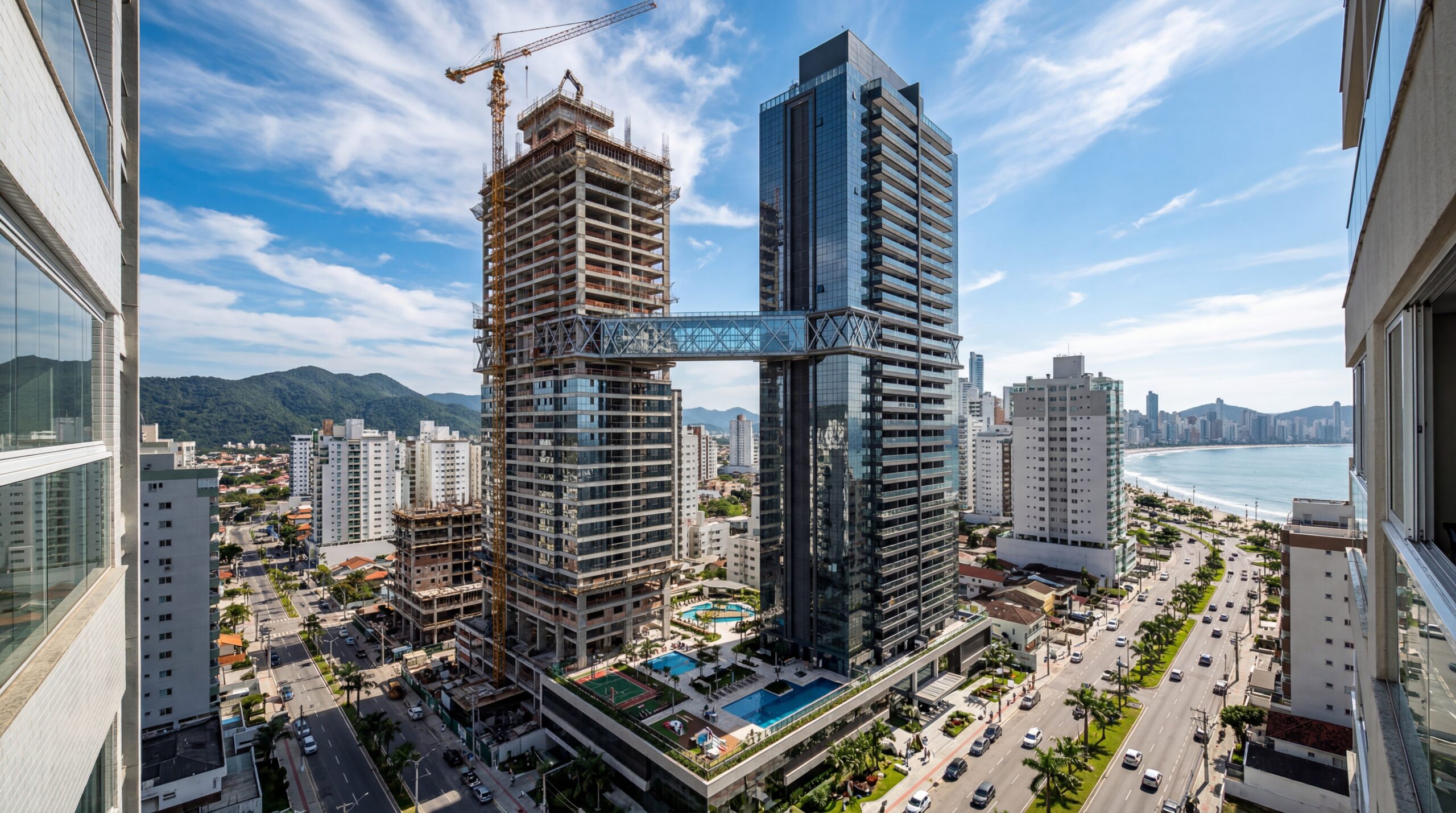

The twin towers of Ápice enter a decisive phase of construction with one tower structurally completed, another almost at the top, ventilated facade, a 15-meter walkway between the blocks, and 6,300 m² of leisure area.
The twin towers of Ápice have reached a moment that helps to gauge the scale of the project. With 55 floors and 177 meters in height, the complex already displays one tower with a completed structure, while the second approaches the same stage, reinforcing the progress of a construction marked by large-scale building solutions and strong visual appeal.
In addition to height and structural volume, the twin towers draw attention for their technical ensemble. The project includes a metal walkway between the blocks, a ventilated facade, expansive leisure areas, and an execution that advances simultaneously in the structure, the exterior, and the internal finishes. The result is a development that combines grandeur, technology, and a rapidly progressing construction.
Twin towers enter a phase that highlights the scale of the project

The current stage of the twin towers makes clear the size of the project. One of the towers has already reached the final structural stage, while the other is nearing completion of the structure, with only a few floors left to reach the same point.
-
Two-Bedroom Home Built in a 40-Foot Shipping Container Delivered and Ready for Same-Day Living in São Paulo Countryside

-
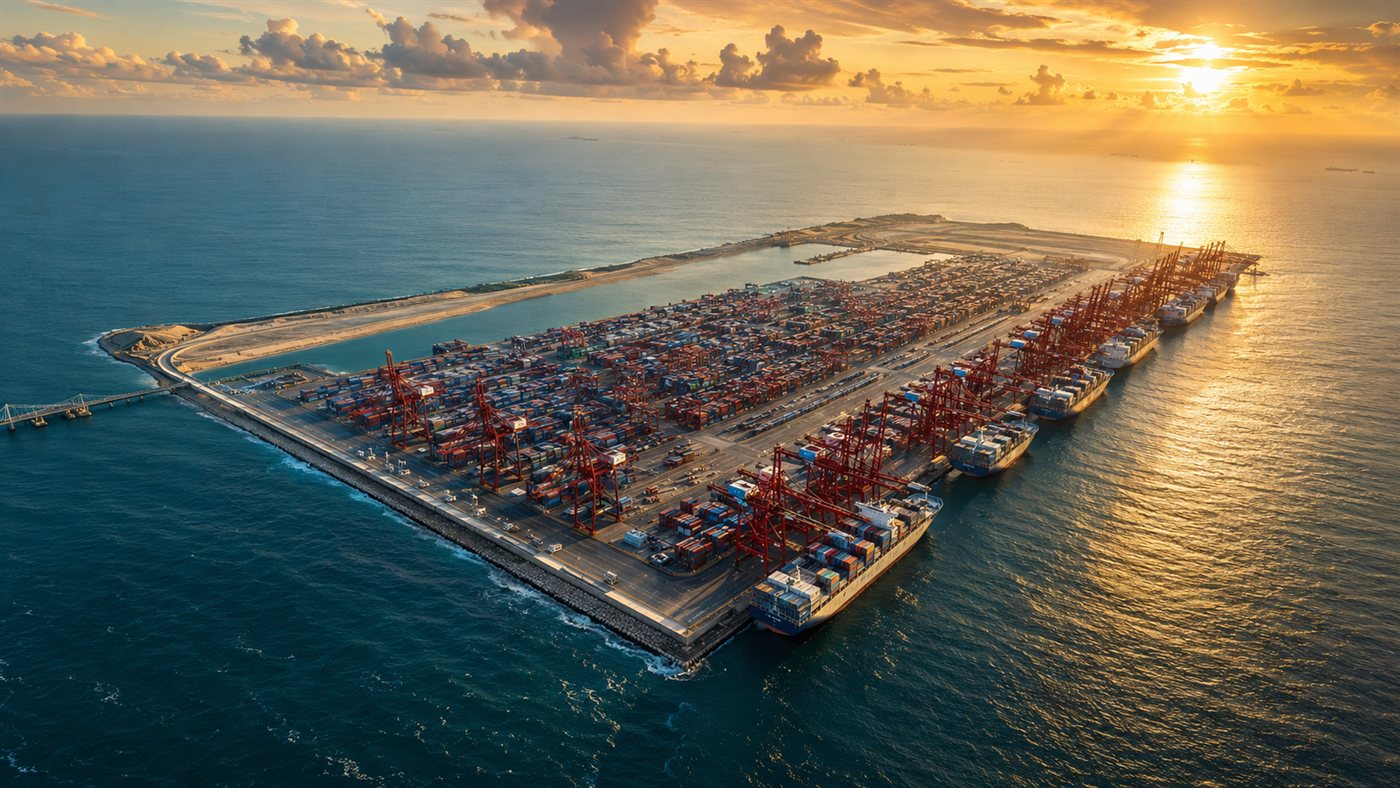
China Constructs Artificial Island 32 km Offshore for Yangshan Port, Connected to Shanghai by 32 km Bridge, Unloading 3,000 Containers in 20 Hours
-
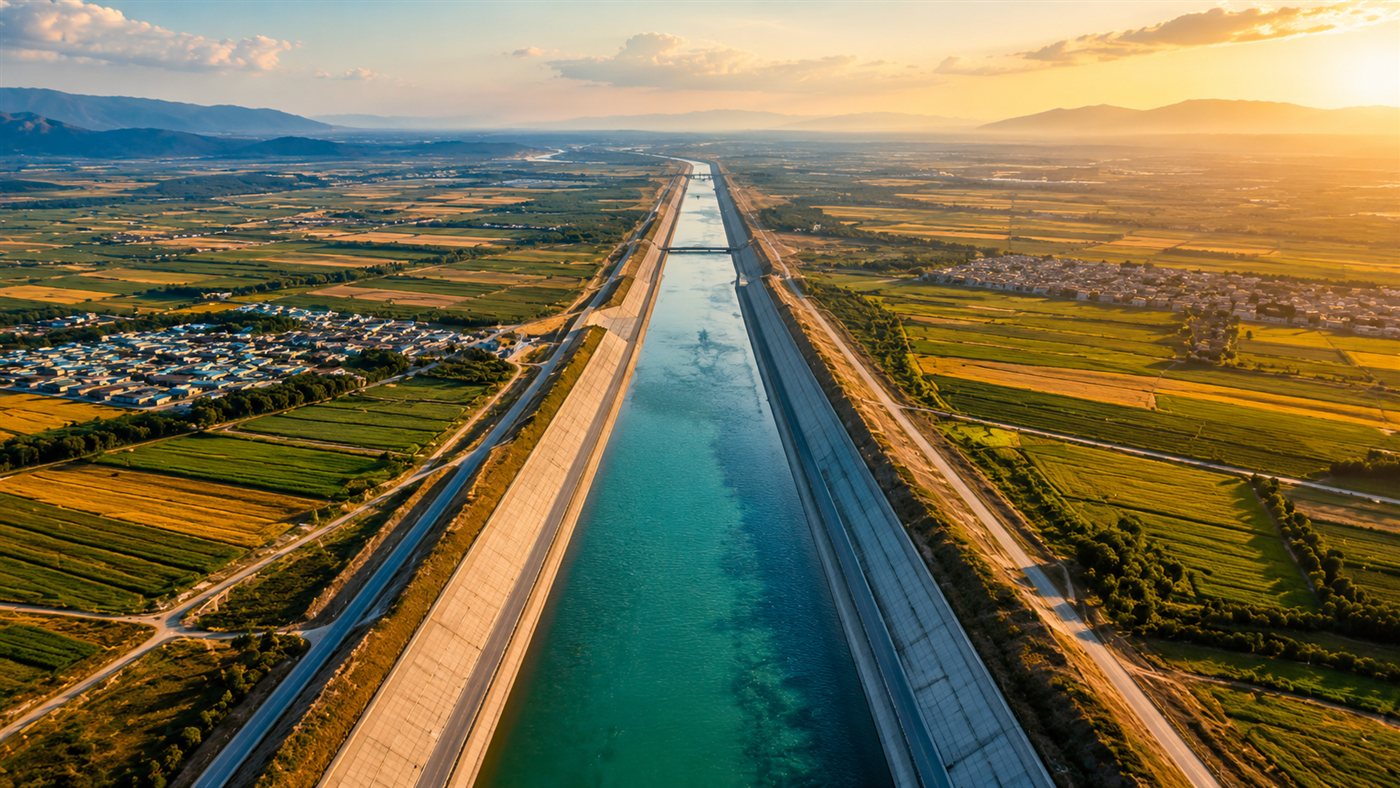
China’s $70 Billion River Diversion Project, the World’s Largest, Moves 44.8 Billion Cubic Meters Annually, Crosses Under the Yellow River, and Displaced 330,000 People
-
Indian Driver Spends 14 Years Digging 10-Meter Tunnel Through Mountain to Connect Isolated Village to the World



With 55 floors and 177 meters in height, the development stands out not only for its verticality but also for the care in execution.
The feeling is that the construction has ceased to be just a promise on paper and has begun to show, in a concrete way, the real dimension of what is being delivered.
Another point that draws attention is the configuration of the roof. The upper areas include a pool, water house, water tank, and large slabs, enhancing the visual and technical weight of the ensemble. The progress of the second tower reinforces the perception that Ápice is approaching an important turning point in the schedule.
15-meter walkway will connect the twin towers

One of the most striking elements of the project is the walkway that will connect the twin towers. The metal structure will have a 15-meter clear span and will be supported between the two towers, creating a physical link between leisure areas installed in each block.
The walkway will be implemented on the 37th floor, precisely in a leisure area that will connect distinct uses. On one side, the space will be dedicated to a gym and health area. On the other, there will be another front for socializing and leisure.
The connection between the two towers transforms the walkway into one of the most symbolic and exclusive points of the development.
The system was designed to respect the independent behavior of the structures. As the towers operate separately, the walkway cannot be completely rigid.
Therefore, the solution considers flexibility and a movable base in one of the supports, allowing the connection to occur without compromising structural performance.
Ventilated facade reinforces performance and visual identity

Another highlight of the twin towers is the ventilated facade. The system appears as one of the central technologies of the project, both for its aesthetic effect and for its thermal and acoustic performance.
The execution includes regularization of the external masonry, waterproofing, and installation of the structure that receives the technical porcelain.
Between the wall and the final coating, there is an air chamber that helps control temperature and also contributes to the internal comfort of the units. This is not just about beautiful finishing, but about a solution designed for performance and durability.
As part of the facade is already advancing on lower floors, other sections are still being executed in the upper areas.
This reveals a construction strategy on multiple fronts, with the exterior taking shape even before the complete conclusion of the second tower.
Leisure area totals 6,300 m² in the twin towers
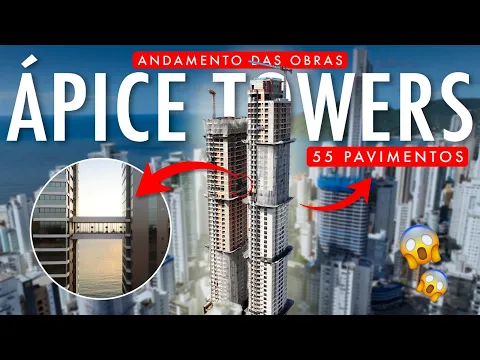

The twin towers also stand out for the scale of leisure. In total, the development gathers 6,300 m² of area intended for socializing and common use, distributed over three floors.
Just in the upper area, connected to the walkway region, there are about 800 m² of water mirror combining both towers. Pools and large shared use areas reinforce the proposal of a development that bets on generous spaces and integration between environments.
This volume helps explain why the project combines extreme verticality with robust permanence areas. Leisure does not appear as a complement, but as a central part of the identity of the development.
Construction also advances in finishes and infrastructure

In addition to the external impact, the twin towers are advancing with internal installations and closures. The construction showcases solutions in drywall, separate electrical infrastructure by systems, automation, communication, pre-assembled piping, and attention to acoustic comfort.
In the apartments, the project includes large frames, preparation for an island, four suites in certain units, technical drainage for air conditioning, niches in the bathrooms, recirculation for heating, and elements designed for safety and efficiency.
There is also a sprinkler system in the apartments, a requirement related to the height of the tower, reinforcing the level of protection adopted.
Another differentiator is the logic of industrialization in the construction. Part of the installations is prepared in advance and then taken to the floor for final assembly. This helps maintain execution standards, quality control, and productivity gains throughout the schedule.
One tower completed and another near the top consolidate a new stage
The moment experienced by the twin towers is strategic because it shows the transition between heavy structure and visual consolidation of the project.
One tower already appears structurally completed, while the other is rapidly approaching the top, reducing the distance between project and reality.
At the same time, the ventilated facade, leisure areas, walkway, and internal finishes reveal that different layers of the construction are progressing in parallel.
This overlap of stages indicates a construction site in full maturity of execution, with fronts advancing simultaneously.
Overall, Ápice presents itself as a project of high visual and technical impact. The twin towers cease to impress only by numbers and begin to draw attention for the complexity of the solutions and the speed with which the project takes shape.
Would you live in a development with twin towers connected by a walkway at the top?