





 Portuguese
  English
  Spanish
  4 min of reading
  0 comments


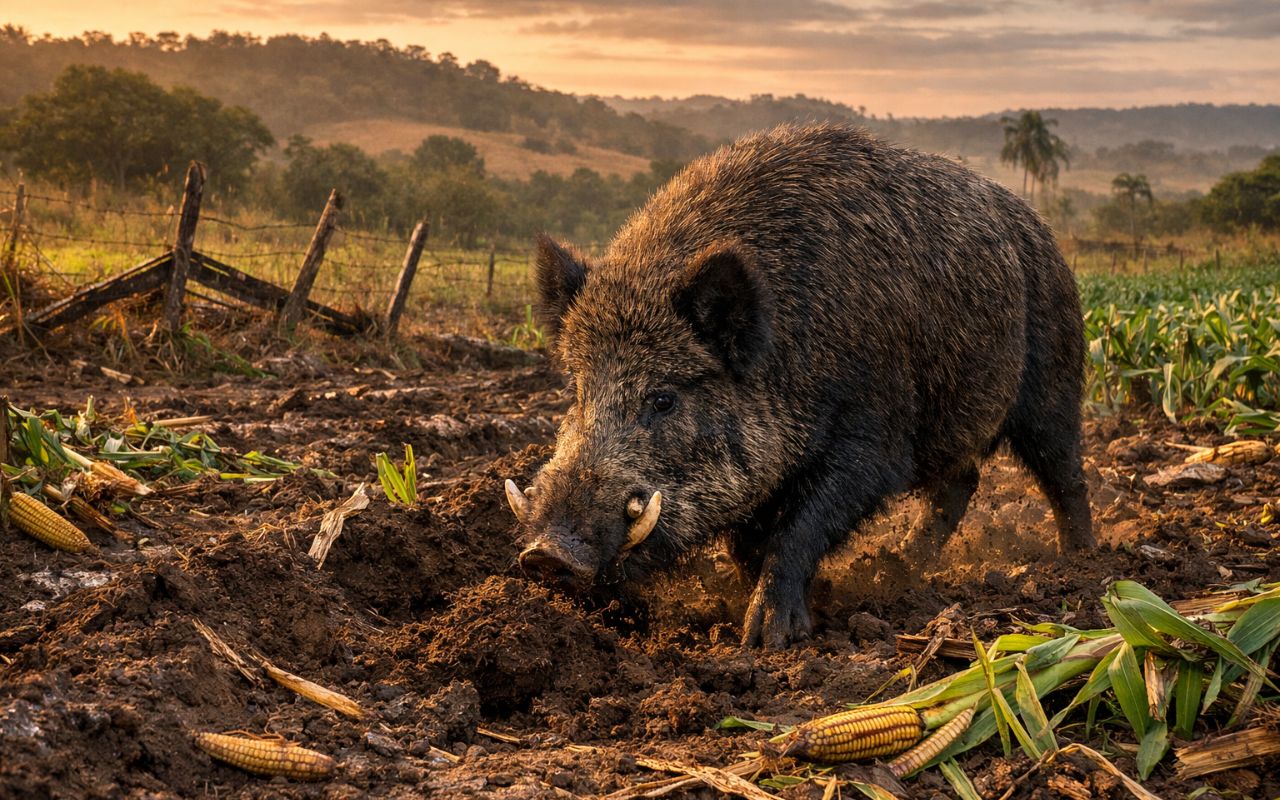
Invasive Animal Pests Already Cost Billions to the Brazilian Economy, Study Warns; Know the Main Invaders, Their Impacts, and Why Control Is Urgent.
Invasive Animal Pests Cost Billions and Threaten Environmental and Agricultural Sectors
Recent studies reveal that invasive animal pests already cost billions of reais to Brazil’s economy, causing environmental, sanitary, and economic damage across different sectors.
The research, based on reports from IPBES and data from institutions such as Embrapa, shows that exotic species introduced outside their natural habitats have proliferated rapidly in the country, affecting crops, public health, and biodiversity.
This situation has drawn the attention of scientists, public managers, and farmers, who warn of the need for more effective prevention and control policies.
-
The sugar-energy sector advances with agricultural technology, but agricultural productivity still raises concerns.

-
The eggshell that almost everyone throws away is made up of about 95% calcium carbonate and can help enrich the soil when crushed, slowly releasing nutrients and being reused in home gardens and vegetable patches.

-
This farm in the United States does not use sunlight, does not use soil, and produces 500 times more food per square meter than traditional agriculture: the secret lies in 42,000 LEDs, hydroponics, and a system that recycles even the heat from the lamps.

-
The water that almost everyone throws away after cooking potatoes carries nutrients released during the preparation and can be reused to help in the development of plants when used correctly at the base of gardens and pots, at no additional cost and without changing the routine.


What Are Invasive Animal Pests and Why Do They Cause Billions in Losses
Invasive animal pests are non-native species that establish themselves in Brazilian environments without natural predators or effective biological control.
Because of this ecological advantage, they spread rapidly, competing with native species and altering entire ecosystems.
This results in losses in agricultural production, damage to infrastructure, and high costs for mitigation and sanitary treatments.
International studies indicate that the losses due to biological invasions can reach hundreds of billions of dollars over decades, with impacts reflected across various sectors of the economy.
In Brazil’s case, estimates suggest that these invasions generate costs that reach US$ 2 to US$ 3 billion per year, considering production losses, labor hours, and impacts on public health.
The Five Main Invaders That Cost the Country the Most
Below are the five biggest invaders currently in Brazil — animals that have become true invasive animal pests, with significant economic and environmental impact.
1. Wild Boar — Crop Devastator and Sanitary Risk
The European wild boar and its hybrids, known as “javaporcos,” are considered the biggest problem among invasive pests in Brazilian agribusiness.
They have spread rapidly across more than 1,500 municipalities and have caused direct damage to corn and soybean crops.
Furthermore, studies from Embrapa indicate that these animals can act as reservoirs for diseases such as Classical Swine Fever and Foot-and-Mouth Disease, threatening the country’s sanitary status and potentially affecting exports.
2. Golden Mussel — Infrastructure at Risk
Originating from Southeast Asia, the golden mussel arrived in Brazil through the ballast water of ships.
It forms dense colonies that clog pipelines in hydroelectric plants and industrial facilities, generating high maintenance costs — around R$ 400 million annually just for cleaning — and threatening the operation of critical infrastructures.
3. African Land Snail — Health and Agriculture Problem
Introduced to Brazil in the 1980s as a culinary promise, the African land snail has become one of the most widespread urban and rural pests.
Fiocruz warns that it can be a host for parasites that cause meningitis and other health issues, in addition to consuming hundreds of plant species, directly impacting family agriculture.
4. Coral Sun — Threat to Marine Reefs
In marine environments, the coral sun has aggressively advanced in areas such as Ilha Grande Bay (RJ) and oil platforms.
By not performing photosynthesis, it competes with native corals for space and food, affecting local biodiversity and harming artisanal fishing dependent on these reefs.
5. Marmoset and Genetic Pollution
Surprisingly, some species of marmosets also rank among the invasive animal pests.
Animal trafficking has led populations of common marmosets to interbreed with native species, causing “genetic pollution” and threatening endemic primates, in addition to preying on eggs and upsetting bird populations.
Why Control of These Pests Is Urgent
Experts emphasize that the cost of prevention and monitoring is much lower than that of late eradication.
Biological control actions, surveillance, and integrated public policies can significantly reduce the impacts of these invasive animal pests on the Brazilian economy and ecosystems.
Moreover, data from international organizations reinforce that without effective measures, the problem is expected to worsen in the coming decades, driven by global goods transportation and the fragility of natural systems in the face of foreign species.
Practical Consequences for the Country
Invasive animal pests directly affect the lives of producers, coastal communities, and consumers.
In the fields, agricultural losses reduce income and productivity; in urban areas, species such as the African land snail pose sanitary risks; and in natural areas, biodiversity suffers from uncontrolled competition for resources.
Therefore, beyond the estimated losses of billion, combating invasive pests is a matter of economic and environmental security that demands immediate responses.









Seja o primeiro a reagir!