





 Portuguese
  English
  Spanish
  6 min of reading
  0 comments


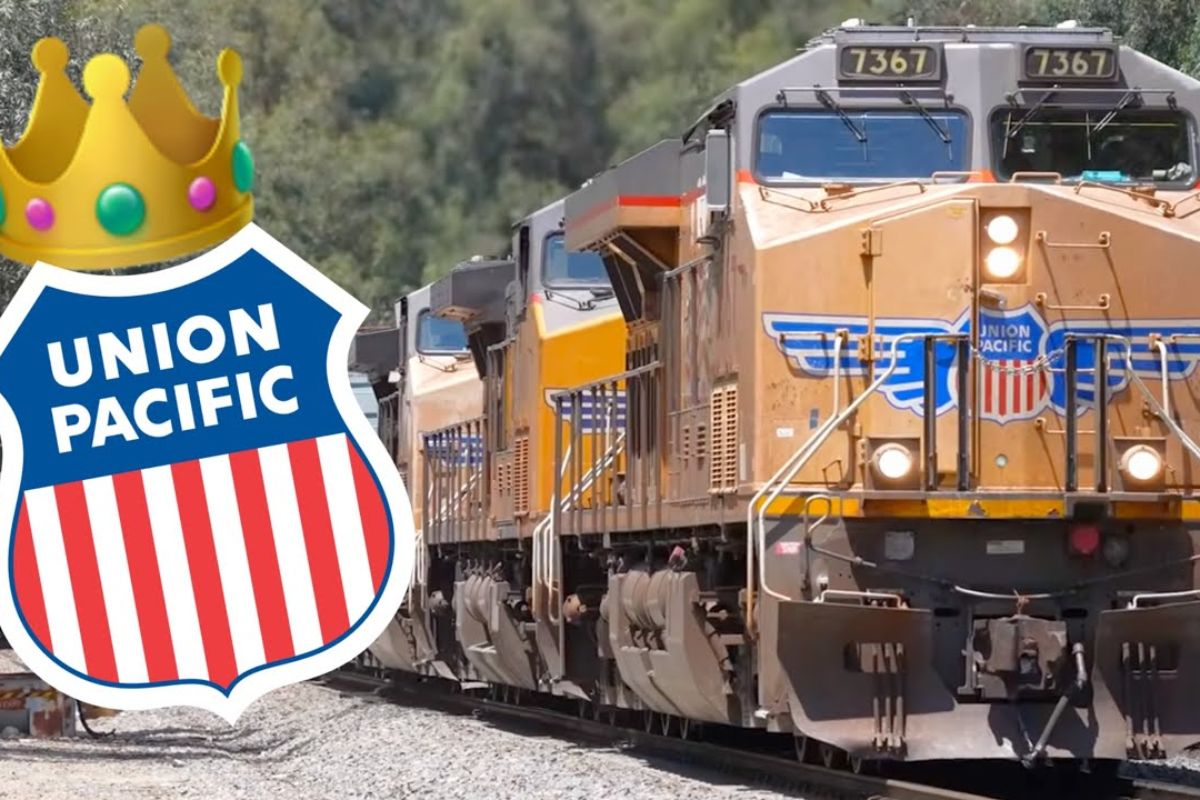
Understand Why A Train Disappeared During The Pandemic And How The Passenger Trains Of The Pacific Surfliner Collide With The Power Of Union Pacific And The Tracks Of California.
While passengers are still waiting for the train that disappeared during the pandemic to return to the map, behind the scenes reveals a silent dispute between the government, passenger operators, and a freight giant that controls the clock and the tracks of California.
When the train that disappeared during the pandemic first vanished, it seemed like just another emergency cut during COVID-19. But when life returned to “normal” and that specific train never reappeared on the schedule, it became clear that the problem was bigger: who really controls the line where the state says it invests in mobility but depends on the goodwill of a private freight company to put any car on the track.
The Train That Disappeared During The Pandemic And Left A Hole On The Map
During the COVID-19 pandemic, one of the first morning trains of the Pacific Surfliner, which connected Los Angeles to Goleta, was suspended.
-
In A European City, The Country’s Largest Railway Junction Was Modernized Without Closing Its Doors, Kept Trains Running During Years Of Construction, Now Serves Up To 60,000 Passengers Per Day, And Installed Solar Panels That Generate About 30% Of Its Energy
-
Famous Brazilian Railway May Become a Parking Lot
-
The Country of “Punctual As a Train” Admits It Has Lost Control: High-Speed Trains Delay, Stop, Disappear from the Map and Turn 6-Hour Trips into 10, While Deutsche Bahn Promises Restructuring in 2026 But Faces 19th Century Infrastructure, Staff Shortages and Sections Closed for Months
-
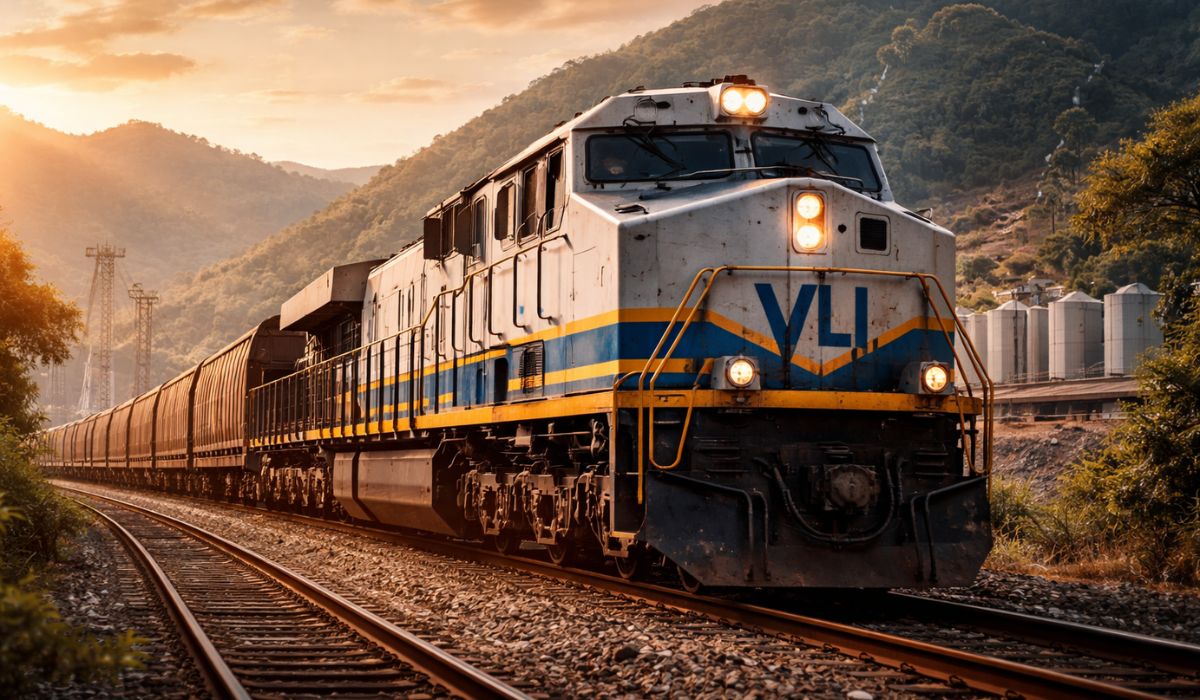
With an Investment of R$ 700 Million in One of the Country’s Main Rail Networks, VLI Reinforces Infrastructure, Receives 8 New Locomotives, and Expands the Corridor Connecting 7 States, Boosting Jobs and the Transportation of Grains, Ore, and Oil Products to the Port of Santos

It was not just any train. It was a train designed as “relief” for Highway 101, functioning as a commuter line, taking cars off the road and putting people on the track.
When services began to resume in 2021, much was restored. But that schedule was not. The train that disappeared during the pandemic left a hole in the schedule: an important morning gap, precisely at peak times where it made the most sense to offer an alternative to cars.
At the same time, between 2023 and 2024, a simple idea on paper and complex in practice began to gain momentum: a pilot operated by Metrolink to Santa Barbara, taking advantage of that empty space in the network.
The Makeshift Pilot That Never Got Off The Ground

The proposal seemed elegant. The Metrolink pilot would be sold via Amtrak, framed as a complement to the Pacific Surfliner but operated by Metrolink as a subcontractor.
In practice, it would use an existing time slot that was not utilized in the Coast Subdivision of Union Pacific north of Moorpark.
There was a reason for this behind-the-scenes engineering. Metrolink only owns the tracks up to Moorpark. From there on, everything enters territory controlled by Union Pacific, which is the host freight railroad and owner of the track to the north.
Any new service – including a train that would effectively replace the train that disappeared during the pandemic – requires authorization, operational agreements, and, most importantly, negotiation time.
Meanwhile, the Pacific Surfliner faced a very concrete crisis: lack of equipment. Out-of-service cars, locomotives sidelined due to mechanical issues and inspections, to the point that Amtrak California had to pull old material from northern California, including Comet cars and NPCU cab-cars that normally served the Capitol Corridor and the San Joaquins trains.
The Metrolink pilot was the temporary solution to fill the gap left by the train that disappeared during the pandemic. However, when it came time to unlock the project, the true owner of the pen appeared.
When The Freight Railroad Decides What Passengers Can Or Cannot Have
As the plan advanced, Union Pacific made a central condition clear: as soon as the pilot was finalized, a new operational agreement would be necessary recognizing Metrolink as an alternative operator on the coastal line. Political will and available money were not enough. It was necessary to align with those who control the tracks.
These negotiations had been discussed since July, but UP’s response was direct: the company’s resources were tied up with its pending acquisition of Norfolk Southern. To translate this into practical terms, the company’s focus was on another corporate priority, not on releasing another passenger train.
The internal outlook was pessimistic: Union Pacific said it would only be able to offer a draft agreement in the first quarter of 2026.
In other words, the pilot that could replace the train that disappeared during the pandemic would be stuck for years in a web of uncertainties, memorandums, and schedules of a freight company that sees that stretch as part of its network, not as a public mobility corridor.
In light of this, Lawson – the consortium that coordinates the service – made a tough decision: continuing to insist on the Metrolink pilot could derail its own plans for the expansion of the Pacific Surfliner. The strategy changed.
Instead of betting on the “stopgap”, the focus shifted to strengthening the Surfliner itself, with a sixth round trip to Goleta and a third round trip to San Luis Obispo.
The Invisible Power Of Those Who Own The Track
This story does much more than explain why a train disappeared during the pandemic and never returned. It exposes a structural problem: the growth of passenger transport in California directly depends on the consent of the host freight railroads.
In practice, even when there is money, demand, and ready projects, public agencies get caught up in the calendar, priorities, and corporate mood of those who control:
- access to the track
- dispatch of trains
- the operational agreements that allow or block new services
Union Pacific controls how many Surfliner trains run in the Coast Subdivision. Most of Amtrak’s routes in California run on tracks that the state does not own. Agencies may have resources in hand, but they still have to wait in line for infrastructure that belongs to another business with a different logic.
Interestingly, according to federal studies, freight traffic on the coastal line is relatively low compared to the main lines inland.
Entire segments, such as from San Luis Obispo to San Jose, practically have no long-distance freight trains on a daily basis.
Even so, the final word on how many passenger trains can pass still belongs to the freight railroad.
When a rare Union Pacific freight train recently descended from Salinas towards San Luis Obispo, the movement was so unusual that enthusiasts tracked the train for miles.
This says a lot about the reality: on most days, the passenger dominates the line, but the strategic decision-making is dominated by freight.
When The Debate Stops Being About Schedules And Becomes About Ownership
At some point, this story leads to a more delicate conversation: track ownership. California cannot simply “seize” an active railroad. Any acquisition would require approval from the Surface Transportation Board and years of heavy negotiation.
The more realistic path, advocated by some planners, would be for the State to buy the right-of-way, while Union Pacific would maintain a permanent easement for freight and continue to be obligated to provide freight service as a common carrier.
In this model, freight continues to move, but the power to plan, prioritize, and expand passenger service is no longer held hostage by the schedule of a private company.
California has already done something similar in other regions. One example is the Santa Paula line, acquired by Ventura County in 1995, with freight operations maintained under specific rules. It would be a transposition of this reasoning for a much more strategic corridor.
And here comes another sensitive point: the connection with California’s high-speed train. Instead of treating the coastal line as a tourist appendage, the state could modernize the entire coast, transforming that stretch into a serious corridor, complementary to the high-speed axis inland.
An Underutilized Coastal Corridor Awaiting Decision
No one is talking about transforming the coast into a 350 km/h line. Discussions revolve around incremental improvements, which in practice would change the passenger experience:
- raising speeds from 79 to 90 or 110 km/h in straighter segments
- duplicating critical stretches, where crossings and conflicts most delay schedules
- implementing modern and reliable signaling, reducing delays and intervals
With this, the Pacific Surfliner and Coast Starlight could offer a more frequent and predictable service, transforming what today still seems like a mixture of “tourist line” and “partial solution” into a real rail corridor, integrated into the logic of state mobility.
At the bottom, the question that the train that disappeared during the pandemic leaves behind is simple and uncomfortable: who decides if a train exists or not when the bill is paid with public money, but the tracks belong to a private freight company?
And you, if you were in the place of the passengers who lost the train that disappeared during the pandemic, what would you consider fairer for the future of the coastal line: the State buying the right-of-way and controlling the planning, or keeping everything as it is, relying on the “yes” or “no” of the freight railroad?









-

Uma pessoa reagiu a isso.