Portuguese
  Spanish




Failures in the Starship Megarocket Worry Investors and Threaten Projects That Depend on Cheap Launches to Function
The Starship Megarocket by Elon Musk has not yet operated as expected and has already accumulated several explosions during tests. This scenario puts at risk over $8 billion invested in space startups that directly depend on this technology.
The impact is significant because these companies rely on the rocket to reduce costs and make space projects viable. Without it, many plans may be delayed or even cease to exist, affecting sectors such as satellite internet, mining, and space data centers.
Startups Depend on Starship to Get Off the Ground
The report was published by E&E News, a journalism outlet specializing in energy and the environment, which detailed the dependence of dozens of companies on the rocket.
-
As Brazil Expands Social Welfare, Survey Reveals 40% Blame Poverty on Laziness, While 58% Cite Lack of Opportunities

-
China Tightens Control on Antimony, Driving Prices from $22,000 to Nearly $40,000 per Ton as U.S. Rushes to Bolster Strategic Reserves

-
BlackRock Freezes $1 Billion in Brazilian Renewable Energy, Impacting 1.5 GW of Planned Projects and Highlighting Investor Concerns Over Infrastructure Bottlenecks Cutting Up to 25% of Solar and Wind Generation
-
Labor Shortage: Despite Record Average Salary, 90% of Brazilian Bar and Restaurant Owners Struggle to Hire Key Roles Like Sushi Chefs and Head Cooks


About 47 startups have their business models linked to the success of Starship. These companies operate in areas such as space data centers, drug production, and off-Earth mining.
An example is Starcloud, which plans to create large orbital data centers. The idea is to reduce the pressure on energy consumption on Earth. However, without a rocket capable of transporting large structures to space at low cost, the project is stalled.
Explosions and Delays Increase Investor Pressure
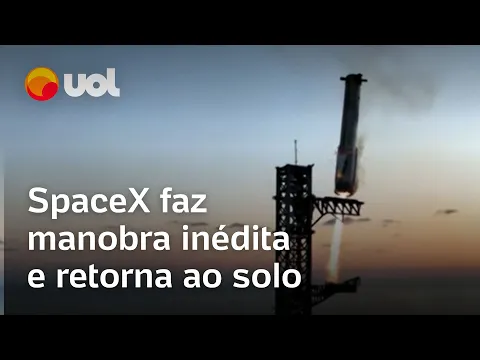
The Starship has already experienced over a dozen explosions during tests, including recent failures that even disrupted air traffic in some regions.
This history worries investors, as many funds expect returns within a 7 to 12 year period. Some of these investments are nearing that limit.
Ali Javaheri, a space sector analyst at PitchBook, stated: “If Starship is not operational in the next two or three years, investors will start to get nervous.”

Rocket Promises to Drastically Reduce the Cost of Going to Space
The main attraction of the Starship Megarocket lies in the promise of reducing the cost of sending payloads to space. Today, this cost has already decreased significantly with SpaceX rockets.
Industry data shows that the cost has dropped from over $65,000 per kg in the past to about $1,500 per kg with current technologies. The expectation is that Starship will bring this value down to around $100 per kg.
This reduction is crucial for making projects like private space stations and large satellites viable.
SpaceX Also Depends on These Companies to Grow
E&E News, a journalism outlet specializing in energy and the environment, reported that SpaceX itself needs these startups to sustain its future plans.
The company cannot rely solely on contracts with governments. It needs commercial clients to fill its launches and generate revenue.
Finn Murphy, an industry investor, emphasized: “They need many companies to be created to really consume the launch stock they intend to build.”
Few Alternatives in the Market Increase Dependence
Today, there are few companies with capabilities similar to those of Starship. This means that many startups do not have other viable options in the short term.
Bryan Clark, a defense expert, stated: “No one else is really investing in a vehicle the size of Starship.”
This lack of competition further increases SpaceX’s dependence.
Ambitious Projects Could Transform Several Industries
The success of the Starship Megarocket could pave the way for significant changes in various fields. Among them are:
large-scale satellite internet, asteroid mining, and drug production in microgravity.
Companies like Voyager Technologies aim to build a new space station. Others, like AST SpaceMobile, seek to expand global communication services.
Without the rocket’s operation, these projects face delays and higher costs.
The Big Question Remains Unanswered
The main question in the space sector today is simple: when will the Starship Megarocket truly operate.
There is confidence that SpaceX will resolve the issues. However, there is no clear timeline for this to happen.
Meanwhile, billions of dollars are at stake and dozens of companies are waiting for a solution to move forward.
If you believe this technology could change the future, share your opinion in the comments and share this content with others interested in the topic.