





 Portuguese
  English
  Spanish
  6 min of reading
  0 comments


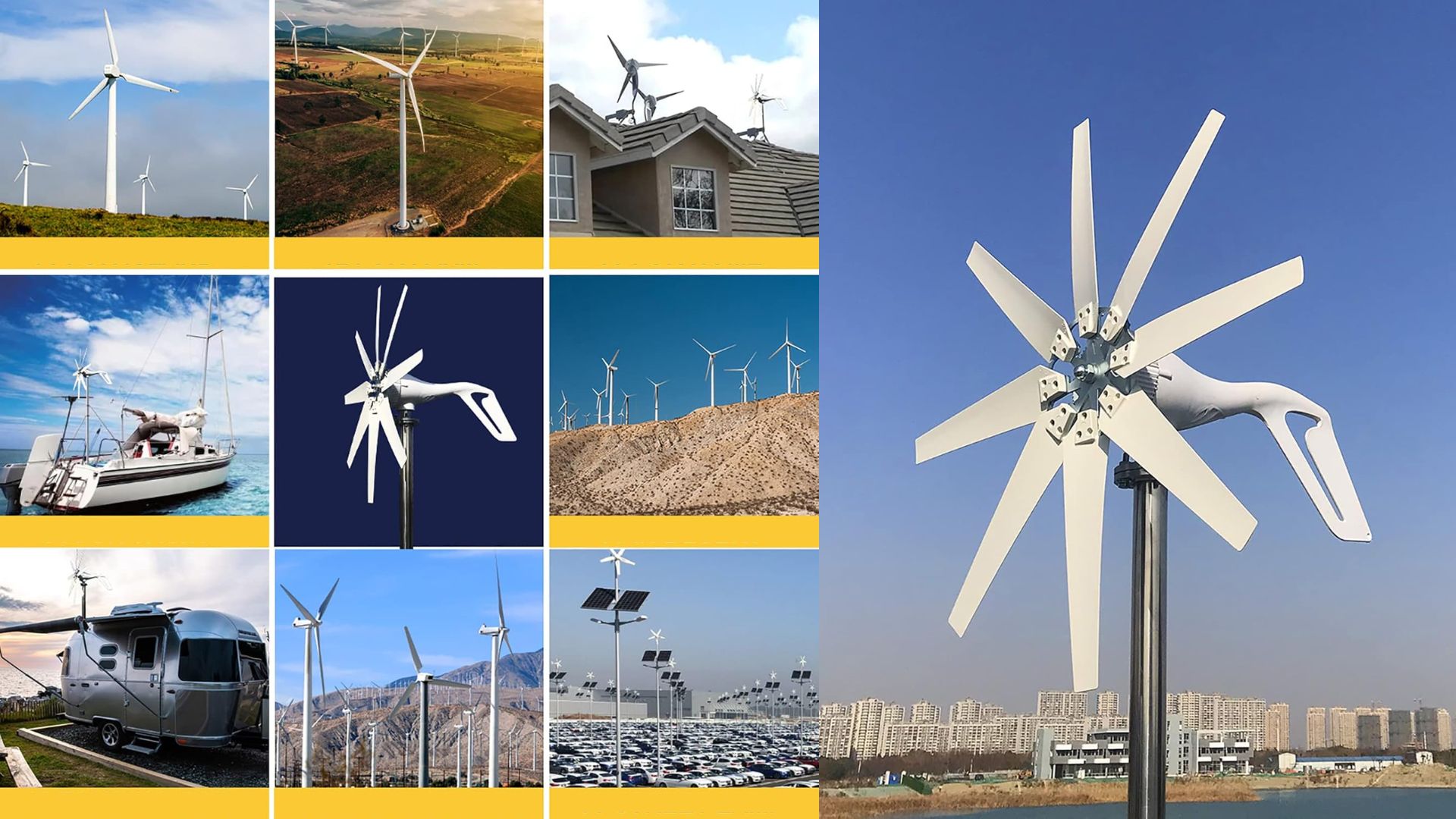
A Low-Cost Residential Wind Turbine Draws Attention For Promising High Power, Quiet Operation, And The Possibility Of Reducing Energy Costs In Different Types Of Housing.
A residential wind turbine advertised on Amazon promises to help families reduce their electricity bill for less than R$ 3,000.
The equipment, from the brand AISINILALAO, is presented as a 12,000-watt generator kit, with quiet operation, free shipping, and the potential to meet the demand of a house with five residents, according to the product description.
12,000 W Turbine And Affordable Price
The kit is advertised as “12,000W wind generator kit, 110V/220V wind turbine, horizontal wind mill power, and no noise.”
-
Giant of the winds in Rio Grande do Norte: Serra do Tigre Wind Complex receives new investments and accelerates the expansion of clean energy generation to supply millions of Brazilian homes.

-
Urgent energy transition: Greenpeace advocates for massive investments and points to Brazil as a global leader in wind energy production in the coming years.

-
Conflict in the Sertão: Rural communities in Rio Grande do Norte report issues with wind farms and the new challenges of clean energy in the semi-arid region.
-
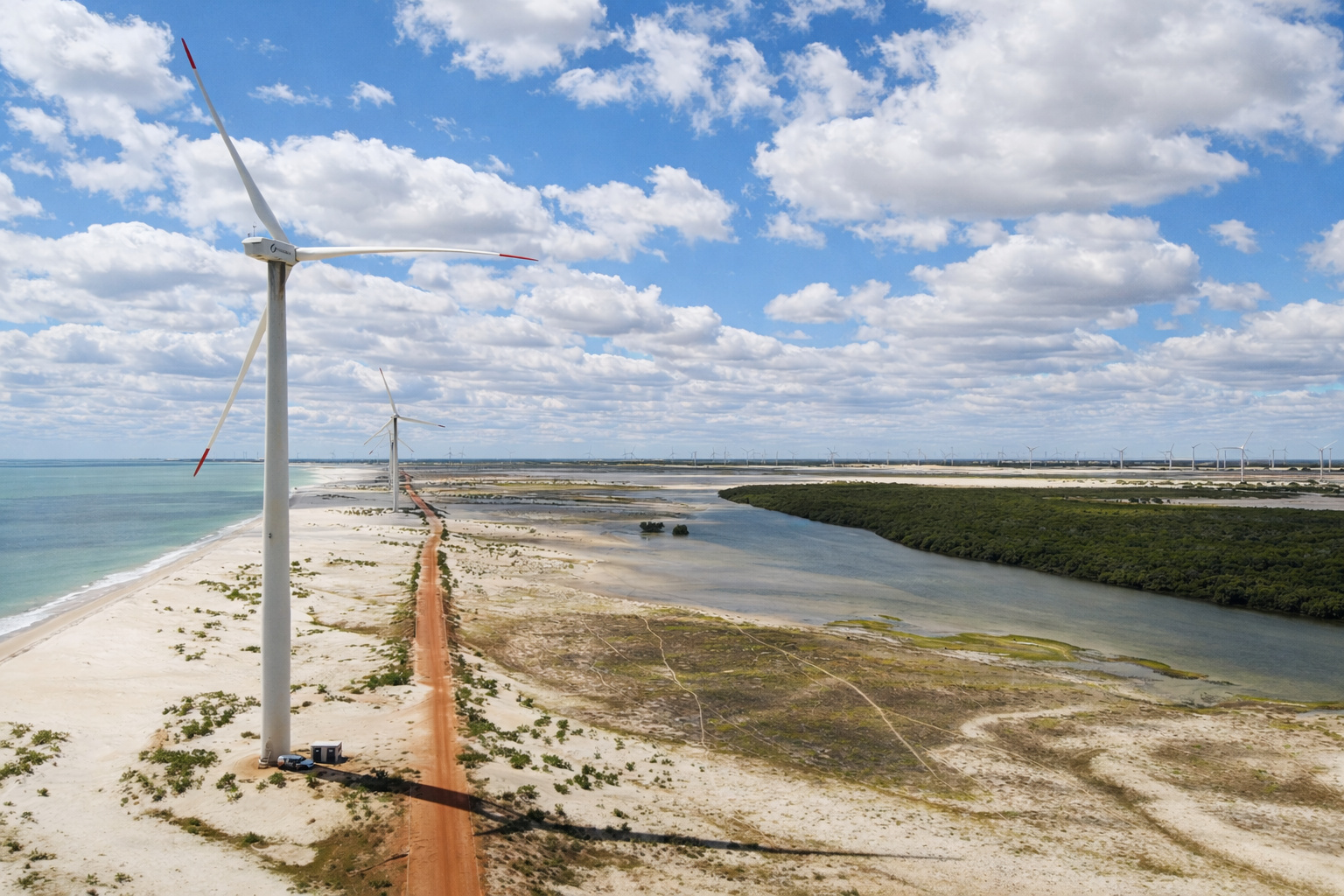
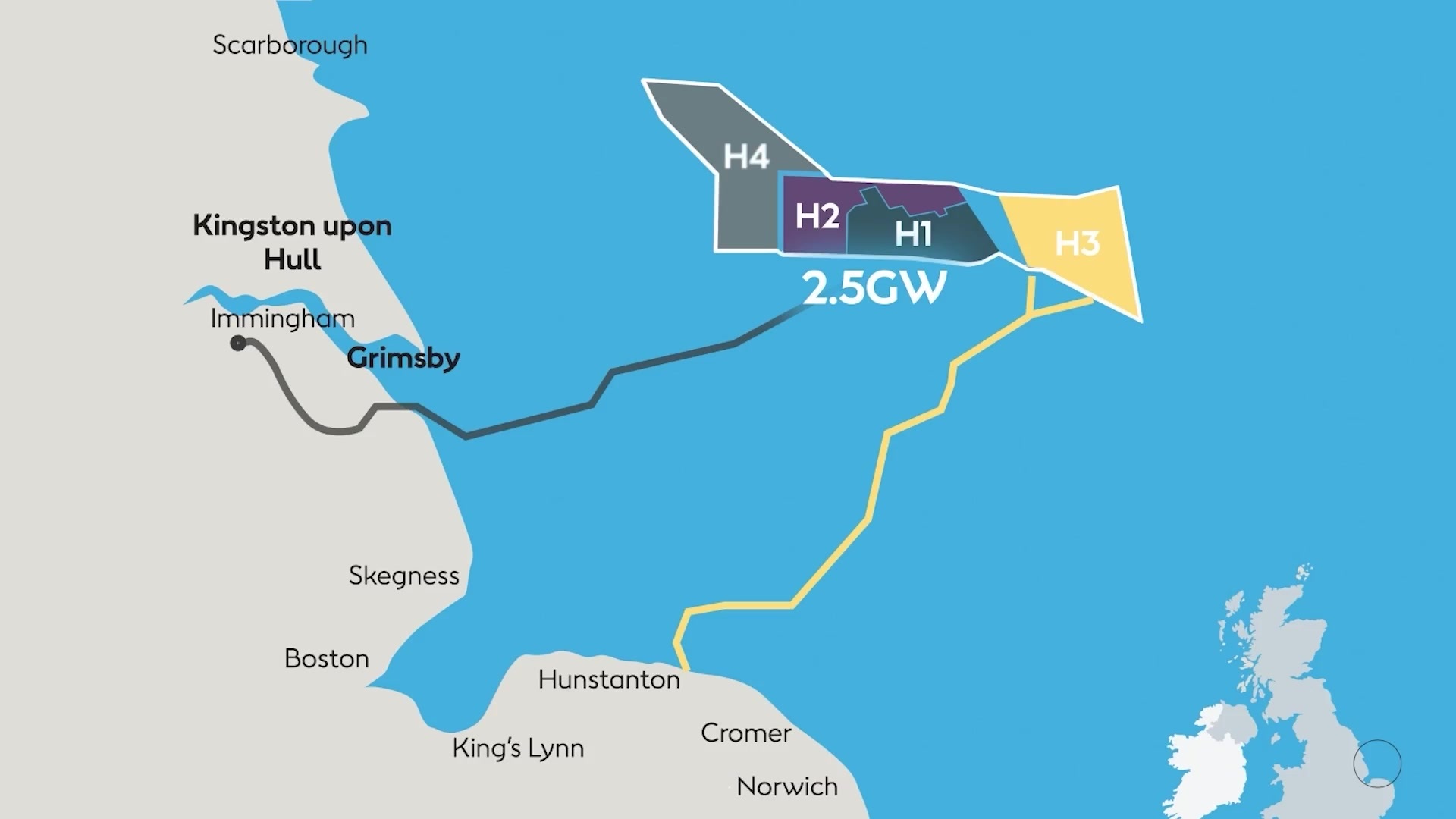
231 turbines of 260 meters at 160 km from the coast, monopiles weighing as much as nine blue whales embedded in the North Sea, and a crane ship taller than the Eiffel Tower: Hornsea 3 will be the largest offshore wind farm on the planet by 2027, and its first components have already arrived in England.

On the product page, the displayed price is R$ 2,989.17, with an option for installment payments of up to 12 times of R$ 249.18 interest-free, in addition to free shipping for the buyer.
According to the manufacturer, it is a portable wind generator, with low maintenance, relatively low weight, and high power density, which would facilitate transport and installation in different usage scenarios.
The brand also informs that the kit is suitable for residential and off-grid applications, such as houses, boats, gazebos, cabins, and mobile homes, functioning as a complementary energy source in locations with good wind incidence.

Technical Features And Capacity Of The Kit
The product is sold as a wind turbine kit with adjustable output voltage between 12V, 24V, 48V, and 220V, powered exclusively by wind.
According to the technical sheet, the nominal power is 12,000 W, with a three-phase permanent magnet synchronous generator in alternating current.
The structure uses three nylon blades, each about 580 millimeters long.
When assembled, they form a wind wheel with an approximate diameter of 1.3 meters. The complete set weighs just over 9.3 kilograms, which reinforces the portable nature of the equipment.
The manufacturer states that the turbine operates from an initial wind speed of about 1.8 m/s, has a nominal speed of around 11.5 m/s, and is designed to withstand winds of up to 46 m/s within the considered safe limits.
The energy capture uses an electromagnetic method, and the wind direction adjustment is automatic, allowing the rotor to align itself with the prevailing gust direction.
The advertised package includes the wind turbine kit and an instruction manual.
In some similar models from the same brand, the charge controller is included with the equipment; in the case described, the page highlights the “wind turbine kit” as the main item, with the buyer responsible for checking the inclusion of controllers and accessories before purchase.
Quiet Operation For Residential Use

One of the points most emphasized by the manufacturer is the quiet operation of the turbine.
The product is described as equipped with double bearings, which stabilize the rotor’s rotation and reduce vibrations.
As a result, the noise generated would be low enough not to cause discomfort in residential areas, according to the promotional material.
This feature is relevant for installations close to bedrooms, balconies, and living spaces.
In poorly sized or poorly designed equipment, vibrations and constant noises can become a problem for residents and neighbors, which explains the commercial emphasis on this point.
Installation On Posts And Simplified Maintenance
The installation, according to the manufacturer’s description, is classified as simple and quick.
The turbine is designed to be mounted on posts with a diameter of 60 millimeters, which facilitates assembly on standard metal structures used in small wind generation systems.
The brand claims that the assembly process helps save time and reduce common installation errors.
Maintenance is also presented as a differentiator: with few exposed moving parts and the use of sealed bearings, the manufacturer defines the generator as a low-maintenance equipment, suitable for those seeking a renewable energy solution with minimal technical intervention in daily life.
In addition to use in grid-connected homes or isolated systems, the turbine is suggested for boats, gazebos, cabins, and mobile homes.
Combined Use With Solar Energy In Hybrid Systems
The promotional material highlights that these wind turbines can be used in hybrid wind and solar generation systems.
In this type of arrangement, the turbine is connected together with photovoltaic panels, through compatible controllers and inverters, allowing both sources to work together.

The logic is simple. On sunny days with little wind, the generation tends to be greater in solar panels.
In cloudy or nighttime periods, the wind becomes more relevant. Thus, the hybrid system seeks to ensure more stable supply throughout the day and across the seasons.
In the advertisement, the manufacturer emphasizes that, in the absence of sunlight, the turbine continues to generate energy from the wind, while on sunny days the solar energy takes over part of the load.
The kit, however, does not include photovoltaic modules, which must be purchased separately by those looking to assemble a complete hybrid system.
Capacity To Serve A House With Five Residents
The product presentation text mentions as a reference a house with five residents, with an average consumption of 370 kWh per month.
From there, it emphasizes that the acquisition of the turbine for less than R$ 3,000 could generate significant savings on the electricity bill, combining reduced costs and lower environmental impact.
In practice, the manufacturer supports this idea with the nominal power of 12,000 W, meaning that, under ideal wind conditions, the equipment would be capable of generating up to 12 kWh of energy per hour.
In a theoretical scenario of continuous operation at this power, the generated energy would comfortably exceed the consumption of the presented example.
However, the actual generation of any wind turbine directly depends on factors such as average wind speed, gust consistency, installation height, lack of obstacles, and quality of the electrical design.
In many regions, the wind does not remain consistently at a level sufficient to extract the generator’s nominal power.
Therefore, although the equipment is advertised as capable of “powering an entire house” under certain conditions, the actual result varies from case to case.
In some contexts, the turbine may only meet part of the demand, acting as a complement to the conventional electrical grid or an already installed photovoltaic system.
Additional Items Required For Residential Use

In order for the generated energy to truly power a residence, the turbine needs to be integrated into a complete electrical system, usually consisting of charge controller, battery bank, and inverter capable of providing energy at 110 V or 220 V.
The advertisement highlights the inclusion of a turbine kit and a manual but does not detail all the components necessary for direct connection to the home installation.
Thus, consumers interested in using the turbine as a primary or complementary source must check, before purchasing, which items are already included in the package and which need to be acquired separately.
It is also important to consider hiring a qualified professional for the design and installation.
Another important point is compliance with electrical safety standards and local distributor rules, especially when there is the intention to connect microgeneration systems to the utility grid.
Available Reviews And Limits Of Information
On the product page, the AISINILALAO turbine appears with a rating of 4.5 out of 5 stars, based on two customer reviews.
The limited number of reviews does not allow for a broad overview of performance but indicates that, among the few buyers who rated it, the experience was mostly positive.
The website that originally published the offer states that it has no connection with the brand or Amazon and claims that the performance estimates are based on the data provided by the manufacturer itself.
In other words, the promises of power, silence, and capacity to power a house are derived from the technical sheet and commercial description, not from independent tests. Turbine Link.
Would You Invest In A Wind Turbine Of This Type To Try To Reduce Your Home’s Electricity Bill, Or Do You Still Consider It More Advantageous To Bet On Other Forms Of Distributed Generation?









Seja o primeiro a reagir!