





 Portuguese
  English
  Spanish
 4 min of reading
  2 comments


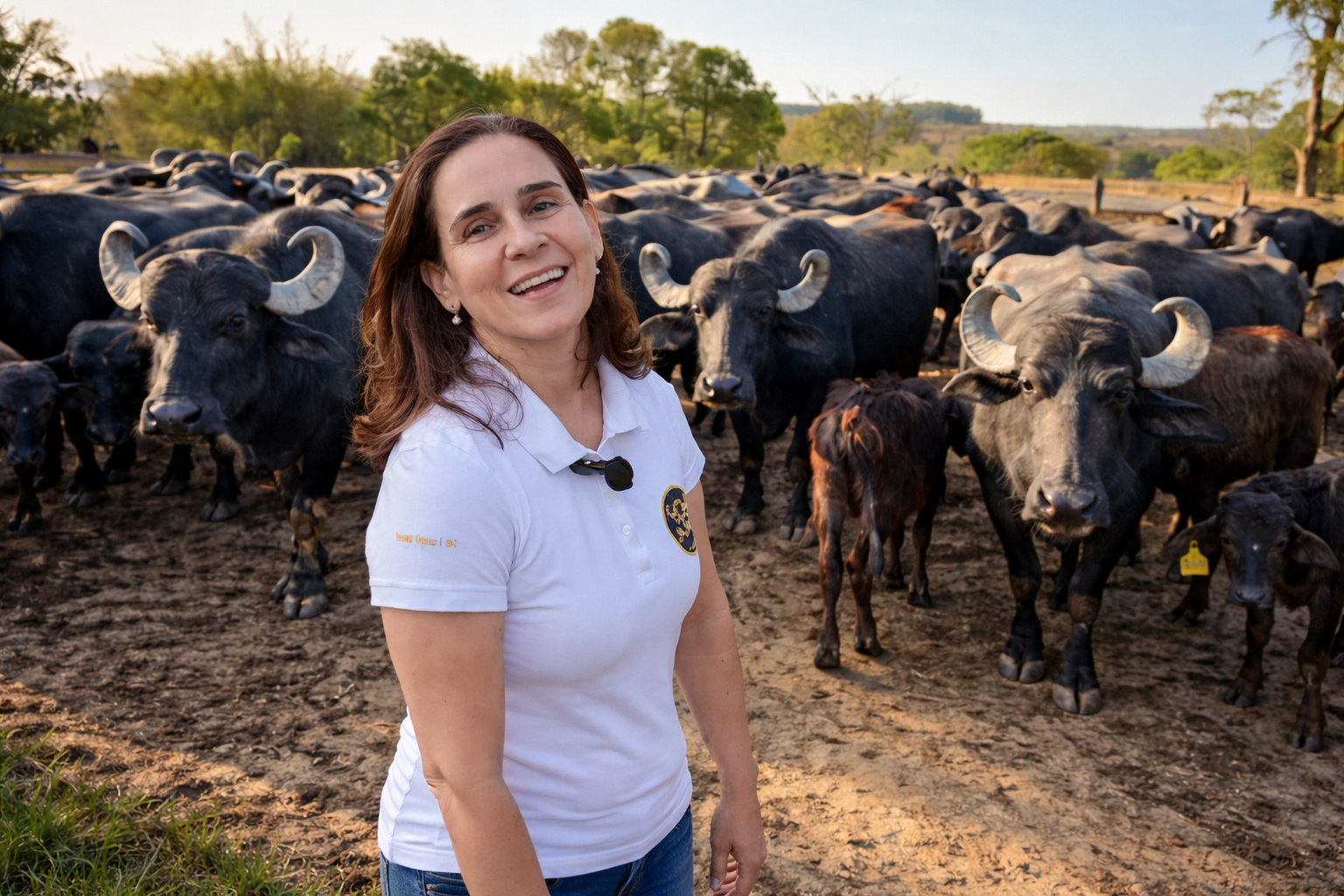


By Switching Traditional Cattle for Buffaloes, Rural Producer Built a Sustainable Model in the Countryside, Uniting Technical Knowledge, Family Tradition, Innovation in the Field, and a Production System that Has Been Growing in Brazil
Since early on, the routine in the countryside has always been part of this rural producer’s life. Raised on a farm, surrounded by animals and lessons passed down from generation to generation, she never imagined that a decision considered “out of the norm” would completely transform her business. By choosing to raise buffaloes instead of traditional beef cattle, she faced skepticism, sarcastic comments, and even prejudice, but the results over the years proved that the gamble was spot on.
The information was shared in an interview recorded directly on the farm, where the producer (known as Rosarinha) details the management, production, and routine with the animals, as seen in the field video and technical reports presented throughout the conversation.
Moreover, the implemented system proved to be highly efficient even during periods of severe drought. While many producers struggle with feed and herd health, the buffaloes demonstrated impressive hardiness and adaptation, maintaining stable productivity with simple management and reduced costs.
-
He started running at 66 years old, broke records at 82, and is now a subject of study for having a metabolic age comparable to that of a 20-year-old, in a case that is intriguing scientists and inspiring the world.

-
Oldest tree on the planet reappears after 130 years of searches: Wattieza, 385 million years old, was 10 meters tall and had no leaves or seeds; Gilboa fossils in New York solved the mystery in 2007.

-
A 48-square-meter house assembled in hours with 4,000 bricks made of recycled plastic that does not absorb moisture, has natural thermal insulation, and costs less than 90,000 reais in a complete kit.

-
Luciano Hang revealed that Havan’s air fleet has already accumulated more than 20,000 landings, 10,000 flight hours, and 6 million kilometers traveled, and he says that without the planes, the company would never have grown so quickly.


Richer Milk Production, Simple Management, and Docile Animals

Currently, the buffaloes’ diet is based exclusively on pasture, even during dry periods, supplemented with only 2 kg of barley per animal, without the use of complex feed. Still, each buffalo produces an average of 8 liters of milk per day, a volume considered quite efficient within buffalo farming.
In addition to quantity, the difference lies in quality. Buffalo milk has 13% more protein, a higher concentration of calcium and minerals, and about 30% less cholesterol compared to cow’s milk. Therefore, it is highly valued in the production of cheeses and derivatives, such as mozzarella, which has a higher yield.
Another point that debunks myths is the behavior of the animals. Contrary to their reputation for aggression, the buffaloes raised on the farm are described as gentle, curious, and calm. Employees report a preference for working with buffaloes over cows, precisely because of their docility and ease of daily management.
Origin of the Buffalo in Brazil and Productive Advantages

The buffalo raised in Brazil has Asian origins, with the main breeds being Murrah and Mediterranean, known for their gentle temperament and good milk performance. The introduction of the animal in the country occurred initially in Pará, especially on Marajó Island, where it was primarily used for traction.
Over time, the immense milk potential of the buffalo became apparent. Today, besides milk, the animal is also valued for its meat, which has a higher protein content, whiter fat, and excellent marbling. Despite this, in Brazil, buffalo meat is still often sold alongside beef, complicating differentiation in the market.
The reproductive cycle also requires technical knowledge. The gestation period for buffaloes lasts about 11 months, slightly longer than that of cows. Additionally, it is an seasonal animal, with calving concentrated between March and August, which requires planning to ensure milk production throughout the year. For this, synchronization protocols are used in heifers, ensuring a supply at the end of the year.
Farm Structure, Family Tradition, and Growth of Buffalo Farming
The property currently has 132 lactating buffaloes and about 200 females suitable for production, in addition to bulls of the Murrah and Mediterranean breeds. The entire system operates with a small team: two employees managing the farm and three in the dairy, highlighting the operational efficiency of the model.
The milking structure carries history. The space was built in 1979, being one of the first closed-circuit milking facilities in the region, initially built with glass piping. Over the years, adaptations have been made, keeping the visionary foundation left by the producer’s father, who transformed an area of the Cerrado, once considered unproductive, into a reference farm.
In addition to production, buffalo farming has been growing in regions such as Eastern Minas, where it was previously rare. What once sounded like madness now inspires other producers to invest in the model. The producer, who is also a veterinarian, has become one of the main advocates for the activity, highlighting the low disease rate, hardiness, and excellent cost-effectiveness of buffaloes.
Women in the Field, Overcoming Challenges, and Passion for Animals
Entering the agricultural sector as a woman was not easy. During her veterinary training, female representation was still a minority, and at the beginning of her career, prejudice was a real barrier. However, with consistent results, years of work in reproduction, milk quality, insemination, IVF, and pregnancy diagnosis, recognition came.
Today, she summarizes her relationship with the farm simply: caring for the animals is more than work; it is a calling. The routine of rising and retiring in the countryside, observing a well-cared-for herd, has become synonymous with a light life, purpose, and pride. For her, the animals are an essential part of the story, the economy, and the identity of the farm.
Source: Brasil Rural








Essa mulher não tem vergonha de matar os bezerros na cuia.
Bufalo e bufula e bezerros raça murrah buffalo a venda
São 29 cabeças sendo 21 búfala 3 búfalos sendo 2 castrados de sela e 5 bezerro
24 Adultos 5 bezerro
$3.000 por cabeça
lote no valor 87 mil
(11)948393131
Mogi das cruzes são Paulo